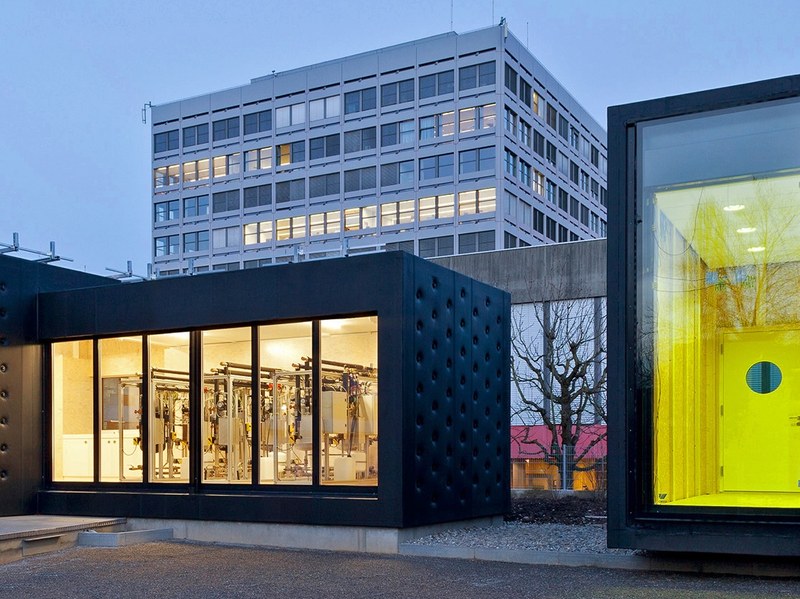
Become an expert in sustainable construction and energy-optimised buildings. Specialisation in building envelope, plant technology and renewable energies – with a focus on energy efficiency and recyclability. Together with your personal advisor, you tailor your studies specifically to your interests and career goals.
Factsheet
- Degree
- Master of Science FHNW in Engineering, Profile Building Technologies
- Study mode
- Full-time, Part-time/work-study
- Learning mode
- Onsite
- ECTS credits
- 90
- Next start
- 22.2.2027
- Duration
- Full-time in three semesters or part-time with a correspondingly longer duration
- Teaching language
- Vertiefung in Englisch oder Deutsch
- Application fee
- CHF 200
- Semester fee
- Place of residence in Switzerland when studies begin: CHF 750, resident in the EU/EFTA when studies begin: CHF 1,000
At a glance
- Focus on sustainable building: You develop solutions for energy-efficient, recyclable and resource-saving buildings – in new buildings as well as energy-efficient refurbishments.
- Individual study design: Your personal advisor will guide you through your studies and help you tailor your profile to your goals.
- Interdisciplinary competence:& you will learn to understand buildings as an overall system – from the building envelope to grid integration.
- Connected research and practice: You work closely with experts from the Institute for Sustainability and Energy in Building and benefit from up-to-date research knowledge.
- Future-oriented career opportunities: With the Building Technologies MSE profile, you are ideally prepared for demanding roles in planning, development or management.
Why study this?
After completing the Master of Science in Engineering (MSE) with the “Building Technologies” profile, you will be able to support the planning and operation of energy-efficient, recyclable and sustainable buildings with in-depth knowledge and thus make an important contribution to the net-zero energy strategy.
After completing the Master of Science in Engineering, you will have various career paths open to you as an engineer. For example, you have the opportunity to take on challenging management positions in construction and engineering or can contribute your expert knowledge in the areas of research and development.
Testimonials
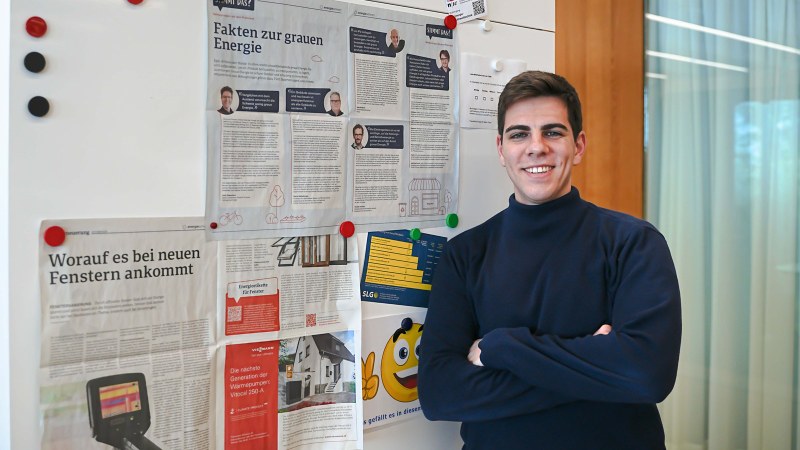
MSE in Building Technologies: Insights from a master’s student
Sergi Fernández Alegre, architect and MSE student in Building Technologies at the FHNW University of Applied Sciences and Arts Northwestern Switzerland, combines design with technology. His focus is on circular construction and sustainable materials. He not only wants to design buildings, but also make them more efficient and resource-conserving.
Reusing bricks for a sustainable circular economy
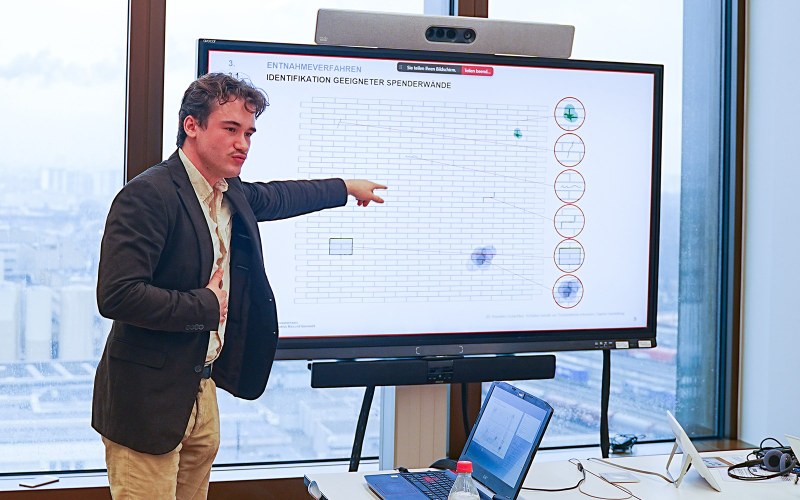
As part of his specialisation, Matthias Aaron Schmidt is investigating innovative methods for reusing bricks from cut wall pieces. The focus is on optimised removal processes, material classification and life cycle assessment to determine the reduction potential of CO₂ emissions.
Structure and programme contents
Structure
You can complete the master’s degree either full-time over three semesters or part-time over a correspondingly longer period. If you choose to study part-time, you have various options for flexibly distributing your work and studies over the semesters.
The chart shows the structure of the programme as a full-time course of study:
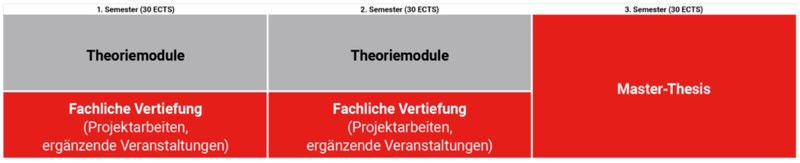
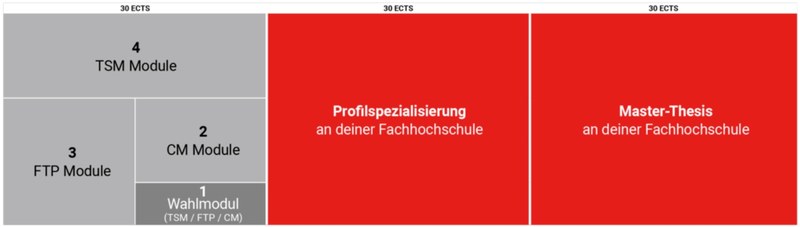
One-third of your programme consists of central modules, which take place at common locations for all students at Swiss universities of applied sciences. The other two thirds are the focus of your Master of Science in Engineering. You will complete this part at the Institute of Sustainability and Energy in Building of the FHNW School of Architecture, Civil Engineering and Geomatics.
The MSE degree programme comprises 90 ECTS credits:
- 30 ECTS credits by completing the core theory modules
- 30 ECTS credits by completing the subject specialisation (project work, specialisation modules)
- 30 ECTS credits by completing the final master thesis.
Core modules
You can choose the modules of your degree programme from the three areas “Technical Scientific Specialisation” (TSM), “Fundamental Theoretical Principles” (FTP) and “Context” (CM). You will attend at least 10 modules, with each module awarded 3 ECTS credits. These modules are offered in collaboration with other Swiss universities of applied sciences in Zurich – there are over 100 modules to choose from. For your specialisation in Building Technologies, we recommend a carefully compiled selection of particularly suitable modules.
We would particularly like to recommend the interdisciplinary TSM “Thermal Hydraulic Methods” offered by the FHNW Institute of Sustainability and Energy in Building. Here, you not only learn the basics of modelling complex energy systems, but also apply the knowledge directly with practical open-source tools.
The chart shows the composition of the core modules:
Specialisation modules
The specialisation at the Institute of Sustainability and Energy in Building comprises almost two thirds of the degree programme and is part of the Building Technologies profile. The 30 ECTS credits for the profile specialisation consist of the modules “Transient Simulation,” “Sustainable and Circular Construction” and “State of the Art Reports” as well as two specialisation projects (see project work and master thesis). Module descriptions:
Specialisation projects and master thesis
Your specialisation projects and master thesis take place in the context of ongoing research projects at the institute. Your specialisation topics are selected in a timely discussion with your advisor.
Here you can find out which specialisation projects are currently being worked on: Overview of current specialisation projects at the institute.
Module descriptions of specialisation projects:
There are three areas to choose from for your specialisation. The topics mentioned here relating to the areas are examples; the list is not exhaustive.
1. Buildings and Energy
- Transformation of buildings to a climate-neutral energy supply (net-zero greenhouse gases, plus energy concepts, grid integration)
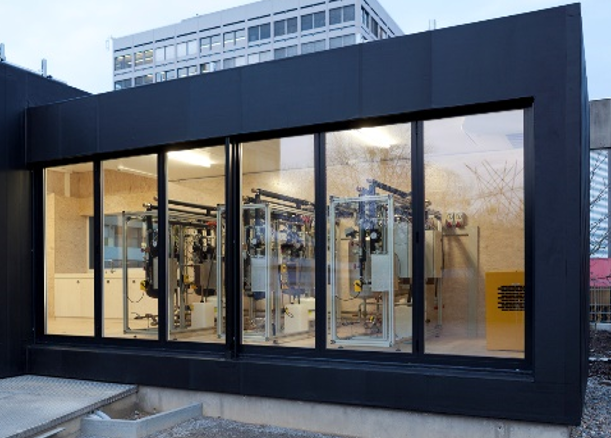
- Monitoring of buildings, implementation with digital twin
- Low-tech ventilation systems (e.g. gravity ventilation)
- Energetic evaluation of reuse windows (U-value measurements, airtightness, etc.)
- Summer heat protection, cooling of buildings in the context of climate change
2. Renewable Energies
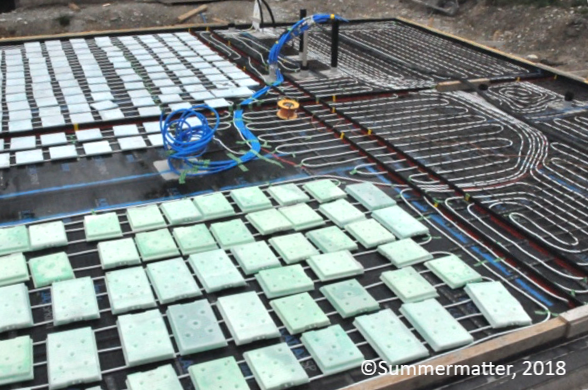
- Energy management: Heat pump systems combined with PV and storage options
- Networking the buildings with the neighbourhood (local heating and proprietary electricity networks, smart grid)
- Operational monitoring of thermal collectors and PV
3. Sustainable Construction
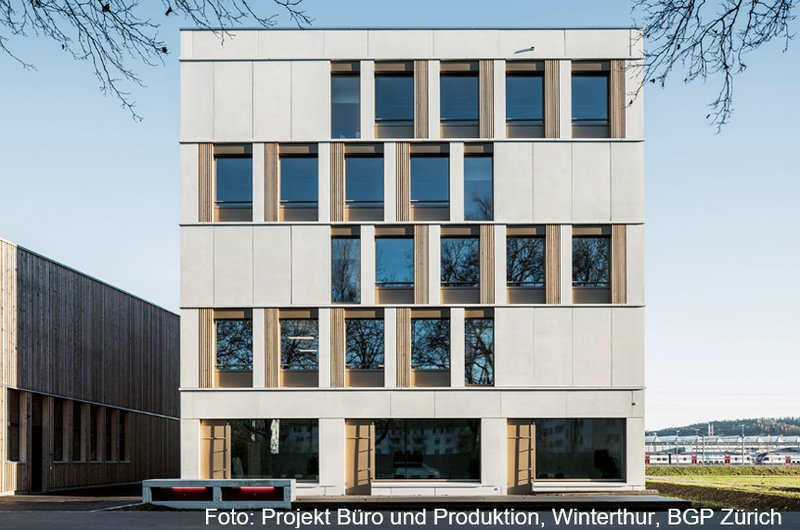
- Resilient and material-efficient buildings and infrastructure buildings with low grey energy
- Integral and digital planning
- Circular economy with system separation and component reuse
- Cities in climate change – climate-adapted construction in cities
- Comfortable interiors with good indoor air quality, optimal daylight supply
Further information on the MSE with the Building Technologies profile can be found in the Profile Description (PDF) or on the website of the Master Commission of the MSE.
Requirements and admission
Conditions of admission
- BSc in Building Technology
- BSc in Energy and Environmental Technology
- If you come from a related field of engineering or the construction sector, you are also welcome to apply. In this case, you will discuss your suitability on a case-by-case basis with the Course Director.
- Language Proficiency PTE Academic overall > 70, writing >= 75
Organisational matters
Personal advisors
From the outset, your personal advisor will help you plan your studies in line with your objectives and will support you throughout your studies. In the Building Technologies profile, you will be supervised by experts from the Institute for Sustainability and Energy in Building and benefit from their specialist knowledge.
Regulations
Current Study Regulations governing the MSE degree programme at the FHNW School of Architecture, Civil Engineering and Geomatics:
- Framework regulations governing the degree programmes at the FHNW in the area of education
- Study Regulations governing the Master of Science in Engineering
- Study Regulations governing the Master of Science in Engineering (valid for students who started their studies before 1 September 2022)
Appendix to the MSE Study Regulations of the FHNW School of Architecture, Civil Engineering and Geomatics:
Key Information for international Applicants
Advising and information events
Contact
Prof. Dr. Achim Geissler
- Phone
- +41 61 228 53 73
- achim.geissler@fhnw.ch
Information events
Loading...