
Process optimisation of wintering service
Residential vocational training centre Neuhof, Birr
The frosty winter in 2011 struck fear into the hearts of many plant lovers. In the following spring, numerous hobby gardeners were forced to say goodbye to palms, oleanders, etc., that they had lovingly nurtured and cultivated. The plants had been unable to withstand the icy weather and had perished from frost damage. Could this have been prevented?
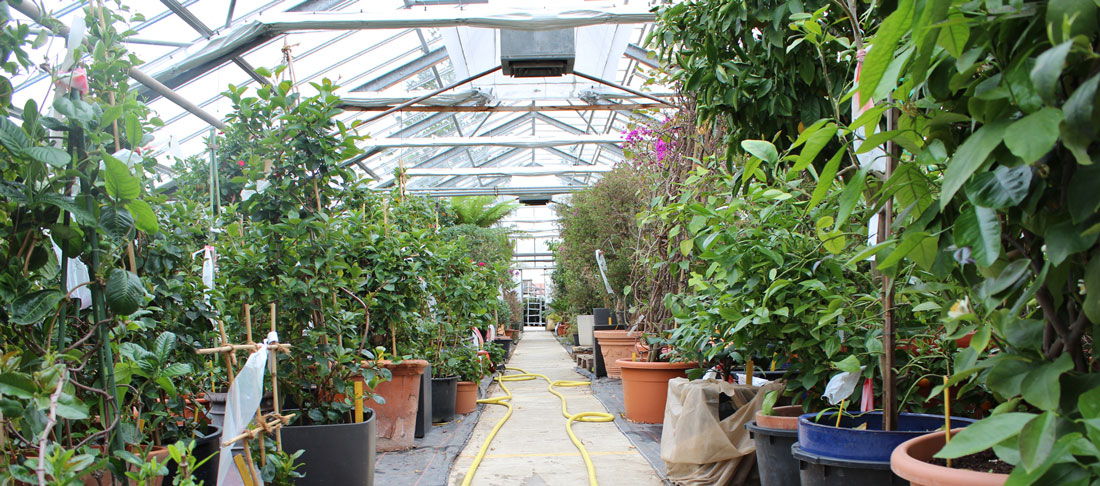
Neuhof vocational college has its own nursery and horticultural centre which offers a wintering service for frost-sensitive potted plants. The service is taken up by numerous customers. It can be assumed that the harshness of the past winter will see its popularity further strengthened. Despite the broad customer base, the work remains highly traditional and is managed without extensive IT support. Neuhof requested an analysis of its processes. It was intended that optimisation potential be identified and definitive measures be defined.
The wintering service as a process was analysed on the basis of discussions with the people in charge, local observations, accompanying the horticultural team and comparative studies of other horticultural operations. It was first necessary to map out the process in text and graphical form. Modelling was used to identify weaknesses in the process and appropriate optimisation recommendations were defined and evaluated accordingly. Concrete implementation measures were recommended with a focus on data acquisition and maintenance of the process data.
The work revealed that the envisaged logging system using electronic stickers does not make sense for Neuhof at the present time. The systems available on the market do not (yet) reflect the needs and requirements of Neuhof; further development should be tracked accordingly. However, it is strongly advised that a changeover to electronic data management take place. The industry software CH-Gartenbau is already utilised by Neuhof for invoicing all other horticultural activities. CH-Gartenbau is well suited to administer the process data of the wintering service and for invoicing. It will be possible to replace the handwritten and outdated customer bills without great expense, and the horticultural centre itself will be able to efficiently perform invoicing processes in the future. Logging the master data will require some time, and will be worth doing.
Author: Ms Anna Hitz, Business Information Technology Graduate
Social Media School of Business FHNW
No social media links available.