
A talk about anaerobic microbial transformation of halogenated contaminants
Talk of Lorenz Adrian, Department of Molecular Environmental Biotechnology, Helmholtz Centre for Environmental Research – UFZ, Leipzig and Chair of Geobiotechnology, Technical University of Berlin
The department of Molecular Environmental Biotechnology in Leipzig has strong roots in the assessment of microbial transformation of persistent chemicals such as halogenated aromatics, antibiotics, pesticides, plastic monomers and complex soil organic matter. They investigate and develop processes in which bacteria metabolically profit from contaminant transformation, such as the respiration with organohalogens or the anaerobic oxidation of ammonium (anammox). With facing climate change they now shift towards biotechnology contributing research for the reduction of greenhouse gas (GHG) emissions. In this talk Adrian Lorenz will give an overview of their work and two detailed examples:
- Respiration with halogenated aromatics by Dehalococcoides strains: microbiology, physiology and biochemistry of organohalide respiration; transfer of their results for the development of in situ remediation and sustainable biotechnology
- Research towards GHG-minimized and energy-efficient wastewater treatment: investigating treatment schemes with anoxic secondary treatment and subsequent partial nitritation/anammox in the mainstream. He will also describe their parallel investigation of the transformation of key persistent and mobile organic contaminants (PMOC’s) in such redox-differentiated systems.
Datum und Zeit
6.2.2026, 10:00–10:45 Uhr iCal
Ort
Raum 01.O.07, FHNW Campus Muttenz, Hofackerstrasse 30, 4132 Muttenz
Veranstaltet durch
Hochschule für Life Sciences
Veranstaltungssprache
Englisch
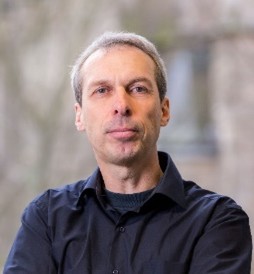
Lorenz Adrian is head of the Department Environmental Biotechnology at Helmholtz Centre for Environmental Research - UFZ in Leipzig and Professor for Geobiotechnology at Technische Universität Berlin, Germany. He studied biology at the University Bonn and Biochemistry with Applied Molecular Biology at the University of Manchester. PhD and Habilitation were done at TU Berlin on anaerobic microbiology and biochemistry under the supervision of Prof. Helmut Görisch and Prof. Ulrich Szewzyk. After short PostDoc stays with Prof. Steven Zinder at Cornell University (Ithaca, NY) and Prof. Donna Fennell at Rensselaer Polytechnic Institute (Troy, NY) he moved to Leipzig as a head of a consolidator ERC group and later department head.