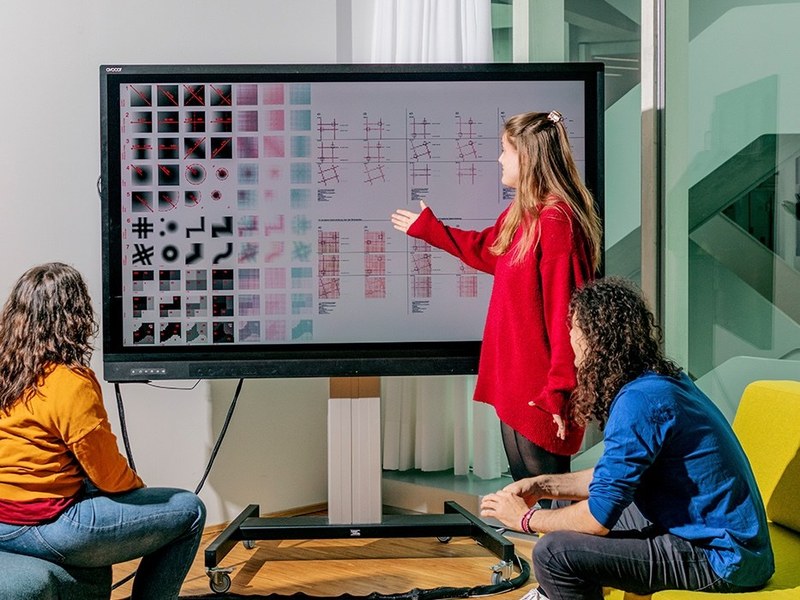
"Study Geomatics – The Space is Yours" - The Swiss Universities of Applied Sciences offer a practical MSE master’s programme with 16 flexible profiles. The geomatics profile prepares you for a dynamic geospatial career, with specialisations in areas like geodata processing, surveying, GIS, GPS, cartography, and spatial big data science. Connect with experts and peers across Switzerland while shaping your future in this innovative field.
Factsheet
- Degree
- Master of Science FHNW in Engineering, Profile Geomatics
- Study mode
- Part-time/work-study, Full-time
- Learning mode
- Onsite
- ECTS credits
- 90
- Next start
- 22.2.2027
- Duration
- Full-time (3 semesters) or part-time (5 semesters)
- Place
- FHNW Campus Muttenz and Zürich
- Application fee
- CHF 200.-
- Semester fee
- Residence in Switzerland at start of studies: CHF 750.-, Residence in EU/EFTA at start of studies: CHF 1000.-, CHF 100.- for materials and licenses
At a glance
- Focus: Advanced master’s program in geodata acquisition, analysis, and visualization.
- Flexibility: Practice-oriented studies with individualized module choices.
- Innovation: Strong connection to applied research and emerging geomatics technologies.
Career prospects
Graduates of the Master of Science FHNW in Engineering, Profile Geomatics, are in high demand for responsible positions in private companies and public institutions within the multifaceted and growing business area of geomatics and related sectors. Jobs are open in areas such as energy infrastructures, agribusiness, cadastral surveying, geographic information systems (GIS), archaeology, environment, monitoring, logistics, planning, cultural heritage, safety or research.
Testimonials
What our students say about this course of study (in German)
Structure and programme contents
Customise your course of study
The central element of the course of study is the individual specialization in your profile. You will study this specialization with theoretical and practical work at the institute of Geomatics. You will be accompanied and supervised throughout the course of the study by a personal advisor. Thus, you acquire a set of unique skills at a high level within the framework of selected theory modules as well as practical research and development projects.
Personal Advisors
Programme Structure and Study Modes
Central modules (TSM, FTP, CM)
Specialisation modules (GEO)
Specialisation research projects
Master Theses
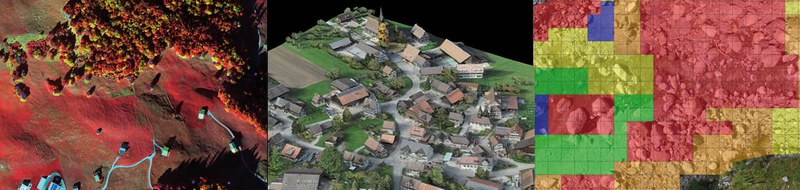
On the following page you will find the posters and movies of the Master Theses of the last years.
Requirements and admission
Acceptance criteria
You are interested in Geomatics and you are looking forward to engage in depth with spatial phenomena, processes and applications. To do so you are motivated to engage with spatial data collection, data modelling, data processing and analysis as well as data and information visualization employing state-of-the-art methods and technologies. Additionally, you have a good Bachelor’s degree in Geomatics, Informatics, Geography, Cartography, Environmental Sciences, or a related discipline, or you have a comparable different background.
Please contact us to discuss your options – mse.habg@fhnw.ch
Regulations and practical information
Regulations
Current examination and study regulations for the MSE programme at the FHNW:
- Studien- und Prüfungsordnung Master of Science in Engineering (in German, legally binding version)
- Study and examination regulation Master of Science in Engineering (translated version in English, not legally binding)
Appendix to the study and examination regulations for the MSE profile Geomatics. Definition of mandatory and elective modules:
StuPO MSE FHNW - Appendix Profile Geomatics
Timetables
Key Information for international Applicants
Location
More information about the FHNW Campus Muttenz.
Advising and information events
Contact
Prof. Dr. Susanne Bleisch
- Phone
- +41 61 228 55 25
- susanne.bleisch@fhnw.ch
Prof. Dr. Pia Bereuter
- Phone
- +41 61 228 55 57
- pia.bereuter@fhnw.ch
Manuela Gonzalez
- Phone
- +41 61 228 58 06
- manuela.gonzalez@fhnw.ch
Information events
Loading...