Workplace diversity is nowadays something most companies strive to achieve, especially the globally oriented large corporations. Higher innovation, increased creativity or better profits are amongst the biggest benefits of having a diverse workforce. What does that mean for an institution of higher education? Prof. Dr. Silvia Mastellone and Prof. Dr. Renato Minamisawa, both professors at the FHNW School of Engineering, give an insight into their experiences.
How would you describe yourself? What is your personal background?
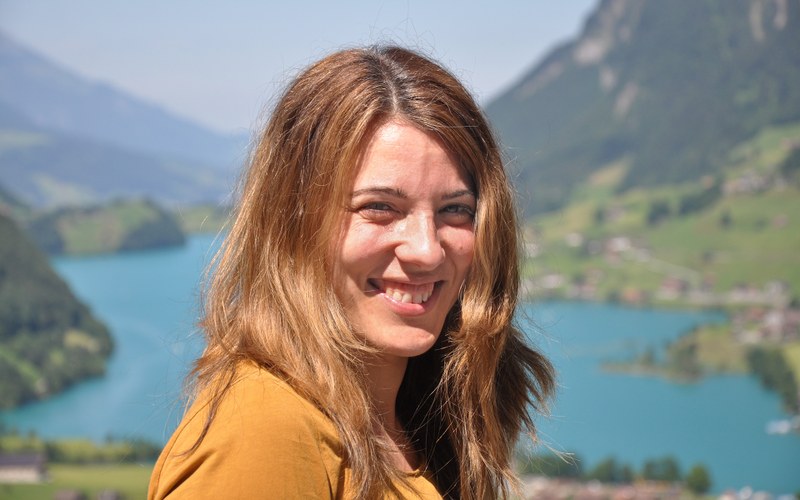
Silvia: I was born and raised in Italy, where I also studied Computer Engineering. Since school I always had fun learning mathematics and solving difficult problems. I was fascinated by the image of engineers as “problem solvers” that use their ideas to add small and big improvements to people’s lives. After graduation, I have been working for one year in an engineering company in Italy, before moving to the US to pursue a master degree in Electrical and Computer Engineering and a PhD in Systems Engineering. Following my wish to come back to Europe, I moved to Switzerland after the completion of my studies. I worked at the ABB Corporate Research Center for nine years before joining the FHNW.
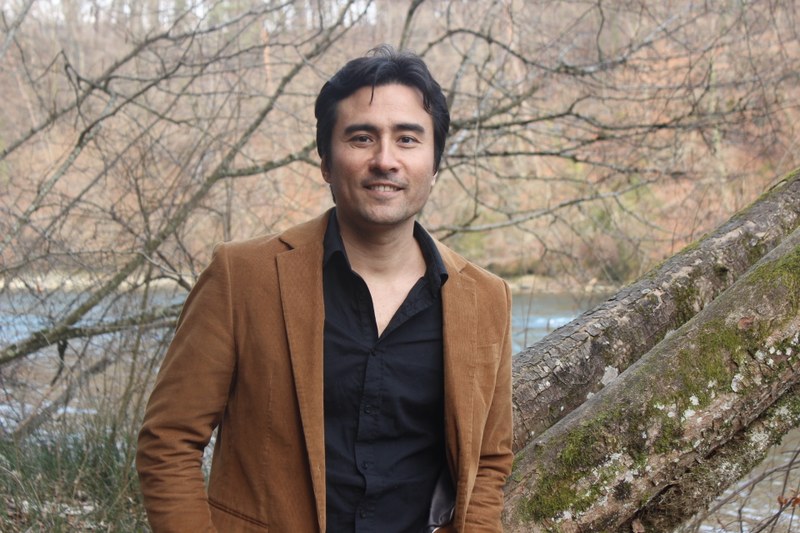
Renato: I’m Brazilian born, of Japanese and Italian roots. I have a family with two kids (7 and 5 years old), my wife is German, working at the FHNW and we live in Windisch. I play jazz guitar and have a band with two other professors of the FHNW School of Engineering.
You have both been studying and working in different countries: Can you see a difference in the way the topic of diversity is approached?
Silvia: Yes, there are cultural differences in the way diversity is approached. In Italy, I didn’t perceive diversity as a topic at all. Most women work, as it has been the case for generations. Although women in engineering are still a minority (maybe 10-15%), there is no stigma nor bias around it. I was also fortunate enough to have a strong family and social support system. In the US, there is more awareness around the topic of diversity and more affirmative actions are implemented. Many students during my graduate studies were foreigners, so diversity was the normality. You didn’t realize that you were different in any way. In Switzerland, it is less common for women to study and work as an engineer, so it can come as a surprise in some cases.
Renato: Absolutely. In Brazil it’s not much of a topic, because the country is already very diverse, with people from all backgrounds. In the US, diversity is a long time addressed and relevant topic and, in my opinion, they are ahead of Europe on it, having many policies for all kinds of minorities. Particularly the American academy is very international oriented at all levels, from professors to students. In Germany, where I did my doctoral studies, diversity is especially related to the inclusion of women, as well as in all the European Union. At university, there was a strong concern to have more women in the research groups. When I moved to Switzerland and started working at the Paul Scherrer Institute PSI, the environment was much more international and performance oriented and reminded me of the US. I can say that working at ABB was also a great part of my education. The company is extremely international, very progressive and very diversity-oriented. At the FHNW, I perceive increasing concerns about diversity, but in my opinion, there is still potential for improvement and a strong diversity unbalance between institutions.
What’s your definition of a diverse team?
Silvia: Diversity can span several dimensions, but in general I see it as a fundamental aspect for innovation and growth. Our minds learn the most and can perform the best when confronted with diversity. A diverse team is in some sense a more complete team as it is equipped to address different aspects and the complexity of a project: different ideas, different ways of looking at a problem, different kinds of experiences and perspectives define a more stimulating and fun environment to work in. For the FHNW as an institution of higher education, diversity is an important aspect to consider. Most of the industries recognize diversity as a critical ingredient in a successful working group and they actively seek to recruit from a diverse pool of candidates. At European level, there is a large request to have balanced teams, balanced governments, balanced boards. As educational institutions, we train the workforce that will work in those positions, so we cannot be left behind. We need to offer our students not only the technical training, but also the skills required to work in a global and diverse environment.
Renato: You have an environment of different people, from different genders, different cultures etc. They can bring different ideas and perspectives, making the environment more dynamic, creative and innovative. If you want to recruit good talents, you cannot cherry pick.
What’s your experience with working in diverse teams?
Renato: I only have great experiences working in diverse teams. My team at the FHNW is very diverse. I have a lot of female and international students, and of course also Swiss students. I think that if you bring together people from different backgrounds, you build different dynamics and you have different points of view to solve problems. That’s the greatest value of a diverse team. You create an open environment, where people are recognized and rewarded for what they do and not for what they are. Great environments for ideas are diverse environments.
Silvia: I always find it very inspiring and interesting to work in diverse teams, because of the great learning experience. It is an enriching journey. You get the chance to question your own methods and get the opportunity to improve them. Diversity enables personal growth. If the scope of an institution is to gather a team of driven and talented people, without placing other restrictions, most likely it will not be formed by single-gender, single-race members. A diverse team will most likely be the natural result. Change is happening in the society, the young generation wants to study and work in balanced and diverse environments. Institutions have to adapt to meet these requirements.
Do you have a concrete example for a project with a diverse team at the FHNW?
Renato: One good example is the SHINE project, where I work with Silvia. The group is very international: Silvia from Italy, me from Brazil, Indian students, Swiss students, all genders. A female researcher from Spain was also contributing. So that’s a very good example of a diverse team.
Silvia: I would also point out the SHINE project, a very gender and nationality mixed team. We have very interesting discussions and brainstorming sessions, everyone contributes with their ideas to create something together. We all encourage each other to think outside the box. Also in the NCCR "Dependable Ubiquitous Automation", where I work as a principal investigator and Equal Opportunity Officer, diversity is considered a key ingredient for innovation. The SNSF, funding the project, places a strong emphasis on defining strategies to sustainably create more diversity in the STEM fields across study and professional environment
What’s the advantage of working in diverse teams?
Silvia: There are plenty: it is intellectually stimulating and enriching, it is fun and it is natural. Societies are mixed, so why should study and work environments not be? I think that nobody would dream of working every day for 30 years in a mono-gender environment. A more balanced environment promotes wellbeing and supports people to thrive. That’s where I can personally give my best. Generally speaking, you can either put your energy into complying with one model or you can just be yourself and put your energy into coming up with solutions etc. There is this fundamental feeling of comfort that gives you the possibility to work better. If you try to fit into one model, it already takes away a lot of energy.
Renato: I personally don’t even think about it when selecting a team. It comes naturally. I think I would be very bored in a homogeneous team. A diverse team makes things much more dynamic, more interesting. Perhaps it has also got something to do with my background, travelling all those countries. Diversity is a great value that I want to pass on to my students, and doing so I’m preparing them for a real world career. I do my very best on guaranteeing that my team is as diverse as possible.
What’s the disadvantage of working in diverse teams?
Renato: I cannot find any. I think it wouldn’t be easier to recruit just one group of people. Maybe if you have to get visas etc., that might be a problem. But I see mostly good things: an increased pool of ideas, talents and creativity. It also helps everybody to develop their team skills. In many institutions of higher education that is simply mainstream. I think it is a very important discussion in our school of engineering, because of women under representation among professors. I actually don`t see how we can increase enrollment of female engineers if we do not have significant higher numbers of female professors in engineering giving example. I have met many extremely talented engineer women in industry, educated at regular Universities; I believe we can achieve the same.
Silvia: If you are not used to working in diverse teams, it might be uncomfortable at the beginning, because of the unfamiliar environment. It takes time and effort to establish a connection and a common language within the team. Just as every growth and learning process, it requires to go beyond the personal comfort zone, but the benefits finally largely compensate for the invested effort, providing opportunities to grow, thrive, and participate in a fruitful innovation process.
This interview was conducted by Clelia Bieler, responsible for diversity at the FHNW School of Engineering.