Zu Hauptinhalt springenZur Suche springenZu Hauptnavigation springenZu Footer springen
Logo der Fachhochschule Nordwestschweiz
  • DE
  • EN
  • Startseite
  • Internationales

Zehn Hochschulen Ein Ziel

Die FHNW umfasst 10 Hochschulen mit unterschiedlichen Schwerpunkten. Wählen Sie eine Hochschule aus, um deren spezifische Kurse, Studiengänge und Informationen zu sehen.

Angewandte Psychologie

Architektur, Bau und Geomatik

Gestaltung und Kunst

Informatik

Life Sciences

Musik

Pädagogische Hochschule

Soziale Arbeit

Technik und Umwelt

Wirtschaft

  • Studienangebot

    • Alle Studiengänge
    • Bachelor-Studiengänge
    • Master-Studium
    • Info-Anlässe
  • Rund ums Studium

    • Gute Gründe für ein Ingenieurstudium an der FHNW
    • Studienberatung
    • FHNW-Rover-Team
    • Praxisintegriertes Bachelor-Studium PiBS
    • Projekt Integral
    • Nachwuchsförderung
  • Internationales Studium

    • Outgoing Studierende
    • Incoming Studierende
    • Trinational Studieren
  • Weiterbildungsangebot

    • Alle Weiterbildungen
    • MAS - Master of Advanced Studies
    • DAS - Diploma of Advanced Studies
    • CAS - Certificate of Advanced Studies
    • Kurse
    • Info-Anlässe
  • Weiterbildungen nach Themen

    • Technik und Ingenieurwesen
    • Leadership und Management
    • Digitalisierung und Artificial Intelligence
    • Beschaffung, Logistik und Produktion
    • Umwelt und Nachhaltigkeit
    • Augenoptik und Optometrie
  • Forschung

    • Forschungsfelder
    • Ausgewählte Projekte
  • Zusammenarbeit

    • Labore der Hochschule für Technik und Umwelt
    • Studierendenprojekte in Auftrag geben
    • Forschungsprojekte realisieren
  • Neuigkeiten und Einblicke

    • News und Storys
  • Veranstaltungen

    • Alle Veranstaltungen
    • Info-Anlässe
  • Medien

    • Medienmitteilungen
  • Über die Hochschule für Technik und Umwelt

    • Organisation
    • Medienstelle
    • Personenverzeichnis
  • Institute

    • Institut für Automation
    • Institut für Biomasse und Ressourceneffizienz
    • Institut für Business Engineering
    • Institut für Elektrische Energietechnik
    • Institut für Geistes- und Sozialwissenschaften
    • Institut für Kunststofftechnik
    • Institut für Mathematik und Naturwissenschaften
    • Institut für Nanotechnologische Kunststoffwissenschaften
    • Institut für Optometrie
    • Institut für Produkt- und Produktionsengineering
    • Institut für Sensorik und Elektronik
    • Institut für Thermo- und Fluid-Engineering
    • Labore der Hochschule für Technik und Umwelt
Logo der Fachhochschule Nordwestschweiz
  • Zur Hochschule
    • Hochschule für Technik und Umwelt
    • Studium
    • Weiterbildung
    • Forschung und Dienstleistungen
  • Social Media
    • LinkedIn
    • Instagram
    • Facebook
    • TikTok
    • YouTube
  • Die FHNW
    • Organisation
    • Hochschulen
    • Standorte
    • Bibliothek FHNW
    • Jobs und Karriere
    • Medienkontakte
  • Support
    • IT-Support
    • Inside FHNW
    • Webmail
  • Datenschutz
  • Impressum
  • Accessibility
  • Studienangebot

    • Alle Studiengänge
    • Bachelor-Studiengänge
    • Master-Studium
    • Info-Anlässe
  • Rund ums Studium

    • Gute Gründe für ein Ingenieurstudium an der FHNW
    • Studienberatung
    • FHNW-Rover-Team
    • Praxisintegriertes Bachelor-Studium PiBS
    • Projekt Integral
    • Nachwuchsförderung
  • Internationales Studium

    • Outgoing Studierende
    • Incoming Studierende
    • Trinational Studieren
  • Weiterbildungsangebot

    • Alle Weiterbildungen
    • MAS - Master of Advanced Studies
    • DAS - Diploma of Advanced Studies
    • CAS - Certificate of Advanced Studies
    • Kurse
    • Info-Anlässe
  • Weiterbildungen nach Themen

    • Technik und Ingenieurwesen
    • Leadership und Management
    • Digitalisierung und Artificial Intelligence
    • Beschaffung, Logistik und Produktion
    • Umwelt und Nachhaltigkeit
    • Augenoptik und Optometrie
  • Forschung

    • Forschungsfelder
    • Ausgewählte Projekte
  • Zusammenarbeit

    • Labore der Hochschule für Technik und Umwelt
    • Studierendenprojekte in Auftrag geben
    • Forschungsprojekte realisieren
  • Neuigkeiten und Einblicke

    • News und Storys
  • Veranstaltungen

    • Alle Veranstaltungen
    • Info-Anlässe
  • Medien

    • Medienmitteilungen
  • Über die Hochschule für Technik und Umwelt

    • Organisation
    • Medienstelle
    • Personenverzeichnis
  • Institute

    • Institut für Automation
    • Institut für Biomasse und Ressourceneffizienz
    • Institut für Business Engineering
    • Institut für Elektrische Energietechnik
    • Institut für Geistes- und Sozialwissenschaften
    • Institut für Kunststofftechnik
    • Institut für Mathematik und Naturwissenschaften
    • Institut für Nanotechnologische Kunststoffwissenschaften
    • Institut für Optometrie
    • Institut für Produkt- und Produktionsengineering
    • Institut für Sensorik und Elektronik
    • Institut für Thermo- und Fluid-Engineering
    • Labore der Hochschule für Technik und Umwelt

Geben Sie einen Suchbegriff ein und suchen Sie nach Weiterbildungen, Studienangeboten, Veranstaltungen, Dokumenten und anderen Inhalten.

Institut für Kunststofftechnik, Hochschule für Technik und Umwelt FHNW

Hochschule für Technik und Umwelt


  • Technik und Umwelt
  • Über uns
  • Institute
Institute
topbild-ikt.jpg

Wir schaffen nachhaltige, kunststoffbasierende Produkt- und Verfahrensinnovationen mit  Schwerpunkten in Hochleistungspolymeren und Verbundwerkstoffen.

Wir sind Expert*innen in der Entwicklung nachhaltiger Produkt- und Verfahrensinnovationen in der Kunststofftechnik, mit besonderem Fokus auf Hochleistungspolymere und Verbundwerkstoffe. Unsere Stärke liegt in einer interdisziplinären Herangehensweise, bei der wir Werkstoffwissenschaft, Konstruktion und Verarbeitungstechnologie nahtlos miteinander verbinden. Dadurch bieten wir eine ganzheitliche Lösung für die Produktentwicklung im Kunststoffbereich.

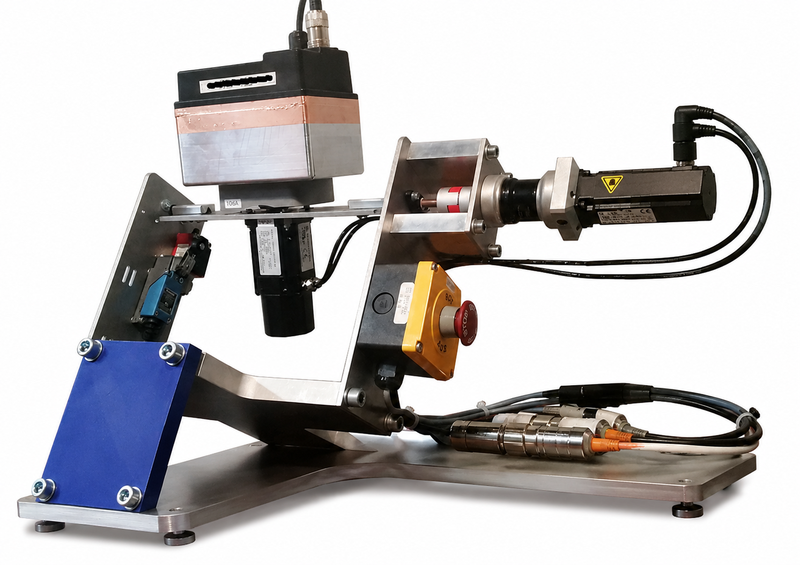
Mit einem engagierten Expert*innen-Team und modernster Ausstattung liefern wir präzise und zuverlässige Messungen, um Ihre Forschungs- und Entwicklungsprojekte optimal zu unterstützen.

Unsere Kompetenzen in Chemie und Analytik, Verfahrenstechnik und Strukturmechanik vereinen wir in enger Zusammenarbeit mit den Kompetenzen Oberflächenstrukturierung und -funktionalisierung des Institut für Nanotechnische Kunststoffanwendungen FHNW.

Forschungsschwerpunkte

Ausgewählte Projekte

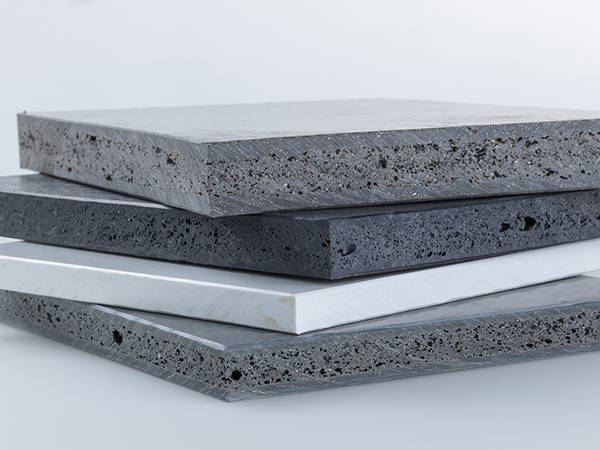
Wir unterstützen innovative Unternehmen bei der Erforschung neuster Technologien und Methoden und bei deren Umsetzung in die Praxis. Wir arbeiten mit nationalen und internationalen Forschungspartnern zusammen und ermöglichen ihnen den Zugang zu Fördermitteln wie zum Beispiel Innosuisse-Projekten oder EU-Forschungsprogrammen.
laden
Zu den Forschungsprojekten des Instituts

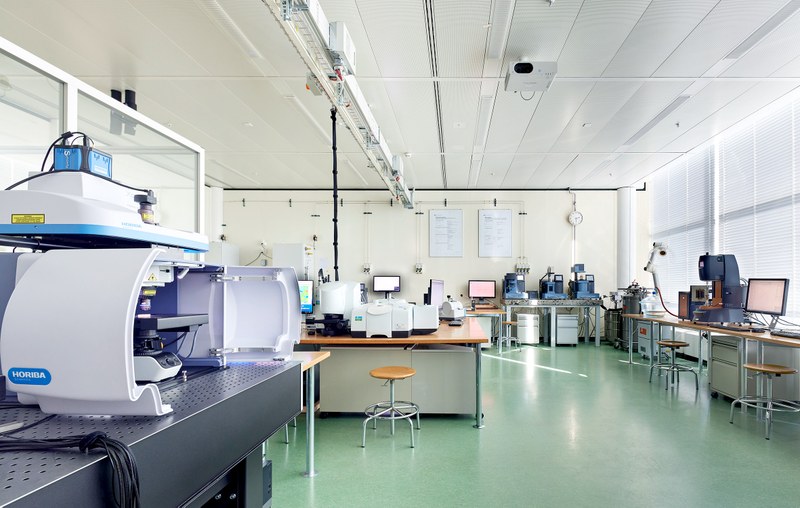
Unsere Laborinfrastruktur

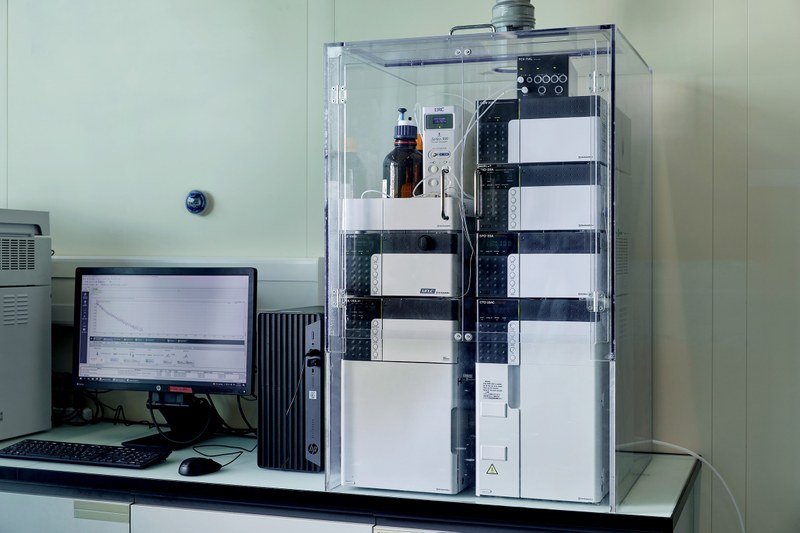
Das Institut für Kunststofftechnik und das Institut für Nanotechnische Kunststoffanwendungen an der FHNW sind zentrale Anlaufstellen für Expertise und Wissen im Bereich der Polymeranalyse. Unsere Mission ist es, durch wegweisende Forschung, gezielte Bildung und Förderung von Innovationen die Polymerindustrie voranzutreiben.
laden

Netzwerk und Partner

CC Schweiz ist die Schweizer Regionalabteilung des Carbon Composites e.V. und wurde von der schweizerischen Kommission für Technologie und Innovation (KTI) als Nationales thematisches Netzwerk (NTN) gewählt. Der Fokus von CC Schweiz liegt auf der Förderung der Anwendung von Hochleistungs-Faserverbundtechnologien in der Schweiz. Unser Institut ist Gründungsmitglied und Mitinitiator des CC Schweiz. Prof. Dr. Christian Brauner ist amtierender Präsident des CC Schweiz.


Der Innovationsbooster fördert die Umsetzung von 100% zirkulärer Konzepte und Lösungen in der Schweiz. Zwischen 2021 und 2024 unterstützt das Programm Schweizer Start-ups und etablierte Unternehmen mit finanziellen Mitteln und durch Wissenstransfer und hilft ihnen, ihre Systeme und unsere Gesellschaft von einer linearen zu einer Kreislaufwirtschaft zu transformieren. Prof. Dr. Christian Rytka ist Konsortiumsmitglied des Innovation Booster Applied Circular Sustainability.

Publikationen

Die Ergebnisse unserer Arbeit publizieren wir regelmässig in Fachmedien und an Konferenzen.

2024
  • Mit Thermoformen gegen Hüftschäden, Seetaler Bote, 2024
  • Rytka C, Krzikalla P, Battaglia S, Volatile Verbindungen in Kunststoffrezyklat, Technische Rundschau, 2024
  • Rytka C, Die Vielseitigkeit von Kunststoffen macht es so spannend, bz, 2024
  • Werlen V, Rytka C, Dransfeld C, Brauner C, Michaud V. A multiscale consolidation model for press molding of hybrid textiles into complex geometries. Polym Compos. 2024; 1-19. doi:10.1002/pc.28139
  • Fachhochschule Nordwestschweiz (FHNW). 26.02.2024. Plastikfrei angeln. FHNW. https://www.fhnw.ch/de/medien/newsroom/news/plastikfrei-angeln (Zugriff am 22. Oktober 2024).
2023
  • Rytka C, Biopolymere – eine nachhaltige Alternative?, Kunststoffextra, 2023
  • Werlen V., Vocke R., Brauner B., Dransfeld C., Michaud V., Rytka C., A model for the consolidation of hybrid textiles considering air entrapment, dissolution and diffusion,
    Composites Part A: Applied Science and Manufacturing, Volume 166, 2023, 107413, ISSN 1359-835X, https://doi.org/10.1016/j.compositesa.2022.107413.
  • S, Tiesnes, Rytka, C., 2023, Life cycle assessment, biodegradability and sustainability of biopolymers in the textile Industry, Nachhaltige Kunststoffe in komplexen Anwendungen, Rapperswil, Schweiz; Slide 1 (ost.ch)
2022
  • Markstaller R, Krzikalla P, Wegmann S, Rytka C, Sandwichplatten aus rezykliertem Kunststoffmix, Kunststoffextra, 2022
  • Rytka C., Zurück in den biologischen Kreislauf, Kunststoffextra, 2022, https://kunststoffxtra.com/zurueck-in-den-biologischen-kreislauf/
  • Werlen V, Rytka C, Wegmann S, et al. Novel tooling for direct melt impregnation of textile with variotherm injection moulding: Methodology and proof of concept. Journal of Composite Materials. 2022;0(0). doi:10.1177/00219983221130720
  • Werlen V., Vocke R., Schwanemann P, Michaud V., Brauner C., Dransfeld C., Rytka C., Consolidation of hybrid textiles for aerospace applications, Composites Meet Sustainability – Proceedings of the 20th European Conference on Composite Materials, ECCM20. 26-30 June, 2022, Lausanne, Switzerland
  • Diaz-Rodenas M., Thommen M., Rytka C., Le Canut J.M., Gschwend G., Queloz S., Tsotra P., Roussel J., Weber J.F., Highly conductive polypropylene based composites for bipolar plates for polymer electrolyte membrane fuel cells, Composites Meet Sustainability – Proceedings of the 20th European Conference on Composite Materials, ECCM20. 26-30 June, 2022, Lausanne, Switzerland
  • Wegmann S.; Rytka C.; Diaz-Rodenas M., Werlen V.; Schneeberger C., Ermanni P., Caglar B., Gomez C., Michaud V., A life cycle analysis of novel lightweight composite processes: Reducing the environmental footprint of automotive structures, Journal of Cleaner Production, Volume 330, 2022, 129808, ISSN 0959-6526, https://doi.org/10.1016/j.jclepro.2021.129808
2021
  • Voegelin T, Durchbruch im Recycling von GFK-Abfällen, Kunststoffextra, 2021
  • Werlen V., Rytka C., Michaud V., A numerical approach to characterize the viscoelastic behaviour of fibre beds and to evaluate the influence of strain deviations on viscoelastic parameter extraction, Composites Part A: Applied Science and Manufacturing, Vol. 143, 2021, 106315, https://doi.org/10.1016/j.compositesa.2021.106315
  • Bühler R., Thommen M., Le Canut J.-M., Weber J.-F., Rytka C., Tsotra P., Highly conductive polypropylene-based composites for bipolar plates for polymer electrolyte membrane fuel cells. Fuel Cells. 2021,1–9. https://doi.org/10.1002/fuce.201900232
2020
  • Rytka C, Spezifische Halbzeuge für den 3D-Druck, Kunststoffextra, 2020
  • Jakubowsky M., Werder J., Rytka C., Kristiansen M., Neyer A. (2020): Design, manufacturing and experimental validation of a bonded dual component microstructured system for vertical light emission Microsystem Technologies, 26(6), 2087-2093; https://doi.org/10.1007/s00542-020-04767-z
2019
  • Arexabaleta, L.; Rytka, C.; Walker, L.; Analysis of the manufacturing process of a car bonnet using Compression Resin Transfer Moulding (CRTM). AEMAC, [S.l.], v. 3, n. 3, p. 60-67, (2019). ISSN 2531-0739.
  • Fairhurst A., Thommen M., Rytka C. (2019): Comparison of short and long term creep testing in high performance polymers Polymer Testing 78 105979, https://doi.org/10.1016/j.polymertesting.2019.105979
  • Madeleine Grossman, Dmitriy Pivovarov, Florian Bouville, Clemens Dransfeld, Kunal Masania,* and André R. Studart*, Hierarchical Toughening of Nacre-Like Composites, Advances Functional Materials 2019, 1806800
2018

Towards aerospace grade thin-ply composites: Effect of ply thickness, fibre, matrix and interlayer toughening on strength and damage tolerance
J. Cugnonia,∗, R. Amachera, S. Kohlera, J. Brunnerb, E. Kramerb, C. Dransfeldb, W. Smith, K. Scobbied, L. Sorensene, J. Botsisa
Composites Science and Technology 168 (2018) 467–477

2017
  • Core-shell rubber nanoparticle reinforcement and processing of high toughness fast-curing epoxy composites, Keller, A.; Chong, H. M.; Taylor, A. C.; Dransfeld, C.; Masania, K., Composites Science and Technology 2017, 147, 78-88.
  • Protective effect of ultrathin alumina film against diffusion of iron into carbon fiber during growth of carbon nanotubes for hierarchical composites investigated by ptychographic X-ray computed tomography,Szmyt, W.; Vogel, S.; Diaz, A.; Holler, M.; Gobrecht, J.; Calame, M.; Dransfeld, C., Carbon 2017, 115, 347-362.
2016
  • Rytka, C., Opara, N., Andersen, N. K., Kristiansen, P. M. and Neyer, A. (2016), On The Role of Wetting, Structure Width, and Flow Characteristics in Polymer Replication on Micro- and Nanoscale. Mater. Eng. 301 597–609
  • Rytka C., Lungershausen J., Kristiansen P. M., Neyer A., (2016) 3D filling simulation of micro- and nanostructures in comparison to injection moulding trials Micromech. Microeng. 26 065018
  • Studer, J.; Dransfeld, C.; Masania, K., Composites Part A: An analytical model for B-stage joining and co-curing of carbon fibre epoxy composites, Applied Science and Manufacturing 2016, 87, 282-289
2015
  • Rytka C., Kristiansen. P. M., Neyer A. (2015), Iso- and variothermal injection compression molding of polymer micro- and nanostructures for optical and medical applications. J. Micromech. Microeng., 25 065008

  • Rother, M., Barmettler, J., Reichmuth, A., Araujo, J. V., Rytka, C., Glaied, O., Pieles, U. and Bruns, N. (2015), Self-Sealing and Puncture Resistant Breathable Mem branes for Water-Evaporation Applications. Adv. Mater. 27 6620-4; https://doi.org/10.1002/adma.201502761

  • Thermoplastic carbon fibre-reinforced polymer recycling with electrodynamical fragmentation:
    From cradle to cradle, Roux, M.; Eguémann, N.; Dransfeld, C.; Thiébaud, F.; Perreux, D., Journal of Thermoplastic Composite Materials 2015.
  • Fast-curing epoxy polymers with silica nanoparticles: properties and rheo-kinetic modelling, Keller, A.; Masania, K.; Taylor, A.; Dransfeld, C., Journal of Materials Science 2015, 1-16.
  • Plasma modified Polytetrafluoroethylene (PTFE) lubrication of α-olefin-copolymer impact-modified Polyamide 66, Hunke, H.; Soin, N.; Gebhard, A.; Shah, T.; Kramer, E.; Witan, K.; Narasimulu, A. A.; Siores, E., Wear 2015, 338–339 (0), 122-132.
  • Influence of plasma pre-treatment of polytetrafluoroethylene (PTFE) micropowders on the mechanical and tribological performance of Polyethersulfone (PESU)–PTFE composites, Hunke, H.; Soin, N.; Shah, T.; Kramer, E.; Witan, K.; Siores, E., Wear 2015, 328–329 (0), 480-487.
  • Low-Pressure H2, NH3 Microwave Plasma Treatment of Polytetrafluoroethylene (PTFE) Powders: Chemical, Thermal and Wettability Analysis, Hunke, H.; Soin, N.; Shah, T.; Kramer, E.; Pascual, A.; Karuna, M.; Siores, E., Materials 2015, 8 (5), 2258.
2014
  • Surface-Structured Bacterial Cellulose with Guided Assembly-Based Biolithography (GAB), Bottan, S.; Robotti, F.; Jayathissa, P.; Hegglin, A.; Bahamonde, N.; Heredia-Guerrero, J. A.; Bayer, I. S.; Scarpellini, A.M Merker, H.; Lindenblatt, N.; Poulikakos, D.; Ferrari, A., ACS Nano 2014, 9 (1), 206-219.
  • Thin ply composites: Experimental characterization and modeling of size-effects, Amacher, R.; Cugnoni, J.; Botsis, J.; Sorensen, L.; Smith, W.; Dransfeld, C., Composites Science and Technology 2014, 101 (0), 121-132.
  • Tailoring surface nanostructures on polyaryletherketones for load-bearing implants, Urwyler, P.; Zhao, Z.; Pascual, A.; Schift, H.; Müller, B., European Journal of Nanomedicine 2014, 6 (1), 37-46.
2013
  • Improved strength of carbon fibres after CNT growth by application of thin alumina layer, S. Vogel; C. Dransfeld; M. Calame; J. Gobrecht, Proceedings of Composites Week@Leuven 2013.
  • Reinforcement of partially cured aerospace structures with B-staged patches, J. Studer; K. Masania; C. Dransfeld, Proceedings of the 19th international conference on composite materials 2013, Montreal 2013.
  • High performance thermoplastic composite processing and recycling from cradle to cradle, M. Roux; N. Eguémann; L. Giger; C. Dransfeld, Proceedings of the SAMPE Europe 34th SEICO International Technical Conference , Paris 2013, 145-150.
  • Recycling of high performance composites with high voltage fragmentation, M. Roux; C. Dransfeld; N. Eguémann; L. Giger, Proceedings of 19th international conference on composite materials 2013, Montréal 2013.
  • The compression resin transfer moulding process for efficient composite manufacture, K. Masania; B. Bachmann; C. Dransfeld, Proceedings of the 19th international conference on composite materials 2013, Montreal 2013.
  • Effets de taille dans les matériaux discontinus obtenus é partir de bandes de fibres de carbone pré-imprégnées, N. Eguémann; F. Thiébaud; D. Perreux; C. Dransfeld, 18ème Journées nationales sur les composites 2013, Nantes 2013.
  • Manufacturing of complex composite parts for aerospace application with novel and recycled thermoplastic materials, N. Eguémann; L. Giger; M. Roux; C. Dransfeld; F. Thiébaud; D. Perreux, Proceedings of 19th international conference on composite materials 2013, Montréal 2013.
  • The modelling of toughening of epoxy polymers via silica nanoparticles: the effects of volume fraction and particles size, F.P. Bray; F.J. Dittanet; P. Guild; A. J. Kinloch; K. Masania; R.A. Pearson; A. C. Taylor, Polymer (accepted) 2013.
  • Simulation of the compresion resin transfer molding process for high volumen manufacturing, B. Bachmann; K. Masania; C. Dransfeld, Proceedings of Composites Week@Leuven 2013.
2012
  • Bearing load introduction using B-stages reinforcements and partially cured aerospace structures, J. Studer; K. Masania; C. Dransfeld, Proceedings of the SAMPE Europe 7th SEICO International Technical Conference, Lucerne 2012.
  • The compression resin transfer moulding process for efficient composite manufacture, K. Masania; C. Dransfeld, Proceedings of the SAMPE Europe 7th SEICO International Technical Conference, Lucerne 2012.
  • Manufacturing and recycling of complex composite thermoplastic parts for aerospace application, N. Eguémann; L. Giger; M. Roux; C. Dransfeld, Proceedings of the SAMPE Europe 7th SETEC International Technical Conference, Lucerne 2012.
  • Fast impregnation of complex shapes for the manufacturing of high performance composites and its associated tooling, C. Dransfeld; K. Masania; E. Kramer; M. Siegfried; S. Klauser, Proceedings of the 11th International Conference on Flow Processes in Composite Materials (FPCM-11), Auckland, New Zealand 2012.
2011
  • Toughening of epoxy using core-shell particles. G. Giannakopoulos; K. Masania; A. C. Taylor, Journal of Materials Science 2011, 46 (2), 327-338.
  • Fast impregnation of complex shapes for the manufacturing of high performance composites and its associated tooling. C. Dransfeld, Proceedings of the SAMPE Europe Technical Conference 2011, Leiden 2011.
  • Quantifying nanoparticle dispersion: application of the Delaunay network for objective analysis of sample micrographs, D. J. Bray; S. G. Gilmour; F. J. Guild; T. H. Hsieh; K. Masania; A. C. Taylor, Journal of Materials Science 2011, 46 (19), 6437-6452.
2010
  • The mechanisms and mechanics of the toughening of epoxy polymers modified with silica nanoparticles, T. H. Hsieh; A. J. Kinloch; K. Masania; A. C. Taylor; S. Sprenger, Polymer 2010, 51 (26), 6284-6294.
  • The toughness of epoxy polymers and fibre composites modified with rubber microparticles and silica nanoparticles, T. H. Hsieh; A. J. Kinloch; K. Masania; J. Sohn Lee; A. C. Taylor; S. Sprenger, Journal of Materials Science 2010, 45 (5), 1193-1210.

Swiss Sustainable Polymer Conference SSPC

Die Swiss Sustainable Polymer Conference (SSPC) ist die erste schweizweite Austauschplattform zur Vernetzung von Industrie und Wissenschaft im Bereich der nachhaltigen Transformation der Kunststoffindustrie. Neben informativen Vorträgen und Laborführungen bietet die Konferenz Show-Cases innovativer Partner und Start-ups sowie vielfältige Möglichkeiten zum Networking.

Über uns

Team

Der interdisziplinäre Charakter der Kunststofftechnik fordert eine Vielfalt an Kompetenzen wie man sie an unserem Institut vorfindet: Chemikerinnen und Chemiker, Werkstoffwissenschaftlerinnen und -wissenschaftler, Ingenieurinnen und Ingenieure und Materialwissenschaftlerinnen und -wissenschaftler arbeiten gemeinsam daran, Innovationen marktfähig zu machen. Sie leisten somit einen Beitrag zur Wettbewerbsfähigkeit der Industrie.

Kontakt

Markus Grob

Prof. Dr. Markus Grob

Leiter Institut für Kunststofftechnik FHNW
Telefon
+41 56 202 85 27 (Direkt)
E-Mail
markus.grob@fhnw.ch

Hochschule für
Technik und Umwelt Fachhochschule Nordwestschweiz FHNW

  • Zur Hochschule
    • Hochschule für Technik und Umwelt
    • Studium
    • Weiterbildung
    • Forschung und Dienstleistungen
  • Social Media
    • LinkedIn
    • Instagram
    • Facebook
    • TikTok
    • YouTube
  • Die FHNW
    • Organisation
    • Hochschulen
    • Standorte
    • Bibliothek FHNW
    • Jobs und Karriere
    • Medienkontakte
  • Support
    • IT-Support
    • Inside FHNW
    • Webmail
Logo FHNW - 20 Jahre
Logo Swiss Universities
Logo European University Association
© FHNW Fachhochschule Nordwestschweiz
  • Datenschutz
  • Impressum
  • Accessibility
  • DE
  • EN