
FHNW Myosotis Garden
Gaming with elderly people
Playing games with elderly people can be fun. It can facilitate communication between people from different generations. In this way digital games can enhance social inclusion and prevent loneliness by giving caretakers, relatives and volunteers a tool that can be used to spend some entertaining time together.
Since 2015, students and researchers at FHNW have been investigating how to best play together and which computer games are particularly accessible for elderly people. The projects are summarized under the term «Myosotis». Myosotis is the botanical name for the forget-me-not – Nobody should be forgotten! Not even our elderly relatives in the retirement homes.
As part of the FHNW's Strategic Initiative 2018-2020, an interdisciplinary team from the fields of art and design, music, psychology and computer science are developing and researching the Myosotis-Garden platform. The platform consists of several minigames which support the social interaction between elderly people and their relatives in an entertaining way with the goal of increasing social well-being.
The minigames are designed for tablet computers and are played by two or more players. In some games, pictures or sounds from the life and environment of the players also appear. This increases the interest in the common occupation and stimulates conversations.
The games are developed in short iterations in close cooperation with elderly people. This ensures that the games are fun and playable for the target group.
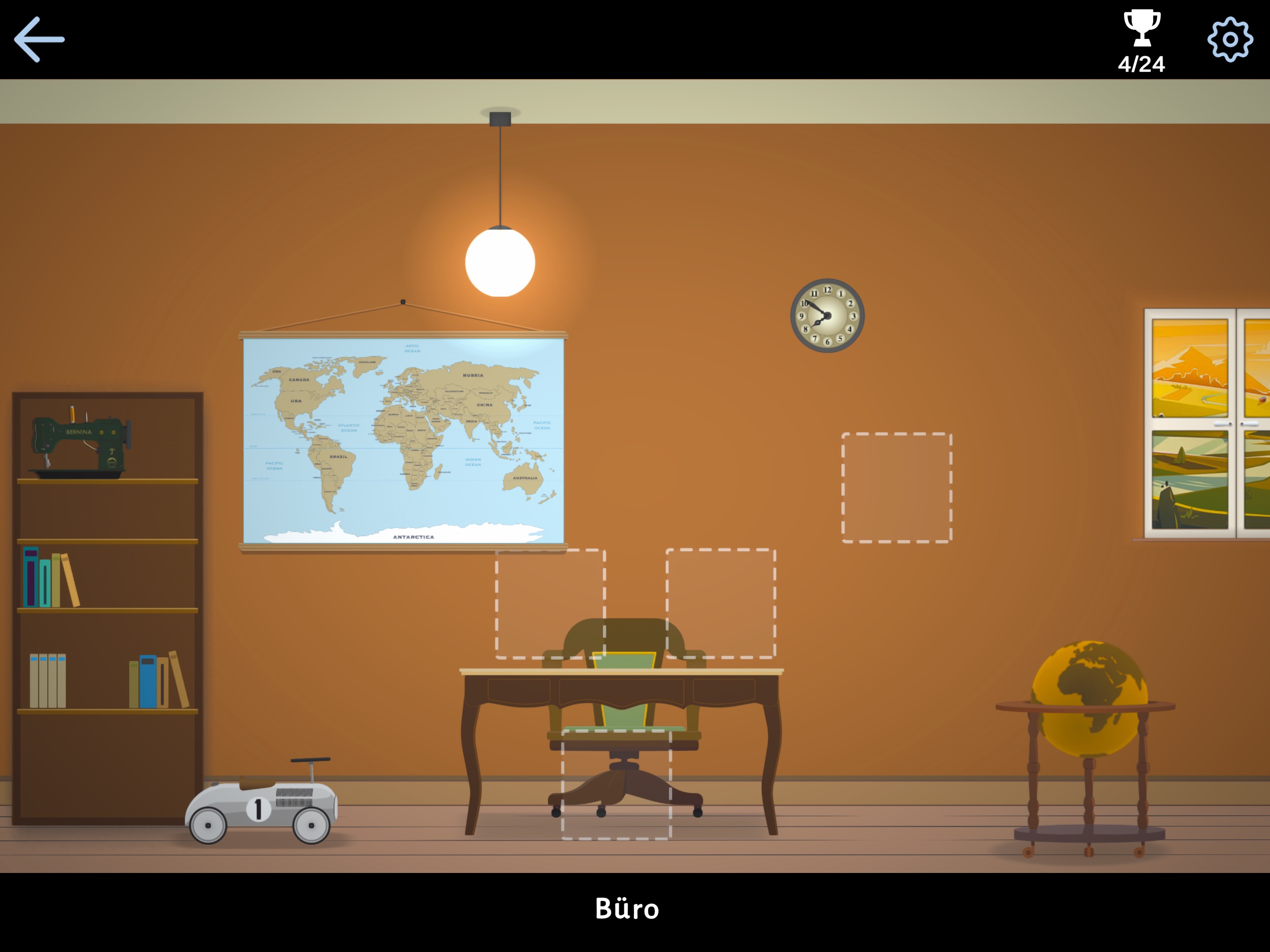
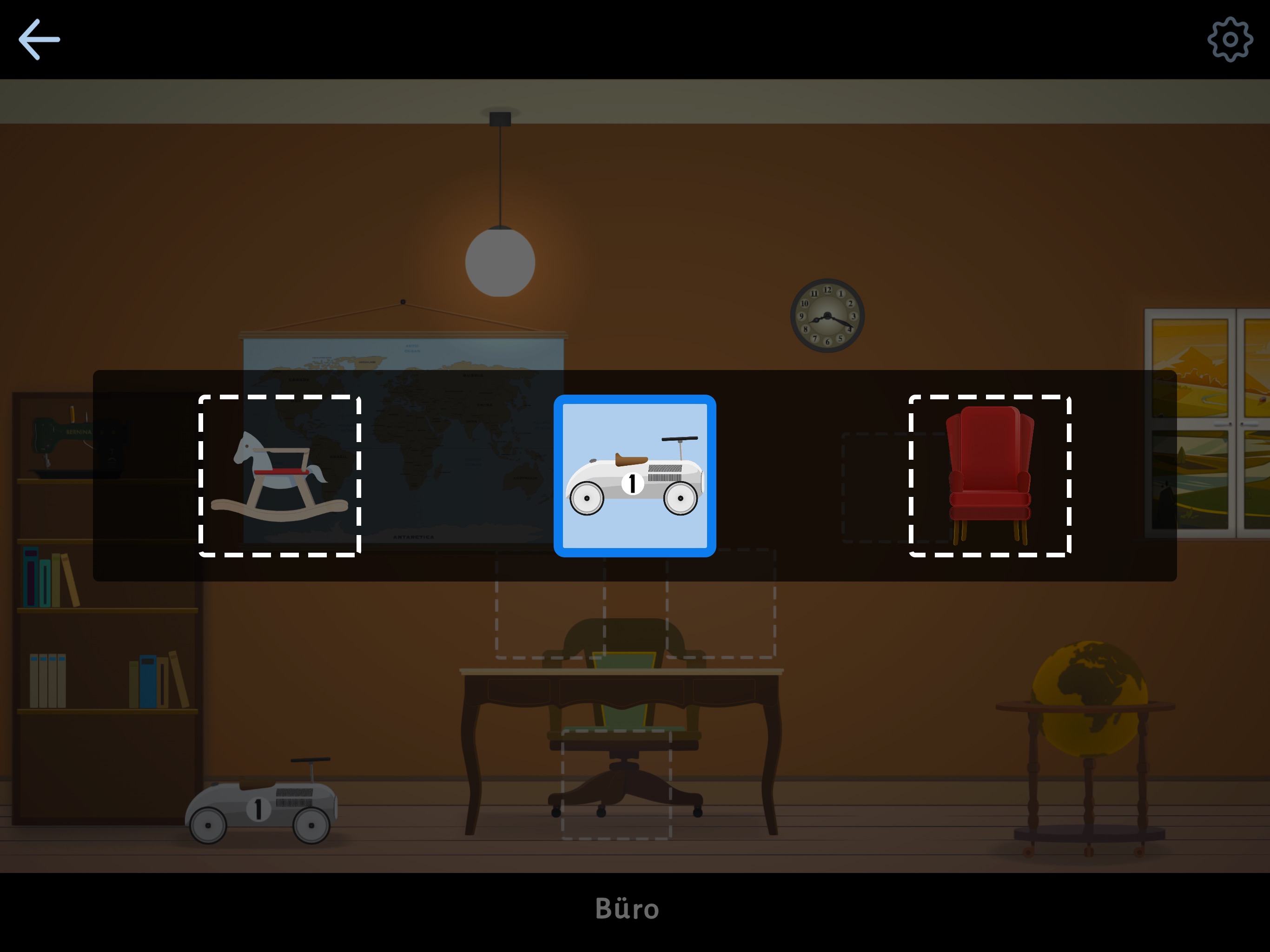
In Myosotis Souvenirs, different rooms of a newly renovated house must be furnished. The first step is to decide together which item to place in a certain location. Then the item has to be collected from the attic. Unfortunately, it is dark there and you need a torch to find the items. Here different interaction techniques for two players are used. One person holds the torch while the other opens a box or moves a curtain.
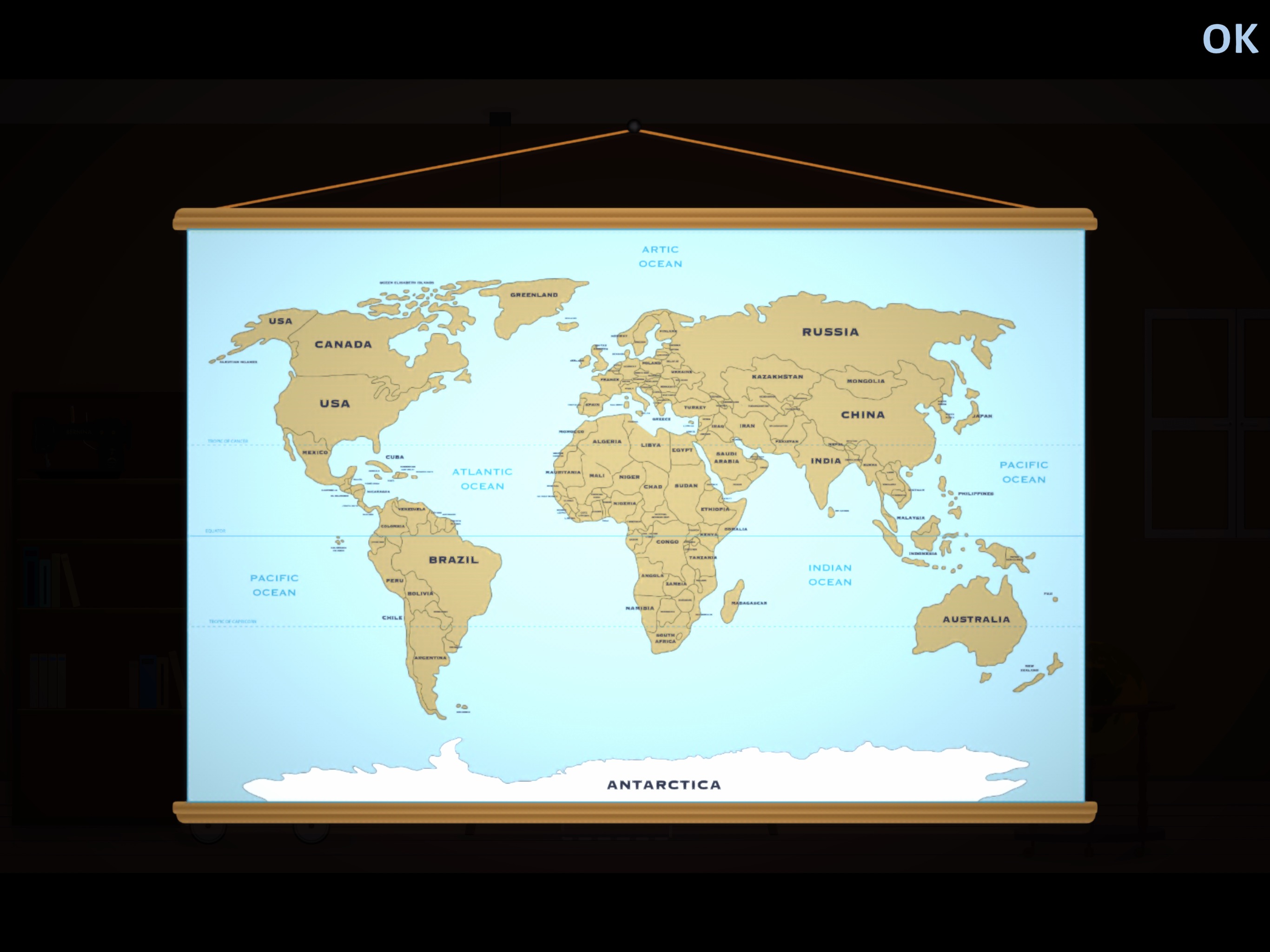
In a third step, the previously found items can be enlarged and some of them can be adjusted. Picture frames can be filled with private photos or your own music can be played on the radio.
Myosotis Souvenirs will be published free of charge in the App Store on 2 December 2020. The game will only run on iPads and will initially only be published in German.
The cooking game "KitchenPlanet" shows the result of the first project phase. The game is optimized for tablet computers but can also be played on modern browsers on Laptop and Desktop computers. In KitchenPlanet a fondue or hamburger is cooked individually, collaboratively against a timer or competitively to see who completes the recipe fastest. The collaborative mode in particular stimulates conversations about recipes.
The project team is organised in two groups. One person from each participating FHNW school is represented in the project management group. It controls the strategic development of the project. The operative team is responsible for the development of Myosotis-Garden as well as for the implementation of the research activities. The two groups work closely together and meet regularly.
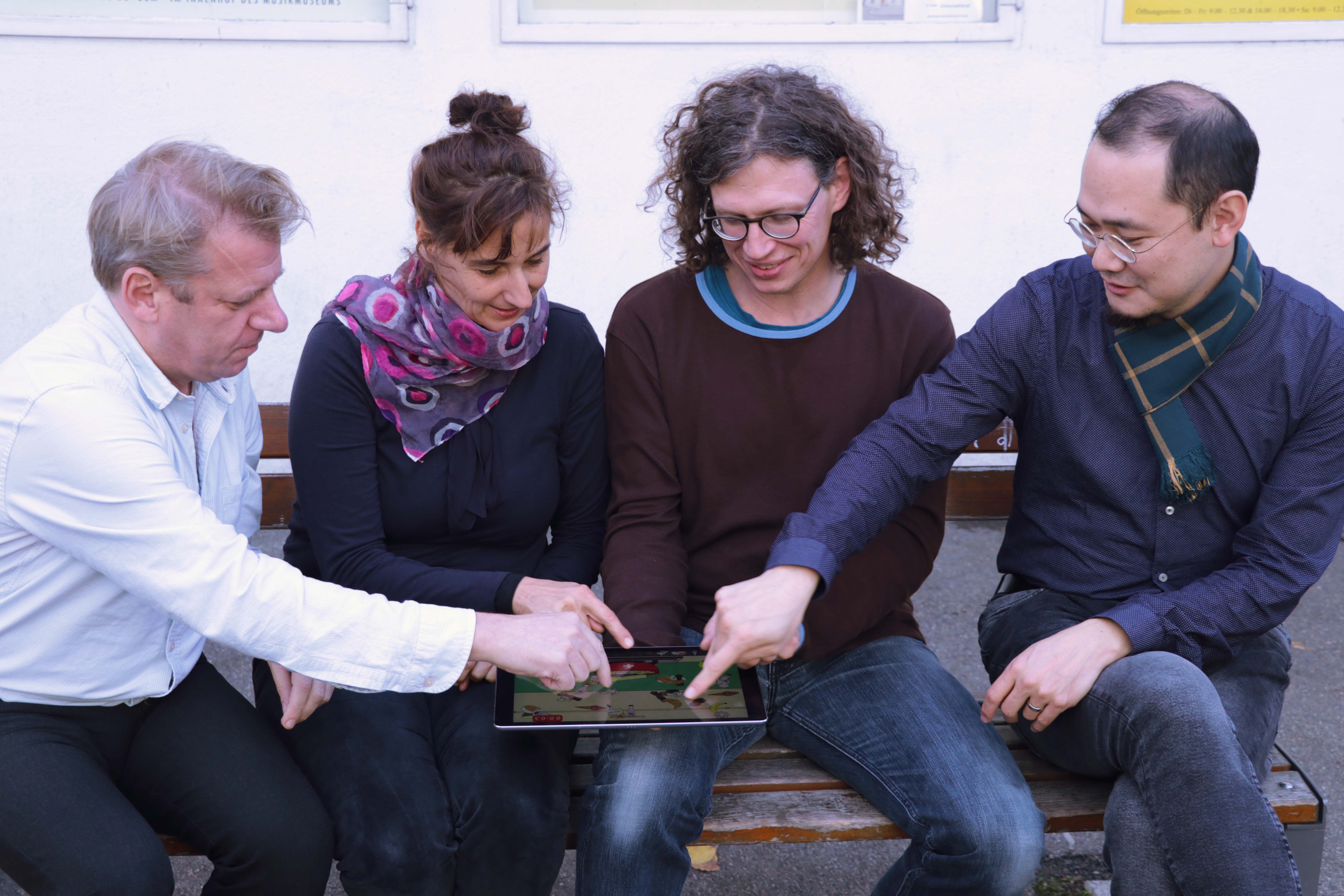
Project management from left to right: Michael Kunkel, Carmen Zahn, Marco Soldati, Shintaro Miyazaki
Operative team from left to right: Doruk Bildibay, Markus Recher, Tudor Andrievici, David Leisner, Mario Niederhauser, Thomas Resch, Maja Riegler, Tabea Iseli (former employees: Adam Coyle, Magdalena Mateescu)
A detailed project report written in German was prepared and published on behalf of the Age Stiftung in August 2108. It explains the idea of Myosotis in an appealing way.