Skip to main contentSkip to search barSkip to navigationSkip to footer
Logo of the University of Applied Sciences and Arts Northwestern Switzerland
Degree Programmes
Continuing Education
Research and Services
International
About FHNW
DeEn
Locations and ContactFHNW LibraryMedia Relations
Logo of the University of Applied Sciences and Arts Northwestern Switzerland
  • Degree Programmes
  • Continuing Education
  • Research and Services
  • International
  • About FHNW
DeEn
Locations and ContactFHNW LibraryMedia Relations
Art and Design
Current modules
Type Design

Type Design

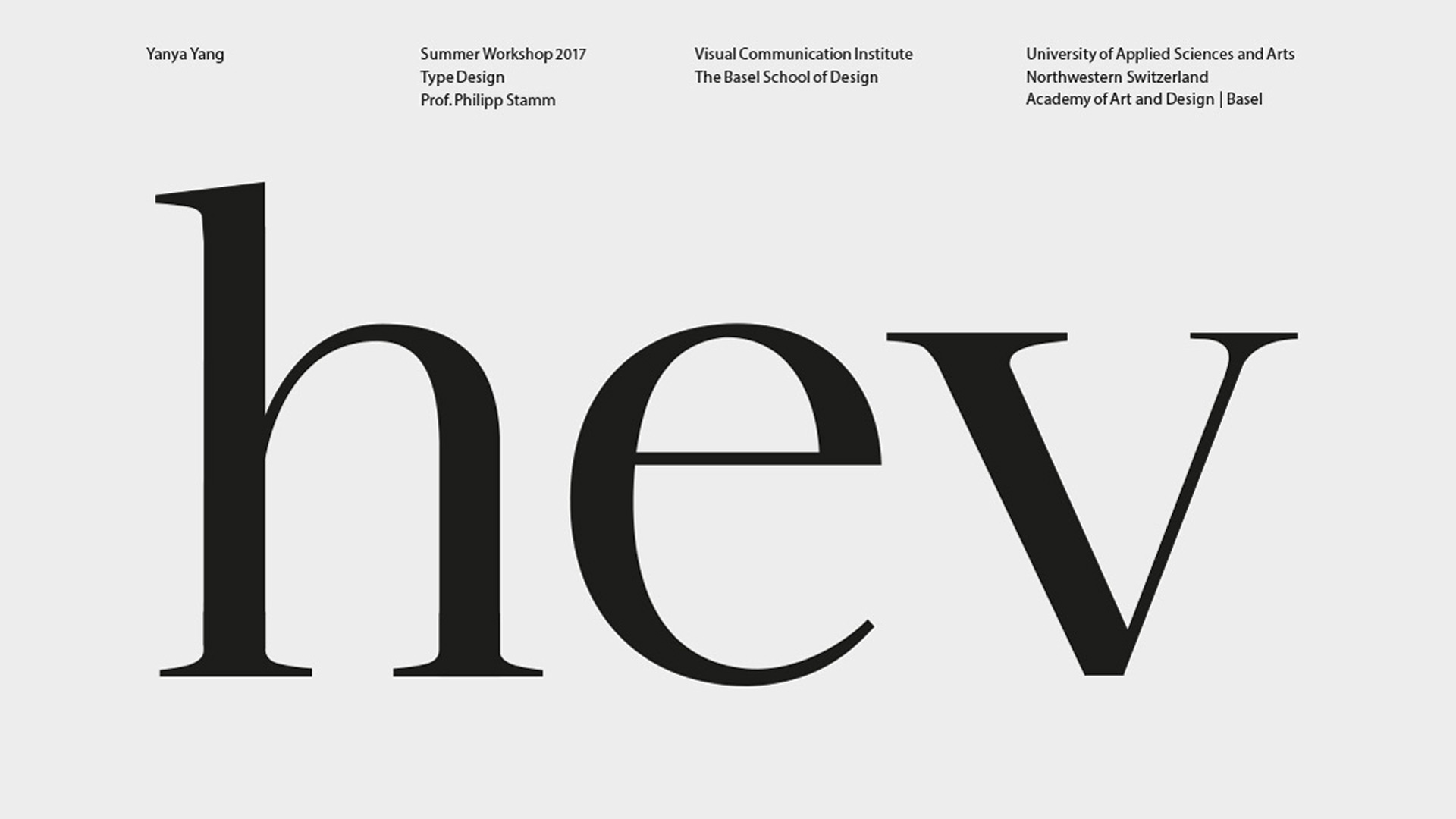
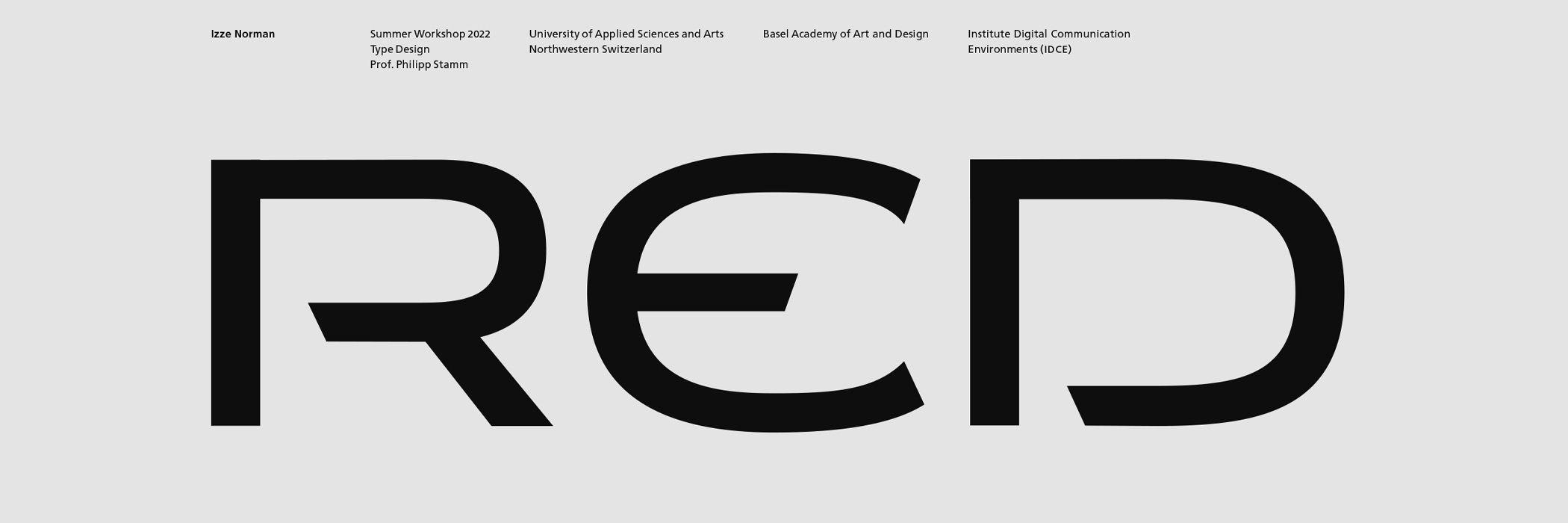
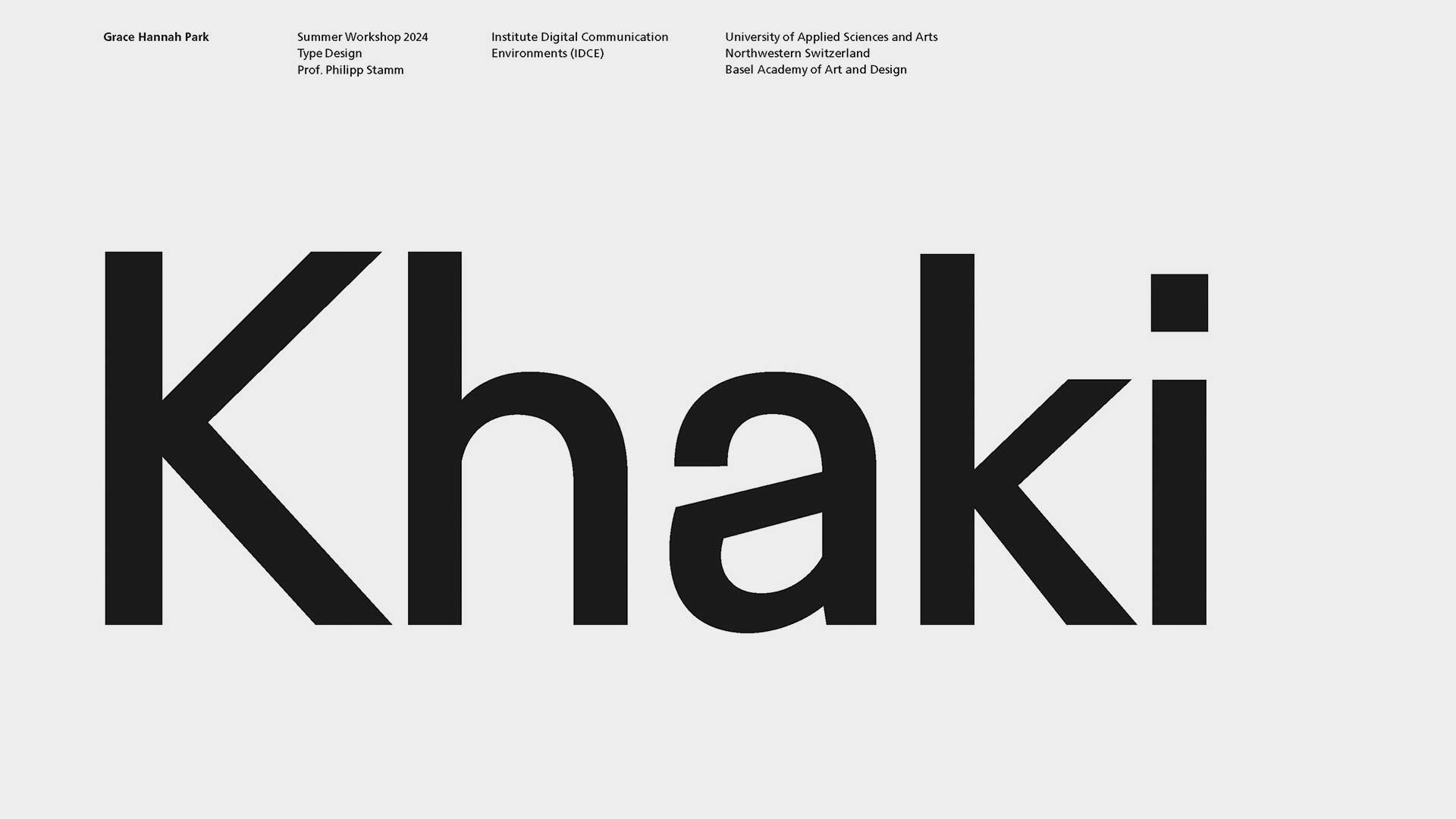
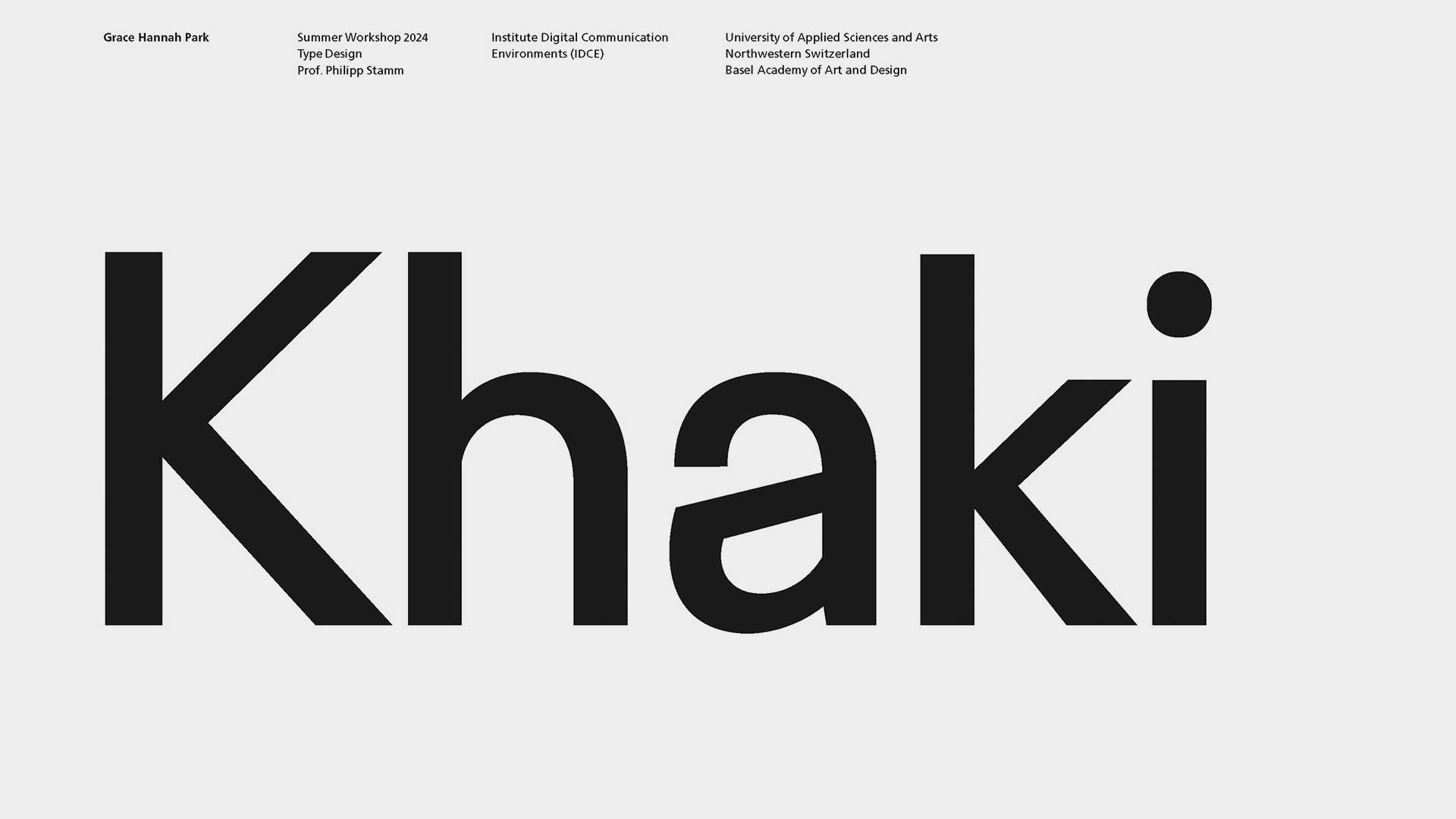
From individual letter forms to word images – an introduction to professional font design. Workshop Type Design at the Institute Digital Communication Environments (IDCE)

Key data

ECTS points
2 ECTS
Next start
6 July 2026
Duration
1 week
Final application date
9 June 2026
School days
5
Teaching language
English
Place
Basel
Fee
CHF 900.– (view fees)
Studying type
Fulltime
Application

Mobile navi goes here!

Letterforms are captivating. They help create stories and pictures in your mind when you read. Through letterforms, we access and retrieve important information at any time and – through them – experience the world differently. Letterforms can function in an extremely small or an enormously large version. Letterforms help typeset texts and «paint» pictures. In fact, typographic characters show a rich and varied spectrum of forms.

In past centuries, letterforms were a part of major art movements; later, in the 19th century, they became more fashionable and stylish and in the 20th century more systematic! And what is new in this century?

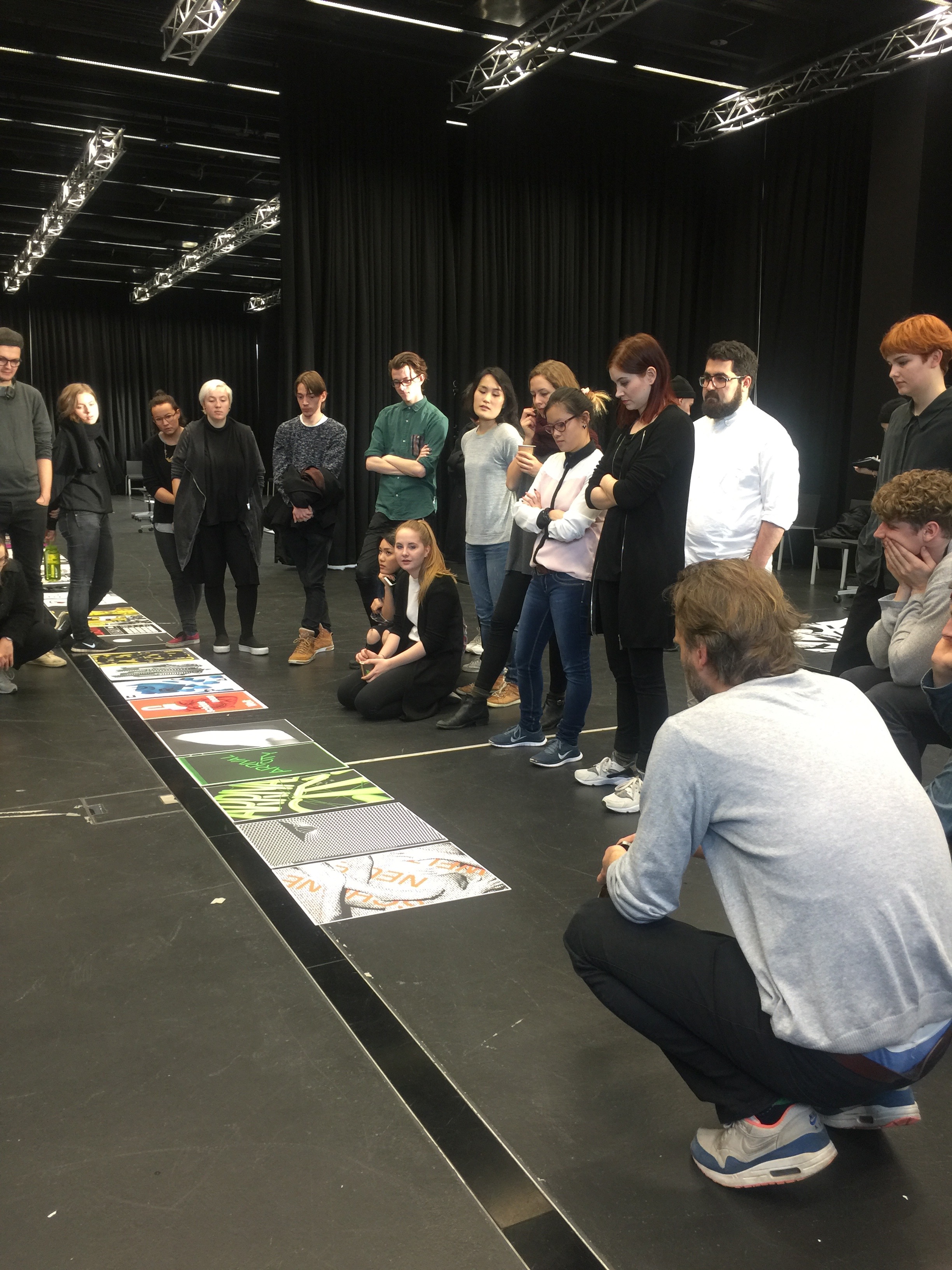
The workshop will explain and show the very character of each letterform in its details. We shall focus on a number of type signs with regard to a concept based on the visual rules of the three basic shapes in Latin type (circle, square, and triangle), the different stroke and curve directions and their terminals. The interaction of drawing by hand and further development on the computer allows for a differentiated and, perhaps, new awareness and appreciation of type forms.
1/36
2/36
36/36
Lecturer

Prof. Philipp Stamm, 1966,trained as a typographer before he began his studies at the Basel School of Design in Typographic Design and Visual Communication. His thesis project dealt with the topic of “The Extension of the Latin Alphabet for the German Language”, published in the Swiss Typographic Magazine 1/1997 et al. His type design work was exhibited in 2000 at the Künstlerhaus in Vienna and 2004 at the Museum für Gestaltung in Zurich. In 2001, he designed the Gutzwiller Corporate Type for a Swiss private bank. Since 2000, Philipp Stamm has been a lecturer in Type Design, Typography, and Corporate Design at the HGK Basel FHNW. Apart from his teaching activity, he has worked for eight years on a documentation of the complete typographic work of Adrian Frutiger. Over a period of two years, he also conducted interviews and discussions with the well-known Swiss type designer. In 2008, the comprehensive monograph of Adrian Frutiger’s type design was published in German, English, and French – Heidrun Osterer, Philipp Stamm: Adrian Frutiger – Typefaces: The Complete Works. The second edition, revised and expanded with an index, was published in 2014, the third edition in 2021. His new book was also published by www.birkhauser.com in 2020/21: Schrifttypen · Verstehen / Kombinieren – Schriftmischung als Reiz in der Typografie and the English edition: Understanding Combining · Typefaces – Typeface Combination as Typographic Stimulus.

Prerequisites

Experiance in Adobe Illustrator or Glyphs is helpful, but not essential. 
A temporary version of the Glyphs font software will be available for the workshop.

Target group

The workshop is aimed at people who are interested in designing wordmarks (logotypes) or who have always dreamed of designing their own typeface but don't know how to get started. Essential basic knowledge in Glyphs font software is explained, but this is not a software course.

Goals and benefits

The workshop offers a well-founded examination of the design of typefaces through theory and creative practice. The topics covered are Procedure from hand sketches to digital final artwork and form variants, the Latin alphabet, typology of letterforms, font character, font classification, development of our typesetting fonts, optical laws and phenomena, font terminology, etc.

General Information Workshops Institute Digital Communication Environments (IDCE)

The Institute Digital Communication Environments (IDCE) offers workshops for students, educators and graphic designers.

The workshops afford insights into topical themes of visual communication for analogue and digital communication channels in a study programme reflecting the rich tradition of the Basel School of Design. Practical exercises with a high level of professionalism form the core of the workshops focus. Reflection as well as contextual knowledge will be conveyed by way of input sessions, allowing participants’ work to be judged within a contemporary, future-oriented context relevant to professional practice. The trinational Rhine River Valley is a unique cultural environment with easy access to France and Germany and to sites such as the Vitra Design Museum (G), the Isenheimer Alter (F), or Ronchamps (F). In Basel, the Fondation Beyeler, Tinguely Museum, Museum of Fine Arts, Schaulager, and Museum of Contemporary Art are world-renowned. Besides its museums, Basel offers a rich mixture of cultural events.

Fees

Multiple Bookings:
 2 ECTS  CHF   900.-
 4 ECTS  CHF 1700.-
 6 ECTS  CHF 2400.-
 8 ECTS  CHF 3000.-
10 ECTS CHF 3500.-

20% discount with a valid student ID. This must be sent in with the registration (pdf)

Information and regulations

Terms of participation (PDF)
Information on continuing education FHNW (fhnw.ch/DE)
Continuing education regulations of the universities FHNW (fhnw.ch/DE)

Institute Digital Communication Environments (IDCE)

Through digital media and the democratisation of communication channels that goes hand in hand with it, the critical handling of their visual and interaction-based design has become decisively more important, because the social relevance of information and communication has thus fundamentally changed.

more
Postal address

FHNW Academy of Art and Design
Institute Digital Communication Environments (IDCE)
Freilager-Platz 1
Postfach

CH-4002 Basel

Visitor and delivery address

FHNW Academy of Art and Design
Institute Digital Communication Environments (IDCE)

Freilager-Platz 1, Hochhaus: D 5.03
4142 Münchenstein b. Basel

T +41 61 228 41 11
M info.idce.hgk@fhnw.ch

No social media links available.

Continuing Education

Art and Design
Institute Digital Communication Environments (IDCE)Continuing Education
Ralf Michel

Dr. Ralf Michel

Fachstelle Weiterbildung

Telephone

+41 61 228 41 47

E-mail

ralf.michel@fhnw.ch

Address

Hochschule für Gestaltung und Kunst Basel FHNW Fachstelle Weiterbildung Freilager-Platz 1 Postfach CH-4002 Basel

Workshops Büro (HGK IDCE)

Workshops Büro (HGK IDCE)

Telephone

+41 61 228 42 72 (undefined)

E-mail

workshops.idce.hgk@fhnw.ch

Address

Fachhochschule Nordwestschweiz FHNW Hochschule für Gestaltung und Kunst Basel Institut Digitale Kommunikations-Umgebungen IDCE Freilager-Platz 1 CH-4002 Basel

Room

D 5.03

hgk_idce_wb_SummerWorkshopshgk_idce_wbhgk_idce_wb_modul_visual_pflichthgk_idce_wb_modul_digital_wahlhgk_iade_wb_modul_artistic_wahl

What we offer

  • Degree Programmes
  • Continuing Education
  • Research and Services

About FHNW

  • Schools
  • Organisation
  • Management
  • Facts and Figures

Information

  • Data Protection
  • Accessibility
  • Imprint

Support & Intranet

  • IT Support
  • Login Inside-FHNW

Member of: