Skip to main contentSkip to search barSkip to navigationSkip to footer
Logo of the University of Applied Sciences and Arts Northwestern Switzerland
Degree Programmes
Continuing Education
Research and Services
International
About FHNW
DeEn
Locations and ContactFHNW LibraryMedia Relations
Logo of the University of Applied Sciences and Arts Northwestern Switzerland
  • Degree Programmes
  • Continuing Education
  • Research and Services
  • International
  • About FHNW
DeEn
Locations and ContactFHNW LibraryMedia Relations
Engineering and Environment
Materials Engineering

Materials Engineering

Whole eras (such as the Bronze Age) and entire regions (such as Silicon Valley) have been named after materials. Materials have always driven progress. In the Materials Engineering programme, you will learn how to develop sustainable materials, understand their properties, apply them purposefully, and design processes for their production. In doing so, you will make a crucial contribution to future technologies and a sustainable society.

  • Fascination with Materials: Explore metals, ceramics, polymers, and composites – and discover how they shape our daily lives and future technologies.
  • Hands-on research: In laboratories and technical centers, you test and characterize materials and develop your own projects – often in direct collaboration with industry partners.
  • Sustainable mindset: Improve the life cycle of materials – from energy-efficient production to recycling.
  • Securing the future: Your expertise is in demand – in industries such as energy, medical technology, mobility, and high-tech.
  • Building bridges: Connect chemistry, physics, mechanical engineering, and digitalization, as a key person interface for sustainable innovation.

Key data

Degree
Bachelor of Science FHNW in Mechanical Engineering
ECTS points
180
Teaching language
German
Place
Brugg-Windisch
Go to information eventsApply now

Mobile navi goes here!

Career Prospects

Your expertise as a materials engineer is in high demand – in key industries such as energy, medical technology, mobility, and high-tech. With your broad education, you will cover development, production, characterization, and sustainability. You will design new materials, optimize processes, and contribute to solutions our society urgently needs. You will learn how to positively influence the life cycle of materials and understand that future technologies are impossible without innovative materials.

Your degree opens up numerous career paths – for example in development, project management, or research, including work in international companies. At the same time, it provides the foundation for a Master’s programme in engineering.

What are typical fields of activity?

  • You develop new materials and products – for example for lightweight construction, medical technology, or sustainable technologies.

  • You optimize manufacturing processes and material life cycles in industry and research.

  • You test and ensure material quality – for instance in energy engineering or high-tech industries.

  • You take on consulting and project management roles in international corporations, SMEs, or research institutions.

Graduates of the Materials Engineering programme take on responsibilities in a wide range of fields. They plan, develop, manufacture, characterize, and test materials. Thanks to their interdisciplinary expertise, they often act as key interfaces within companies – connecting research, development, production, quality assurance, and environmental topics.

Skills in materials engineering are in high demand across numerous industries, including automotive, medical technology, energy, and sensor technology. With growing professional experience, career paths open up toward leadership positions – for example in quality assurance, research & development, or production management.

Structure and Content

The Materials Engineering programme at FHNW is modular in design, combining scientific foundations with practical application. From the very beginning, you will apply your knowledge in projects – in laboratories, technical centers, interdisciplinary teams, and in collaboration with industry.

In the first semesters, you build a solid foundation in mathematics, physics, chemistry, and engineering sciences. Afterwards, you deepen your expertise in material classes such as metals, ceramics, polymers, and composites, while tailoring your studies to your individual interests and career goals.

How is the programme structured?

  • Student projects
    In every semester, you work on real projects – from laboratory experiments to industry collaborations. This allows you to connect theory and practice right from the start.

  • Specialist training
    You gain in-depth knowledge in mathematics, physics, chemistry, and engineering sciences. These fundamentals form the basis for your advanced expertise in materials. In the first year, you attend lectures together with Mechanical Engineering students.

  • Signature Modules
    In the first year, the Signature Modules immerse you in the fascinating world of materials through company visits, challenges, and research lab tours at the School of Engineering and Environment.

  • Materials
    From the second year onward, you specialise in materials: metals, ceramics, polymers, and composites. Industry cases and laboratory work make the content tangible and practice-oriented.

  • Environment
    Materials are always part of a larger system. In the environmental modules, you learn about recycling processes and evaluate life cycles using appropriate analysis tools (LCA). You address sustainability issues and gain knowledge of regulatory aspects as well as the selection of alternative materials.

  • Digital Skills
    These modules introduce you to essential digital tools, such as programming skills, FEM simulations, material databases, and design tools, as well as the efficient and responsible use of AI.

  • Science, Technology and Society: Context
    These modules link the foundations and specialisations in the humanities and social sciences with technical expertise. You learn how to create a positive impact on society through your work, act responsibly and with foresight, consider problems from multiple perspectives, and lay the groundwork for ethical and sustainable action.

In our laboratories and pilot plants, you apply suitable testing and characterization methods and gain hands-on experience with a wide range of material properties – whether brittle or ductile, insulating or conductive. You will learn how to influence both the life cycle and the performance of materials.

We are looking for analytically minded materials engineers with a holistic perspective on the product development process – from research to production. We value the industry-oriented training concept at FHNW and the integration of environmental aspects such as regulatory changes and energy-efficient manufacturing processes.
Dr. Torben Gillich, Sensirion

Modules

In this programme, you will explore the full spectrum of materials science. Key modules include, for example:

  • Deep Dive into Material Classes: Metals, ceramics, polymers, composites

  • Industry Cases: Practice-oriented projects with partners from energy, medical technology, and high-tech industries

  • Life Cycle & Sustainability: Life-cycle assessment, recycling, circular economy

  • Failure Analysis & Materials Testing: Investigating root causes and applying testing methods

  • Nanotechnology & Surfaces: Developing materials for high-tech applications

Specialisation Options

In the second year, you will gain an in-depth understanding of the material classes: metals, ceramics, polymers, and composites.

In the third year, you may choose to continue as a generalist, working across all material classes.

Alternatively, you can specialise in selected material classes and deepen your expertise according to your personal interests.

Planning to study Materials Engineering at FHNW?

  • Requirements, Fees and How To Apply

    Discover all you need to know before starting your studies at FHNW, including fees, admission criteria, and more. Please note that this information is provided in German.

Degree Programmes

Engineering and Environment
Degree Programmes Engineering and Environment
null null
Study Administration and Advisory
Telephone

+41 56 202 99 33

E-mail

start.technik@fhnw.ch

Address

Klosterzelgstrasse 2 5210 Windisch

Room

1.031

Availability

Monday to Thursday: 8.00 a.m. - 12.15 p.m. and 1.00 p.m. - 5.00 p.m. Friday: 8.00 a.m. - 12.15 p.m. and 1.00 p.m. - 4.00 p.m. Company holidays Christmas/New Year 20.12.25 - 04.01.26

Sonja Neuhaus

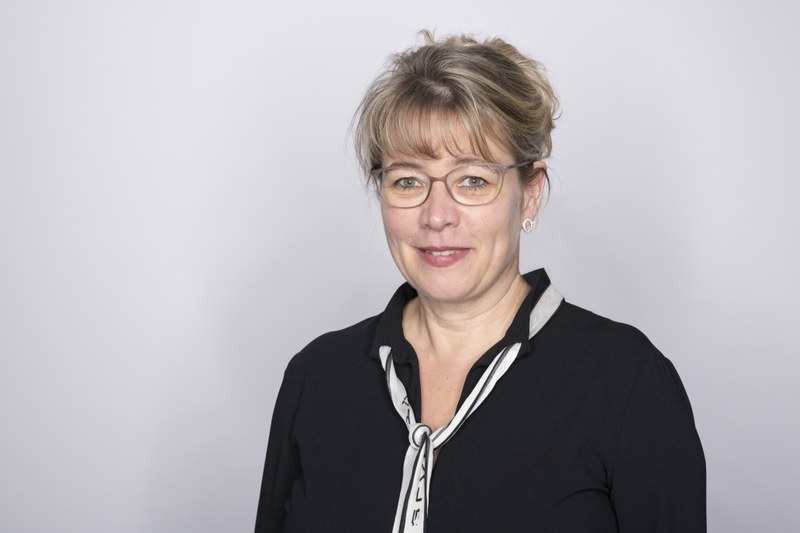
Prof. Dr. Sonja Neuhaus

Programme Head Materials Engineering, Head of the surface functionalization group

Telephone

+41 56 202 78 95 (undefined)

E-mail

sonja.neuhaus@fhnw.ch

Address

Fachhochschule Nordwestschweiz FHNW Hochschule für Technik und Umwelt Klosterzelgstrasse 2 5210 Windisch

Room

3.001

ht_stu_teaser

What we offer

  • Degree Programmes
  • Continuing Education
  • Research and Services

About FHNW

  • Schools
  • Organisation
  • Management
  • Facts and Figures

Information

  • Data Protection
  • Accessibility
  • Imprint

Support & Intranet

  • IT Support
  • Login Inside-FHNW

Member of: