
Diana Schweizer spent three months in Seoul to work on her Master's thesis
At the Steinegger Lab at Seoul National University, she conducted research on biosensor development.
Field of study: MSc Bioanalytics
Stay abroad: Master's thesis
Host institution: Steinegger Lab, Seoul National University
Semester: Winter 2025
What made you decide, what motivated you to go abroad?
I like to explore foreign countries and I love to learn about foreign cultures. A good way to do that is by living and working in the country you want to explore.
Why did you choose your host institution/country?
The Steinegger Lab is a renowned bioinformatics laboratory. It develops bioinformatics software that is used by scientists around the world. They revolutionized protein structure search with their tool Foldseek.
The working environment in the lab is very good. Furthermore, the Steinegger Lab is part of Seoul National University, which is South Korea’s most renowned university. The campus is very beautiful and surrounded by forests.
I am very interested in South Korea and its culture, which has been gaining a lot of popularity around the world. The K-wave is spreading across the globe, and I wanted to experience the Korean culture firsthand. In the capital city, Seoul, you can find traditional Korean culture (palaces, temples, etc.) next to modern and trendy K-culture (cosmetic shops, cafés, shopping malls, karaoke, K-pop, K-drama, etc.). I am a huge fan of the girl group Blackpink, which is how I initially became interested in Korean culture.
What does a typical day at the host institution look like?
Group members of the Steinegger Lab can organize their day individually, which I really appreciate. There are no official working hours, so we can decide on our preferred working schedule, as long as we participate in meetings and daily project status presentations. Home office is allowed. The official regular Korean weekly working hours are 40 hours, but you will find that most Koreans work much more than this.
Tell us about your research and your research findings during your residency.
I worked on biosensor development. The details are confidential.
What surprised you the most about your stay abroad?
What surprised me most is that the winter in Korea is very cold and it is very difficult to find restaurants that offer vegetarian or vegan meals.
What tip would you like to give to future exchange students.
If you come in winter, you might want to bring a padded long winter jacket, like the ones you can buy in Korea, to keep you warm. If you are vegetarian or vegan, you might want to have a kitchen at home to prepare meals yourself. It is common to order food in Korea, but the meal options for vegetarians and vegans are almost non-existent.
Is there anything else you would like to share?
What I really like about Seoul is the coexistence of modern Korean culture and traditional Korean culture. For example, you can find modern skyscrapers next to palaces from dynasties that ruled centuries ago. A very memorable experience for me was wearing the Hanbok (한복, traditional Korean clothing - they are so beautiful and also comfortable to wear) and visiting Changdeokgung (창덕궁, one of the five grand palaces in Seoul) and its secret garden. It was so beautiful.
I love eating delicious food and tasting new flavours. Korean cuisine is definitely the right address for this (if you like meat). I had so many highlights in Korea involving food: Korean BBQ, Mandu (만두, Korean dumplings), Samgyetang (삼계탕, ginseng chicken soup), the famous Kalguksu (칼국수, noodle soup) from Gwangjang market, which was featured in the Netflix series “Street Food: Asia”, fried chicken and beer (치맥), iced tea with espresso (아샷추), Hotteok (호떡, pancakes with sweet filling), eating at different markets, enjoying the Korean café culture. I could talk for hours about all the delicious things I ate and drank in Korea, the unique atmospheres in cafés and restaurants, etc.
I also enjoyed seeing Seoul from different perspectives. The vibrant life in the streets of Seoul, walking up along the city wall and looking over some Seoul neighborhoods, climbing the stairs to N Seoul Tower (N서울타워) while enjoying a wonderful sunset, riding the elevator to the 120th floor in the 6th tallest building in the world (롯데월드타워, Lotte World Tower), from where skyscrapers look tiny, wandering in Bukhansan National Park (북한산국립공원) and enjoying the view of snow-covered trees and rocks. Seoul has it all: endless entertainment options and nature combined in one city.
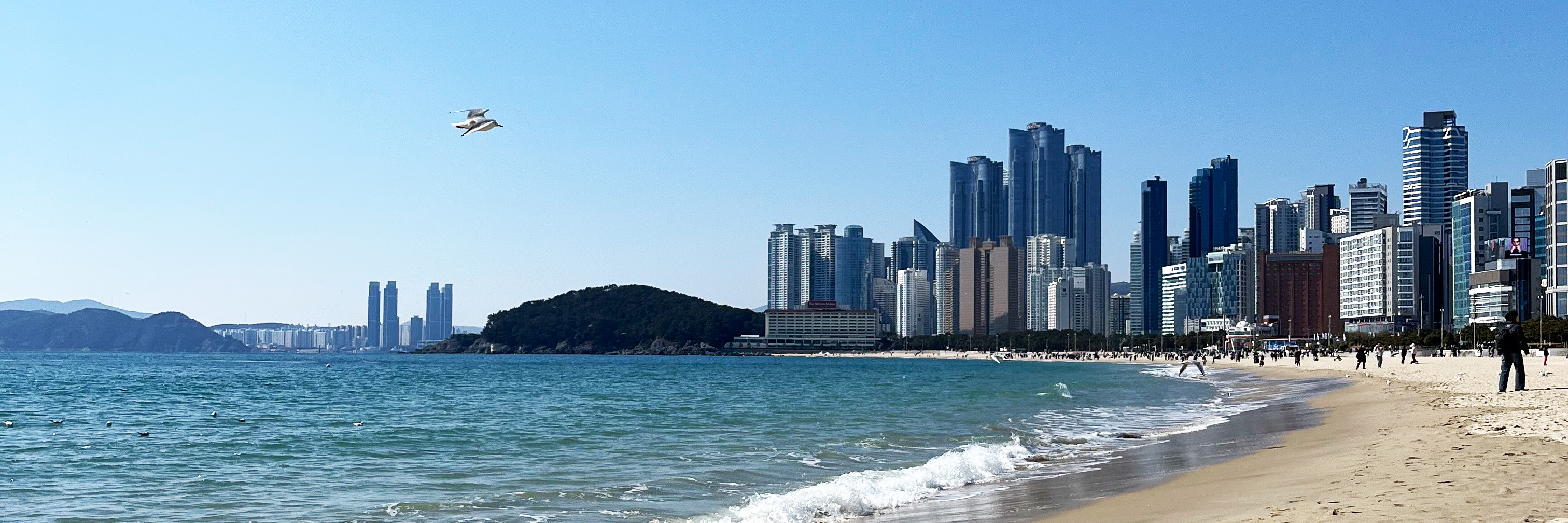
One of the most beautiful weekends I spent in Korea was when we took the train to Busan (no, we didn’t come across any zombies), a port city in the south of the Republic of Korea, and relaxed at the beach. We rode a cute sightseeing train at Haeundae Beach (해운대해수욕장) and watched a drone light show at Gwangalli Beach (광안리 해수욕장). It was so exciting.