Understanding key events leading to liver fibrosis

Healthy liver (back) compared to diseased liver (front): formation of scar tissue in the liver can lead to fibrosis, cirrhosis, and cancer.
Hepatitis C, alcoholism, or taking certain medications can cause chronic cellular damage in the liver, and eventually lead to liver fibrosis.
Until now, standardized in vitro models to better understand key events and cell-cell interactions leading to fibrosis were lacking.
In a collaborative project with InSphero, Saskia Schmid used new approach methodologies (NAMs) to quantify events in the adverse outcome pathway (AOP) of fibrosis progression.
Working with her collagues from the FHNW’s Cell biology and in vitro toxicology group, she developed a scalable liver fibrosis model using InSphero’s 384-well Akura™ Twin microplate, featuring 168 interconnected well pairs.
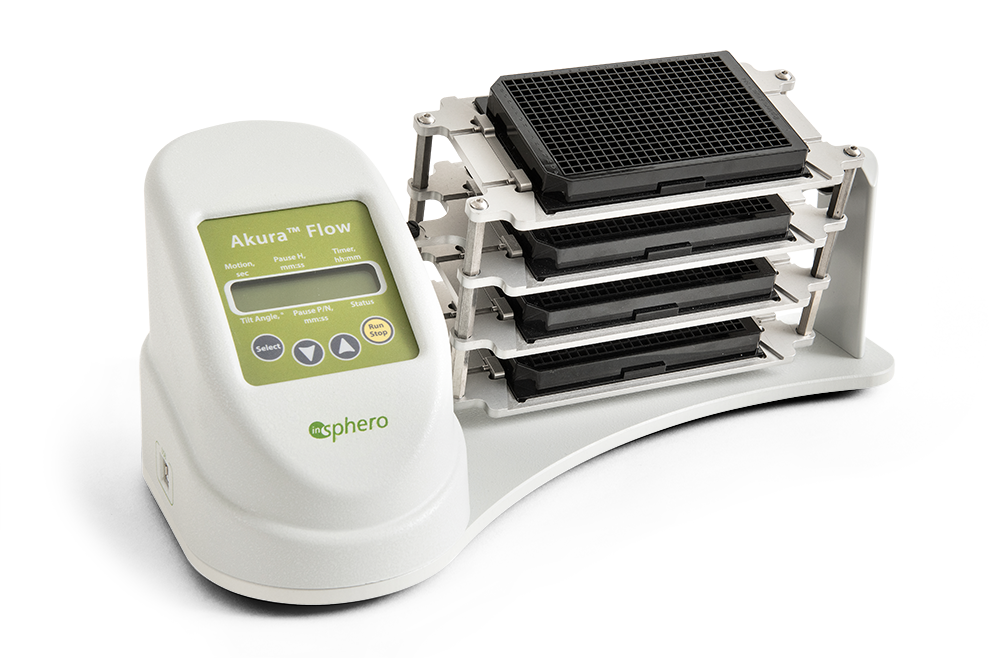
InSphero’s 384-well Akura™ Twin microplate, featuring 168 interconnected well pairs, was used to grow different cells found in the liver and to apply various agents to mimic the process of fibrosis.
Saskia’s model contains human hepatic cells, the primary cell type found in the liver, and hepatic stellate cells, which play a crucial role in normal liver function and response to injury. Some cells were treated with THP-1 to enable their immune response and enhance their physiological relevance.
She then applied transforming growth factor beta 1 (TGF-β1), methotrexate (MTX) and acetaminophen (APAP), which generated hepatocellular injury (scarring) and set off a cascade of events that mimics the adverse outcome pathway leading to fibrosis.
The team’s model offers a promising tool to investigate fibrosis mechanisms and better quantify key events along the adverse outcome pathway. Their results were recently published in the Journal of Toxicology.
Comments
No comment posted about Understanding key events leading to liver fibrosis