Zu Hauptinhalt springenZur Suche springenZu Hauptnavigation springenZu Footer springen
Logo der Fachhochschule Nordwestschweiz
  • DE
  • EN
  • Startseite

Zehn Hochschulen Ein Ziel

Die FHNW umfasst 10 Hochschulen mit unterschiedlichen Schwerpunkten. Wählen Sie eine Hochschule aus, um deren spezifische Kurse, Studiengänge und Informationen zu sehen.

Angewandte Psychologie

Architektur, Bau und Geomatik

Gestaltung und Kunst

Informatik

Life Sciences

Musik

Pädagogische Hochschule

Soziale Arbeit

Technik und Umwelt

Wirtschaft

  • Studienangebot

    • Alle Studiengänge
    • Bachelor in Life Sciences
    • Master in Life Sciences
    • Master in Medical Informatics
    • Joint Degree Master in Biomedical Engineering
    • Info-Anlässe
  • Rund ums Studium

    • Vorbereitung aufs BSc-Studium
    • Unterstützungsangebote während des Studiums
    • Erfahrungsberichte
    • Studiengeld und Stipendien
    • Digital Life Sciences
  • International studieren

    • Outgoing Studierende
    • Incoming Studierende
    • Double Degree
    • Partnerschulen
    • Erlebnisberichte
    • Buddy-Programm
    • News und Storys
  • Weiterbildungsangebot

    • Alle Weiterbildungen
    • MAS - Master of Advanced Studies
    • DAS - Diploma of Advanced Studies
    • CAS - Certificate of Advanced Studies
    • Module und Seminare
    • Info-Anlässe
  • Weiterbildungen nach Themen

    • Artificial Intelligence und Machine Learning
    • Betriebswirtschaft, Unternehmensführung, Entrepreneurship
    • Biologie und Chemie
    • Data Science und Engineering
    • Diagnostik
    • Digital Industry and Optimisation
    • Digital Transformation and Technologies
    • Energie
    • Extented Reality und Immersive Technologies
    • Führung und Teammanagement
    • Gesundheitsförderung und Prävention
    • Konsumverhalten
    • Kreislaufwirtschaft
    • Management in Healthcare
    • Maschinentechnik und Robotik
    • Organisationsentwicklung und Change Management
    • Pharma-, Medizin- und Biotechnologie
    • Prozess- und Projektmanagement
    • Sustainable Business Development, Ressourcenmanagement
    • Umweltmanagement
    • Umweltrecht
    • Umwelttechnologie und Recycling
    • Werkstoffe, Verfahrenstechnik
  • Organisatorisches

    • Beratung
    • Rechtliches und Bedingungen
  • Forschung

    • Forschungsfelder
    • Projekte
  • Zusammenarbeit

    • Process Technology Centre
    • Dienstleistungen
    • Tech Transfer Office
    • Studierendenprojekte
  • Internationales

    • International studieren
    • Internationale Forschungsprojekte
  • Neuigkeiten und Einblicke

    • News und Storys
    • Forschungshighlights
    • Medienmitteilungen
  • Veranstaltungen

    • Alle Veranstaltungen
    • Info-Anlässe
  • Medienstelle

    • Medienmitteilungen
  • Über die Hochschule für Life Sciences

    • Strategie und Werte
    • Hochschulleitung
    • Mitarbeitende
    • Fachbeirat
    • Personenverzeichnis
    • Diversity und Gleichstellung
    • Nachwuchsförderung
    • Medienstelle
    • Infrastruktur und Campus
  • Institute und Kompetenzzentren

    • Institut für Chemie und Bioanalytik
    • Institut für Ecopreneurship
    • Institut für Medizintechnik und Medizininformatik
    • Institut für Pharmatechnologie und Biotechnologie
    • Zentrum für Ausbildung und Lehre
    • Process Technology Centre
Logo der Fachhochschule Nordwestschweiz
  • Zur Hochschule
    • Hochschule
    • Studium
    • Weiterbildung
    • Forschung
    • Veranstaltungen
  • Social Media
    • Facebook
    • Instagram
    • YouTube
    • LinkedIn
  • Die FHNW
    • Organisation
    • Hochschulen
    • Standorte
    • Bibliothek FHNW
    • Jobs und Karriere
    • Medienkontakte
  • Support
    • IT-Support
    • Inside FHNW
    • Webmail
  • Datenschutz
  • Impressum
  • Accessibility
  • Studienangebot

    • Alle Studiengänge
    • Bachelor in Life Sciences
    • Master in Life Sciences
    • Master in Medical Informatics
    • Joint Degree Master in Biomedical Engineering
    • Info-Anlässe
  • Rund ums Studium

    • Vorbereitung aufs BSc-Studium
    • Unterstützungsangebote während des Studiums
    • Erfahrungsberichte
    • Studiengeld und Stipendien
    • Digital Life Sciences
  • International studieren

    • Outgoing Studierende
    • Incoming Studierende
    • Double Degree
    • Partnerschulen
    • Erlebnisberichte
    • Buddy-Programm
    • News und Storys
  • Weiterbildungsangebot

    • Alle Weiterbildungen
    • MAS - Master of Advanced Studies
    • DAS - Diploma of Advanced Studies
    • CAS - Certificate of Advanced Studies
    • Module und Seminare
    • Info-Anlässe
  • Weiterbildungen nach Themen

    • Artificial Intelligence und Machine Learning
    • Betriebswirtschaft, Unternehmensführung, Entrepreneurship
    • Biologie und Chemie
    • Data Science und Engineering
    • Diagnostik
    • Digital Industry and Optimisation
    • Digital Transformation and Technologies
    • Energie
    • Extented Reality und Immersive Technologies
    • Führung und Teammanagement
    • Gesundheitsförderung und Prävention
    • Konsumverhalten
    • Kreislaufwirtschaft
    • Management in Healthcare
    • Maschinentechnik und Robotik
    • Organisationsentwicklung und Change Management
    • Pharma-, Medizin- und Biotechnologie
    • Prozess- und Projektmanagement
    • Sustainable Business Development, Ressourcenmanagement
    • Umweltmanagement
    • Umweltrecht
    • Umwelttechnologie und Recycling
    • Werkstoffe, Verfahrenstechnik
  • Organisatorisches

    • Beratung
    • Rechtliches und Bedingungen
  • Forschung

    • Forschungsfelder
    • Projekte
  • Zusammenarbeit

    • Process Technology Centre
    • Dienstleistungen
    • Tech Transfer Office
    • Studierendenprojekte
  • Internationales

    • International studieren
    • Internationale Forschungsprojekte
  • Neuigkeiten und Einblicke

    • News und Storys
    • Forschungshighlights
    • Medienmitteilungen
  • Veranstaltungen

    • Alle Veranstaltungen
    • Info-Anlässe
  • Medienstelle

    • Medienmitteilungen
  • Über die Hochschule für Life Sciences

    • Strategie und Werte
    • Hochschulleitung
    • Mitarbeitende
    • Fachbeirat
    • Personenverzeichnis
    • Diversity und Gleichstellung
    • Nachwuchsförderung
    • Medienstelle
    • Infrastruktur und Campus
  • Institute und Kompetenzzentren

    • Institut für Chemie und Bioanalytik
    • Institut für Ecopreneurship
    • Institut für Medizintechnik und Medizininformatik
    • Institut für Pharmatechnologie und Biotechnologie
    • Zentrum für Ausbildung und Lehre
    • Process Technology Centre

Geben Sie einen Suchbegriff ein und suchen Sie nach Weiterbildungen, Studienangeboten, Veranstaltungen, Dokumenten und anderen Inhalten.

  • Life Sciences
  • Weiterbildung
  • Weiterbildungsangebot
  • Weiterbildungen
Weiterbildungen

CAS Advanced Research Methods: Implementing the 3Rs in Animal Testing, Hochschule für Life Sciences FHNW

Hochschule für Life Sciences


Learn how the 3Rs (Replacement, Reduction, Refinement) can transform your research! Explore responsible and innovative research methods such as New Approach Methodologies (NAMs), in-vitro and in-silico techniques as well as AI-driven solutions. Develop strategies to reduce animal use through ethical study design, while ensuring scientific integrity.
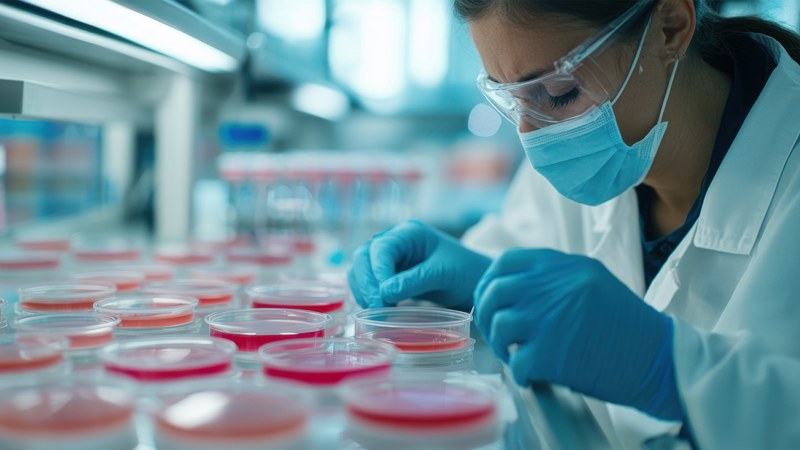
cas-3rs-implementation-in-applied-research-and-testing.jpg

Steckbrief

Abschluss
Certificate of Advanced Studies FHNW CAS Advanced Research Methods: Implementing the 3Rs in Animal Testing
Lernsetting
Remote und Präsenz
ECTS-Punkte
10
Nächster Start
14.1.2027
Unterrichtssprache(n)
Englisch
Durchführungsort(e)
Online und FHNW Campus Muttenz
Preis
CHF 6 500 (Early Bird)*

Auf einen Blick

  • Master current practices in biomedical research involving animal experimentation and New Approach Methodologies (NAMs).
  • Analyse novel strategies and good practice for Replacement, Reduction and Refinement (3R) of animal testing.
  • Develop expertise in the legal and regulatory frameworks.
  • Ensure scientific validity by learning how to optimize study design, data analysis and statistical methods.
  • Learn from public and private sector experts via real-world case studies.
  • Discuss communication, public perception, political advocacy and ethical aspects.

Ziele und Nutzen

Upon completing this programme, you will be able to: 

  • Navigate and interpret national and international regulatory frameworks governing animal use and alternative methods
  • Critically evaluate and apply 3Rs principles within the legal framework in applied research
  • Gain insight into NAMs, emerging technologies and strategies for replacing and reducing animal use while maintaining scientific validity and regulatory acceptance
  • Advocate for, and lead, responsible and ethical research practices by engaging stakeholders and driving institutional change toward greater 3Rs integration and implementation

You will complete the programme with an individual written case study – enabling you to apply your knowledge directly in your professional setting.


Zielpublikum

This part-time programme is suitable for professionals in a broad range of fields interested in biomedical research and animal testing, including those working in industry (pharmaceuticals, cosmetics, consumer goods, chemicals), research institutions, policy-making and advocacy.


Aufbau und Inhalte

This part-time programme has been designed with six separate, focused modules. You will gain in-depth knowledge and acquire practical skills to apply directly to your professional activities.
Each module can also be booked individually. Successful completion of the 6 modules leads to a CAS qualification.

Module 1: Introduction to the 3Rs and ethical aspects of animal use in research, education and testing (1 day)

Focus: Introduce the 3Rs through societal, ethical, historical and practical contexts of animal use in research, education and testing.

Learning goals: Develop a broad understanding of the ethical, historical and research contexts of animal experimentation and the 3Rs.

Module 2: Legal and regulatory frameworks and the 3Rs (1.5 days)

Focus: The changing global regulatory frameworks around animal testing. It outlines international and Swiss legal and regulatory frameworks relevant to animal use for scientific purposes, as well as for the testing of safety and efficacy in different areas.

Learning goals: Understand international and Swiss regulatory frameworks related to animal use and implementation of the 3Rs in various research fields.

Module 3: Implementing the 3Rs: Replacing animal testing (4.5 days)

Focus: Introduce a range of technologies that can replace animal testing through specific case studies.

Learning goals: Acquire knowledge of replacement strategies including in-silico and in-vitro assays; understand the advantages, limitations and implementation in each context.

Module 4: Implementing the 3Rs: Reducing animal use (2 days)

Focus: Methodologies for reducing animal use.

Learning goals: Gain insight into strategies for reducing the number of animals used, without compromising scientific outcomes.

Module 5: Implementing the 3Rs: Refining animal procedures and improving welfare (3 days)

Focus: Refinement and welfare management.

Learning goals: Gain insights into how to refine procedures and improve welfare. Past and present practice in animal handling and management of suffering.

Module 6: Advancing the 3Rs: management, leadership and communication (3 days)

Focus: Equip participants with leadership and communication skills to advance the 3Rs in response to societal, political and institutional drivers.

Learning goals: Understand public and stakeholder dynamics, and apply change management and leadership strategies to advance the 3Rs. Engage in public debate around the need for and regulation of animal testing.

Voraussetzungen und Zulassung

At least one of the following admission requirements must be met:

  • Tertiary educational qualification (at least Bachelor’s degree level) and relevant professional experience.
  • Federal Diploma of Higher Education (from a Swiss “Höhere Fachschule” or “eidg. HFP” or “eidg. BP”) and at least 3 years’ professional experience in a subject relevant to the programme.
  • At least 5 years’ professional experience in a subject relevant to the programme and successful completion of continuing education courses (in-company or CAS/MAS/DAS), or partially completed tertiary education (> 50%).

As the instruction and training materials are in English, proficiency in English (minimum level C1) is a prerequisite.

Organisatorisches

Unterrichtsform

The modules are taught on Thursdays. Some lessons take place online, while others are held in person at the FHNW campus in Muttenz (Switzerland).

Preis

Early bird discount: if you book your place at least three months before the programme starts, you will benefit from a special price of CHF 6 500 instead of the standard fee of CHF 7 500.

Programme partner

The course content has been defined in collaboration with the programme partner Swiss 3RCC. The Swiss 3R Competence Centre (3RCC) is a non-profit association dedicated to advancing the principles of Replacement, Reduction and Refinement (the 3Rs) in animal experimentation. By funding research, educating professionals and informing the public about the 3Rs, 3RCC promotes the use of alternatives and improved animal welfare for better science in Switzerland.
It is also supported by the 3R-Network in Baden Württemberg and the 3RCenter Tübingen. The 3R-Center Tübingen focuses on organ-on-chip systems as human-based alternatives and supplements to animal testing. It is active in the areas of i) scientific communication and public outreach ii) training, education and professional development and iii) tailored research support. The center is part of the 3R-Network Baden-Württemberg.

Downloads

    Programme specific

    • Factsheet CAS Advanced Research Methods: Implementing the 3Rs in Animal Testing FHNW (PDF)
    • Programme Description CAS Advanced Research Methods: Implementing the 3Rs in Animal Testing FHNW (PDF)

    General Documents

    All general documents can be found here.


Beratung und Info-Anlässe

Kontakt

Laura Suter-Dick

Prof. Dr. Laura Suter-Dick

Arbeitsgruppenleiterin Zellbiologie und in vitro Toxikologie, Studiengangleiterin BSc Bioanalytik und Zellbiologie
Telefon
+41 61 228 56 59
E-Mail
laura.suterdick@fhnw.ch
Elzbieta Lehmann und Nicole Widmann

Elzbieta Lehmann und Nicole Widmann

Telefon
+41 61 228 55 40
E-Mail
weiterbildung.lifesciences@fhnw.ch

Anmeldung

*Early booking discount valid up to 3 months before the start date, afterwards CHF 7 500)

CAS Advanced Research Methods: Implementing the 3Rs in Animal Testing
14. Januar 2027

Datum
14.1.2027
Ort
Online und FHNW Campus Muttenz
Kursleitung
Prof. Dr. Laura Suter-Dick
Anmeldeschluss
4.12.2026
Anmelden

Hochschule für
Life Sciences Fachhochschule Nordwestschweiz FHNW

  • Zur Hochschule
    • Hochschule
    • Studium
    • Weiterbildung
    • Forschung
    • Veranstaltungen
  • Social Media
    • Facebook
    • Instagram
    • YouTube
    • LinkedIn
  • Die FHNW
    • Organisation
    • Hochschulen
    • Standorte
    • Bibliothek FHNW
    • Jobs und Karriere
    • Medienkontakte
  • Support
    • IT-Support
    • Inside FHNW
    • Webmail
Logo FHNW - 20 Jahre
Logo Swiss Universities
Logo European University Association
© FHNW Fachhochschule Nordwestschweiz
  • Datenschutz
  • Impressum
  • Accessibility
  • DE
  • EN