
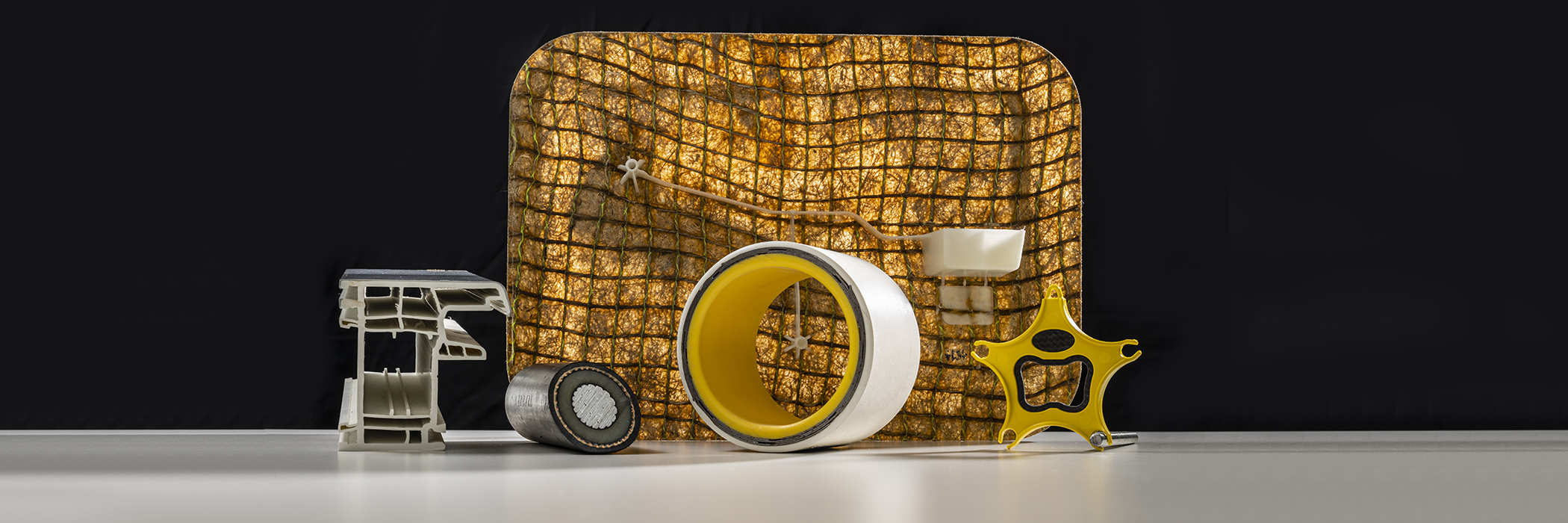
Material characterisation
A comprehensive infrastructure allows us to directly understand the various aspects of construction and processing and to analyse the interaction of material properties and their effects in detail.
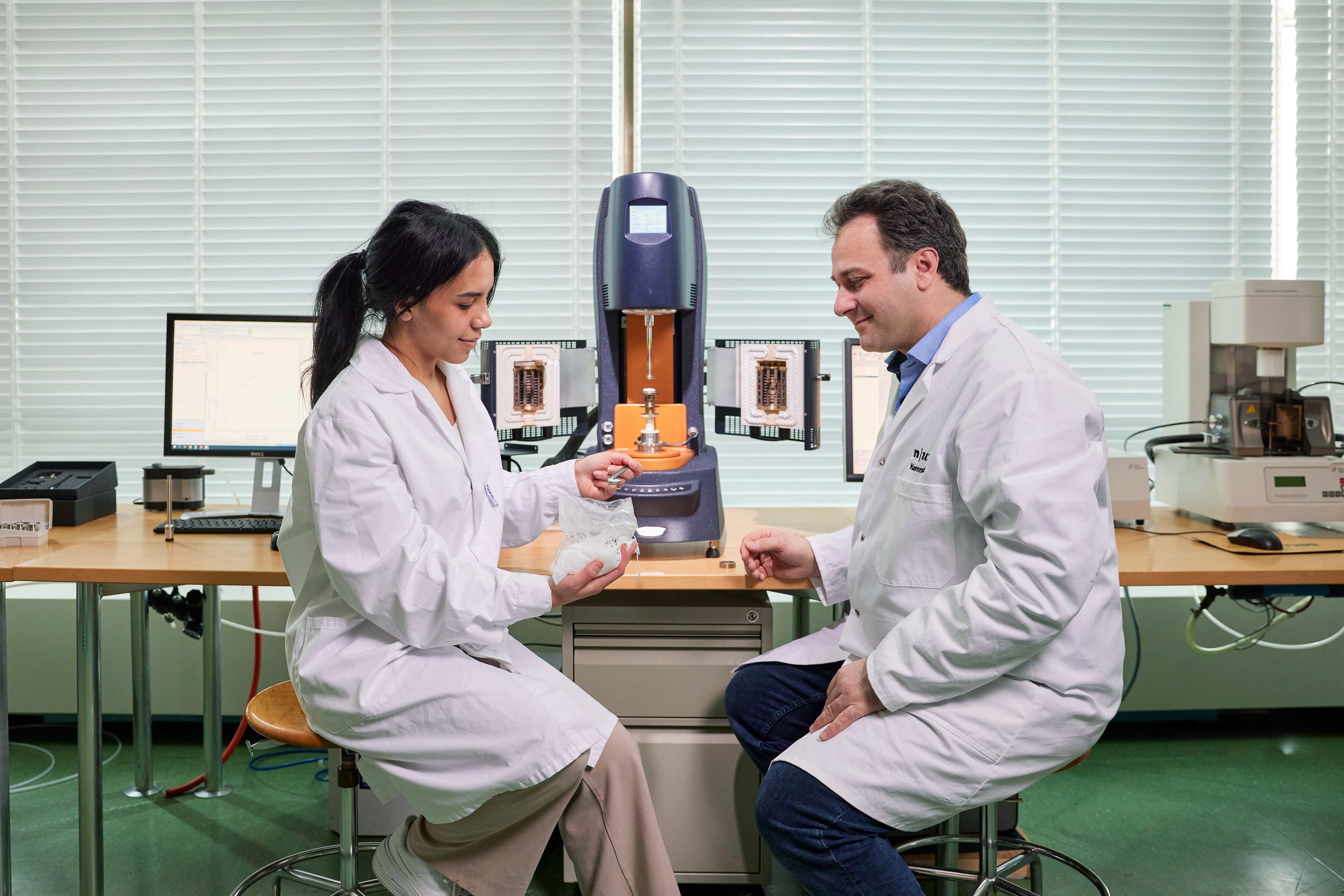
Rheology measurement of plastics on the plate-plate rheometer DHR3
Calorimetric analyses of polymers are usually carried out using differential scanning calorimetry (DSC). DSC is used to determine the amount of heat absorbed or released by a sample while it is subjected to a defined heating and cooling programme. In this way, thermodynamic parameters such as transformation temperatures as well as melting and reaction heat quantities can be determined. The following aspects can be analysed with the DSC:
- Physical transformations: Melting, crystallisation, evaporation, glass transitions
- Chemical processes: Decomposition and pyrolysis behaviour, oxidation stability (OIT), composition, reaction enthalpy, reaction kinetics, cross-linking, curing
Laboratory equipment
- DSC module Q1000 (TA Instruments)
- DSC 25 (TA Instrumenmts)
- Measurements in the range -90 °C - 600 °C possible
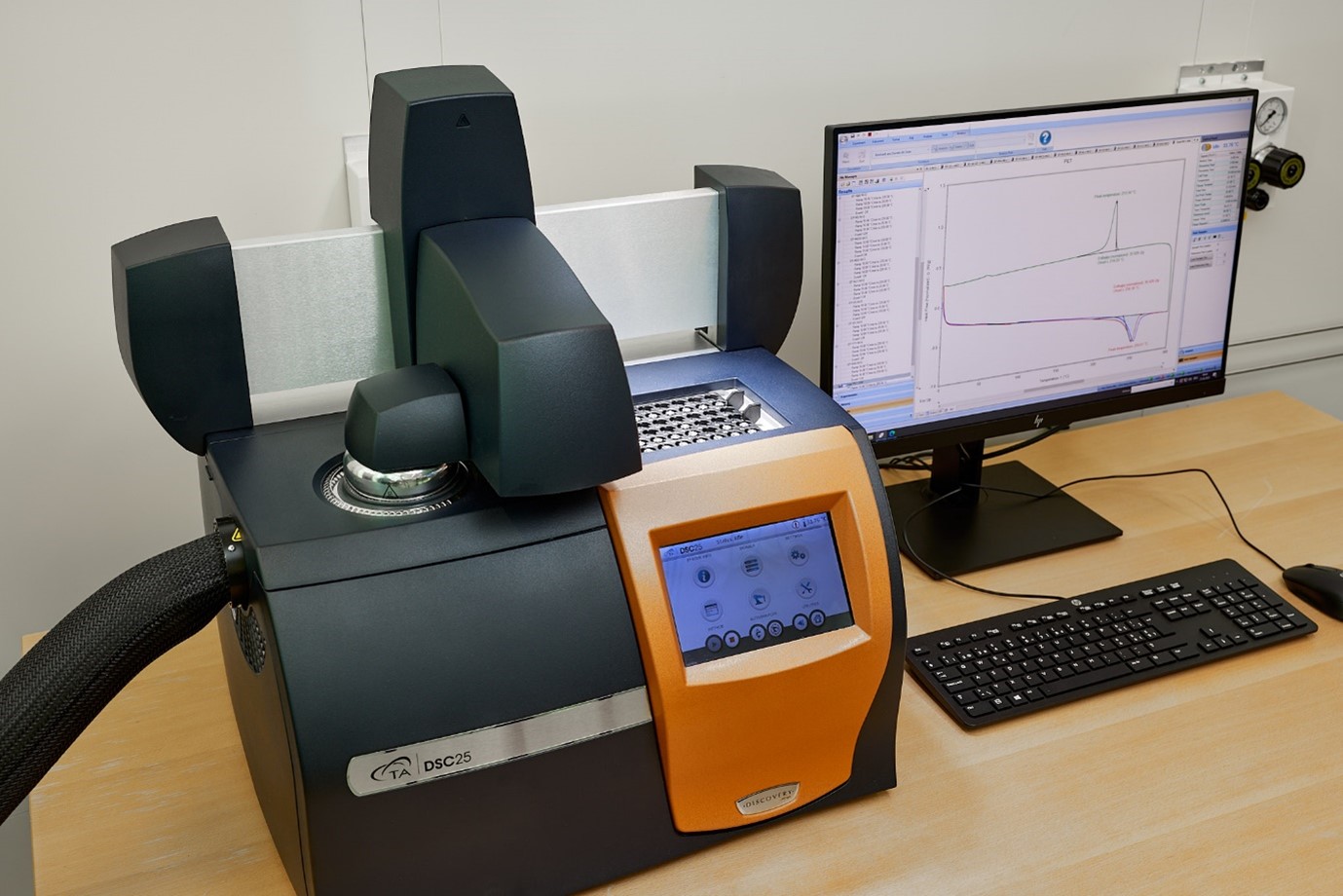
DSC 25 (TA Instruments)
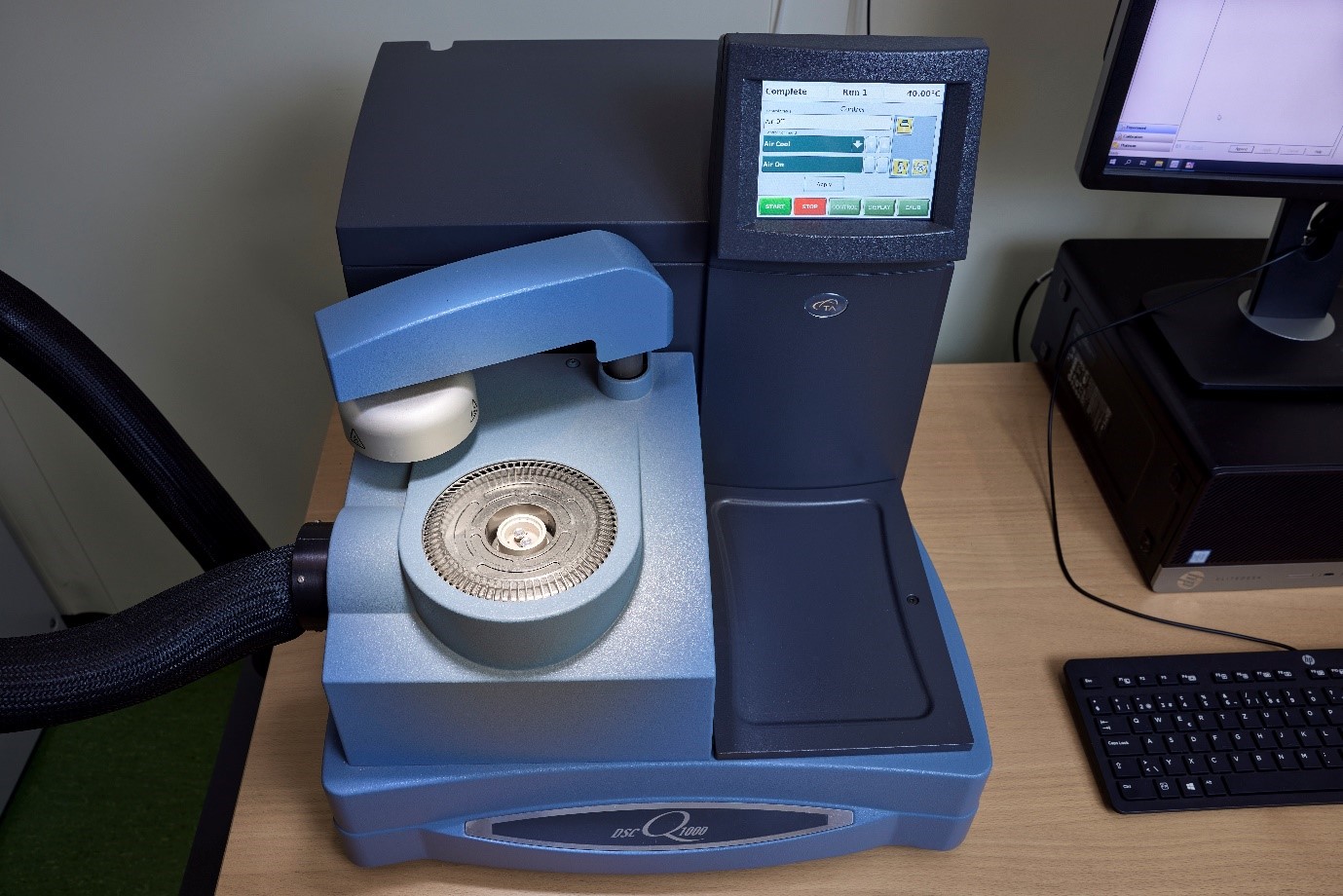
DSC-Modul Q1000
Thermogravimetric analysis (TGA) is used to analyse physical processes and chemical reactions associated with mass changes in a specific gas atmosphere (e.g. N2 or synt. air). This allows weight loss or gain to be recorded as a function of temperature or time. The application examples are: Determination of polymer compositions, carbon black content, Quantitative determination of fillers e.g. chalk, talc, glass fibre, stabiliser Degradation / ageing of plastics, ...
Laboratory equipment
- TGA Q500 (TA Instruments)
- Measurements in the RT - 1000 °C range possible
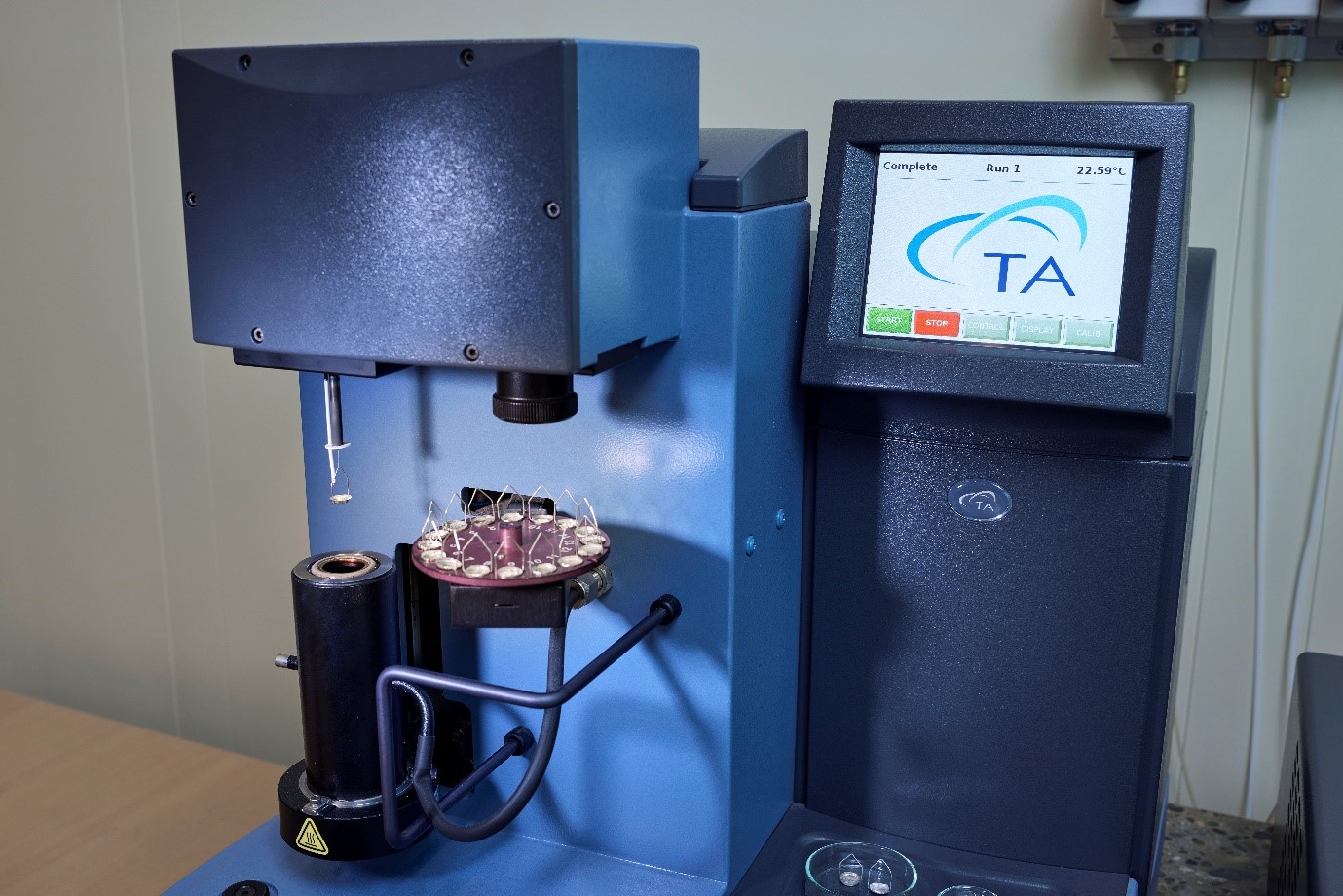
TGA Q500 (TA Instruments)
Dynamic mechanical analysis (DMA) provides information on the development of mechanical properties under low, usually sinusoidal dynamic load as a function of temperature, time and/or frequency. The measuring principle of DMA consists of loading a sample with a sinusoidal load (frequency) and measuring the resulting stress. Examples of applications for DMA are Viscoelastic behaviour of a polymer, glass transition, crystallisation and melting, relaxation behaviour, phase transitions, storage and loss modulus, relaxation and creep behaviour, curing and polymerisation reactions, material defects, effects due to filling materials, ...
Laboratory equipment
- TMA Q800 (TA Instruments)
- Measurements possible in the temperature range -150 °C - 600 °C and frequency range from 0.01 to 200 Hz
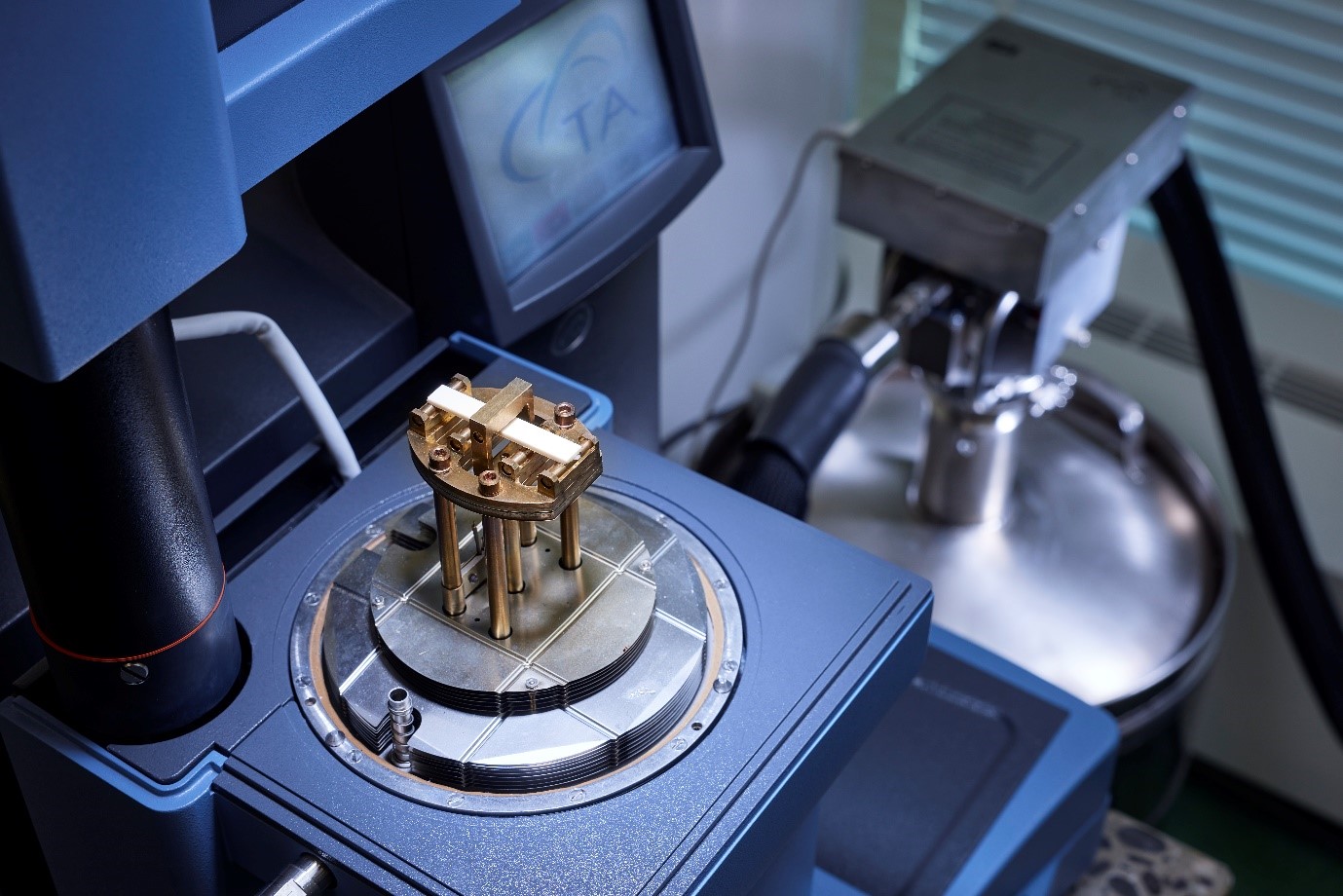
TGA Q800 (TA Instruments)
Thermodynamic analysis (TMA) is used to measure dimensional changes in a sample under mechanical stress as a function of temperature.
TMA allows the determination of thermal effects (softening e.g. Tg of polymers, change in expansion coefficient, swelling in solvents, shrinkage), temperatures that characterise the thermal effect, deformation step heights (extent of deformation) and the thermal expansion coefficient.
Laboratory equipment
- TMA Q400 (TA Instruments)
- Measurements possible in the RT - 1000 °C range
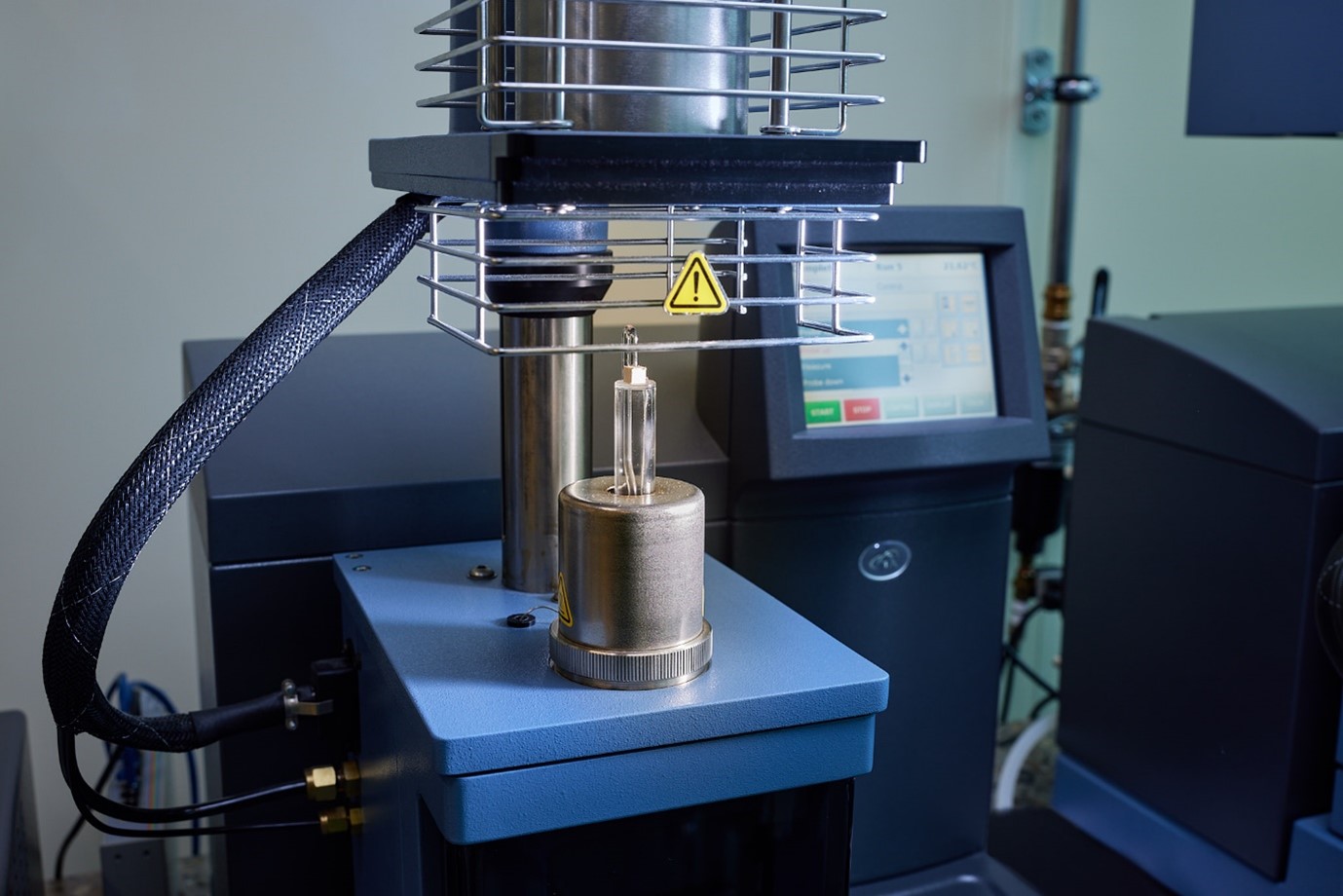
TGA Q400 (TA Instruments)
Rheology
Plate-plate / cone-plate
Capillary rheometer incl. rheotens and pVT
Melt index tester (MFI)
Light microscopy
Accessories: Heating table & micro tensile tester
Water content determination
Ultrasonic testing for composite materials
Creep test bench with temperature chamber
Climatic chamber (-10 - 100 °C; 10 - 98 % r.h.)
Colour, gloss, density, hardness, pH, conductivity, stress crack resistance
Corrosion resistance Potentiostat / Galvanostat PGSTAT101
Component and fibre orientation measurement APODIUS Vision System 3D