Development of a test platform that optimises and automates the I&C maintenance processes, including tests and diagnostics for hardware and software.
Project details
- University
- FHNW School of Engineering and Environment / School of Engineering and Environment, Institute of Electrical Power Systems
Technologies
- System modelling, Digital Twins
- System identification for diagnostics
- Signal processing
Background
In recent decades, the growing traffic and complexity of railroads have been a major challenge for the maintenance, upgrading and diagnosis of rolling stock control systems. In the event of faults, identifying the root cause is a highly challenging task that must be performed quickly and reliably so that the train can be quickly returned to service. Currently, no available system can fully perform the specific functions with the required performance. In this project, we are developing and testing a test platform that optimizes and automates the I&C maintenance processes, including testing and diagnostics for hardware and software.
Goals
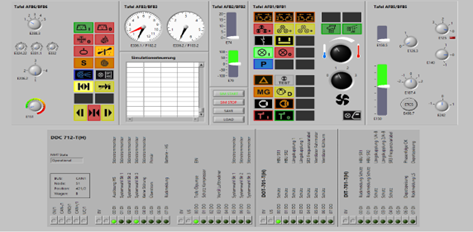
A digital twin simulation model that simulates the processes in the environment of the vehicle control technology that directly controls the test unit (including heating, ventilation, air conditioning (HVAC), door control, traction, etc.). Combined with an appropriate HiL setup, the test device is thus to be made to believe that it is still installed in the train.
A diagnostic and fault localization algorithm based on a novel hybrid classification concept. This combines and integrates deterministic and stochastic models, i.e. historical data, models and measurements.
A modular diagnostic and fault localization algorithm, which identifies and documents defective inputs and outputs of the test equipment. Modular in the sense that it can test different generations of the same vehicle control system.
Results
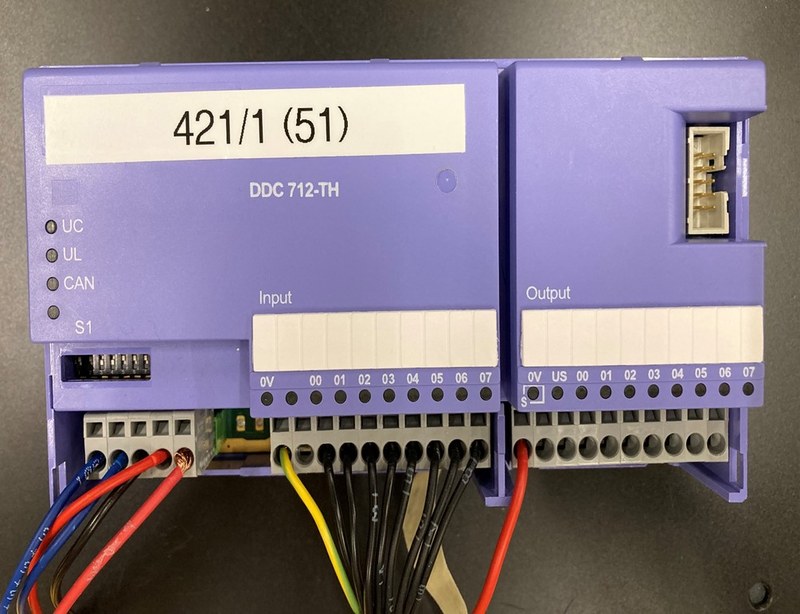
Build and develop fault localization software to test defective digital inputs and outputs of the first generation of the test set.
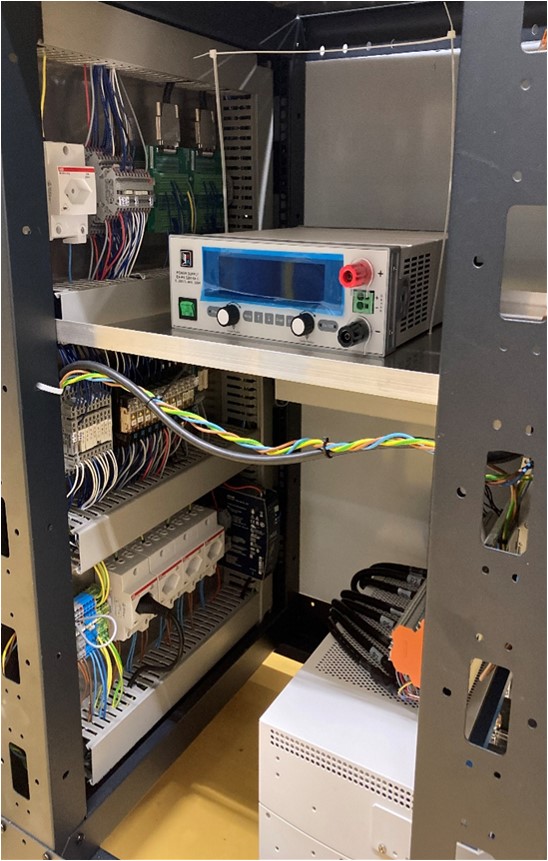
Build the hardware of the modular test set so that it can test inputs and outputs from different generations of the vehicle control system.
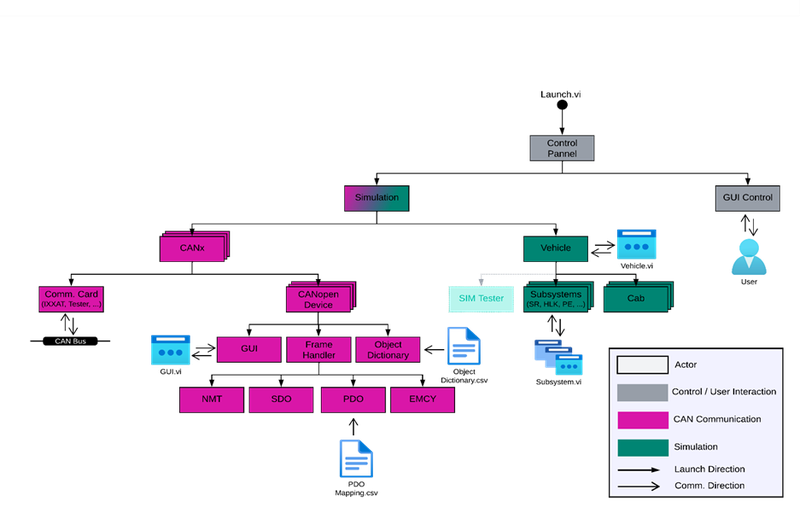
Software structure for the digital-twin simulation model developed and implemented so that the most important models of the subsystems can be incorporated.
Communication interface between test device and vehicle control system programmed and tested.
Project information
Client | Schweizerische Bundesbahnen (SBB) |
Execution | |
Duration | 2 years. 09.2021 - 09.2023 |
Funding | Bundesamt für Verkehr (BAV) |
Project lead | Silvia Mastellone, FHNW |