Participation and health – this has long been a central focus for Prof. Carlo Fabian of the FHNW School of Social Work . Since early 2025, he has been a Fellow of Sciana – The Health Leaders Network. In this interview, he shares his early impressions, key topics, and personal reflections.
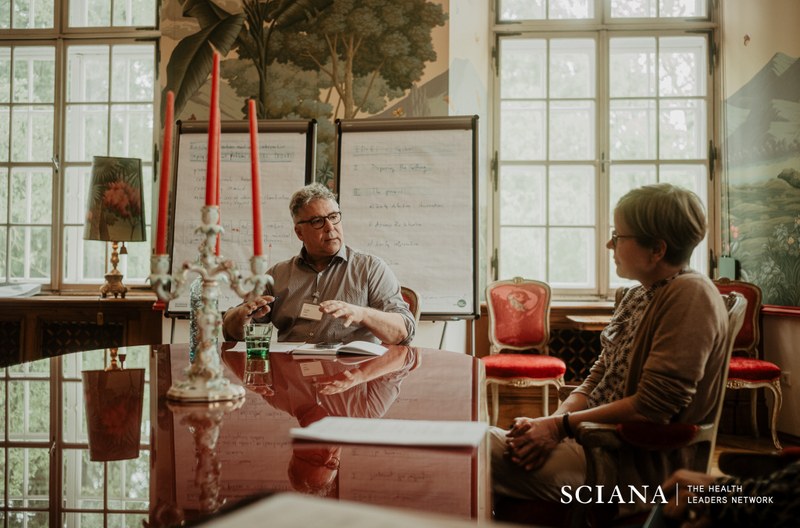
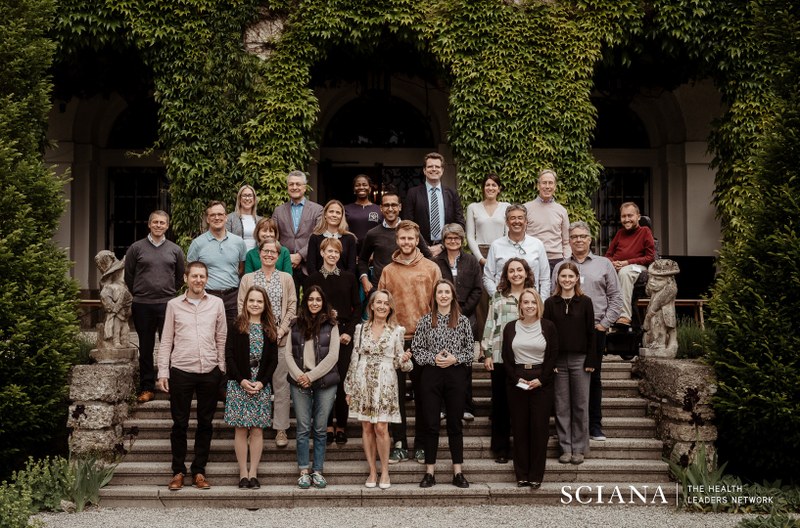
Health is part of a complex system. Biological, psychological, and social factors, legal regulations, funding models, external influences, individual behaviors all impact people’s health and wellbeing. Within this intricate system, professionals s in medicine, social work, and psychology, and beyond must collabroate, understand one another’s perspectives, and develop shared, sustainable solutions. One of the core challenges: how can we promote health for all, despite this complexity?
Sciana addresses exactly these types of challenges. The international network brings together leaders and experts from Germany, the United Kingdom, and Switzerland to exchange ideas and drive the development of health systems through a “systems leadership” approach. Each cohort of fellows focuses on a specific theme. Fabian is part of the seventh cohort (2025–2026), addressing “Systems Leadership for Population Health in Times of Scarcity.” In this interview he shares his initial experiences.
A Conversation With Prof. Carlo Fabian
Conducted on May 22, 2025
Before diving into your cohort’s topic, I’m curious: Did the international exchange work out from the start? Or did it require some adjustments?
Carlo Fabian (laughs):
Yes, we kindly asked the native English speakers to slow down and avoid excessive jargon – and it worked out well.
Our first meeting was in March in Copenhagen, with around 100 participants from all cohorts. What struck me immediately was the diversity – in disciplines, cultures, languages, and professional backgrounds – and that’s exactly what makes it so exciting and enriching. The concentration of expertise and the shared commitment to the topic of health. Is truly impressive. Some topics were very familiar to me, others less so. My personal focus is on health promotion and prevention. I noticed that some topics were very familiar to me, while others were less so. My personal focus is on health promotion and prevention.
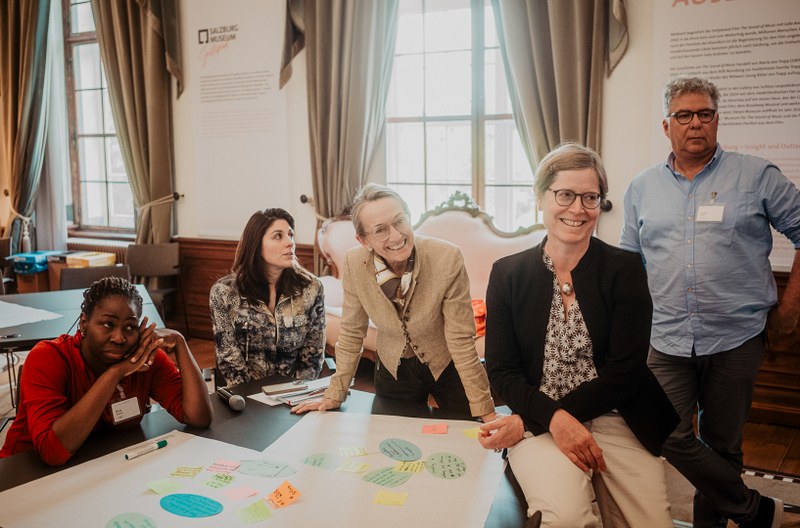
The biannual meetings in Salzburg are designed to foster both professional dialogue and personal connection. From the beginning, participation was key: everyone is contributing, and we are continually building a mutual understanding. Getting to know each other is an ongoing process – both professionally and personally. It quickly became clear that we needed a shared language – and that process was initiated and continues to evolve. I’m learning a lot – and contributing as well. I’m really looking forward to what’s ahead.
With such varied backgrounds – how do you find a common starting point?
CF: Those differences are exactly what make this kind of network so valuable – they open up new perspectives on our own systems. We started out by having two fellows from each country present their national health system. In Switzerland, for instance, the cantons and municipalities play a key role in health promotion, prevention, and care. Our system varies significantly from one canton to another. The UK has a nationally organized system, while in Germany’s is again quite different. The funding mechanisms are also very diverse. The per capita premium is unique to Switzerland. In the UK, healthcare for the entire population is tax-funded, while in Germany, health insurance contributions are income-based. These “simple” differences reflect much deeper variations in systems, understandings, culture, access to health services.
At the same time, commonalities emerged. For instance, we discussed how health and social systems could be better integrated. This is also a key issue in Switzerland. Despite very different frameworks, we found many thematic parallels – which was both surprising and inspiring.
Let’s turn to your cohort’s theme: “Systems Leadership for Population Health in Times of Scarcity.” What exactly does “Population Health” mean, and what does “scarcity” refer to?
CF: “Population Health” refers to the health of the entire population. A health system one tool that supports that goal. To optimally promote health, systemic changes might be necessary: new priorities, different processes, revised financing or pricing policies, etc. It’s not about creating a “better” health insurance system – it’s about creating one that supports people’s health as effectively and equitably as possible.
Is this perspective missing in the current health system debate?
CF: Yes, I think it is often overlooked. The conversation tends to focus on costs, efficiency, and care – but less on what people actually need to live healthy lives. The population is rarely seen as an active co-creator of health. This is precisely where our work at Sciana begins. Over the two-year program, we’re exploring how participation in health can be promoted at individual, community, and systemic levels.
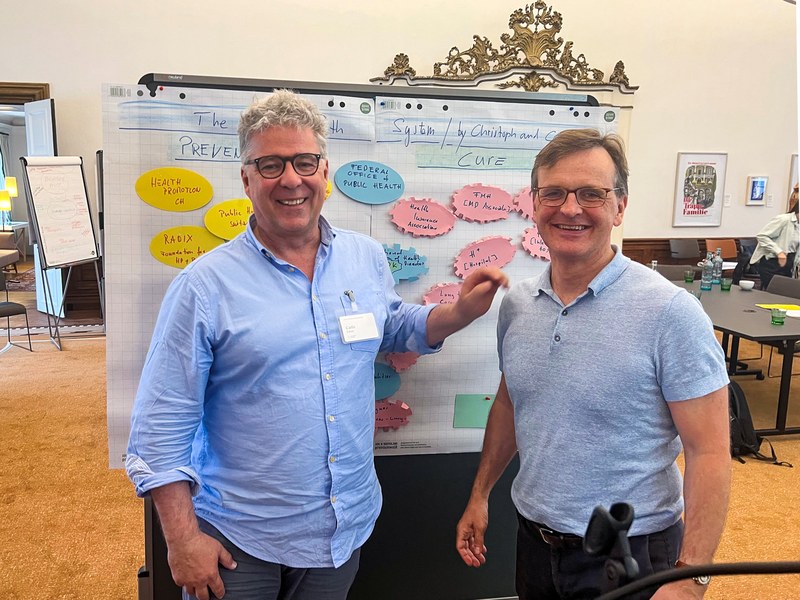
We aim to understand different systems, gather insights and ideas, and ultimately develop a toolkit, comprised of methods, tools, or even training programs. It’s ambitious and we’ll see how far we get. We are also looking at existing structures- such as the Swiss Federal Office of Public Health, cantons, municipalities, health insurers, foundations, and NGOs – all of which significantly shape what is possible. The mindset shifts from “for the people” to “with the people.” We ask: What is really needed? How can a system improve from the people’s perspective? Participation and co-creation have long been central to my work.. Sciana offers the opportunity to pursue these issues collaboratively, across disciplines and borders, and with a forward-thinking approach.
Let’s talk about “scarcity.” How was that discussed?
CF: “Times of Scarcity” is highly relevant. In Switzerland too, we’re seeing budget cuts in the health sector – especially in health promotion and prevention. The same is happening in Germany and the UK. Geopolitical developments also play a role: In many countries, significant funds are being redirected toward the military, leaving less for other areas. That raises critical questions: What are the consequences for health systems? What structural challenges are emerging?
Are there ideas on how to respond?
CF: There are various approaches. In Salzburg, I presented a project on “early detection and early intervention” – a prevention model that’s been promoted in Switzerland for 30 years.I’ve worked with it just as long and remain convinced of its value. However, there is still no scientifically sound evaluation of its effectiveness. We have extensive practical knowledge, but the evidence base is lacking. Especially in times of limited resources, it is essential to invest in prevention programs with proven benefits. That also means funding research – even when budgets are tight. It’s crucial to use available funds with impact in mind. We simply cannot afford programs without demonstrable benefit – neither financially nor ethically.

Given these challenges. what was the atmosphere like at the meetings?
CF: The setting of the Sciana meetings is extraordinary: They take place at Schloss Leopoldskron in Salzburg– a beautiful, serene location that fosters open and thoughtful exchange. The setting, the time for in-depth discussion, the skilled coaches and mentors, and yes, the excellent food – all contribute to a positive, focused atmosphere.. From the very beginning, it was clear: despite our differences, we are all working toward the same goal. There’s a strong sense of openness and shared commitment to improving people’s health.
What are you taking away from this network?
CF: It’s still too early to say exactly what the outcome will be. But I hope to bring the insights and ideas back into my fields of work and to my Institute for Social Work and Health. What I find especially encouraging is that the spirit of collaboration is already having an effect – between participants and across the institutions we represent.
Thank you, Carlo, for the conversation. We look forward to hearing more from your journey with Sciana.
Prof. Carlo Fabian heads the Institute for Social Work and Health at the FHNW School of Social Work. His research focuses on health promotion, prevention, public health in public spaces, and the evaluation of health programs.
More information on Sciana and the seventh cohort is available here.
Follow Prof. Carlo Fabian on LinkedIn for insights into his professional work.
Contact

Prof. Carlo Fabian
- Phone
- +41 62 957 22 12
- carlo.fabian@fhnw.ch