Have you completed a technically oriented Bachelor’s degree and would like to deepen your expertise in Computer Science or Data Science? Then the MSE is the right choice for you!
Factsheet
- Degree
- Master of Science in Engineering MSE
- Study mode
- Part-time/work-study, Full-time
- Next start
- 22.2.2027
- Teaching language
- English B2 - C1 level recommended.
- Place
- FHNW Campus Brugg-Windisch
- Semester fee
- CHF 750 (with residence Switzerland) For all other fees see fees.
At a glance
- Deepen your Cyber Security expertise: Design secure architectures, analyze vulnerabilities, and effectively defend against threats.
- Bridge technology & governance: Combine security engineering with risk management and compliance.
- Specialize individually: Shape a tailored profile in Information & Cybersecurity with the support of a personal advisor.
Why study this?
The Swiss ICT sector employs more than 210,000 people and continues to see steadily growing demand for specialists in Cyber Security. With the Master of Science in Engineering (MSE) in Information and Cybersecurity (ICS), you are ideally prepared for demanding specialist and leadership roles. Potential career paths include Security Analyst, Penetration Tester, Security Architect, Incident Responder, Security Consultant or positions in Security Management. Employers can be found across all service and industrial sectors, as well as in private and public organisations that need to protect their digital assets.
Possible career paths
Increasing connectivity and digitalisation introduce new risks and require specialised professionals to protect critical systems and data. With the Master of Science in Engineering (MSE) in Information and Cybersecurity (ICS), you are equipped to address these challenges and actively contribute to securing the digital world.
- Cyber Security Engineering: Design, implement and validate secure systems and architectures.
- Threat Detection & Response: Identify, analyse and effectively mitigate attacks and vulnerabilities.
- Data Security & Privacy: Protect data and privacy in compliance with legal requirements and best practices.
- Security Management & Governance: Develop security strategies, manage risks and ensure regulatory compliance.
Structure and programme contents
Content
With the Master of Science in Engineering (MSE) in Information and Cybersecurity (ICS), you acquire in-depth knowledge and competencies in the research, development, planning, specification and design of robust security solutions and architectures. You analyse complex systems for vulnerabilities, develop protective measures and seamlessly integrate them into existing IT landscapes in compliance with relevant security standards, quality requirements and regulatory frameworks. You master tools and methods for security analysis, monitoring, threat detection and incident response. You evaluate emerging security technologies and attack patterns and develop innovative defence strategies. You make well-founded decisions, taking into account technical, organisational and legal frameworks.
In addition to technical expertise, the MSE in Information and Cybersecurity (ICS) enhances and deepens your management competencies, enabling you to lead security teams effectively and assume responsibility for comprehensive security strategies and infrastructures.
Structure
One third of the programme consists of theoretical modules delivered at central locations for students from all Swiss Universities of Applied Sciences. The remaining two thirds form the core of the Master of Science in Engineering programme. This part of your studies is completed at one of the institutes of the FHNW School of Computer Science.
The MSE programme comprises 90 ECTS credits:
- 30 ECTS by completing the central theoretical modules
- 30 ECTS through your area of specialisation (project work and complementary courses)
- 30 ECTS upon successful completion of the Master’s thesis.
Overview MSE
Tailor your Master’s studies to your needs
The core element of the programme is the individual specialisation within a chosen profile. You develop this specialisation through theoretical and practical work at one of the institutes of the FHNW School of Computer Science, supported throughout your studies by a personal advisor.
Through selected theoretical modules as well as practice-oriented research and development projects, you acquire unique, high-level competencies. Carefully chosen theoretical modules further deepen and broaden your expertise.
How to proceed:
- You contact the profile coordinator and/or a potential advisor to explore your specialisation options.
- You apply for a place in the programme.
- The MSE Admissions Committee decides on your admission.
- Once admitted, you select theoretical modules from the available offerings together with your advisor.
- Your module selection and the content of your specialisation are defined in the Individual Study Agreement (ISA).
Complementary Courses
All students are required to complete complementary courses (EVA) amounting to 6 ECTS credits over the course of their studies.
Complementary courses provide theoretical knowledge that is not covered by the central theoretical modules due to your specialisation. The EVA are organised by the respective institute of the FHNW School of Computer Science at which you are based.
You may also attend suitable complementary courses offered by other Universities of Applied Sciences, provided this has been agreed upon with your advisor and the respective profile coordinator.
Admission Requirements and Application
The Master’s programme is designed for Bachelor’s graduates who have achieved very good academic performance during their studies (ECTS grades A or B).
The completed field of study must be related to the competence area of the chosen profile. Holders of an equivalent qualification (e.g. an HTL or University of Applied Sciences diploma) may also be admitted to the programme.
After the application deadline, the documents you submitted with your application will be reviewed, and our Admissions Committee will decide on your acceptance or rejection.
If necessary, an additional admission interview may be arranged.
The MSE programme generally follows directly after completion of a Bachelor’s degree. If you have several years of professional experience after graduation, a more detailed assessment is required.
Requirements and Organisational matters
Other MSE-Profiles
MSE Profiles at the FHNW School of Computer Science

MSE - Profile Data Science
- Studying mode
- Part-time/work-study, Full-time
- Teaching language
- English
- Place
- Brugg-Windisch
- Next start
- 22.2.2027

MSE - Profile Computer Science
- Studying mode
- Part-time/work-study, Full-time
- Teaching language
- English
- Place
- Brugg-Windisch
- Next start
- 22.2.2027
School of Engineering and Environment FHNW
School of Architecture, Civil Engineering and Geomatics FHNW
With the Master’s programme – the highest academic degree awarded by a University of Applied Sciences – you prepare yourself for positions of responsibility in research, industry and public administration. You are qualified to take on demanding specialist roles as well as leadership responsibilities and to manage interdisciplinary projects.
Further Information
Engineering MSE Profile Information and Cybersecurity (ICS)Spring Semester 2027
- Date
- 22.2.2027
- Place
- FHNW Campus Brugg-Windisch and others
- Final application date
- 30.9.2026
- Notes
- Start your semester either in the spring or autumn semester.
Contact us
For further information about studying at the FHNW School of Computer Science, please contact us.
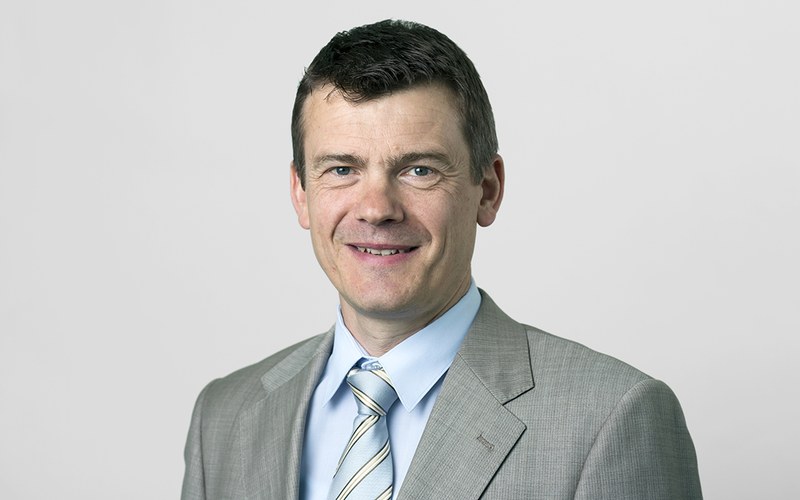
Prof. Dr. Gregor Burkhard
- Phone
- +41 56 202 74 58
- gregor.burkhard@fhnw.ch


Study Administration and Advisory
- Phone
- +41 56 202 99 33 (Direct)
- start.informatik@fhnw.ch
Info-Events
Loading...