
Learn today how to develop the software of tomorrow – practice-oriented, future-proof, and responsible.
Factsheet
- Degree
- Bachelor of Science FHNW in Computer Science
Study Track Software Engineering & Intelligent Technologies - Study mode
- Practice-integrated bachelor's degree program (PiBS), Part-time/work-study, Full-time
- ECTS credits
- 180
- Next start
- 1.3.2027
- Teaching language
- German / English
- Place
- FHNW Campus Dreispitz
At a glance
- Unite AI & Software: Develop intelligent systems and purposefully integrate AI into modern software solutions.
- Agile & hands-on: Work with companies on real-world projects – from the initial idea to a market-ready product.
- Future skills: Master software engineering, machine learning, and ethical responsibility in combination.
Why study this?
The demand for professionals who can handle this increasing complexity and use AI to build and seamlessly integrate high-quality software products is growing rapidly. Graduates of the Study Track Software Engineering & Intelligent Technologies are therefore highly sought after, as they combine software development, AI, and agile methods – precisely the combination that companies across nearly every industry urgently need.
A degree in Software Engineering & Intelligent Technologies positions you at the heart of cutting-edge software development, state-of-the-art architectures, and the latest AI trends. Through hands-on project work in collaboration with companies, you gain valuable experience that you can apply immediately. By working with modern software engineering methods and technologies, and by developing essential soft skills such as collaboration, communication, product focus, and ethical awareness, you are ideally prepared to embark on a future-proof, versatile, and responsible career.
Target Audience
Are you looking for a future-proof degree with excellent career prospects in software development and AI? Then Software Engineering & Intelligent Technologies is the perfect fit for you.
This program specifically prepares you to develop, integrate, and responsibly implement intelligent systems. By completing this degree, you will open up a wide range of career opportunities in the fields of engineering and AI.
Possible careers
Software Engineer
Test Engineer
Requirements-Engineer
Software Architect
Data Engineer
Compliance Technologist
Possible careers with a focus on AI
AI Integration Engineer
AI-Engineer
AI-Quality Engineer
AI-Ethics Engineer
With this degree, you are perfectly prepared to launch a future-proof, diverse, and exciting career in almost any industry. Are you ready to actively shape the digital future?
Structure and programme contents
In the Study Track Software Engineering & Intelligent Technologies, you can expect a modern computer science education with a focus on software development, agile methods, and artificial intelligence. From the very first semester, you take specialised modules in these areas.
In projects carried out in collaboration with companies and in lab exercises, you apply what you have learned directly in practice.
Contents
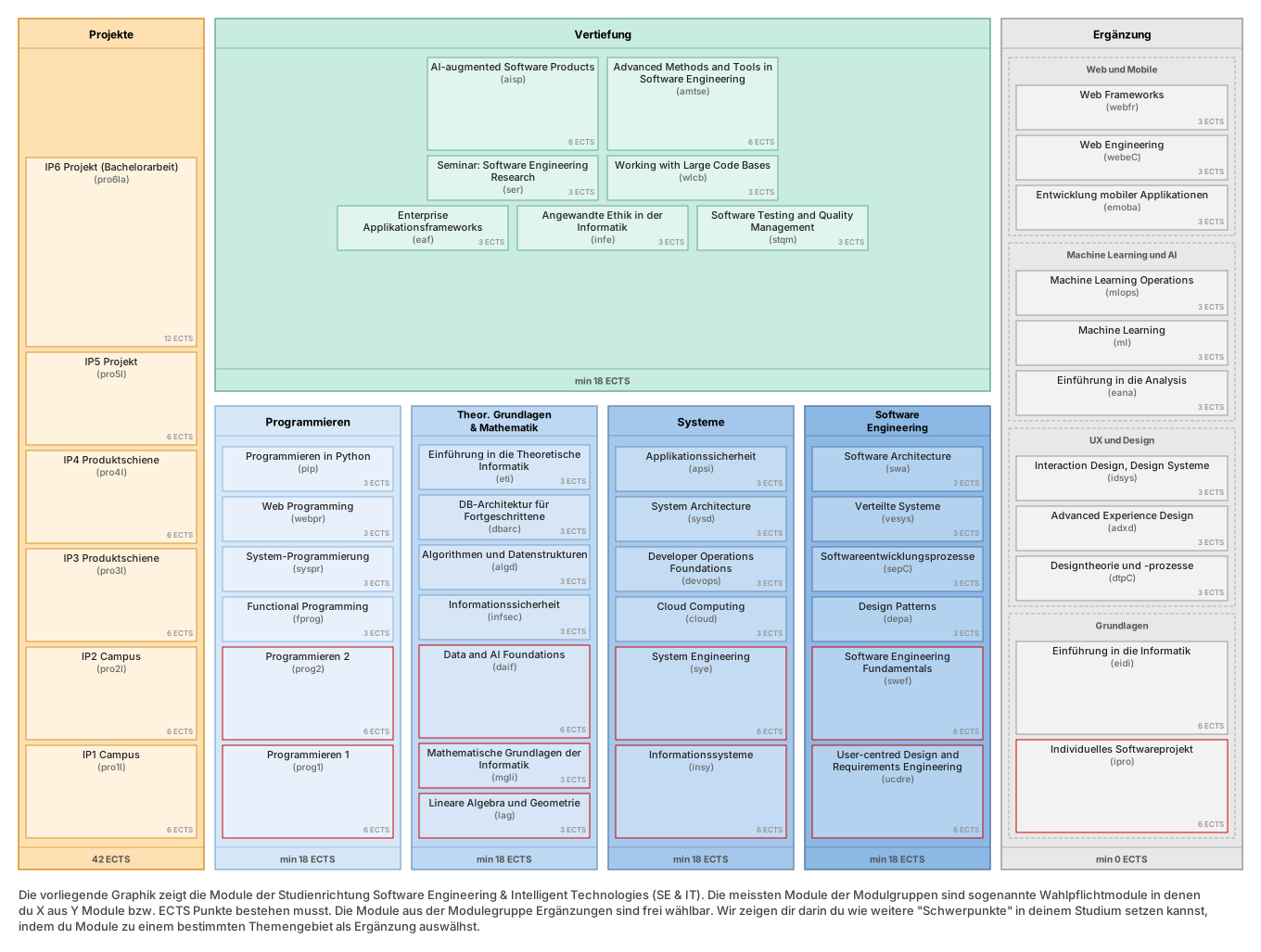
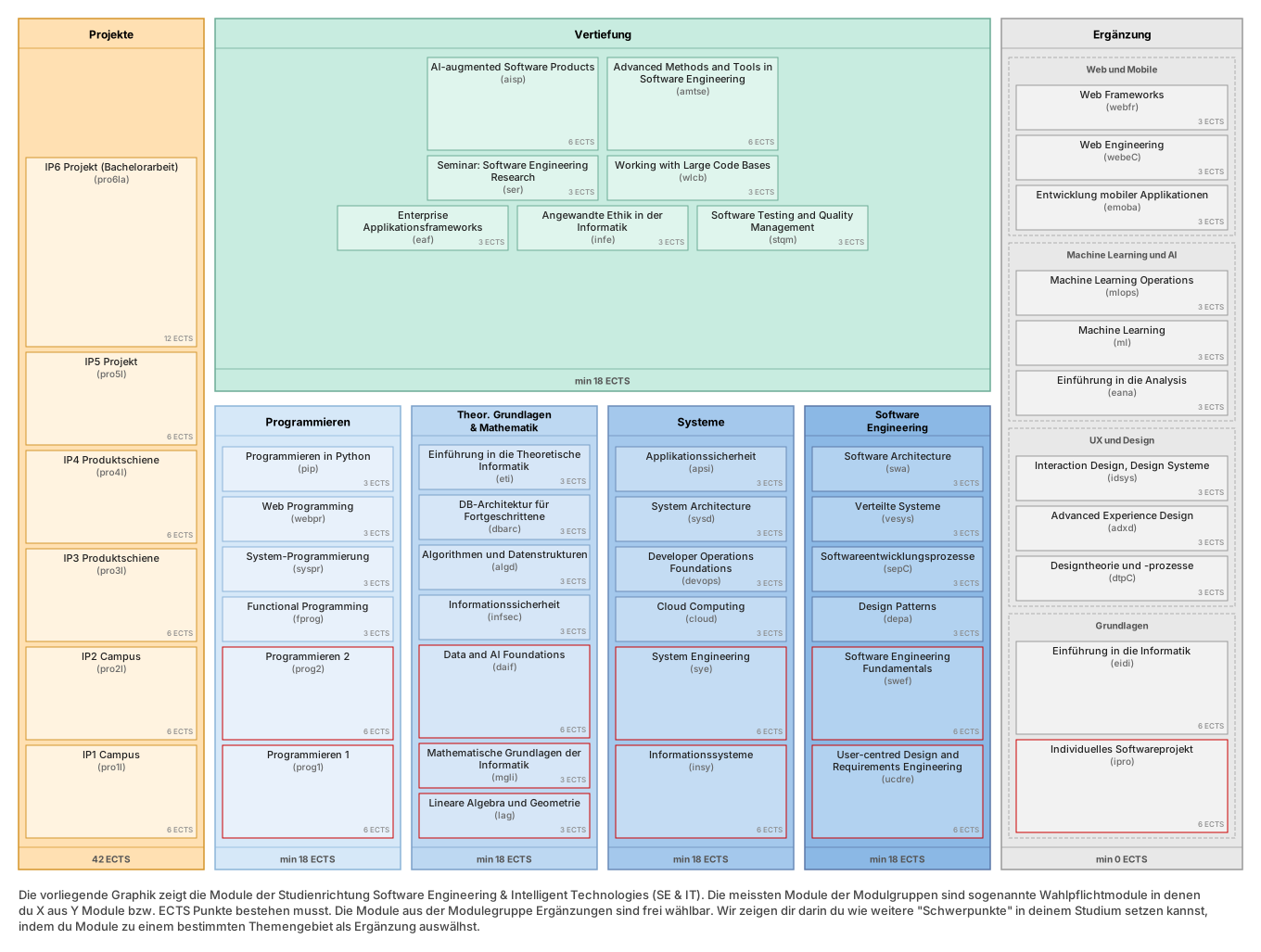
The academic curriculum includes, among other things:
- Computer science with a focus on software engineering and programming
- Software architecture
- DevOps fundamentals
- Systems
- Prompting & Vibe Coding
- Theoretical foundations and mathematics
- Machine learning and deep learning
In the advanced modules, you can choose between two specialisations:
In the AI-Augmented Software Engineering specialisation, you focus on creating software in collaboration with AI while thinking holistically. You use AI as a tool to efficiently develop high-quality software – for example through generative code assistance, test automation, or intelligent development environments.
In the Building of AI-Enabled Software Solutions specialisation, you learn how to develop intelligent software products by integrating AI functionality into the software solution itself. Here, you use AI as part of the solution – for example in the form of machine learning models, recommendation systems, or natural language interfaces.
In both specialisations, you also have access to a wide range of modules, seminars, and hands-on workshops, such as:
- Software Testing
- Evolutionary Software Design & Architecture
- Enterprise Application Frameworks
- Value Stream–Driven Product Development
- Tools & Trends in Modern Software Engineering
- Ethics in Computer Science
International

Spain, Poland, Sweden, France … exchange students from across Europe enrich our everyday student life. The Data Science & AI programme is particularly popular among exchange students due to its modular structure, study format and strong sense of community.
As a Data Science & AI student, you naturally also have the opportunity to spend one or two semesters at one of our partner universities. Further information is available from the International Office.
Requirements and Organisational matters
Contact
Sibylle Peter
- Phone
- +41 56 202 72 57 (Direct)
- sibylle.peter@fhnw.ch

Prof. Martin Kropp
- Phone
- +41 56 202 78 18 (Direct)
- martin.kropp@fhnw.ch

Daria Zgraggen
- Phone
- +41 56 202 72 41 (Direct)
- sgi.informatik@fhnw.ch

Study Administration and Advisory
- Phone
- +41 56 202 99 33 (Direct)
- start.informatik@fhnw.ch
Questions? Our students have the answers!

Do you have questions about the programme content, student life or study format? Our Computer Science graduates Aaron and Andris are happy to provide information via WhatsApp.
Register
Apply now to secure your spot!
Bachelor of Science in Software Engineering & Intelligent TechnologiesSpring Semester 2027
- Date
- 1.3.2027
- Duration
- 6-8 Semesters
- Place
- FHNW Campus Dreispitz
Bachelor of Science in Software Engineering & Intelligent TechnologiesAutumn Semester 2027
- Date
- 20.9.2027
- Duration
- 6-8 Semesters
- Place
- FHNW Campus Dreispitz