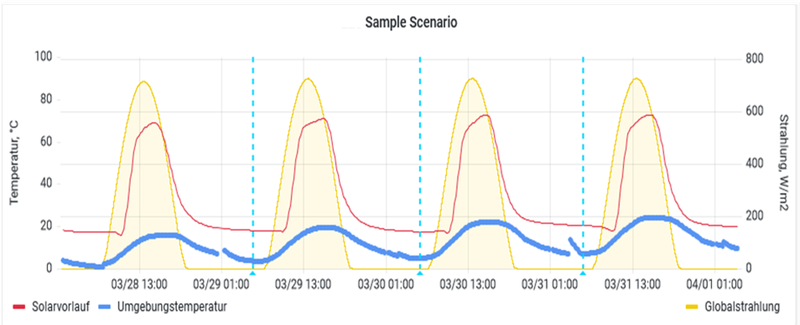
The potential of machine learning (ML) algorithms for fault detection in residential building heating systems is well established in scientific literature including our recent works. We developed a preliminary ML-pipeline, that utilizes time series forecasting to identify faults in a solar thermal system using minimal initial data unlike existing data-intensive approaches. Although the ML algorithm achieves similar accuracies as the rule-based algorithm integrated into the industrial partner’s single-sensor IoT framework, it lacks theoretical testing and conceptual evaluation.
Projektdetails
- Forschungsfeld
- Erneuerbare Energie und Gebäudetechnik, Digitale Lösungen für nachhaltige Gebäude
- Hochschule/Institut
- Hochschule für Architektur, Bau und Geomatik FHNW / Institut Nachhaltigkeit u.Energie am Bau
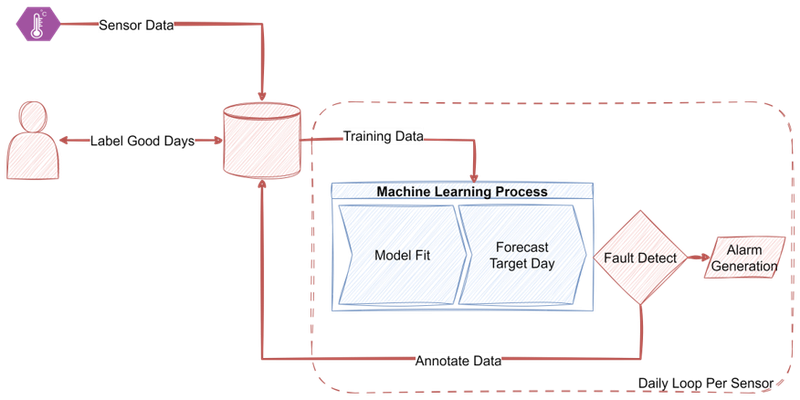
We aim to advance this ML approach to industrial maturity, necessitating a critical evaluation of our ML pipeline and support for robust deployment.
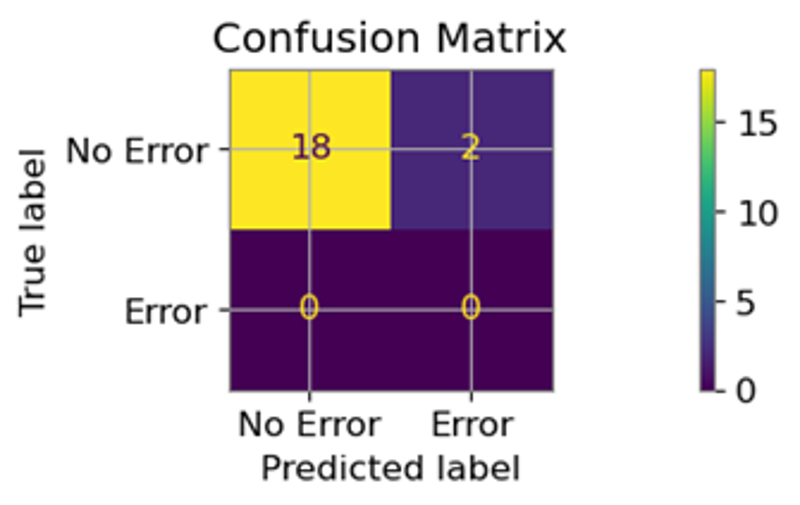
This project has significant potential for fault detection in other heating systems, such as heat pumps and district heating, projected to play a major role in Switzerland’s future energy mix. Collaboration with SDSC is essential for ensuring the successful translation of our research prototype into a robust, production-ready application, significantly impacting energy efficiency and sustainability in building heating systems.
Eckdaten des Projekts
Zukunftsfeld | Zero Emission |
Projektpartner*innen | Swiss Data Science Center |
Projektleitung | |
Projektmitarbeitende | Nicola von Bülow (INEB) |
Laufzeit | Januar 2025 - Dezember 2027 |
Weiterführende Links
Kontakt

Institut Nachhaltigkeit und Energie am Bau
Fachhochschule Nordwestschweiz FHNW
Hochschule für Architektur, Bau und Geomatik Institut Nachhaltigkeit und Energie am Bau
Hofackerstrasse 30
4132 Muttenz