In 2026, Cédric Müller spent five months at the Universidad Nacional de San Martín (UNSAM) for his thesis. A seized opportunity turned it into a journey of academic discovery and personal growth—far away from home and structured plans.
What made you decide to go abroad?
I wanted to gain international experience as part of my studies, as exploring other countries and cultures is something I genuinely enjoy. Argentina also gave me the chance to use and improve my Spanish in everyday life, even though I wrote my thesis in English. The topic itself was a strong motivation as well; analysing brain networks combines neuroscience with data analysis, a field I find fascinating and wanted to work in for my thesis.
Beyond the academic side, it was the perfect opportunity to grow personally.
Why did you choose your host institution/country?
Honestly, it wasn't something I had planned, as going abroad is not common during my course of study. The bachelor's thesis is basically the one window of opportunity for it. One of my professors had a contact at a university in Buenos Aires, and the opportunity developed from there. Therefore, the choice was less a decision between different countries than seizing a chance that opened up.
What does a typical day at the host institution look like?
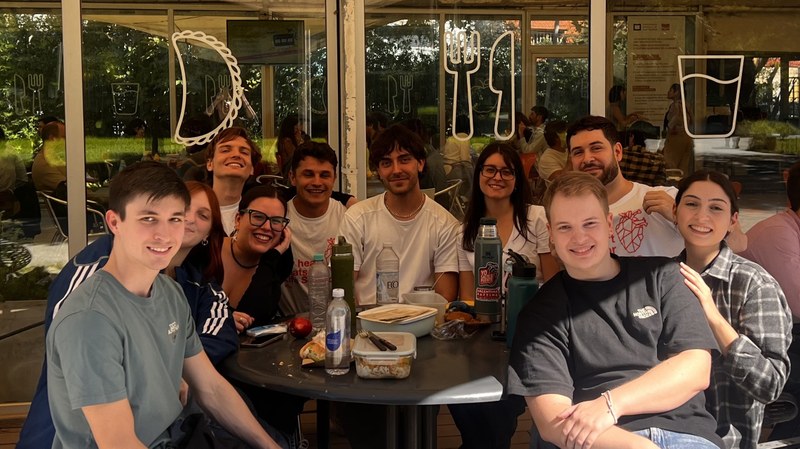
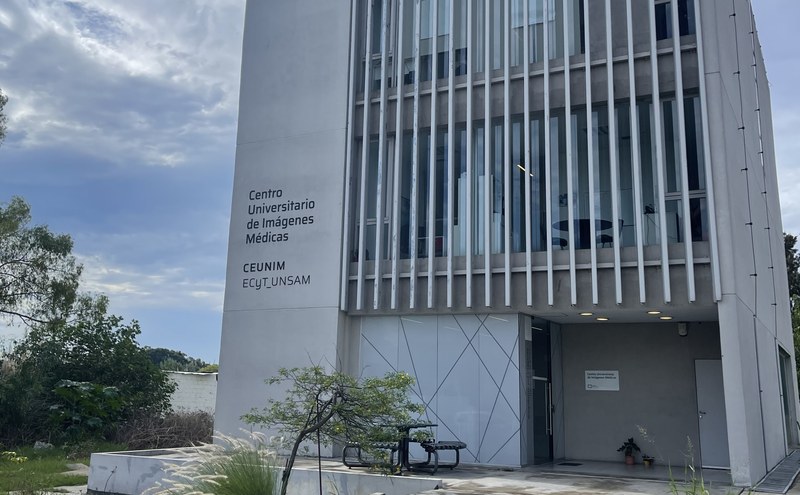
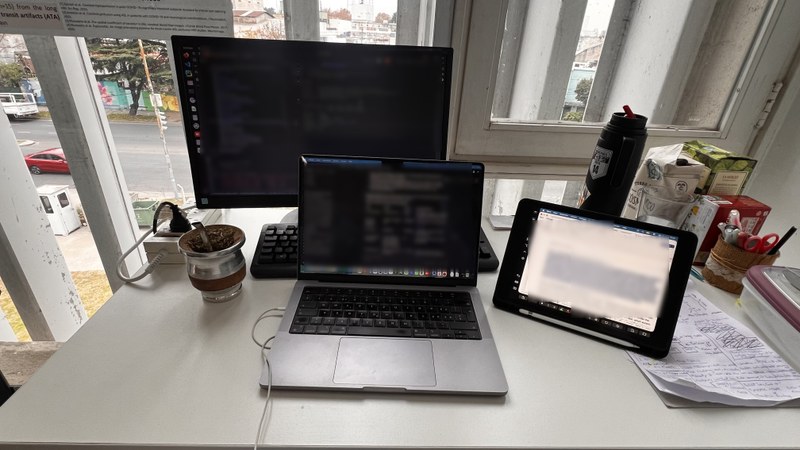
My days in Buenos Aires varied a lot, and hardly any two weekdays looked the same, but roughly speaking: I would arrive at the university between 9 and 10 a.m. and work in the office alongside a few other students. Lunch was at the university canteen around midday until approximately 1 p.m. (sometimes later), followed by work again until 4 or 5 p.m. The commute took about 40 to 50 minutes, depending on how punctual the buses were. I spent my evenings with friends, going out, playing sports, or calling people back home.
Tell us about your research during your residency.
I worked with brain scans from people who had Long COVID and from healthy volunteers. The scans were resting-state fMRI images, which show which brain regions are active at the same time while a person is at rest. This makes it possible to map how strongly the regions are connected. I compared these maps between the two groups to see whether the brain's internal communication is organised differently after Long COVID.
In the cohort I analysed, the differences between the two groups were not large enough to be statistically meaningful. There was a trend towards lower connectivity and higher segregation in the Long COVID group, meaning brain regions communicated a little less across the network and clustered somewhat more into separate subgroups. All analyses pointed in the same direction, but the differences stayed within the range that could also occur by chance.
What surprised you the most about your stay abroad?
What struck me most was how openly people welcomed me and how naturally internationals are included at the university. I felt at home from the very first day.
Something that did not concern me personally, but that I noticed through my friends at university, was the structure of the studies in Argentina. Instead of a three-year bachelor's followed by a separate two-year master's, students there complete one continuous degree that takes about five to six years, longer in professional fields such as medicine or engineering. There is no intermediate degree along the way, and in practice many students take even longer than the official duration. Hearing my friends talk about their study plans made that difference very tangible.
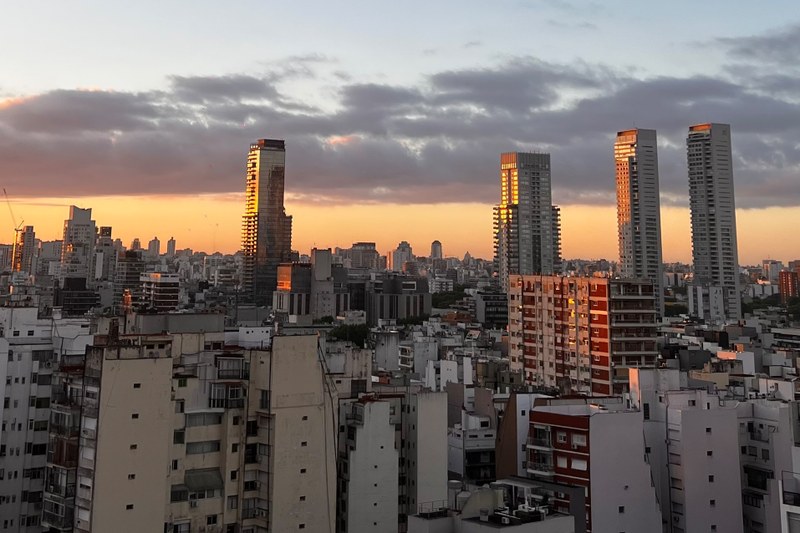
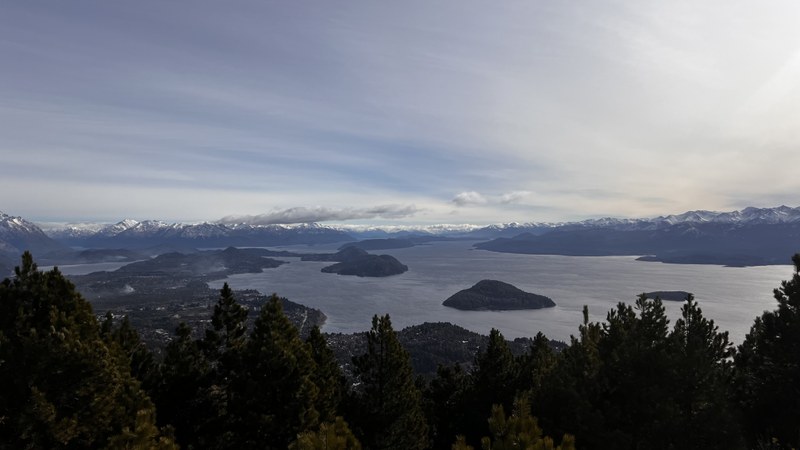
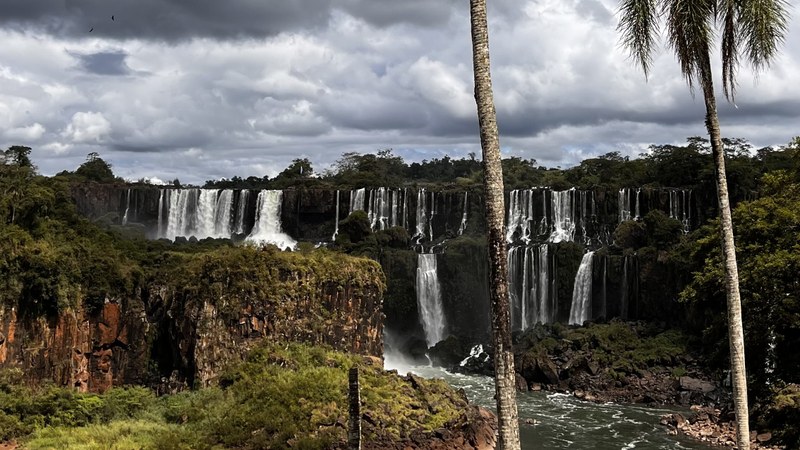
The beauty and diversity of the country surprised me as well. Buenos Aires alone changes character from one neighborhood to the next and outside the city the landscapes shift completely. From subtropical forest in the north to glaciers and mountains in Patagonia in the south. Even a weekend trip meant covering distances that would take you across half of Europe.
What tips would you give to future exchange students?
I deliberately went with almost no preparation. Apart from looking at the university, I informed myself neither about the political nor the economic situation, because I didn't want to arrive with an already fixed picture in my head. But that was also the reason why I had to figure a lot of things out on site in Buenos Aires (for example, the bus system is something I had never seen before and is something one must get used to at first). That worked well for me, but it is a matter of personality. If you prefer arriving well prepared in Argentina, look into the political and economic situation, the currency situation (whether you need cash and how best to get it), and your housing situation in advance.
Are there any special experiences or memorable moments you would like to share?
Mostly I am simply grateful. For the stay itself and for the privilege of being able to travel a bit. My main recommendation: talk to the locals, meet them with a smile, and get involved. That is how you experience the country far more closely and honestly. And travel as much as your time and budget allow. Seeing different parts of Argentina showed me how diverse the country really is, and I am very thankful for those moments.
Take your chance to study abroad!