Holografische Identifizierung von Titanimplantaten
Die holografische Kennzeichnung von Implantaten ist erforderlich, um deren Authentizität und Rückverfolgbarkeit zu gewährleisten. In diesem Projekt haben wir holografische Sicherheitsmerkmale und hochkomplexe diffraktive optische Elemente (DOE) entwickelt, die bei Beleuchtung mit einem Laser Bilder wie QR-Codes, Logos, Artikel- oder Chargennummern sichtbar machen und direkt in das Titanimplantatmaterial integriert werden können. Diese innovativen Designmerkmale können für die eindeutige Identifizierung von Medizinprodukten (UDI) verwendet werden.
Unsere nanostrukturierte Oberflächenkennzeichnung ist vollständig gewebeverträglich, da der Prägeprozess auf einer physikalischen Strukturierung der Implantatoberfläche ohne Zusatzstoffe oder Beschichtung basiert. Die zugrunde liegenden holografischen Nanostrukturen sind gegen alle herkömmlichen Sterilisationsmethoden beständig. Sicherheitsmerkmale der Stufen 1 und 2 bieten (versteckte) eindeutige Identifizierungsstrukturen für den Markenschutz von Titanimplantaten.
Bildergalerie
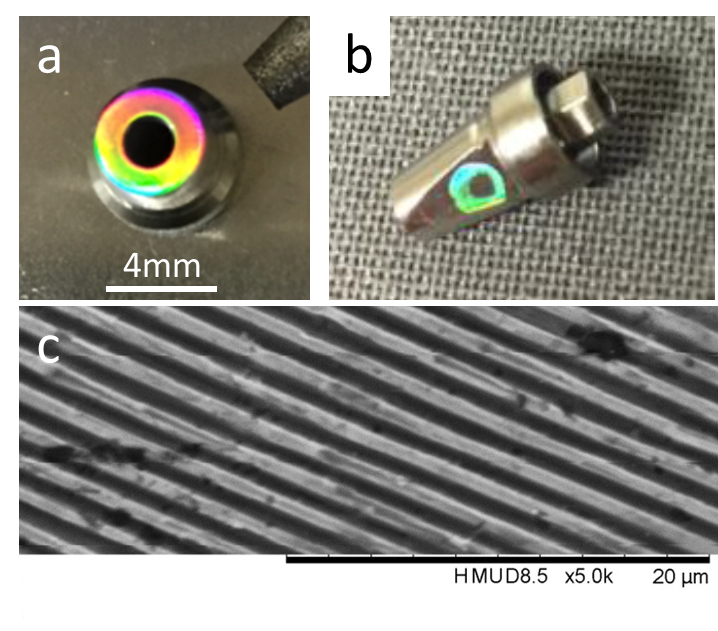
a, b) Clearly visible embossed holograms on Ti abutments. c) Scanning Electron Microscopy image shows the periodicity of the diffractive structure on the tooled titanium surface. From: M. de Wild et al., Holographic identification of titanium implants, European Cells and Materials, Online Periodical, Coll 1; p10 (2019). 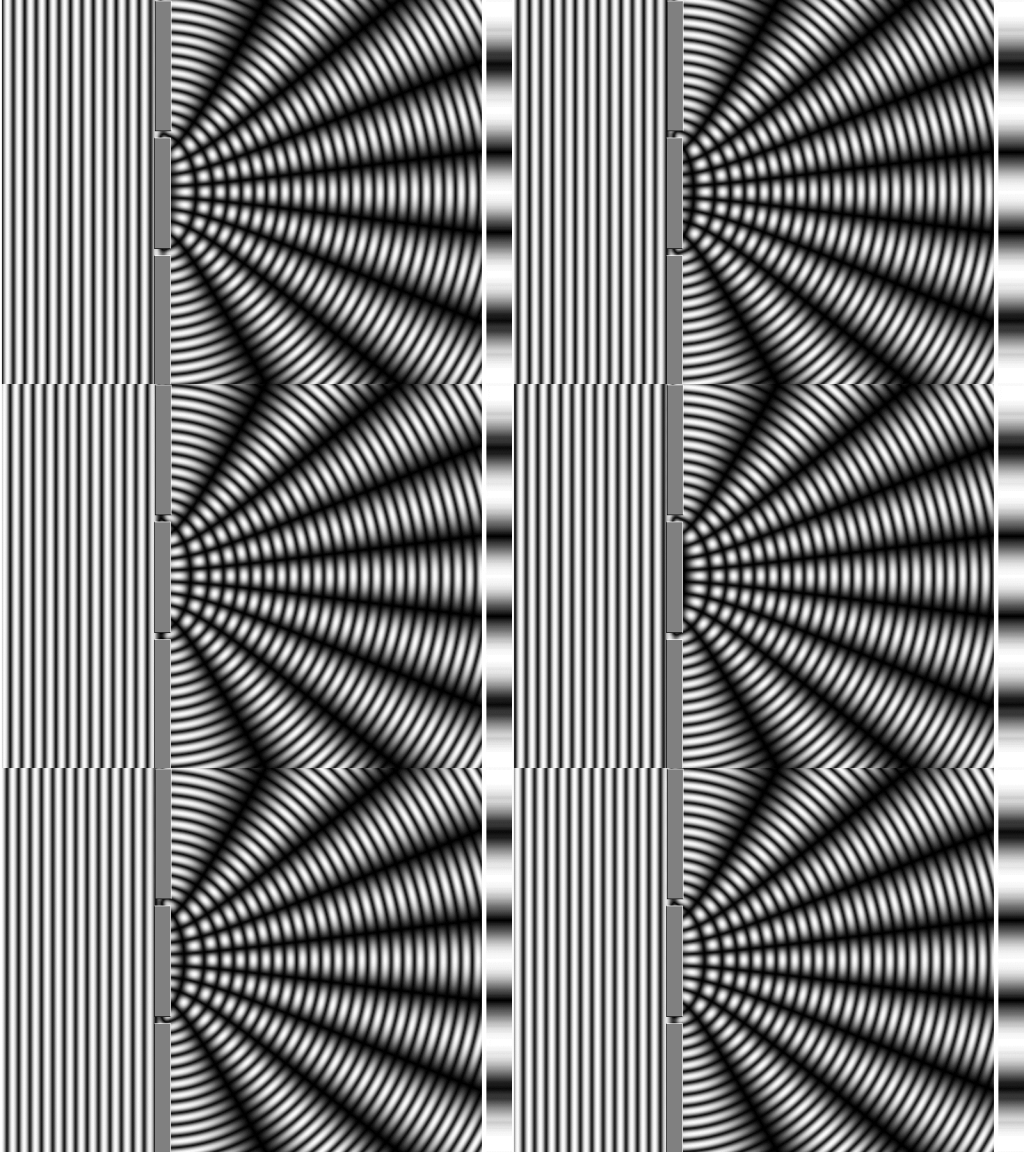
Diffraction and interference at the double slit. From https://www.alanzucconi.com/2017/07/15/understanding-diffraction-grating 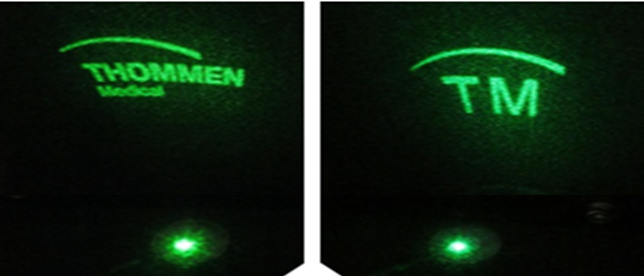
A DOE-diffracted laser produces a visible, precalculated image on a screen. 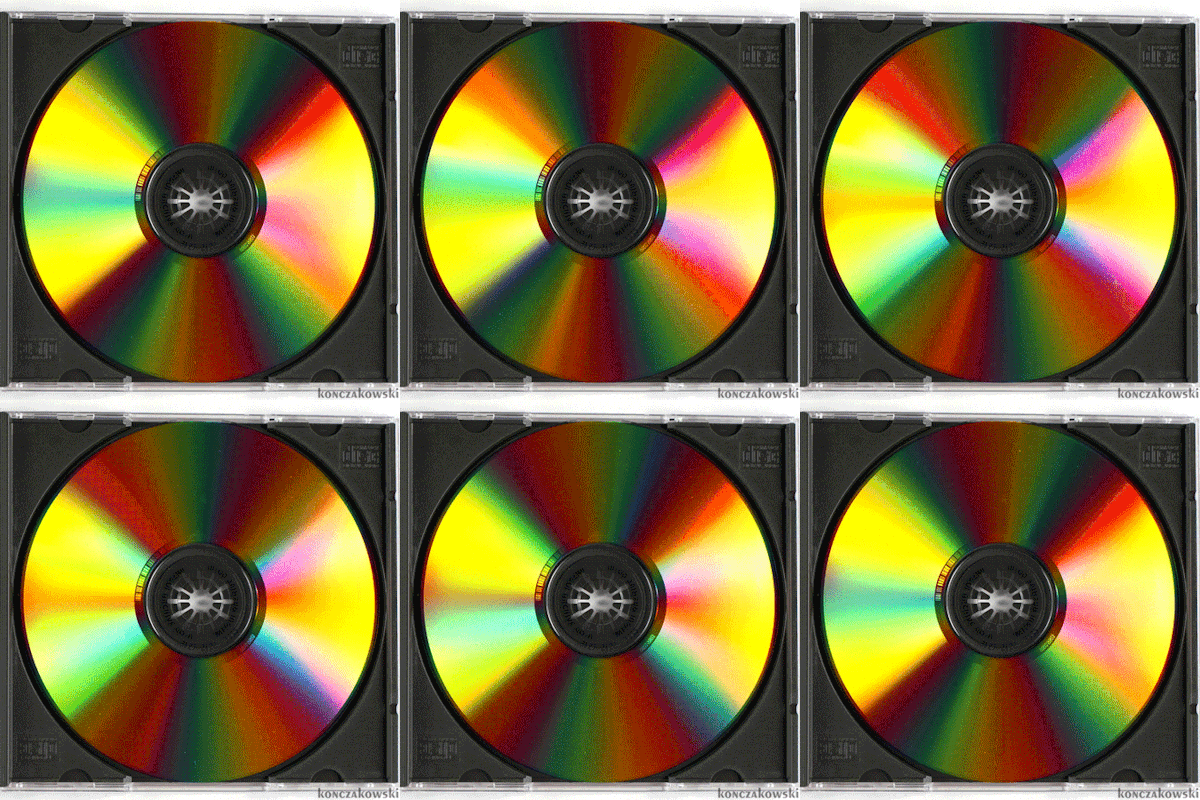
Iridescent effect of a CD. Iridescence, goniochromistic properties: gradual change of colors when looking at a surface from different angles. From: https://konczakowski.tumblr.com/post/134500316667
Referenzen
- M. de Wild, R. Krähenbühl, D. Kallweit, R. Marek, M. Estermann, M. Schnieper, Holographic identification of titanium implants, European Cells and Materials, Online Periodical, Collection 1; Meet the Expert Conference Abstracts, p10 (2019).
- M. Estermann, J. Waser, Ch. Schneider, A. Luu-Dinh, M. Schnieper, D. Kallweit, R. Krähenbühl, M. de Wild, R. Marek, Medical prostheses, medical osteosynthetic devices or hearing aids with security and/or identification elements, patent application, EP18164627.4 and EP18164630.8, 28.03.2018.
Projektdetails
- Typ
- Forschungsprojekt
- Forschungsfeld
- Funktionale Materialien und Oberflächen
- Hochschule/Institut
- Hochschule für Life Sciences FHNW / Institut für Medizintechnik und Medizininformatik
- Partner
- Thommen Medical, CSEM
- Förderung
- KTI / CTI
Kontakt

Prof. Dr. Michael de Wild
- Telefon
- +41 61 228 56 49
- michael.dewild@fhnw.ch