Zu Hauptinhalt springenZur Suche springenZu Hauptnavigation springenZu Footer springen
Logo der Fachhochschule Nordwestschweiz
Studium
Weiterbildung
Forschung und Dienstleistungen
Internationales
Die FHNW
DeEn
Standorte und KontaktBibliothek FHNWKarriere an der FHNWMedien
Logo der Fachhochschule Nordwestschweiz
  • Studium
  • Weiterbildung
  • Forschung und Dienstleistungen
  • Internationales
  • Die FHNW
DeEn
Standorte und KontaktBibliothek FHNWKarriere an der FHNWMedien

Infotage Musik

15.1.26

Jetzt anmelden!

Musik studieren an d...
Inst...
Master of Arts in Spezial...
Student projects i...

Student projects in Music and Research

Get to know the research projects of MA SP Music and Research students
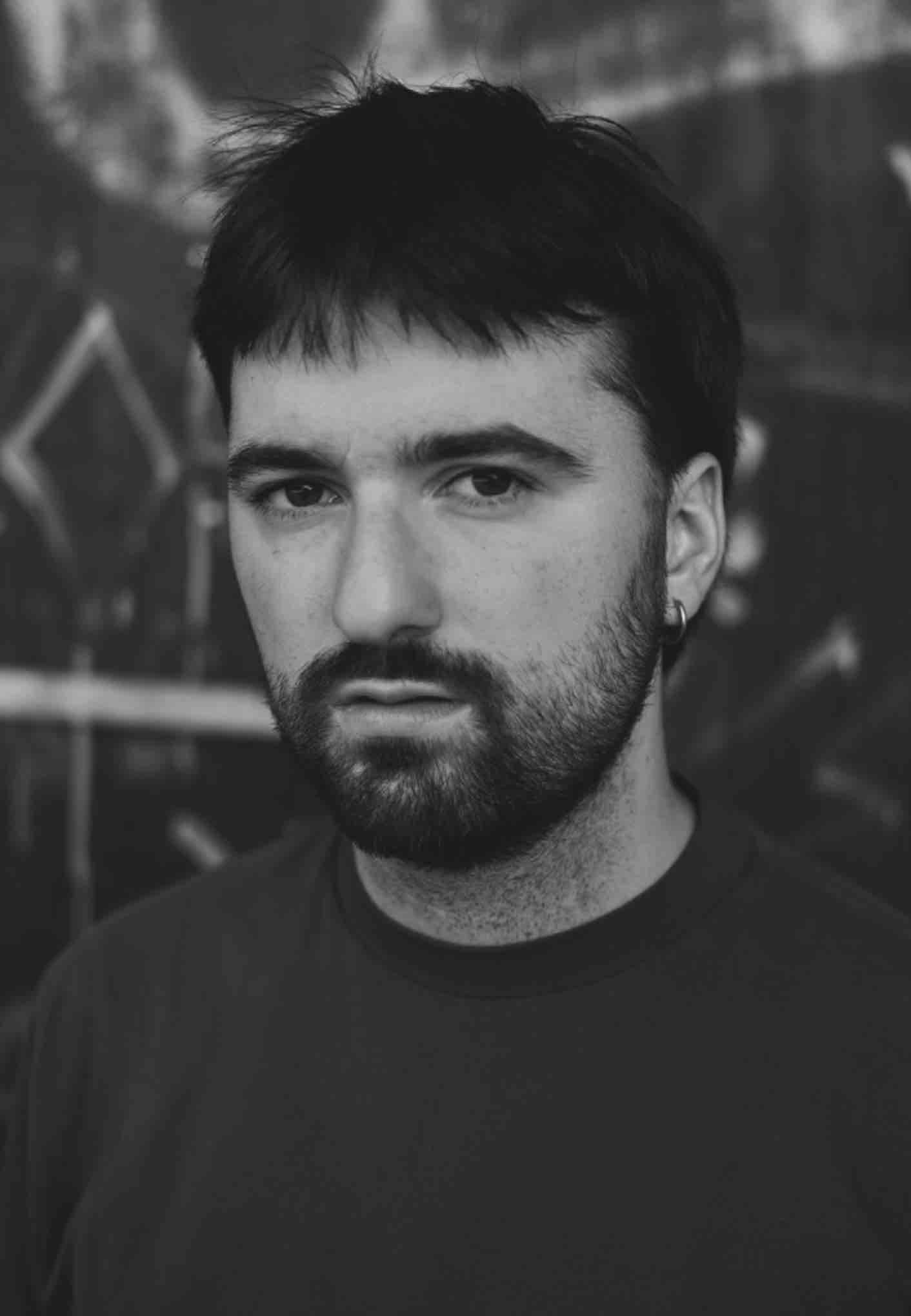
Portrait of Alejandro Sarriegui
The Music and Research programme is a unique opportunity for the development of my project. The methodological knowledge and skills I have gained have broadened my possibilities to reach new intellectual perspectives and to connect musical practice and reflection in a meaningful way. Exploring the frontiers offered by this interdisciplinary training programme allows me to find my own way through critical analysis and hybrid research having a direct impact on my artistic practice.
Alejandro Sarriegui

Studienbeginn 2025

Malcolm Braff: Generalized Theory Of Swing

I have been working on a generalization of swing for over 20 years. Throughout this time, I have conducted in-depth research under different names such as Organic Groove, The Well Tempered Rhythm Machine, Non-Euclidean Rhythms and currently Generalized Theory Of Swing. I have integrated this approach into my playing, composing and teaching at the Jazzcampus in Basel as well as numerous masterclasses/lectures worldwide. Despite being referenced by many musicians, teachers, and researchers, this body of work has never been formally published or compiled. I now feel the need to dedicate focused time to deepen my research, organize my findings, and publish the results, making them accessible to others.

Duration 2025-2027
Mentors Dr. Michael Kunkel, Prof. Dr. Michel Roth

Bio

Prof. Malcolm Braff, Student Music and Research and Lecturer Institut Jazz

Links

general-theory-of-rhythm.org
xenrhythmic.fandom.com/wiki/Malcolm_Braff
malcolmbraff.ch


Łukasz Moroz: Composing with Material Tendencies
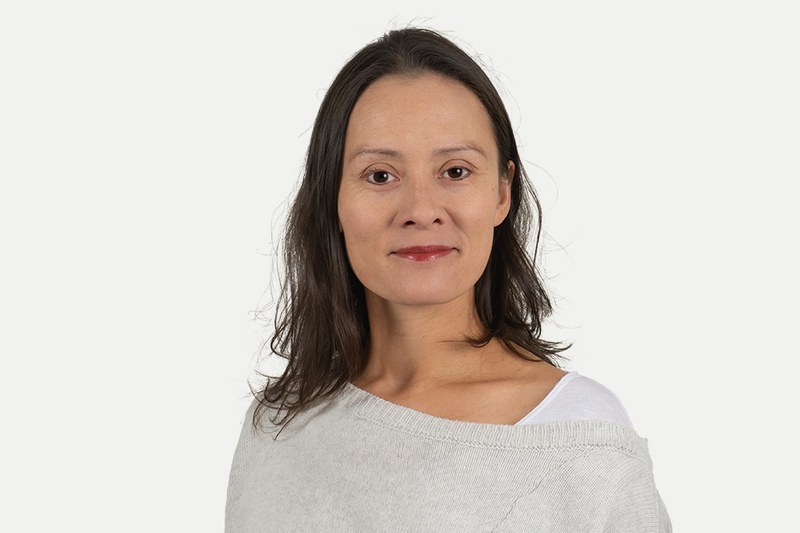
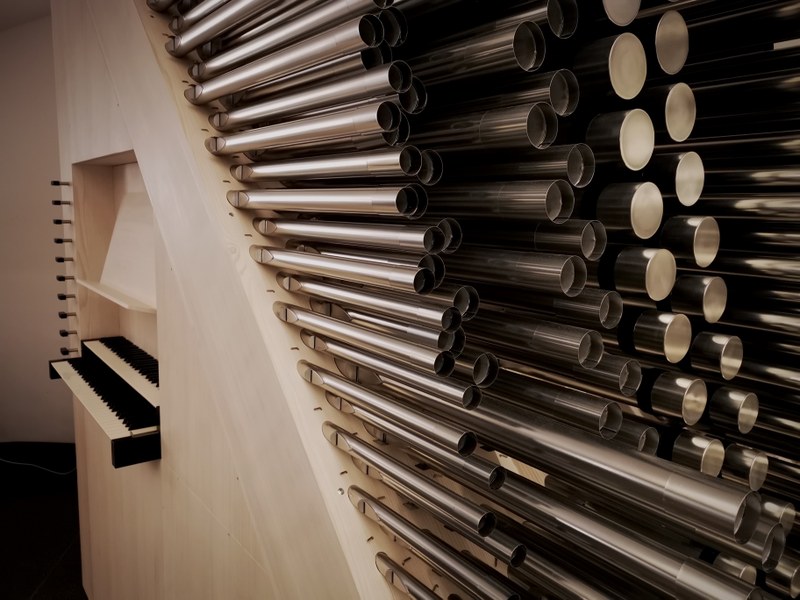
My research originates from two formative listening experiences as a former classical pianist: playing meantone temperament for the first time on a small portative organ, and later encountering La Monte Young’s The Well-Tuned Piano. In both situations, familiar harmonic relations appeared under new aspects: the keyboard itself lost its habitual clarity, and the piano’s resonance unfolded into an uncanny, seemingly autonomous order. In the first, the same tonal materials revealed new perceptual contours; in the second, the instrument itself seemed to exceed compositional control, articulating an order of its own. These moments of aspect-hearing and allure revealed to me that tuning and timbre are not neutral parameters but behaving materials, quasi-agents whose tendencies reshape our sense of pitch, duration, and relation. Rather than serving as means of expression, they disclose their own modes of organisation and resistance. From these experiences arises the central question of this project: What does it mean to compose when tuning, timbre, and material behaviour are not fixed, but co-constitutive and mutually constraining? Through my compositional practice, I aim to explore how instruments’ spectra co-determine consonant terrains, and how composition can 1 of 2unfold these spectral aEordances audible. By spectral aEordances I mean regions where a given tuning and an instrument’s partials jointly minimise roughness and/or maximise tonalness, opening particular pathways of consonance. In this view, composition becomes a practice of cultivating correspondences among sounding materials rather than imposing structure upon them.

Duration 2025-2027
Mentors Dr. Christoph Haffter, Prof. Dr. Michel Roth (2025/26)

Bio

Łukasz Moroz is a composer-performer and sound artist exploring tuning, timbre, and material behavior through microtonality, just intonation, and psychoacoustic phenomena. His music and installations have been presented at Rewire Festival (The Hague), Aural Spaces Festival and Muziekgebouw aan ’t IJ (Amsterdam), Nest Gallery and West Museum (The Hague), among others. He co-organizes the experimental music festival Luksfery in Gdynia. Originally from Poland, Łukasz holds a BMus in Art of Sound from the Royal Conservatoire The Hague (Koninklijk Conservatorium Den Haag) and has worked at Willem Twee Studios in ’s-Hertogenbosch. /2025


Mads Emil Nielsen: Framework / Fragments
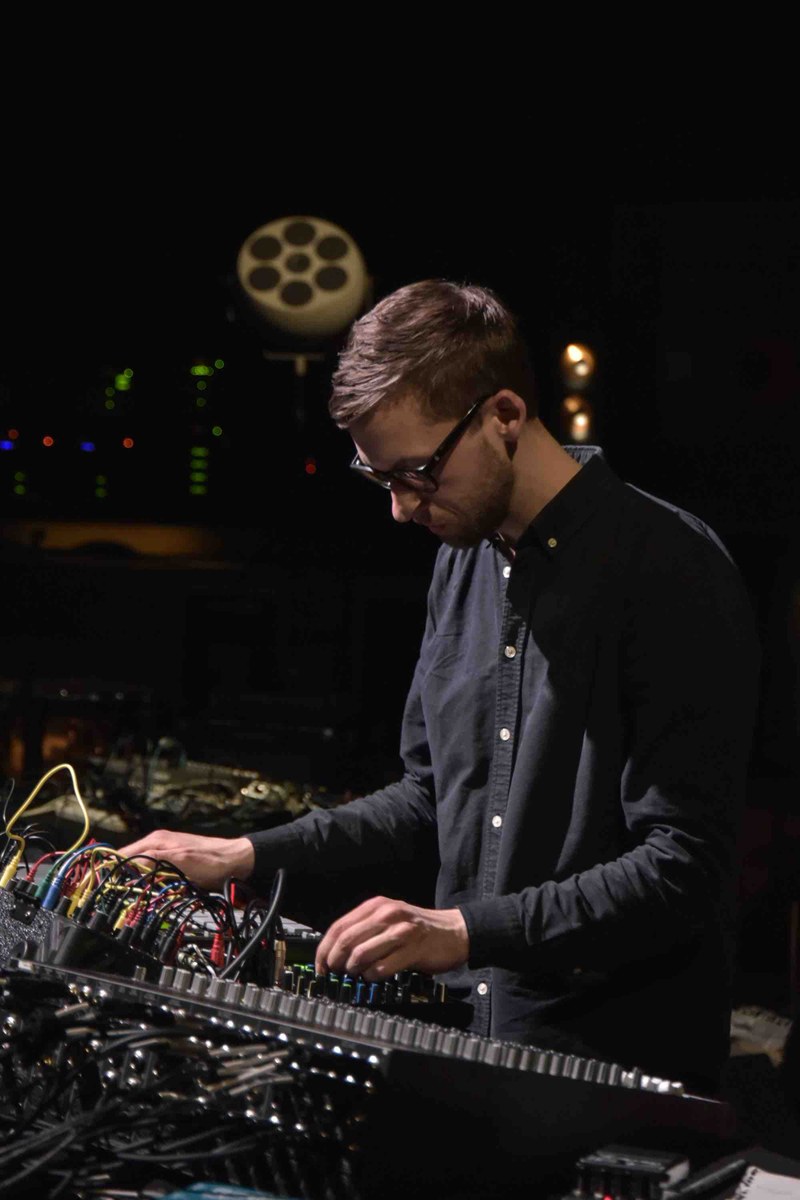
Framework / Fragments (working title) is a project based on graphic score explorations and a direct, visual approach to sound and composition. As a musician/composer I have been interested in architecture and graphic design and the question of how to intuitively sonify an image / “how does an image sound?” and in translating sounds and music into illustrations and scores. With this project, I would like to research texture and materiality, and visual qualities of sound, and the connections between visual materials and recordings.
The work is based on exchanging and producing multiple sound pieces and graphic score fragments. I see this as a research process and exploration, and feedback system with the potential of generating a large amount of sketches and material, also later in this process by collaborating with others – musicians, composers, graphic designers. In general, the work is based on a fascination of working with mainly basic electronic sound sources and analog electronic instruments, also in combination with entirely digital sounds and granulations, and emphasizing and amplifying unpredictability, surprises, micro-events, noises and error sounds. I am interested in exploring how these recordings can already have “visual” qualities.
The process of producing and exchanging pieces and graphic score fragments will happen in several parts – starting from either one recording or drawing. Each piece / score is interpreted in multiple turns, back and forth, sound to image. In this process, I would like to research various material such as architectural sketches, historic and contemporary graphic scores, maps and experimental graphic design. I would also like to develop various methods and systems of describing and analyzing the audio material, and other types of recordings in general (short texts, questionnaire, hörprotokoll). The intention is then to create a large archive of material which is edited, possibly deconstructed into final scores and compositions.
I am interested in how this work and output, which is strongly related to movements and aesthetics in sound and graphics from the 1960s-70s, can be placed and exist in a contemporary context. And in doing comparisons between these historic works and contemporary graphic notation projects & recordings. I would also like to research the following question: how can this material as music / sound in finalized recordings, and performances, diffusions or live compositions have materiality in sounds themselves, and these graphic, visual, or even (although perhaps more abstract) “architectural” qualities – e.g. being presented in stereo without using several loudspeakers, and without any of the visual material being present? This is something that I often miss when being part of the audience at presentations of graphic notation projects and “visual music”.

Duration 2025-27
Mentors Prof. Svetlana Maraš, Dr. Christoph Haffter

Bio

Copenhagen based musician/composer Mads Emil Nielsen works with basic sound sources, often combined with short percussive and orchestral samples, and the amplification of machine produced errors. In 2014 he founded the label and artistic platform arbitrary, on which he has released the Framework series of graphic scores and recordings, as well as solo works and collaborations including Percussion Loops, the album Refound with Andrea Neumann, the Black Box series of works originally made for theatre, dance performances & radio soundtracks, and most recently the remix collaboration Framework / Zwischen Remixes with German producer Jan Jelinek (2025). He has contributed to various exhibitions, including the Notations 21 Project. /2025

Links

madsemilnielsen.dk

arbitraryproject.com


Vittoria Pagani: Reinventing the Unwritten: The Archival Legacy of Hindustani Music in Academic and Artistic Practice
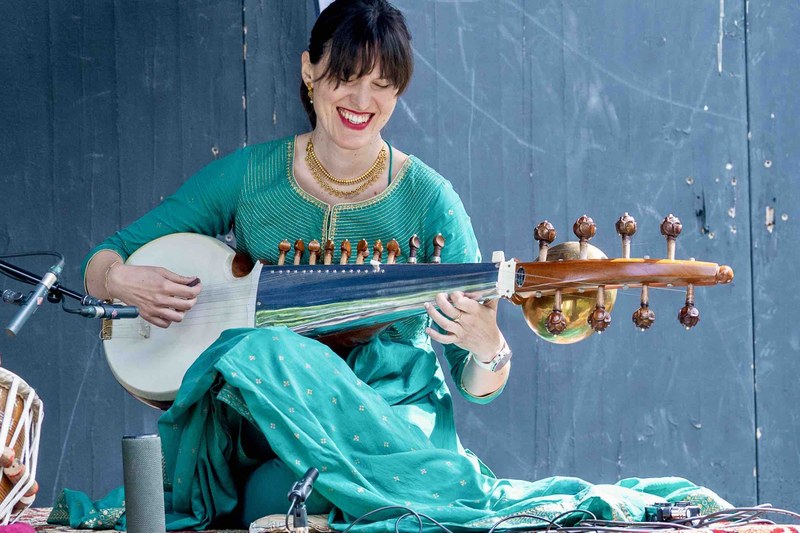
In Hindustani music, notation is not standardized but functions mainly as a mnemonic aid: an approximate record of a composition learned by ear and imitation. This paper examines the potential of the archival legacy of Hindustani music to complement and expand pedagogical and artistic approaches in European academic education. At the center of the project are numerous transcriptions and recordings of Ali Akbar Khan’s teaching, collected over decades by his student Ken Zuckerman.
Because Hindustani music is transmitted orally, these notations remain partial and open-ended. Rather than fixing musical meaning, they demand interpretation, requiring the performer to reconstruct melodic and rhythmic material through listening, memory, and embodied practice. In this sense, the archive becomes a generative site: it preserves the legacy of a master while simultaneously demanding reinvention, enacting an active process of cultural transmission.
My research explores two interconnected dimensions:

  • Pedagogy in higher education – Integrating this archival legacy into ear training and guided improvisation courses at the Musikhochschule Basel, where students encounter Hindustani music as a parallel to European monodic traditions and learn to navigate oral transmission alongside Western notation. Key questions include: In what ways does learning Hindustani music foster skills applicable to other musical genres? What challenges and limitations arise when teaching an oral, non-European art form in a Western academic context?
  • Artistic projects – Using the archive as a springboard for performances that place Hindustani material in dialogue with European modal traditions, highlighting melodic affinities and exploring transcultural approaches to musical expression. Central questions include: To what extent do skills acquired through Hindustani training versus Western academic training influence my compositional and creative practice? In collaborative projects with non-Hindustani musicians, is the oral dimension a limitation or an added value?

Duration 2025-2027
Mentors Dr. Budhaditya Chattopadhyay, Prof. Dr. Anne-May Krüger

Bio

Vittoria Pagani (b. 1985, Novara, Italy) is a sarod and classical guitar player based in Switzerland. She studied sarod and Hindustani vocal music under the guidance of Kenneth Zuckerman, disciple of Ali Akbar Khan, and is currently continuing her studies with Sougata Roy Chowdhury. Vittoria teaches Hindustani music at the Musik-Akademie Basel and classical guitar at the Musikschule Olten.
As a performer, she appears both as a soloist and in transcultural collaborations, including the Duo Rasa with violinist Paula Perez and the project Unity in Diversity with Ensemble Zefiro Torna. Her work explores the dialogue between Hindustani music and European traditions, bridging oral transmission and contemporary artistic practice. /2025

Links

vittoriapagani.com

www.musikschule-basel.ch/de/uber-uns/lehrerinnen-und-lehrer/detail/pagani-vittoria.html


Arthur Wilkens: Ars organisandi: late medieval organ improvisation
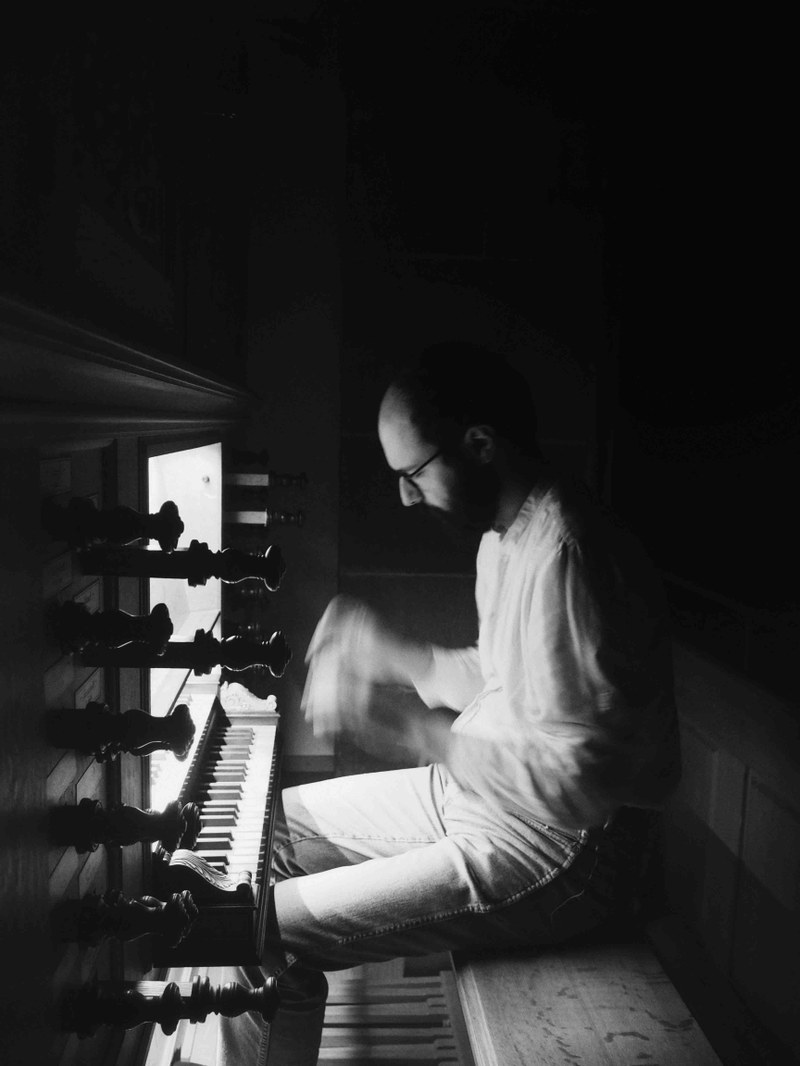
Ars organisandi: late medieval organ improvisation Keyboard music of the Middle-Ages has come down to us in the form of organ tablatures and pedagogic methods known as Fundamenta organisandi. My aim is to engage practically with this surviving material as traces of an orally transmitted tradition in which improvisation and the use of memory played a central role. Developing the skills described in the sources of the Ars organisandi requires a radical shift in how we conceive of music pedagogy today. While traditional musicology has placed much emphasis on the concepts of the musical “work” and authorship, a significant portion of medieval sources focuses instead on the process of making music—an approach that could be described as non-compositional. This research project is an experimental attempt to embody the mindset of late medieval instrumentalists in contemporary music-making. It is also a practical reflection on the generative nature of this music: an interesting encounter between two distinct yet complementary traditions—the ancient Ars organica and the mensural music of the 14th and 15th centuries.

Duration 2025-2027
Mentors Prof. Dr. Martin Kirnbauer, Prof. Dr. David Mesquita

Bio

Arthur Wilkens is an organist and singer specializing in the music of the Middle Ages and the Renaissance. He is dedicated to the research and performance of plainchant, mensural music, and organ music of the late Middle Ages. After studying composition and choral conducting in Brazil, his native country, he continued his training in France at the Francis Poulenc Conservatory in Tours, and later at the Schola Cantorum in Basel (Switzerland), where he obtained a bachelor’s and a master’s degree in early keyboards under the guidance of Corina Marti. He has also attended courses in modal singing with Aram and Virginia Kerovpyan, Marcel Pérès, and Rebecca Stewart. /2025


Studienbeginn 2024

Rubén Bañuelos Preciado: Disembodiment as a performative Spectrum
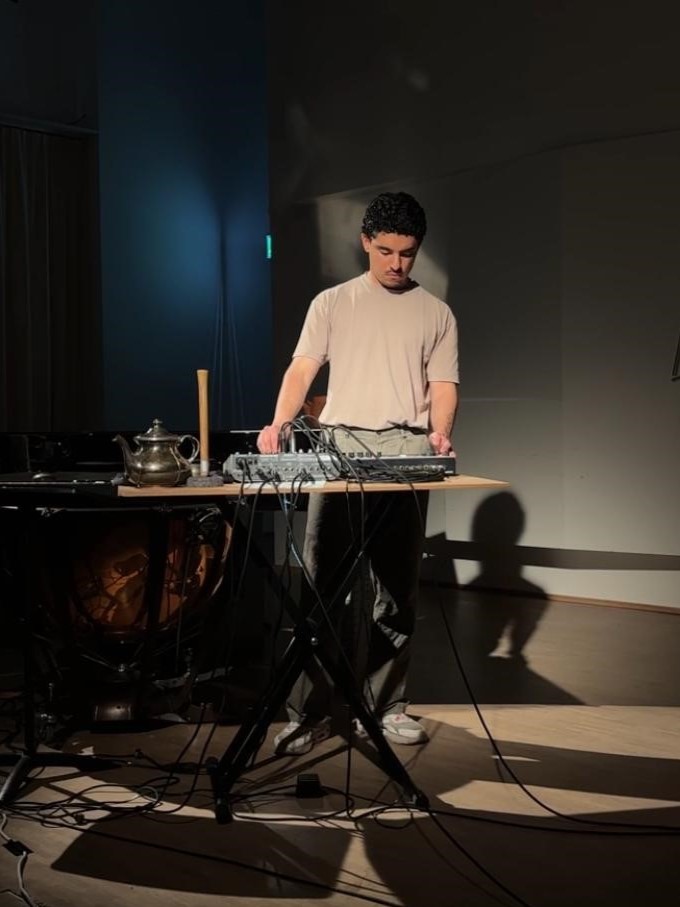
This research project develops a series of re-imaginations of a small percussion setup composed by me called Semilla. This particular setup, which highlights certain possible acoustic distortions and empathetic resonances between the instruments of said setup, gets expanded, abstracted, situated under various modifications. Each iteration corresponds to a research question on an artistic, acoustic, or technical degree. The answers to each of these questions feed into the construction of a new apparatus ultimately designed with the goal of harnessing the acoustic and artistic principles found on the original setup to unleash them into non-performative spheres as well as performative and hybrid mise-en-scènes. A looped procedure that renders itself out of its initial conditions and onto a constituted non-performativity.

Duration 2024–26
Mentors Prof. Christian Dierstein, Prof. Svetlana Maraš, Prof. Dr. Michel Roth

Bio

The Tijuana-born percussionist obtained a master's degree in Percussion Performance at the Basel Academy of Music, under the mentorship of Christian Dierstein. At the same institution, as a current student of the Music and Research programme, he engages with the performance and non-performance of acoustics by building instrument/installation hybrids. He has extrapolated his practice from the contemporary classical percussion repertoire towards instrumental and sound design involving performance and/or installation frameworks. 
In 2024 he toured the experimental solo-project That weightless flesh is our relative through Mexico and Switzerland, along with composers Luis Fernando Amaya and Nora Vetter. For the latter project he composed a work that applies the principles of acoustic distortion that he explores in depth in his research Disembodiment as a performative spectrum. Said acoustic principles were also developed in his master’s final exam Alma Inmediata (2024), a recital-form mise-en-scène of an installation and several compositions by him that inspired the research. /2024

WEBSITE


Varun Rangaswamy: Musical Fabulation, or, Hearing History in a Different Voice
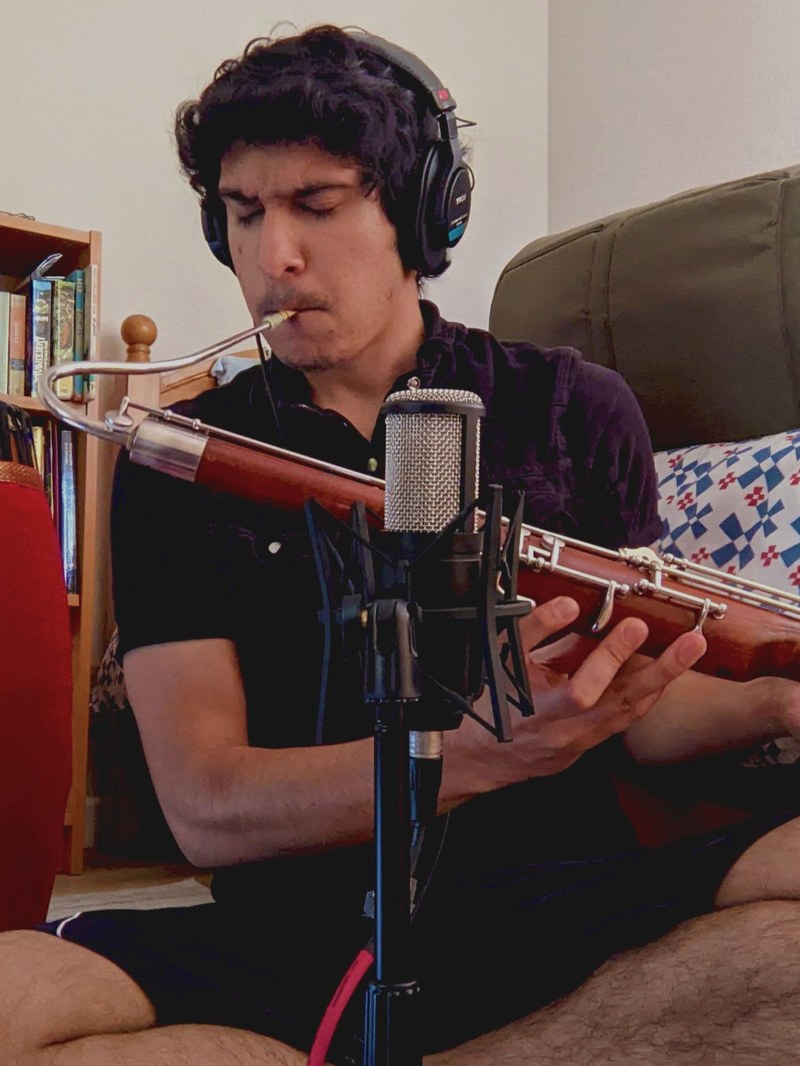
I make music through the archive. By studying the archives of colonial South India and 19th century Basel missionaries, my research focuses on the types of voices that are audible to readers (and listeners) of the archive. Heeding the historical expertise of Saidiya Hartman, I refrain from reconstructing those voices, instead trying to uncover how they might sound, how heterogenously they could be conceived, and how they came to be un/authorized through colonial hegemony. By staging the text and the drama of the archive, I try to make audible the tensions of history, rearranging that network of conflicting voices, to offer a new sensory experience of the past, and in doing so, the present and future as well.
In my artistic practice, I put to work my experience in Karnatak vocal, Western classical, and experimental/creative music. By deploying the discourses of those musics in the service of reinterpreting the archive, I hope to bring a varied and unique perspective to archival research.
The title of my project comes from Saidiya Hartman’s original methodology, which she calls “critical fabulation,” through which she combines historical evidence with artistic writing to produce a counter-history to the archive of American slavery. In my artistic practice, I—though under very different historical circumstances—try to musically fabulate. Quotations, descriptions of sounds, descriptions of voices, and other sonic traces abound in the archive of colonial India. What would it mean to compose or improvise those sonic traces musically? And how might one trouble the authority of those descriptions, inflecting them through a different perspective than the one preserved by imperial venture? My time in the Music & Research program will be spent composing and improvising the traces of sound and voice found in archive, with an aspiration towards offering a different way of hearing the encounter between colonizer and colonized.

Duration 2024–26
Mentors Prof. Johannes Kreidler, Prof. Dr. Michel Roth

Bio

Varun Rangaswamy is an improviser, composer, scholar, bassoonist, and Karnāṭak vocalist. His self-reflexive debut album REINHERITANCE has been praised for “creating a mesmerizing circular dialect” (I Care If You Listen). As a multifaceted artist, he has worked with such ensembles as International Contemporary Ensemble, Talea Ensemble, and Mivos Quartet in varying capacities as performer and/or composer. Collaborators included Aakash Mittal, Fay Victor, Rebekah Heller, Sara Schoenbeck, and Jasmine Wilson. Varun helped conceive and establish the San Diego Emerging Composers Concert, in which he has participated as composer, performer, and recruiter. This annual concert series offers performance opportunities for undergraduate composers based in the San Diego/Ensenada/Tijuana area. Varun was originally trained in Karnāṭak music. He has studied voice with C.M. Venkatachalam and B. Balasubrahmaniam, and mridanga with Rajna Swaminathan. He has also studied bassoon performance with George Sakakeeny and Valentin Martchev. Varun has degrees from UC San Diego and the Eastman School of Music and is currently a master’s student at the Hochschule für Musik Basel. /2024

WEBSITE

Archiv

Abschluss 2025

Mauricio Silva Orendain: The Placticity of the Pipe. Microtonality as Sound Synthesis

The Experimentalorgel by Rieger at St. Martin’s Church in Kassel, Germany, inaugurated in 2021, shook my artistic career like nothing before. Its extremely flexible dynamic wind not only made me fall in love with its soundscapes but also opened new avenues for my musical development, inevitably leading me into the field of research. Two years after composing a piece for its inauguration, starting the new MA programme “Music & Research” fit like a glove, providing the guidance and inputs I needed to deepen my exploration and understand how my artistic practice had the potential to take on a strong research direction, and how to approach it, communicate it and benefit from it. My current project, titled "The Plasticity of the Pipe: Micro-transdimensional Counterpoint", analyses the sound development and sound decay of the organ pipe under dynamic wind, exploring the resulting counterpoint between pitch, intensity, timbre, and rhythm for both composition and performance. It places the Experimentalorgel in Kassel as the central object of study, through which, as an improviser, composer, and performer, I explore its sonic possibilities, analyze them, and structure these possibilities into compositions that I perform myself. By translating and adapting these musical ideas to other organs across Europe, I question how innovations in organ building can trigger new possibilities within a single pipe and how the organ as a whole can offer insights into complex acoustic phenomena that are impossible to imagine or experience without the physicality of the instrument and which give us new perspectives where to observe and understand Klangfarbe from.

Bio
Winner of the Kaija Saariaho Organ Composition Prize in 2023 and Artist in Residence at Center for Italian Renaissance Studies at Harvard University in 2023, Basel-based Mexican composer and diverse keyboardist Mauricio Silva Orendain works with unconventional tuning systems to explore the bridges between microtonality and sound synthesis, bringing Klangfarbe to the foreground in his search for authentic sound sculptures. He is continuously composing for and performing with Vicentino’s Arciorgano in Basel, the new experimental organs at St. Martin’s Church in Kassel, Germany, as well as at various organ venues across Europe. His innovative approach to the organ — treating each pipe as an individual instrument through partial registration and dynamic wind control — was the catalyst for his artistic research project, “The Plasticity of the Pipe: Micro-Transdimensional Counterpoint.” His performances further explore spatialisation through the 4DSOUND engine as a performance vehicle via acoustic and electronic instruments. /2023

Duration 2023-25
Mentors Johannes Keller, Prof. Dr. Martin Kirnbauer, Prof. Caspar Johannes Walter

Alejandro Sarriegui: Experimental Percussion Instruments: an Artistic Research in Musical Interpretation

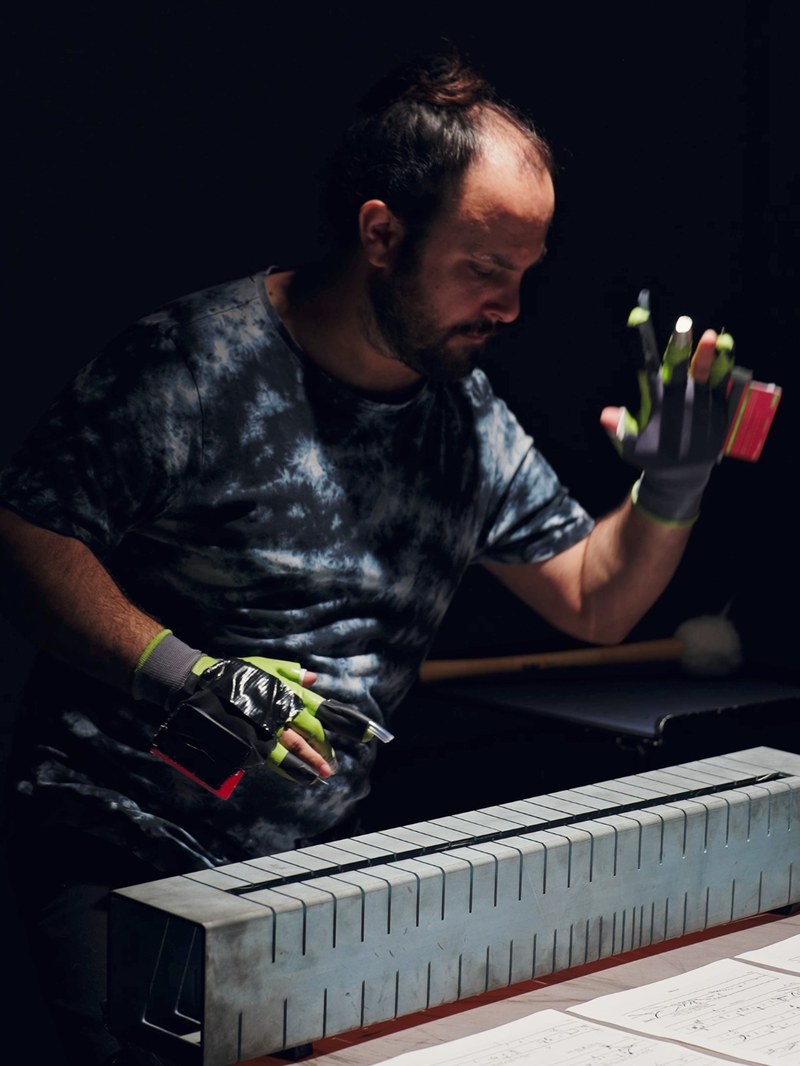
As a percussionist, I am interested in exploring the musical possibilities of non-conventional percussion instruments. These instruments often lack a substantial repertoire. Through the study case of Josef Anton Riedl's 'Paper-Music,' I discovered not only techniques for generating sounds with non-conventional generators but also a way to stimulate my creativity as a performer. Reconstructing the paper sound sculpture and reinterpreting Riedl's music provided a space for critical reflection on musical interpretation. Studying the historical performance practice of this music helped me develop a procedure for generating repertoire for non-conventional percussion instruments. This process of musical interpretation has transformed my artistic practice into one of creation. Through this reflexive reinterpretation, I have recreated pieces for Riedl's paper sound generators and the Swiss nicophone developed by Lunason.
Having started within the framework of the MA SP Music and Research, I will further pursue this project for my doctoral degree within the doctoral programme Musikwissen, a cooperation between the Basel Academy of Music and the University of Basel.

Bio
Alejandro Neves Sarriegui is an Argentinian percussionist born in Buenos Aires in 1989. After completing his classical percussion studies in his hometown, he pursued postgraduate studies in Germany. Specializing in percussion at the Basel Academy of Music, he focused on the integration of non-conventional percussion instruments into 20th-century and contemporary music. Currently, he's engaged in a research project at the same institution, exploring these instruments and their musical interpretation within the "Music and Research" study programme. An active figure in the contemporary music scene, Alejandro performs in various ensembles, musical theater productions, and solo recitals. He is also a member of Duo Amoeba, a duo dedicated to post-instrumental practices. With Duo Amoeba, he has toured Germany, Switzerland, Asia, and Argentina, sharing their innovative approach to music. They have also had the opportunity to teach as guest lecturers at the National University of La Plata and the National University of Lanús. /2023

Duration 2023-25
Mentors Prof. Christian Dierstein, Prof. Dr. Anne-May Krüger

Dakota Wayne: The Principle of Distance in Music

I use a model of artistic research where a theoretical background is developed, against which an aesthetic object is produced as an exemplification. This process forms a feedback loop between a theoretical portion, which precludes and informs the frame of the artwork, and a work of art, which demonstrates and clarifies the theory. The theoretical envelops and evaluates the artistic while the artistic motivates and practices the theory. With this method, I develop a concept of musical space focused on manipulating the literal and metaphorical distance between the listener and the musical work, moving in between what I have named the reflective and inflective domains of art. In a series of works, I attempt to highlight compositional tools for manipulating distance both immanent and external to musical material. Of special interest to this principle of distance is the role media play in creating this dual character of art that lives between reality and fiction.

Bio
Dakota Wayne is a composer of conceptual and performative music whose work examines the social situation in and around sound. His work has been performed internationally at festivals, including ZeitRäume Basel (2021), impuls (2019, 2023), Darmstädter Ferienkurse (2018), and SALT New Music Festival (2015). He has worked with experienced ensembles in the field such as Ensemble Recherche, kinnekt kollektiv, VanProject, Illinois Modern Ensemble, Purchase Contemporary Ensemble, as well as outstanding performers, Miranda Cuckson, Rebekkah Heller, Gunnhilldur Einarsdottir, Seth Josef, Ellen Fallowfield, Sanae Yoshida, Peyee Chen, Kalle Hakosalo, Mikolaj Rytowski, and Phoebe Bognar among others. Dakota’s work spans disciplines, as he has experience in installation and performance art as well as theater music. Originally from Albany, New York, Dakota has studied in the US and Europe, holding degrees from Purchase College, University of Illinois and the Kunstuniversität Graz. He is currently pursuing the Music and Research programme at the Basel Academy of Music. /2023

Duration 2023-25
Mentors Dr. Christoph Haffter, Prof. Johannes Kreidler/ Sara Glojnarić, Prof. Svetlana Maraš, Prof. Dr. Michel Roth

Researching about?

Dakota Wayne about his research project in MA SP Music and Research /2023
Teaching Staff

Teaching Staff

Who will you be working with?

Studium

StudienangebotMA SP Music and Research
hsm_klassik_forschung_info-studierende

Angebot

  • Studium
  • Weiterbildung
  • Forschung & Dienstleistungen

Über die FHNW

  • Hochschulen
  • Organisation
  • Leitung
  • Facts and Figures

Hinweise

  • Datenschutz
  • Accessibility
  • Impressum

Support & Intranet

  • IT Support
  • Login Inside-FHNW

Member of: