Get to know the research projects of MA SP Music and Research students
Studienbeginn 2025
Malcolm Braff: Generalized Theory Of Swing
I have been working on a generalization of swing for over 20 years. Throughout this time, I have conducted in-depth research under different names such as Organic Groove, The Well Tempered Rhythm Machine, Non-Euclidean Rhythms and currently Generalized Theory Of Swing. I have integrated this approach into my playing, composing and teaching at the Jazzcampus in Basel as well as numerous masterclasses/lectures worldwide. Despite being referenced by many musicians, teachers, and researchers, this body of work has never been formally published or compiled. I now feel the need to dedicate focused time to deepen my research, organize my findings, and publish the results, making them accessible to others.
Duration 2025-2027
Mentors Dr. Michael Kunkel, Prof. Dr. Michel Roth
Bio
Links
Łukasz Moroz: Composing with Material Tendencies
Duration 2025-2027
Mentors Dr. Christoph Haffter, Prof. Dr. Michel Roth (2025/26)
Bio
Mads Emil Nielsen: Framework / Fragments
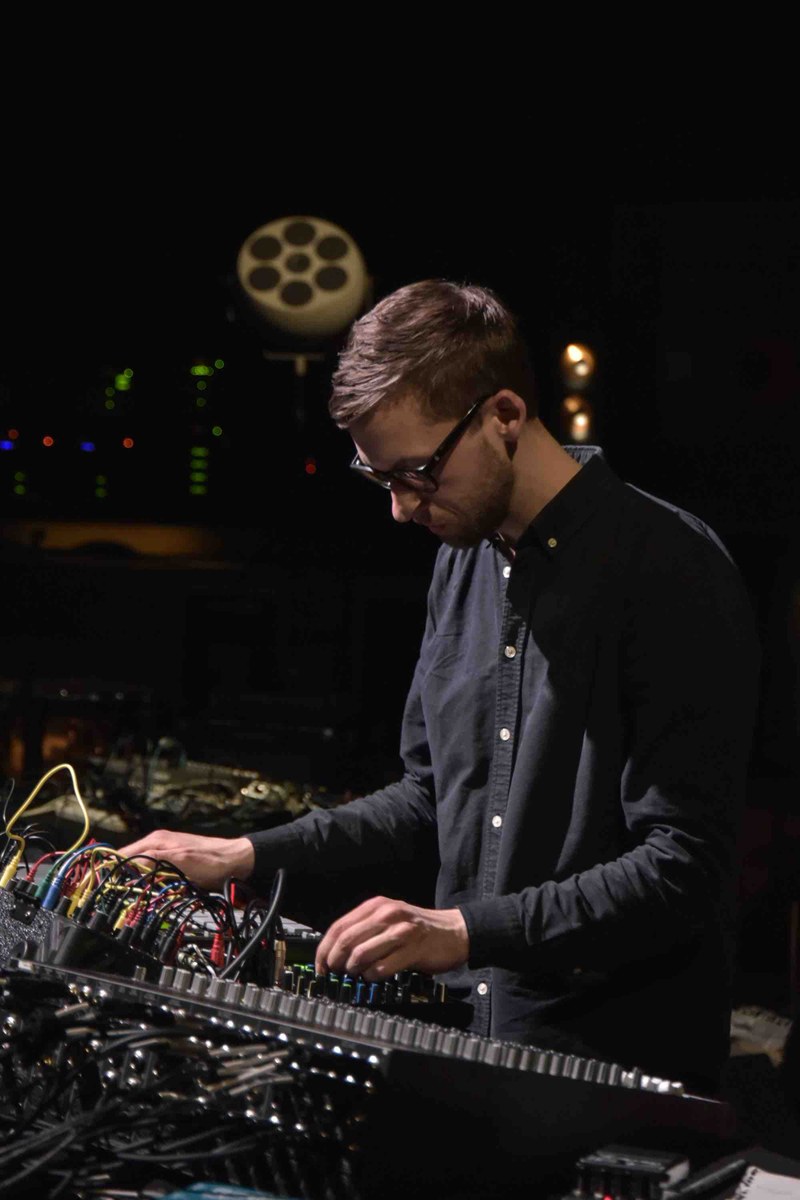
Framework / Fragments (working title) is a project based on graphic score explorations and a direct, visual approach to sound and composition. As a musician/composer I have been interested in architecture and graphic design and the question of how to intuitively sonify an image / “how does an image sound?” and in translating sounds and music into illustrations and scores. With this project, I would like to research texture and materiality, and visual qualities of sound, and the connections between visual materials and recordings.
The work is based on exchanging and producing multiple sound pieces and graphic score fragments. I see this as a research process and exploration, and feedback system with the potential of generating a large amount of sketches and material, also later in this process by collaborating with others – musicians, composers, graphic designers. In general, the work is based on a fascination of working with mainly basic electronic sound sources and analog electronic instruments, also in combination with entirely digital sounds and granulations, and emphasising and amplifying unpredictability, surprises, micro-events, noises and error sounds. I am interested in exploring how these recordings can already have “visual” qualities.
The process of producing and exchanging pieces and graphic score fragments will happen in several parts – starting from either one recording or drawing. Each piece / score is interpreted in multiple turns, back and forth, sound to image. In this process, I would like to research various material such as architectural sketches, historic and contemporary graphic scores, maps and experimental graphic design. I would also like to develop various methods and systems of describing and analysing the audio material, and other types of recordings in general (short texts, questionnaire, hörprotokoll). The intention is then to create a large archive of material which is edited, possibly deconstructed into final scores and compositions.
I am interested in how this work and output, which is strongly related to movements and aesthetics in sound and graphics from the 1960s-70s, can be placed and exist in a contemporary context. And in doing comparisons between these historic works and contemporary graphic notation projects & recordings. I would also like to research the following question: how can this material as music / sound in finalized recordings, and performances, diffusions or live compositions have materiality in sounds themselves, and these graphic, visual, or even (although perhaps more abstract) “architectural” qualities – e.g. being presented in stereo without using several loudspeakers, and without any of the visual material being present? This is something that I often miss when being part of the audience at presentations of graphic notation projects and “visual music”.
Duration 2025-27
Mentors Prof. Svetlana Maraš, Dr. Christoph Haffter
Bio
Links
Vittoria Pagani: Reinventing the Unwritten: The Archival Legacy of Hindustani Music in Academic and Artistic Practice
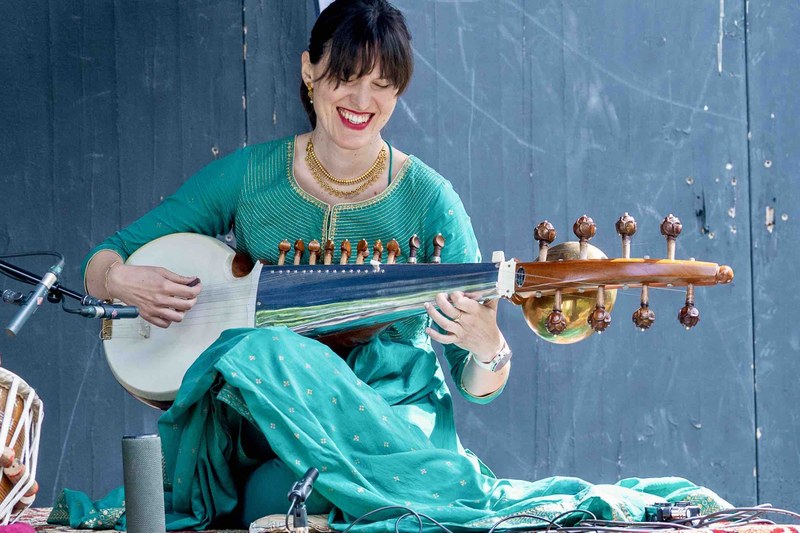
In Hindustani music, notation is not standardized but functions mainly as a mnemonic aid: an approximate record of a composition learned by ear and imitation. This paper examines the potential of the archival legacy of Hindustani music to complement and expand pedagogical and artistic approaches in European academic education. At the center of the project are numerous transcriptions and recordings of Ali Akbar Khan’s teaching, collected over decades by his student Ken Zuckerman.
Because Hindustani music is transmitted orally, these notations remain partial and open-ended. Rather than fixing musical meaning, they demand interpretation, requiring the performer to reconstruct melodic and rhythmic material through listening, memory, and embodied practice. In this sense, the archive becomes a generative site: it preserves the legacy of a master while simultaneously demanding reinvention, enacting an active process of cultural transmission.
My research explores two interconnected dimensions:
- Pedagogy in higher education – Integrating this archival legacy into ear training and guided improvisation courses at the Musikhochschule Basel, where students encounter Hindustani music as a parallel to European monodic traditions and learn to navigate oral transmission alongside Western notation. Key questions include: In what ways does learning Hindustani music foster skills applicable to other musical genres? What challenges and limitations arise when teaching an oral, non-European art form in a Western academic context?
- Artistic projects – Using the archive as a springboard for performances that place Hindustani material in dialogue with European modal traditions, highlighting melodic affinities and exploring transcultural approaches to musical expression. Central questions include: To what extent do skills acquired through Hindustani training versus Western academic training influence my compositional and creative practice? In collaborative projects with non-Hindustani musicians, is the oral dimension a limitation or an added value?
Duration 2025-2027
Mentors Dr. Budhaditya Chattopadhyay, Prof. Dr. Anne-May Krüger
Bio
Links
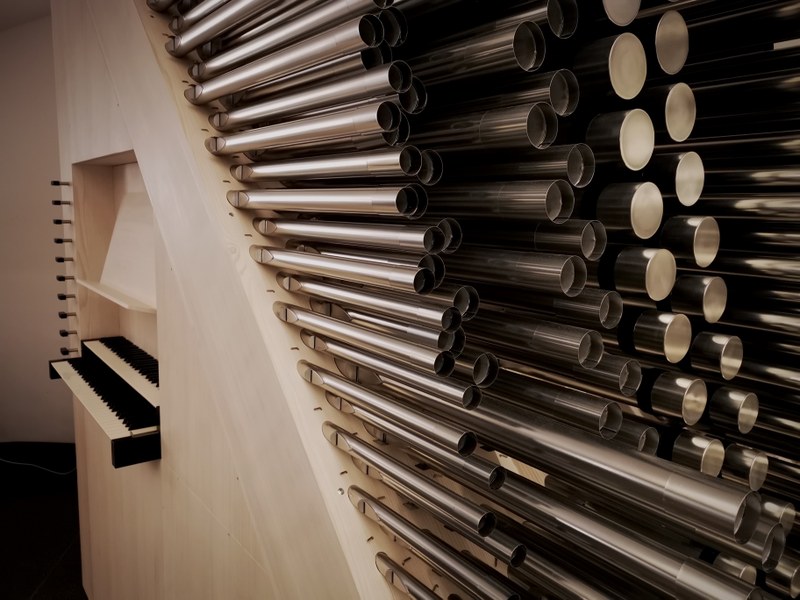
Arthur Wilkens: Ars organisandi: late medieval organ improvisation
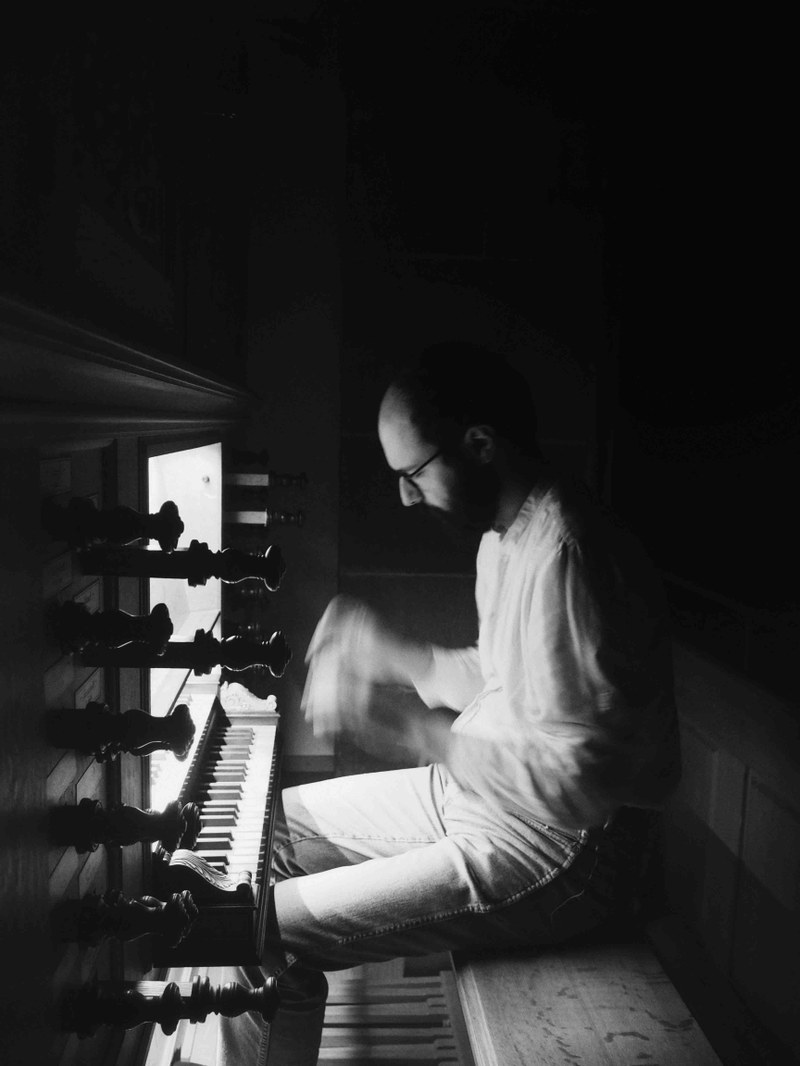
Ars organisandi: late medieval organ improvisation Keyboard music of the Middle-Ages has come down to us in the form of organ tablatures and pedagogic methods known as Fundamenta organisandi. My aim is to engage practically with this surviving material as traces of an orally transmitted tradition in which improvisation and the use of memory played a central role. Developing the skills described in the sources of the Ars organisandi requires a radical shift in how we conceive of music pedagogy today. While traditional musicology has placed much emphasis on the concepts of the musical “work” and authorship, a significant portion of medieval sources focuses instead on the process of making music – an approach that could be described as non-compositional. This research project is an experimental attempt to embody the mindset of late medieval instrumentalists in contemporary music-making. It is also a practical reflection on the generative nature of this music: an interesting encounter between two distinct yet complementary traditions – the ancient Ars organica and the mensural music of the 14th and 15th centuries.
Duration 2025-2027
Mentors Prof. Dr. Martin Kirnbauer, Prof. Dr. David Mesquita
Bio
Studienbeginn 2024
Rubén Bañuelos Preciado: Disembodiment as a performative Spectrum
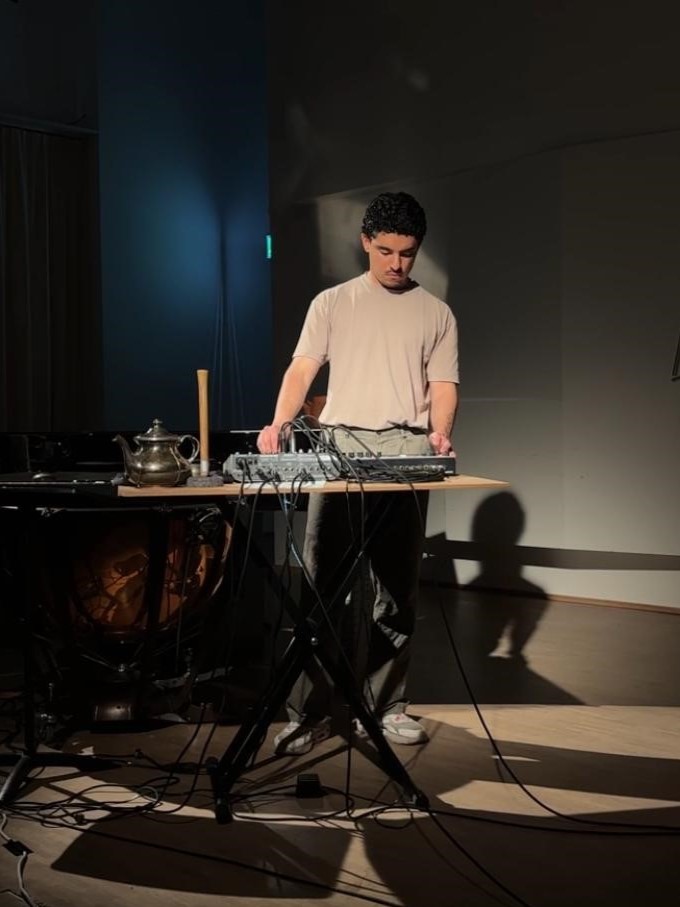
This research project develops a series of re-imaginations of a small percussion setup composed by me called Semilla. This particular setup, which highlights certain possible acoustic distortions and empathetic resonances between the instruments of said setup, gets expanded, abstracted, situated under various modifications. Each iteration corresponds to a research question on an artistic, acoustic, or technical degree. The answers to each of these questions feed into the construction of a new apparatus ultimately designed with the goal of harnessing the acoustic and artistic principles found on the original setup to unleash them into non-performative spheres as well as performative and hybrid mise-en-scènes. A looped procedure that renders itself out of its initial conditions and onto a constituted non-performativity.
Duration 2024–26
Mentors Prof. Christian Dierstein, Prof. Svetlana Maraš, Prof. Dr. Michel Roth
Bio
Varun Rangaswamy: Musical Fabulation, or, Hearing History in a Different Voice
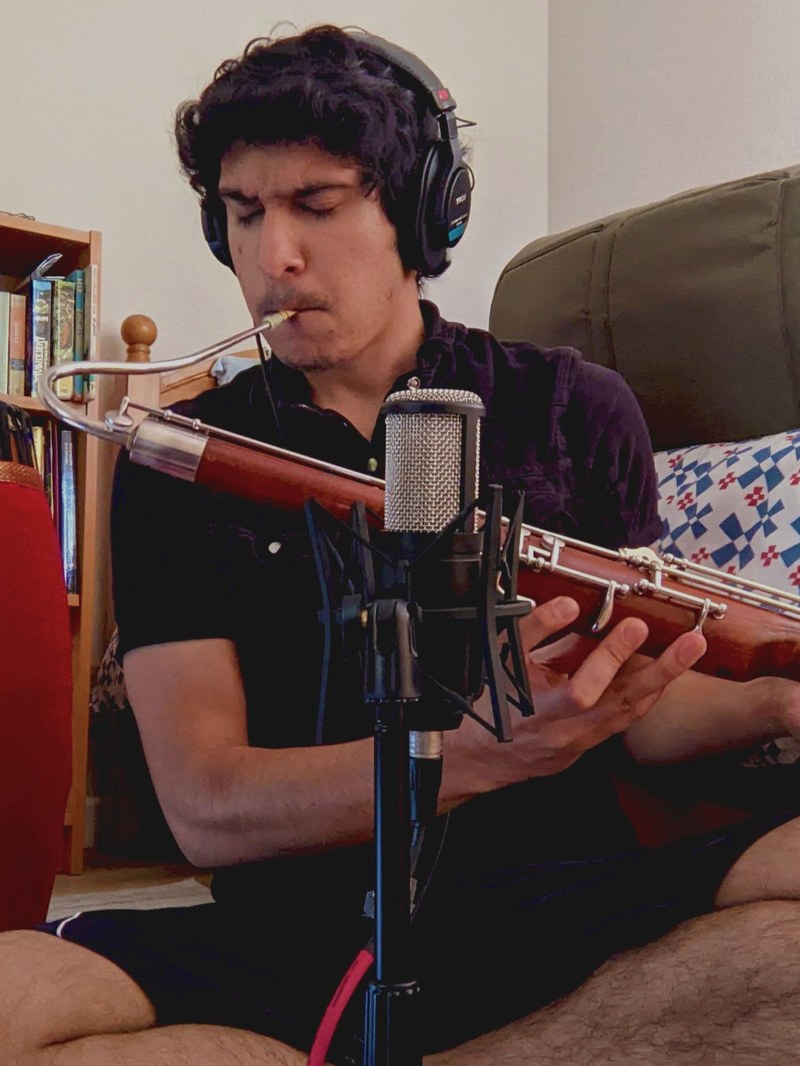
I make music through the archive. By studying the archives of colonial South India and 19th century Basel missionaries, my research focuses on the types of voices that are audible to readers (and listeners) of the archive. Heeding the historical expertise of Saidiya Hartman, I refrain from reconstructing those voices, instead trying to uncover how they might sound, how heterogeneously they could be conceived, and how they came to be un/authorized through colonial hegemony. By staging the text and the drama of the archive, I try to make audible the tensions of history, rearranging that network of conflicting voices, to offer a new sensory experience of the past, and in doing so, the present and future as well.
In my artistic practice, I put to work my experience in Karnatak vocal, Western classical, and experimental/creative music. By deploying the discourses of those musics in the service of reinterpreting the archive, I hope to bring a varied and unique perspective to archival research.
The title of my project comes from Saidiya Hartman’s original methodology, which she calls “critical fabulation,” through which she combines historical evidence with artistic writing to produce a counter-history to the archive of American slavery. In my artistic practice, I – though under very different historical circumstances – try to musically fabulate. Quotations, descriptions of sounds, descriptions of voices, and other sonic traces abound in the archive of colonial India. What would it mean to compose or improvise those sonic traces musically? And how might one trouble the authority of those descriptions, inflecting them through a different perspective than the one preserved by imperial venture? My time in the Music & Research program will be spent composing and improvising the traces of sound and voice found in archive, with an aspiration towards offering a different way of hearing the encounter between colonizer and colonized.
Duration 2024–26
Mentors Prof. Johannes Kreidler, Prof. Dr. Michel Roth
Bio
Archiv
Abschluss 2025
Researching about?
Dakota Wayne about his research project in MA SP Music and Research /2023
Teaching Staff
Kontakt