My Experience in the Master’s in International Management at FHNW
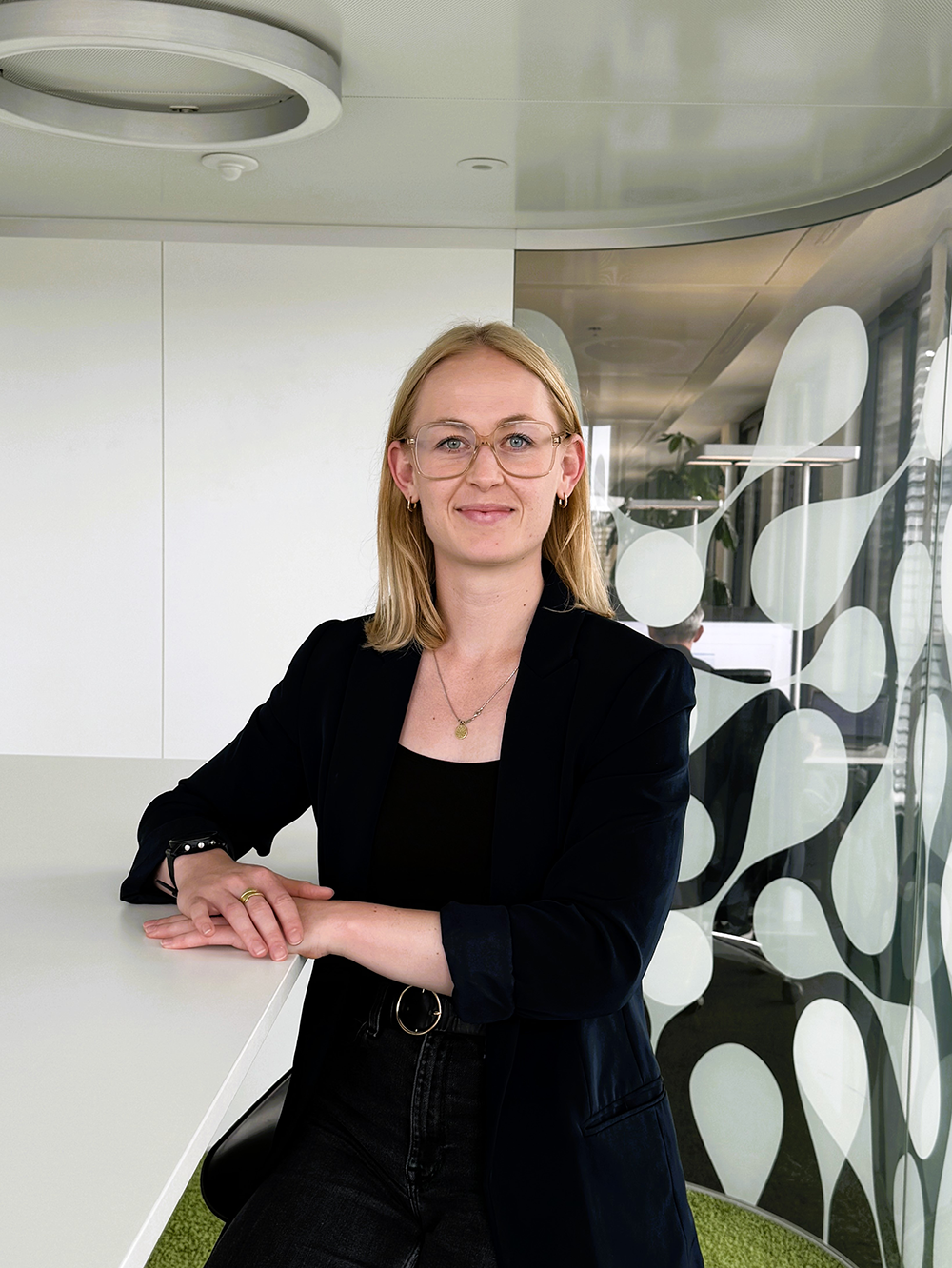
Study with practical relevance, think globally and develop personally. Meike Lenting talks about how the master's programme at FHNW helped her to grow.
Meike, why did you choose to study at FHNW?
I wanted to deepen my understanding of business and sharpen my strategic thinking. International Management was the logical choice for me: the additional complexity and cultural diversity are central in our VUCA environment(volatility, uncertainty, complexity, ambiguity), even if you don’t work in an explicitly international company. I was also convinced by the modular structure, the International Weeks, and the good compatibility with my job. I particularly appreciated the practical orientation of the modules, the real-world experience of the lecturers, and the heterogeneous classes. The discussions were therefore very close to real-life challenges.
How has the programme influenced your professional and personal development?
I completed the part-time master’s programme. For me, it was less of a door opener at the beginning and more of a way to accelerate my progress in my current role. Today, I work much more strategically, from structured analysis to prioritisation and implementation planning. Theory became practice for me, for example in strategy and change projects, stakeholder management, and cross-organisational collaboration. Personally, I found that the programme increased my confidence in decision-making, improved my analytical thinking skills and made my communication clearer, particularly in cross-functional settings.
Which highlights from your studies do you remember most fondly?
Definitely the study trips to Singapore and New York. They gave me a deeper understanding of global economic dynamics, innovation ecosystems, and intercultural collaboration. It also became clear to me how crucial interpersonal interaction and mutual understanding are for sustainable success. Another highlight was the process of my master’s thesis: through the qualitative study, I was able to exchange ideas with leaders from business and administration in Switzerland and Singapore, which broadened my understanding of different perspectives.
How did you experience studying abroad?
Enriching and mind-expanding. The exchange with students and lecturers on site, case studies with local companies, and immersion in different work and learning cultures pushed me out of my comfort zone. This experience strengthened my ability to quickly adapt to new contexts and to build bridges between cultures.
What advice would you give to current and future students?
I would recommend that future students complete the Master's programme on a part-time basis, as this allows them to apply their learning directly to practice, which greatly enhances the learning experience. The practice-oriented content can be applied directly in the workplace, tightly linking theory and practice. Gaining work experience prior to the programme is particularly valuable, as it helps contextualise new content and enables you to contribute real-world examples to discussions. The study abroad modules are also a highlight, offering professional and personal enrichment while providing insights into other countries.
Equally important is the ability to think critically, recognise connections, and ask the right questions – more important than memorising models or theories. When it comes to your master's thesis, it's worth choosing a topic that genuinely interests you. This process fosters personal development and opens up valuable new perspectives.