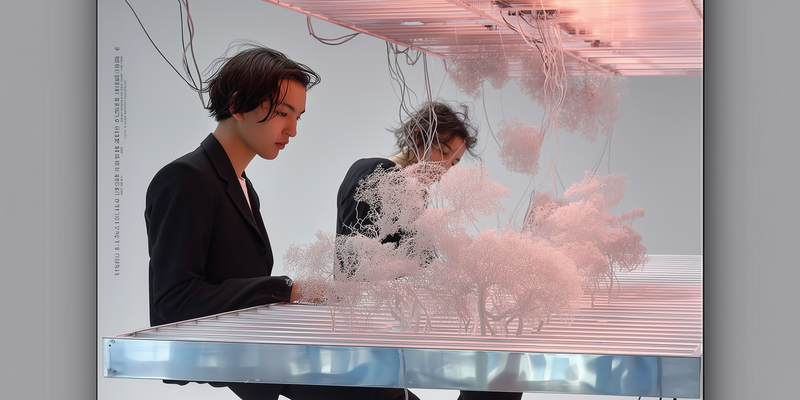
Spatial Computing – Intelligently Connecting and Experiencing Spaces
Research focus areas
Spatial computing is about calculating the space around us in real time based on a combination of cameras and sensors, often in 3D. In this area of expertise, we focus on the creation, processing and interaction with spatial information and three-dimensional digital environments. The goal is often (but not exclusively) to intelligently connect real and virtual spaces, make them accessible and bring them to life.
- Spatial computing: linking spatial data with digital systems for navigation, spatial perception or context processing – e.g. in augmented reality applications or for space-related assistance systems.
- 3D representation: generation of realistic or abstract 3D representations, simulation of physical processes and design of virtual environments for research, teaching, art and interaction.
- 3D interaction & interfaces: Development of intuitive control methods for navigation and manipulation in 3D environments, such as gestures, speech or eye tracking.
- Computer Games & Serious Games: Conception and implementation of interactive 3D applications with educational or training purposes – including for education, simulation, rehabilitation or safety training.
Projects
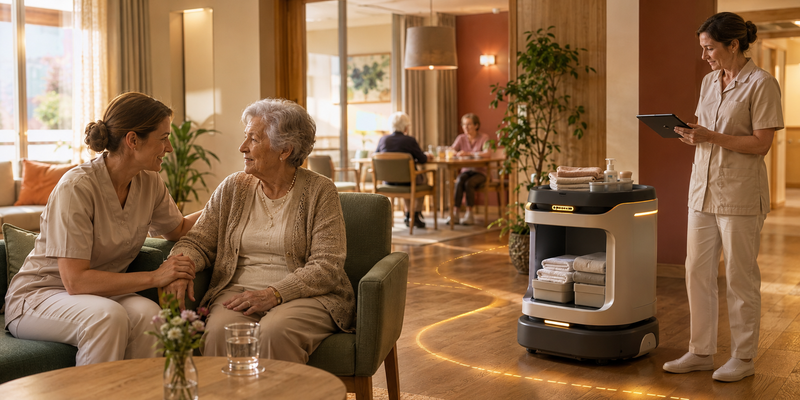
Accessible and Integrated Robotic Assistant for Care Homes
This project explores how robotic assistants can be meaningfully integrated into care homes. Together with caregivers, it develops safe and practical solutions that relieve staff and support quality of care.
- Institute
- Institute of Interactive Technologies
- Research field
- Spatial Computing and 3D-Technologies
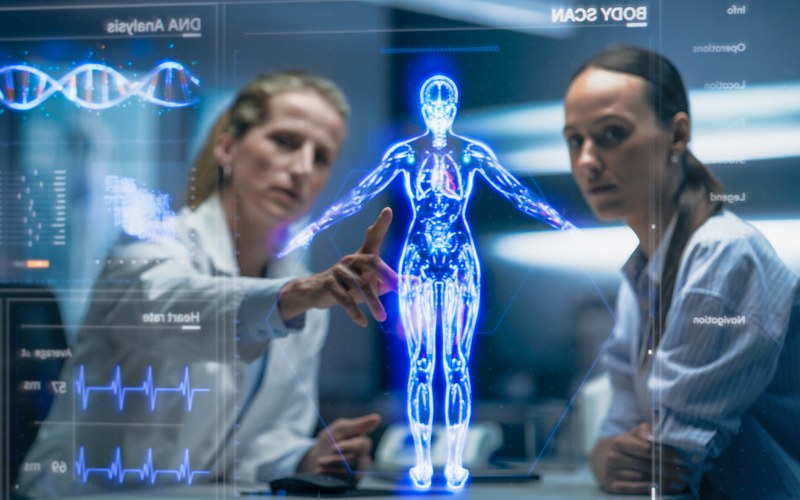
NAIPO Flagship
National AI Initiative for Precision Oncology (NAIPO)
- Institute
- Institute of Interactive Technologies, Institute for Chemistry and Bioanalytics, Institute for Medical Engineering and Medical Informatics
- Research field
- Data science in life sciences, Medical decision support systems, Spatial Computing and 3D-Technologies, Human-Computer Interaction (HCI)
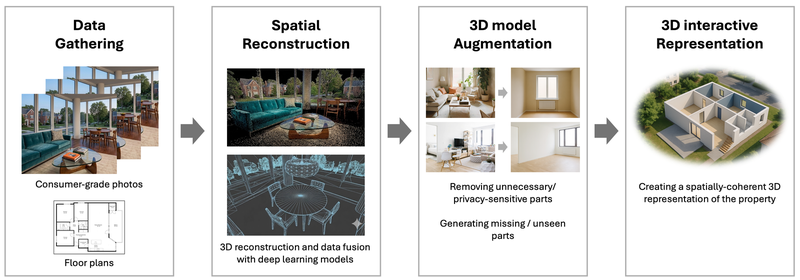
Real Estate in 3D
Photos and floor plans are transformed into realistic 3D models that allow prospective tenants to explore apartments spatially and intuitively.
- Institute
- Institute of Interactive Technologies
- Research field
- Spatial Computing and 3D-Technologies
Degree programmes offerings

Bachelor of Science
Game Technologies & Extended Reality
- Studying mode
- Practice-integrated bachelor's degree program (PiBS), Part-time/work-study, Full-time
- Teaching language
- English, German
- Place
- Brugg-Windisch
- Next start
- 1.3.2027
Bachelor of Science
Data Science & Artificial Intelligence
- Studying mode
- Practice-integrated bachelor's degree program (PiBS), Part-time/work-study, Full-time
- Teaching language
- English, German
- Place
- Brugg-Windisch
- Next start
- 1.3.2027
Bachelor of Science
Computer Science
- Studying mode
- Practice-integrated bachelor's degree program (PiBS), Part-time/work-study, Full-time
- Teaching language
- English, German
- Place
- Basel, Brugg-Windisch
- Next start
- 1.3.2027
Contact us
For further information about the FHNW School of Computer Science or to discuss potential collaboration opportunities, please contact us:
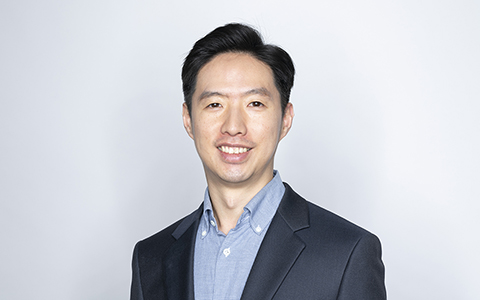
Prof. Dr. Kevin Gonyop Kim
Lecturer for Spatial Computing and 3D Technologies
- Phone
- +41 56 202 82 38 (Direct)
- kevin.kim@fhnw.ch
Our School
School of Computer Science
inspiring, deep, connected