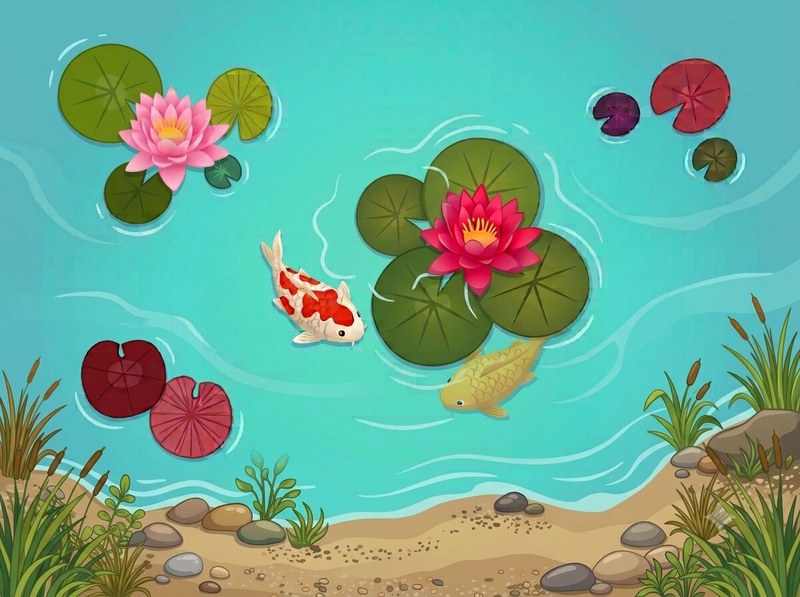
A mobile-first prototype that extends Bubblee's pond metaphor from a tool for social reconnection into a space for self-discovery, combining reflective journaling with an AI assistant that helps young adults explore and understand their own interests.
Testimonial
Initial situation
Bubblee originated as a fifth-semester interdisciplinary project (IP5), where the pond metaphor was developed to help people reconnect with acquaintances through shared interests. That evaluation confirmed the metaphor's emotional appeal but also surfaced a separate, unexplored idea already latent in the original Bubblee vision: personal interests as a starting point for self-discovery rather than only for connecting with others. This thesis picks up that thread. Instead of asking how the pond can help users find other people, it asks how the pond can help users understand themselves.
Problem statement / Project goal
Digital tools for self-reflection typically rely on generic mood logs or journaling prompts disconnected from any meaningful context. Bubblee's pond metaphor offered an alternative: a visual environment already built around personal interests. The goal of this thesis was to extend that metaphor into a theory-informed design for self-discovery, integrate an AI assistant that supports interest exploration, and evaluate how young adults experience the resulting prototype. Three questions guided the work: how self-discovery can be conceptualized within the pond metaphor, how an AI assistant can be designed to support that process, and how young adults perceive the resulting system.
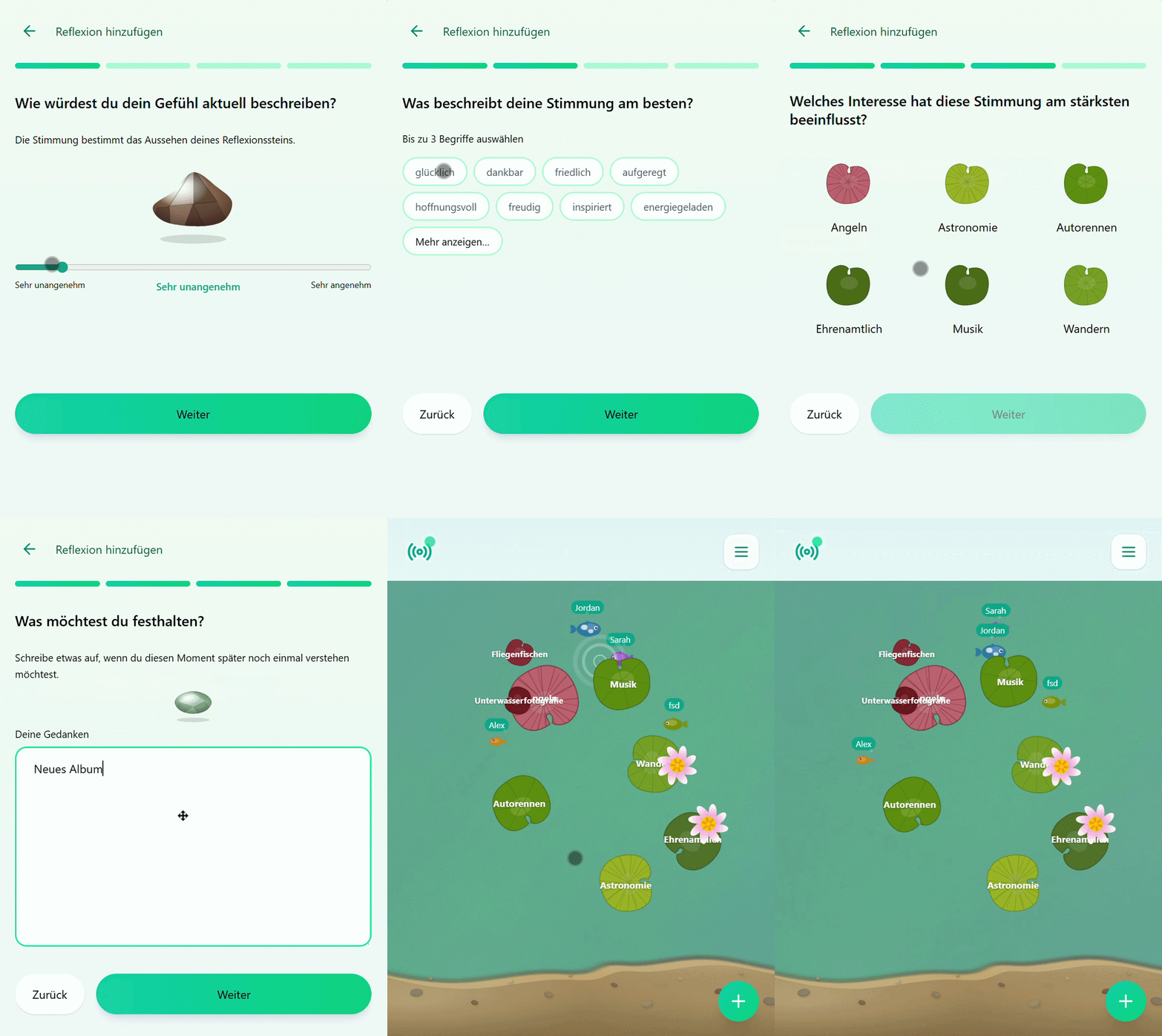
Reflecting on an interest is designed as a short, tangible ritual rather than a form to fill out. Users describe their mood, pick a few keywords, and select the relevant interest before throwing a stone into their pond, where its color and shape encode the mood they chose. The more a user reflects on an interest, the more detailed lily pad becomes, turning the pond into a living record of engagement over time. 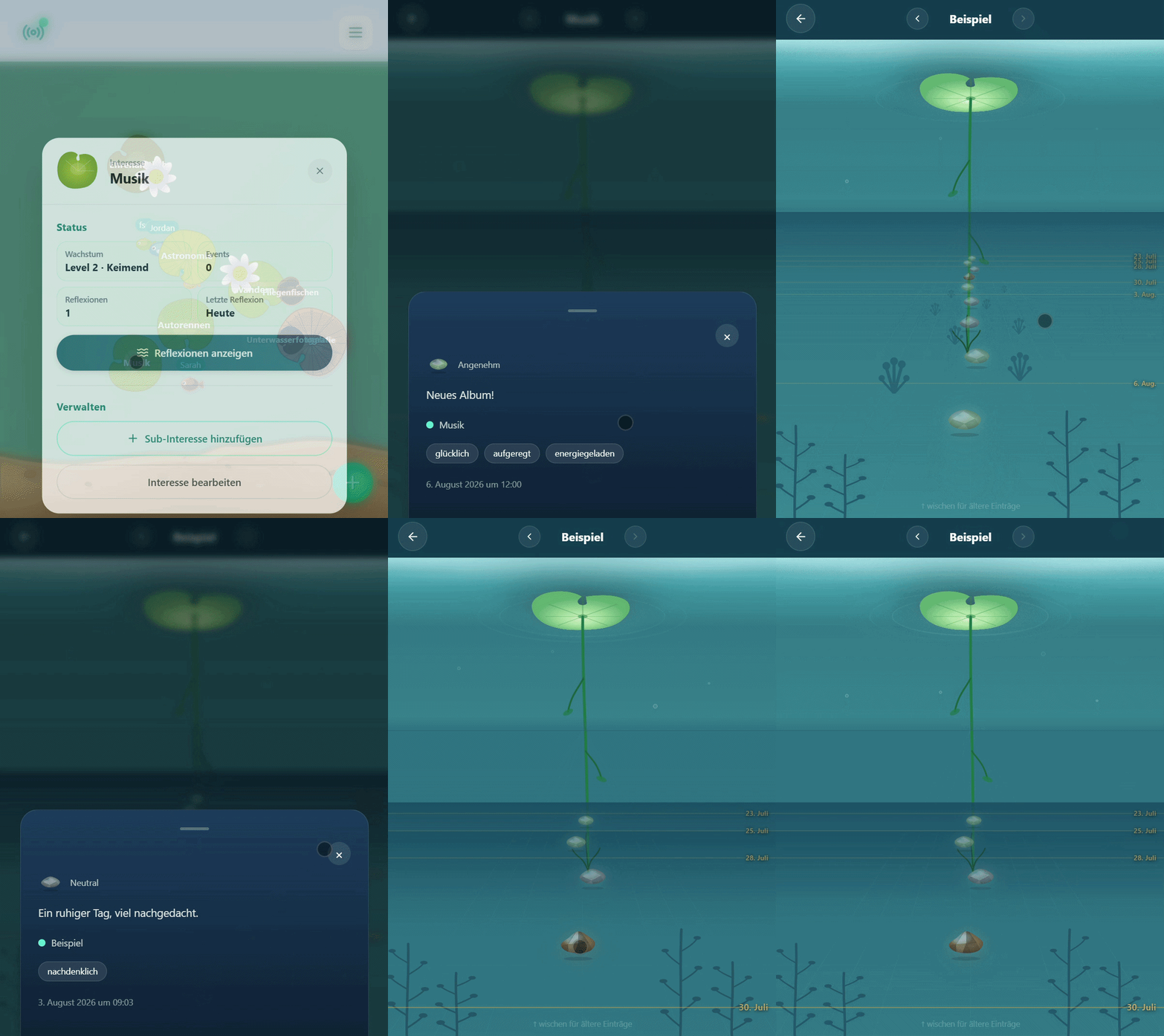
Diving beneath the surface of the pond reveals every reflection stone ever thrown for a given interest, arranged as a trail running from newest to oldest entries. Patterns become visible over time without the system interpreting them for the user. 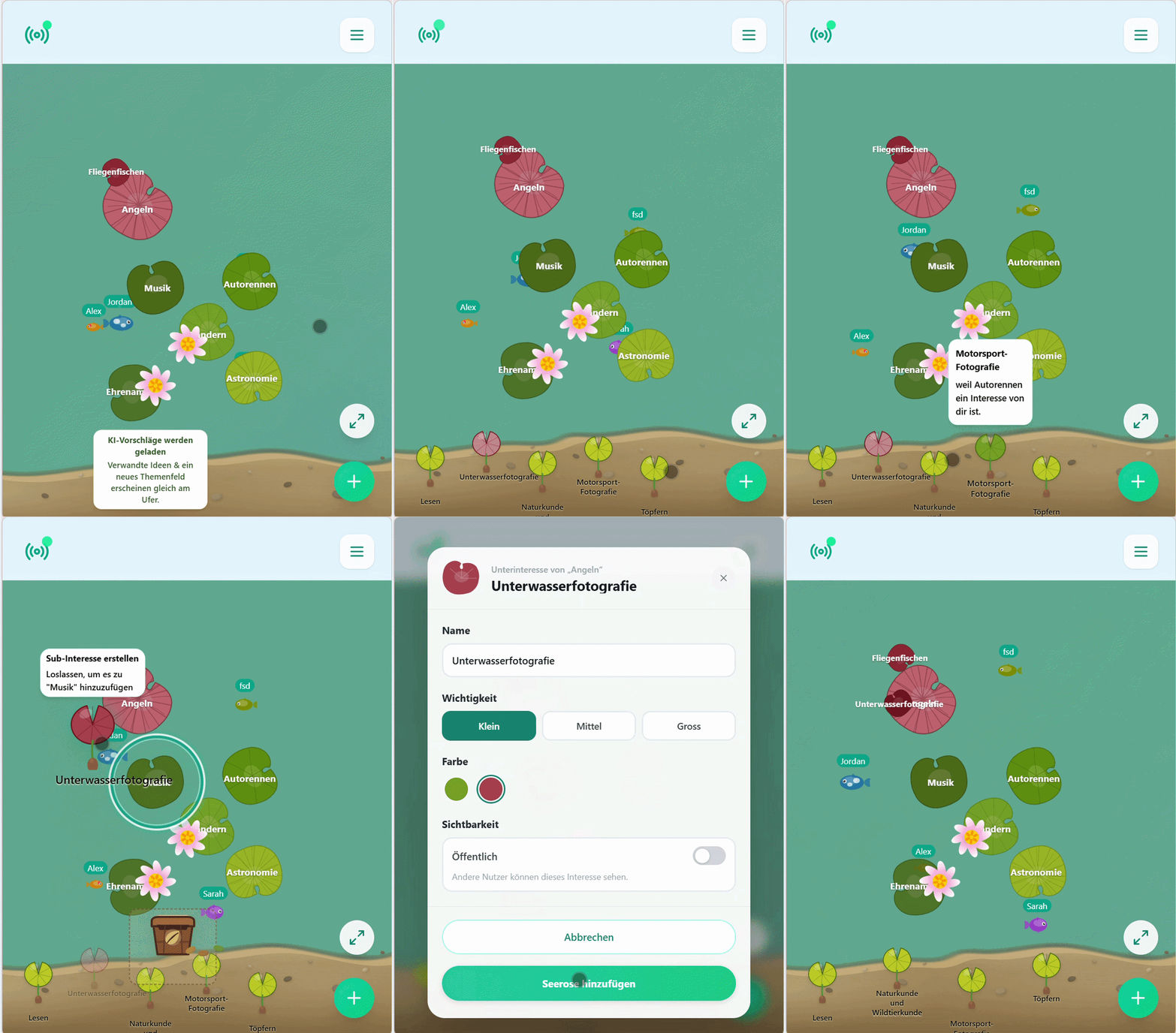
Seedlings appear on the bank of the pond, each representing an AI-generated interest suggestion grounded in the user's existing profile or their connections' interests. Tapping a seedling reveals the reasoning behind it and users can accept it into their pond or discard it.
Solution developed and its benefits
The project delivered an interactive, mobile-first prototype built around six integrated features, each connected to self-discovery literature. Reflection, exploration, and identity representation are treated as interconnected parts of one evolving pond environment bolted onto the original metaphor.
Core Features
- Reflection Stone: a guided, question-driven flow for logging how an interest currently feels, turning journaling into a small ritual instead of an open text field
- Underwater Timeline: a chronological, explorable trail of past reflections beneath each interest's lily pad, supporting retrospective pattern recognition
- Interest Leveling: as a user logs more reflections for an interest, its lily pad becomes less saturated in color and gains more detailed leaf patterning
- Fish Avatar: a customizable fish avatar that lets users express identity choices within the pond
- Lily Pad Customization: adjustable color and size for lily pads, giving users direct control over how their interests are represented
- AI Interest Suggestions: seedlings generated by an AI assistant that proposes new or connection-derived interests, each with a stated rationale the user can accept or dismiss
Key Insights from Evaluation
- Emotional engagement as differentiator: the metaphor was perceived as visually distinctive and calming, setting Bubblee apart from generic, performance-oriented tracking apps
- Exploration validated: interest structuring, AI suggestions, and lily pad customization were all well received
- Reflection resonant, but hard to reach: once participants reached the reflection stone it felt genuinely meaningful, but weak discoverability and unclear purpose made it hard to get there
- Unclear core purpose: for participants, it was unclear whether Bubblee is for private reflection or social connection. The onboarding suggested a social app, but reflection turned out to be entirely private with no path to actually connect
Project details
- Type
- Student project
- Research field
- Human-Computer Interaction (HCI), Image Processing & Computer Vision
- School
- FHNW School of Computer Science
- Partners
- bubblee
- Project lead
- Moritz Schneider,
Simy Melinda Tran,
Advisor:
Anton Fedosov,
Elif Gurcinar,
Key terms
Self-Discovery | The ongoing process of understanding and reinterpreting who you are through your experiences, interests, and reflections. |
Extended Self | The idea that a person's identity extends beyond their body into their possessions, experiences, and relationships. |
Extended Digital Self | The idea that digital possessions and online representations become meaningful parts of a person's identity. |
Reflection | The deliberate process of examining one's experiences to build new understanding about oneself. |
Transparent User Model | A user model whose reasoning is made visible to the user, rather than hidden, so they can explore and understand it. |
Self-Actualization | A person's lifelong drive to grow, develop, and become the fullest version of themselves. |
EDUSS Framework | Five goals: Explore, Develop, Understand, Scrutinize, and Socialize. These goals describe how AI-driven systems can support self-actualization. |
Pond Metaphor | Bubblee's interface concept, representing a user's interests as lily pads, connections as fish, and reflections as stones within a shared pond. |
User-Centered Design | An iterative design methodology involving target users throughout research, conceptualization, prototyping, and evaluation phases. |
Interaction Design | The design of interactions between users and digital systems. |
Contact us

Prof. Dr. Anton Fedosov
- Phone
- +41 56 202 81 37 (Direct)
- anton.fedosov@fhnw.ch

Further projects
Machine Learning for Real-Time Solar Flare Detection
- Research field
- Astroinformatics and Space Sciences, Visual Computing
Custom Testing Interface for Circuit Breakers
- Research field
- Human-Computer Interaction (HCI), Requirements and Software Engineering