Zu Hauptinhalt springenZur Suche springenZu Hauptnavigation springenZu Footer springen
Logo der Fachhochschule Nordwestschweiz
  • DE
  • Startseite

Zehn Hochschulen Ein Ziel

Die FHNW umfasst 10 Hochschulen mit unterschiedlichen Schwerpunkten. Wählen Sie eine Hochschule aus, um deren spezifische Kurse, Studiengänge und Informationen zu sehen.

Angewandte Psychologie

Architektur, Bau und Geomatik

Gestaltung und Kunst

Informatik

Life Sciences

Musik

Pädagogische Hochschule

Soziale Arbeit

Technik und Umwelt

Wirtschaft

  • Studienangebot

    • Alle Studiengänge
    • Bachelor of Arts
    • Master of Arts
    • Co-Create Programm
    • PhD-Programme
    • MDes-Programm
    • Vorstudium Integral
    • Gasthörer:innen
    • Info-Anlässe
  • Rund ums Studium

    • Anmeldung, Zulassung und Eignungsabklärung
    • Immatrikulation an der HGK Basel
    • Gebühren und Stipendien
    • Studiengangadministrationen
    • Semesterdaten
    • Tools fürs Studium
    • Beratungsstellen
    • Sprachkurse
    • Versicherung und Vorsorge
    • Zivil- und Militärdienst
    • Rechtliches und Formalia
    • Modulbeschreibungen
  • Internationales Studium

    • International Studierende
    • Incoming Studierende
    • Outgoing Studierende
    • Praktikum
    • Partnerinnenhochschulen
    • Sprachkurse
    • International Office
  • Weiterbildungsangebot

    • Alle Weiterbildungen
    • MAS - Master of Advanced Studies
    • CAS - Certificate of Advanced Studies
    • Module
    • Kurse
    • Info-Anlässe
  • Rund um Weiterbildung

    • Beratung und Kontakt
  • International Office

    • Mobilität für Lehrende und Mitarbeitende
    • Internationales Studium
  • Forschung

    • Forschungsfelder
    • Forschungsprojekte
    • PhD-Projekte
  • Zusammenarbeit

    • Dienstleistungen
  • Neuigkeiten und Einblicke

    • News und Storys
    • Applaus
    • Publikationen
    • Newsletter
  • Veranstaltungen

    • Alle Veranstaltungen
    • Info-Anlässe
  • Medien

    • Medienmitteilungen
  • Über die Hochschule für Gestaltung und Kunst Basel

    • Leitung und Organisation
    • Personenverzeichnis
  • Institute

    • Institute Art Gender Nature
    • Institute Arts and Design Education
    • Institute Contemporary Design Practices
    • Institute Digital Communication Environments
    • Institute Experimental Design an Media Cultures
  • Campus und Infrastruktur

    • CIVIC
    • Mediathek
    • der TANK
    • FoodCultureLab
    • Café Freilager und Bistro der Künste
    • Sport
    • Studi-Lounge
    • Zugänglichkeit & Ausstattung
  • Campus.Werkstätten

    • Bildhauerwerkstatt
    • Buchbinden
    • Digital Fabrication Lab
    • Holzwerkstatt
    • Kunststoffwerkstatt
    • Lackierwerkstatt
    • Medienwerkstatt
    • Metallwerkstatt
    • Näh.Insel
    • Siebdruck
Logo der Fachhochschule Nordwestschweiz
  • Zur Hochschule
    • HGK Basel
    • Studium
    • Weiterbildung
    • Forschung
    • News und Storys
    • Veranstaltungen
    • NEXT Generation Diplomprojekte
  • Social Media
    • Instagram
    • LinkedIn
  • Die FHNW
    • Organisation
    • Hochschulen
    • Standorte
    • Bibliothek FHNW
    • Jobs und Karriere
    • Medienkontakte
  • Support
    • IT-Support
    • Inside FHNW
    • Webmail
  • Datenschutz
  • Impressum
  • Accessibility
  • Studienangebot

    • Alle Studiengänge
    • Bachelor of Arts
    • Master of Arts
    • Co-Create Programm
    • PhD-Programme
    • MDes-Programm
    • Vorstudium Integral
    • Gasthörer:innen
    • Info-Anlässe
  • Rund ums Studium

    • Anmeldung, Zulassung und Eignungsabklärung
    • Immatrikulation an der HGK Basel
    • Gebühren und Stipendien
    • Studiengangadministrationen
    • Semesterdaten
    • Tools fürs Studium
    • Beratungsstellen
    • Sprachkurse
    • Versicherung und Vorsorge
    • Zivil- und Militärdienst
    • Rechtliches und Formalia
    • Modulbeschreibungen
  • Internationales Studium

    • International Studierende
    • Incoming Studierende
    • Outgoing Studierende
    • Praktikum
    • Partnerinnenhochschulen
    • Sprachkurse
    • International Office
  • Weiterbildungsangebot

    • Alle Weiterbildungen
    • MAS - Master of Advanced Studies
    • CAS - Certificate of Advanced Studies
    • Module
    • Kurse
    • Info-Anlässe
  • Rund um Weiterbildung

    • Beratung und Kontakt
  • International Office

    • Mobilität für Lehrende und Mitarbeitende
    • Internationales Studium
  • Forschung

    • Forschungsfelder
    • Forschungsprojekte
    • PhD-Projekte
  • Zusammenarbeit

    • Dienstleistungen
  • Neuigkeiten und Einblicke

    • News und Storys
    • Applaus
    • Publikationen
    • Newsletter
  • Veranstaltungen

    • Alle Veranstaltungen
    • Info-Anlässe
  • Medien

    • Medienmitteilungen
  • Über die Hochschule für Gestaltung und Kunst Basel

    • Leitung und Organisation
    • Personenverzeichnis
  • Institute

    • Institute Art Gender Nature
    • Institute Arts and Design Education
    • Institute Contemporary Design Practices
    • Institute Digital Communication Environments
    • Institute Experimental Design an Media Cultures
  • Campus und Infrastruktur

    • CIVIC
    • Mediathek
    • der TANK
    • FoodCultureLab
    • Café Freilager und Bistro der Künste
    • Sport
    • Studi-Lounge
    • Zugänglichkeit & Ausstattung
  • Campus.Werkstätten

    • Bildhauerwerkstatt
    • Buchbinden
    • Digital Fabrication Lab
    • Holzwerkstatt
    • Kunststoffwerkstatt
    • Lackierwerkstatt
    • Medienwerkstatt
    • Metallwerkstatt
    • Näh.Insel
    • Siebdruck

Geben Sie einen Suchbegriff ein und suchen Sie nach Weiterbildungen, Studienangeboten, Veranstaltungen, Dokumenten und anderen Inhalten.

Commons in Design – Call for Papers, Hochschule für Gestaltung und Kunst Basel

29.3.2022 – Hochschule für Gestaltung und Kunst Basel, Hochschule für Gestaltung und Kunst Basel


  • Gestaltung und Kunst
  • Aktuelles
  • Neuigkeiten und Einblicke
  • News und Storys
News und Storys
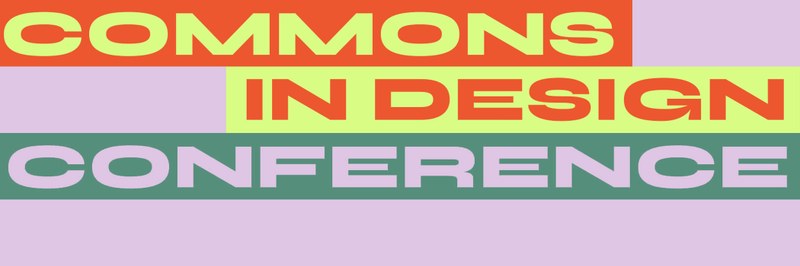
call_purple_header.jpg

The retreat of industrial societies, the scarcity of resources, climate change, and the digitalisation of everyday life are aspects that have fueled the economy of sharing, swapping, and lending – principles of commoning.

In addition to the economic motivation of sharing – as evident in the disruptive business models of Airbnb, Uber or Spotify – a change in values is emerging increative societies, characterized by conviviality and community. This includessharing in the sense of ecological sustainability and free cooperation, which is evident in collective offerings such as food sharing or the free encyclopedia Wikipedia.

In our conference, we aim to explore the relevance of commons and commoning within design as a discipline and field of research. It aims to shedlight on the complexity of commons and commoning from a design perspective and to present future models and scenarios pointing towards a more sustainable, just and peaceful world. Central to this is the question of how principles of commoning can benefit design processes, methods, and ways of working, ultimately changing the way designers position themselves.

We understand commons as community-based processes that use, collectively manage, and organize generally accessible resources (cf. Ostrom 1990,Helfrich/Bollier 2019, 2015, Rifkin 2014). So far, commons-based studies in the field of design are not widely known, especially in the domain of digitally networked design culture and working practice (see also: VanAbel/Evers/Klaassen/Troxler 2011, Cruickshank 2014, Ehn/Nilsson/Topgaard2014, Troxler 2019 and others). This aspect will play a central role in the conference.

Another important aspect of commoning lies in the changing role of designers.There are great opportunities for sharing in workplaces, infrastructure and techniques, etc., that promise increased freedom and flexibility in design and production processes. However, negative effects familiar to artistic disciplines are often associated with such living and working environments,such as precarious working status, self-exploitation, and lack of social safeguards. While pessimistic future scenarios predict a decline in employment in favor of machines and technology, other voices distinguish between the manufacturing professions and social or creative professions,which are likely to experience a boom.

Based on the above, we seek contributions that address the following topics,approaches and/or methods, but are not limited to:

  • knowledge sharing in design- commoning methods relevant for design
  • identity versus economy (this format does not impose that identity and economy are exclusive)
  • (dis)advantages of open design
  • relation between working environments (physical and virtual) and collaborative design processes
  • modes of sharing (people to people, people-to-thing, thing-to-thing,other…)
  • commoning linked to other inclusive approaches (e.g. feminism,postcolonialism, other...)
  • design principles, practices, infrastructure examples for designcommons and/or commoning design
  • ethical and data-related factors in commons and commoning

We especially encourage submissions that relate to one or more of thefollowing thematic areas:

  1. Design, Gender, Working Environment
  2. Design, Activism, Body and Ecology
  3. Design, Networks and Digital Fabrication

The conference is organized as part of a 4-year SNSF research project“Commons in Design” carried out at the Institute of Contemporary Design Practices (ICDP), FHNW Academy of Art and Design, Basel, Switzerland.

How to participate:
We invite proposals for full papers, short papers/case studies, or workshops related to the conference theme. Anybody related to the field of design and/orthe commons is welcome to submit, from designers to academics,practitioners, theorists, critics, teachers and students, as long as your outline strongly challenges our themes.

  • For all submission types, applicants are required to submit an initial abstract(max. 400 words).
  • The deadline for abstracts is May 31, 2022. For submission, please use our conference tool Converia and follow the guidelines for submissions.
  • All submissions will be double-blind peer-reviewed. Selection will be based on quality, originality and the diversity of practices represented by the contributors.
  • Selected contributors will be invited to participate in the conference, which will be held in hybrid format at the FHNW Academy of Art and Design in Basel from February 15–17, 2023.
  • Accepted full papers and short papers/case studies will be published in acomprehensive publication with Valiz Publishers, that will frame and conclude the 4-year SNSF project “Commons in Design”.

Conference Organizers:
Conference Chair / Scientific Lead:
Christine Schranz Head of Research at the Institute of Contemporary Design Practices (ICDP),FHNW Academy of Art and Design

Conference Coordination:
Charleen Elberskirch PhD Candidate and Research Assistant at the Institute of Contemporary Design Practices (ICDP), FHNW Academy of Art and Design

For inquiries: christine.schranz@fhnw.ch

For more information on the event, visit:
commons-in-design.ch

Hochschule für
Gestaltung und Kunst Basel Fachhochschule Nordwestschweiz FHNW

  • Zur Hochschule
    • HGK Basel
    • Studium
    • Weiterbildung
    • Forschung
    • News und Storys
    • Veranstaltungen
    • NEXT Generation Diplomprojekte
  • Social Media
    • Instagram
    • LinkedIn
  • Die FHNW
    • Organisation
    • Hochschulen
    • Standorte
    • Bibliothek FHNW
    • Jobs und Karriere
    • Medienkontakte
  • Support
    • IT-Support
    • Inside FHNW
    • Webmail
Logo FHNW - 20 Jahre
Logo Swiss Universities
Logo European University Association
© FHNW Fachhochschule Nordwestschweiz
  • Datenschutz
  • Impressum
  • Accessibility
  • DE