Lithium: On Bathing and Mining Grounds, 1850—1890 and 2015—2022
Projektdetails
- Hochschule/Institut
- Hochschule für Gestaltung und Kunst Basel / Institut Experimentelles Design und Medienkulturen
Fall Semester 2021
Renown as a critical element for the EU energy transition, lithium has also been used for the treatment of mania and depression since the late 19th century. Departing from the hypothesis that bodily and planetary exhaustion converge through the flows of lithium, this research documents the sites where practices of bathing, inhaling, drinking and mining lithium have been historically intertwined.
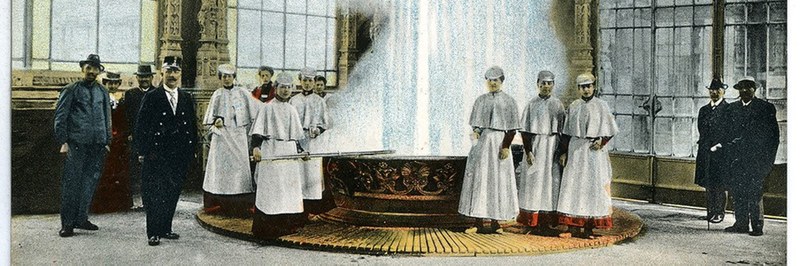
Around the 1850s, numerous spa resorts opened around lithium-rich springs in Europe, offering bathing and drinking cures to the exhausted bodies. With the advancement of medical sciences over the early 20th century, many of these health destinations had been abandoned. Today, the same territories are being rediscovered as prospective lithium mining sites by states and multinational corporations, seeking to secure the independent supply of this element for the global e-mobility markets. Yet these projects increasingly face resistance due to the risks of land dispossession, ecosystemic destruction and toxic contamination.
Combining archival research, visual ethnographic methods and counter-mapping, the project documents the sites across Central and Eastern Europe where lithium has played a role as a somatic and environmental cure. The research pays special attention to media and infrastructures that have rendered these territories resourceful, modelling lithium into a measurable energy asset.