Zu Hauptinhalt springenZur Suche springenZu Hauptnavigation springenZu Footer springen
Logo der Fachhochschule Nordwestschweiz
  • DE
  • Startseite

Zehn Hochschulen Ein Ziel

Die FHNW umfasst 10 Hochschulen mit unterschiedlichen Schwerpunkten. Wählen Sie eine Hochschule aus, um deren spezifische Kurse, Studiengänge und Informationen zu sehen.

Angewandte Psychologie

Architektur, Bau und Geomatik

Gestaltung und Kunst

Informatik

Life Sciences

Musik

Pädagogische Hochschule

Soziale Arbeit

Technik und Umwelt

Wirtschaft

  • Studienangebot

    • Alle Studiengänge
    • Bachelor in Life Sciences
    • Master in Life Sciences
    • Master in Medical Informatics
    • Joint Degree Master in Biomedical Engineering
    • Info-Anlässe
  • Rund ums Studium

    • Vorbereitung aufs BSc-Studium
    • Unterstützungsangebote während des Studiums
    • Erfahrungsberichte
    • Studiengeld und Stipendien
    • Digital Life Sciences
  • International studieren

    • Outgoing Studierende
    • Incoming Studierende
    • Double Degree
    • Partnerschulen
    • Erlebnisberichte
    • Buddy-Programm
    • News und Storys
  • Weiterbildungsangebot

    • Alle Weiterbildungen
    • MAS - Master of Advanced Studies
    • DAS - Diploma of Advanced Studies
    • CAS - Certificate of Advanced Studies
    • Module und Seminare
    • Info-Anlässe
  • Weiterbildungen nach Themen

    • Artificial Intelligence und Machine Learning
    • Betriebswirtschaft, Unternehmensführung, Entrepreneurship
    • Biologie und Chemie
    • Data Science und Engineering
    • Diagnostik
    • Digital Industry and Optimisation
    • Digital Transformation and Technologies
    • Energie
    • Extended Reality und Immersive Technologies
    • Führung und Teammanagement
    • Gesundheitsförderung und Prävention
    • Konsumverhalten
    • Kreislaufwirtschaft
    • Management in Healthcare
    • Maschinentechnik und Robotik
    • Organisationsentwicklung und Change Management
    • Pharma-, Medizin- und Biotechnologie
    • Prozess- und Projektmanagement
    • Sustainable Business Development, Ressourcenmanagement
    • Umweltmanagement
    • Umweltrecht
    • Umwelttechnologie und Recycling
    • Werkstoffe, Verfahrenstechnik
  • Organisatorisches

    • Beratung
    • Rechtliches und Bedingungen
  • Forschung

    • Forschungsfelder
    • Projekte
    • Institute und Kompetenzzentren
  • Zusammenarbeit

    • Process Technology Centre
    • Dienstleistungen
    • Tech Transfer Office
    • Studierendenprojekte
  • Internationales

    • International studieren
    • Internationale Forschungsprojekte
  • Neuigkeiten und Einblicke

    • News und Storys
    • Forschungshighlights
    • Medienmitteilungen
  • Veranstaltungen

    • Alle Veranstaltungen
    • Info-Anlässe
  • Medienstelle

    • Medienmitteilungen
  • Über die Hochschule für Life Sciences

    • Strategie und Werte
    • Hochschulleitung
    • Mitarbeitende Stab und Services
    • Fachbeirat
    • Personenverzeichnis
    • Diversity und Gleichstellung
    • Nachwuchsförderung
    • Medienstelle
    • Infrastruktur und Campus
  • Institute und Kompetenzzentren

    • Institut für Chemie und Bioanalytik
    • Institut für Ecopreneurship
    • Institut für Medizintechnik und Medizininformatik
    • Institut für Pharmatechnologie und Biotechnologie
    • Zentrum für Ausbildung und Lehre
    • Process Technology Centre
Logo der Fachhochschule Nordwestschweiz
  • Zur Hochschule
    • Hochschule
    • Studium
    • Weiterbildung
    • Forschung
    • Veranstaltungen
  • Social Media
    • Facebook
    • Instagram
    • YouTube
    • LinkedIn
  • Die FHNW
    • Organisation
    • Hochschulen
    • Standorte
    • Bibliothek FHNW
    • Jobs und Karriere
    • Medienkontakte
  • Support
    • IT-Support
    • Inside FHNW
    • Webmail
  • Datenschutz
  • Impressum
  • Accessibility
  • Studienangebot

    • Alle Studiengänge
    • Bachelor in Life Sciences
    • Master in Life Sciences
    • Master in Medical Informatics
    • Joint Degree Master in Biomedical Engineering
    • Info-Anlässe
  • Rund ums Studium

    • Vorbereitung aufs BSc-Studium
    • Unterstützungsangebote während des Studiums
    • Erfahrungsberichte
    • Studiengeld und Stipendien
    • Digital Life Sciences
  • International studieren

    • Outgoing Studierende
    • Incoming Studierende
    • Double Degree
    • Partnerschulen
    • Erlebnisberichte
    • Buddy-Programm
    • News und Storys
  • Weiterbildungsangebot

    • Alle Weiterbildungen
    • MAS - Master of Advanced Studies
    • DAS - Diploma of Advanced Studies
    • CAS - Certificate of Advanced Studies
    • Module und Seminare
    • Info-Anlässe
  • Weiterbildungen nach Themen

    • Artificial Intelligence und Machine Learning
    • Betriebswirtschaft, Unternehmensführung, Entrepreneurship
    • Biologie und Chemie
    • Data Science und Engineering
    • Diagnostik
    • Digital Industry and Optimisation
    • Digital Transformation and Technologies
    • Energie
    • Extended Reality und Immersive Technologies
    • Führung und Teammanagement
    • Gesundheitsförderung und Prävention
    • Konsumverhalten
    • Kreislaufwirtschaft
    • Management in Healthcare
    • Maschinentechnik und Robotik
    • Organisationsentwicklung und Change Management
    • Pharma-, Medizin- und Biotechnologie
    • Prozess- und Projektmanagement
    • Sustainable Business Development, Ressourcenmanagement
    • Umweltmanagement
    • Umweltrecht
    • Umwelttechnologie und Recycling
    • Werkstoffe, Verfahrenstechnik
  • Organisatorisches

    • Beratung
    • Rechtliches und Bedingungen
  • Forschung

    • Forschungsfelder
    • Projekte
    • Institute und Kompetenzzentren
  • Zusammenarbeit

    • Process Technology Centre
    • Dienstleistungen
    • Tech Transfer Office
    • Studierendenprojekte
  • Internationales

    • International studieren
    • Internationale Forschungsprojekte
  • Neuigkeiten und Einblicke

    • News und Storys
    • Forschungshighlights
    • Medienmitteilungen
  • Veranstaltungen

    • Alle Veranstaltungen
    • Info-Anlässe
  • Medienstelle

    • Medienmitteilungen
  • Über die Hochschule für Life Sciences

    • Strategie und Werte
    • Hochschulleitung
    • Mitarbeitende Stab und Services
    • Fachbeirat
    • Personenverzeichnis
    • Diversity und Gleichstellung
    • Nachwuchsförderung
    • Medienstelle
    • Infrastruktur und Campus
  • Institute und Kompetenzzentren

    • Institut für Chemie und Bioanalytik
    • Institut für Ecopreneurship
    • Institut für Medizintechnik und Medizininformatik
    • Institut für Pharmatechnologie und Biotechnologie
    • Zentrum für Ausbildung und Lehre
    • Process Technology Centre

Geben Sie einen Suchbegriff ein und suchen Sie nach Weiterbildungen, Studienangeboten, Veranstaltungen, Dokumenten und anderen Inhalten.

Czech Republic, MSc Biotechnology, Double Degree, Hochschule für Life Sciences FHNW

2.2.2026 – Hochschule für Life Sciences, Institut für Chemie und Bioanalytik


  • Life Sciences
  • Aktuelles
  • Neuigkeiten und Einblicke
  • Alle News und Storys
Alle News und Storys
header_jaspar.jpg

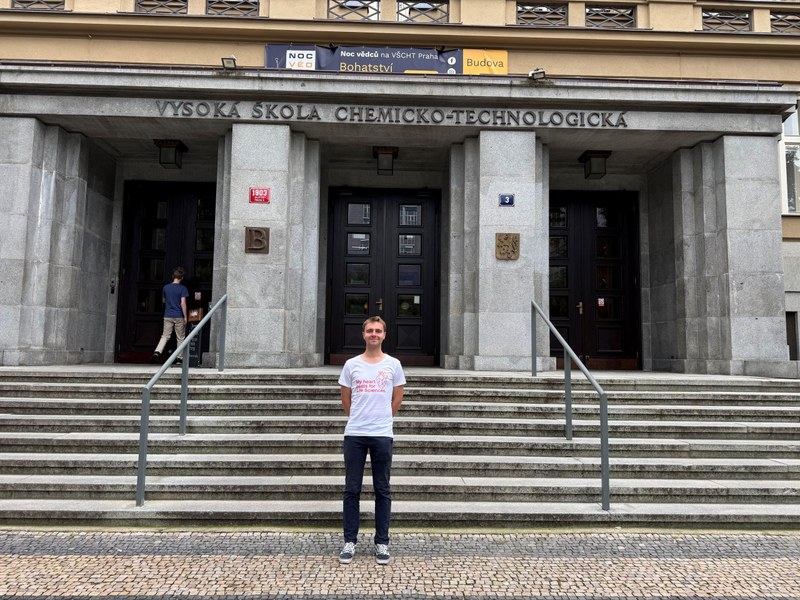
In 2025, Jaspar Fucker took the opportunity to do a double degree in Prague.

  • Story

What motivated you to go abroad?
I am generally fascinated by new surroundings and people from different backgrounds and their personal stories. I was motivated to experience different university systems and to see how they are organized. In addition, I wanted to gain experiences that would benefit my future professional career by learning to adapt to new and complex environments. I knew that I could only grow from this kind of experience.

Why did you choose your host institution/country?
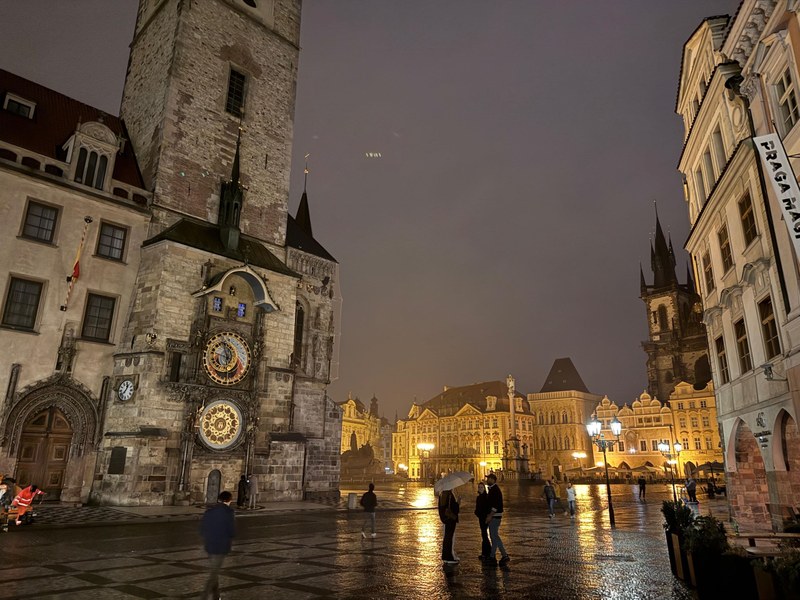
I knew that I wanted to spend a semester abroad, and the Double Degree Programme between the FHNW School of Life Sciences and University of Chemistry and Technology offered the perfect opportunity to combine this wish with my academic path. From my prior research and a weekend trip, I knew that Prague would be a good choice culturally and architecturally, as well as a lively city both day and night. Its central location in Europe also makes it ideal for traveling to neighboring countries.
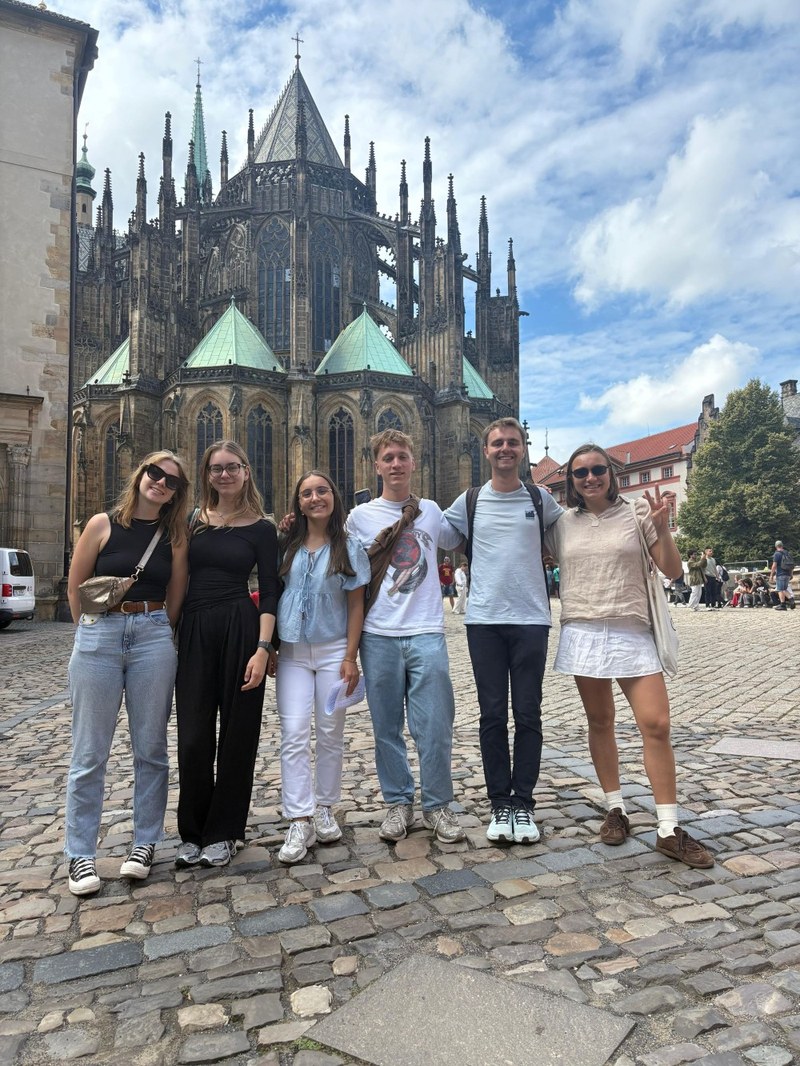
Many people have visited Prague for a weekend, but only few spend half a year and have the chance to go beyond the must visit spots.

What is your everyday life like?
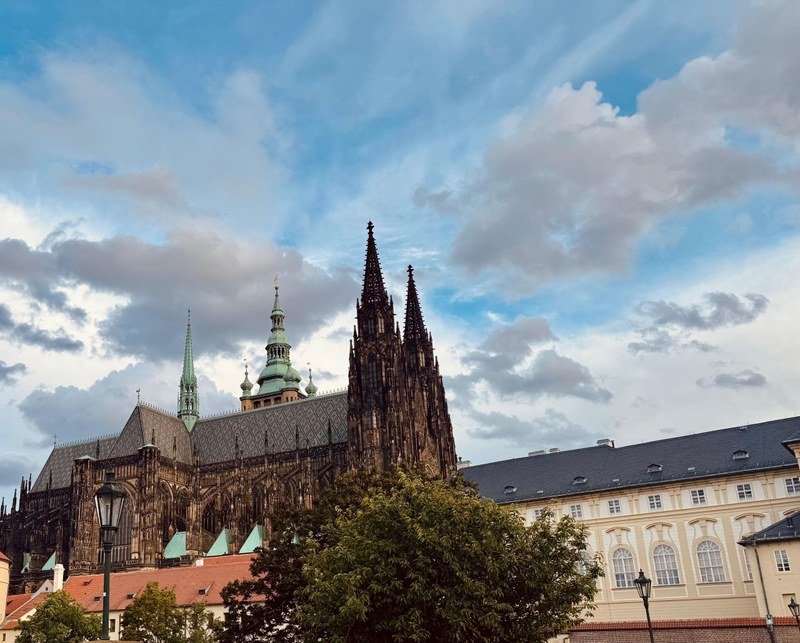
My master’s courses were spread throughout the day, and because I also worked in the lab, I usually woke up around 7 a.m. to commute by the affordable and efficient metro from the dormitory to campus. I planned my experiments flexibly and often had lunch with friends in the university canteens. I usually finished my day around 4–5 p.m., depending on the workload I had in the lab and some courses that were held in the afternoon. One really memorable spot for me was the technical library, which is shared with the other neighboring universities and therefore can become quite full, but offers a great space to work alone or in groups. After long days, it was always possible to walk to Prague Castle and enjoy the stunning views.

Tell us about your research findings during your residency.
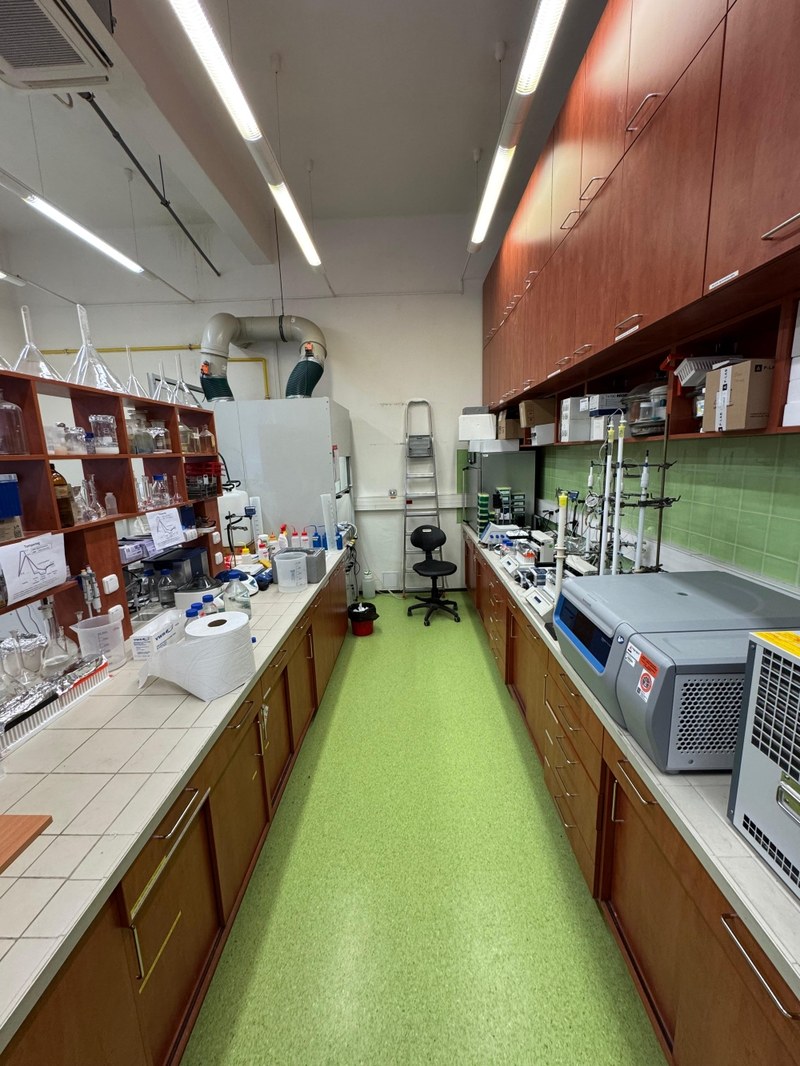
It obviously always depends on the lab and the people you are working with, but in my case, it was very important to set a clear and realistic goal for what you want to achieve in the lab and how much time you can devote to the work. The university offers very different specialized laboratories, in my case, I was assigned an analytical chemistry lab in the department for carbohydrates and cereals.

I worked on the structural elucidation of algal polysaccharides by extracting and separating them and applying spectroscopic and chromatographic methods. This was a realistic goal, as most protocols were well established. Although the laboratory equipment was not at the same level as at FHNW, practical solutions were always found.

What surprised you the most about your stay abroad?
I was surprised that I mainly spent time with international students and had limited interaction with local Czech students outside the laboratory. I also found that Prague was not as cheap as expected in comparison to other beautiful places within the Czech Republic.

What tips would you give to future exchange students?
It is important to decide early what kind of Erasmus or Double Degree experience you want, as there are many courses, responsibilities, and travel opportunities. Staying in close contact with colleagues and supervisors helps to meet expectations. I also recommend reading authors like Franz Kafka or Milan Kundera by the Vltava River to better understand the cultural background of the city.

Is there anything else you would like to share?
I especially enjoyed attending local and university sports events, for example ice hockey matches of the university team and a football game of Sparta Praha. The cultural evenings organized by the Erasmus Student Network were also very memorable, as they allowed students to share traditions and stories, creating a welcoming atmosphere.
  • 4_jaspar.jpg
  • 1_jaspar.jpg
  • 3_jaspar.jpg
  • 2_jaspar.jpg

Take your chance to study abroad!
Thinking about a semester abroad or an international thesis? Find all the necessary information for outgoing students here:
DE - Outgoing StudierendeEN - Outgoing Students

Kontakt

Irina Hauri

Irina Hauri

Leiterin International Office und Weiterbildungsmanagement
Telefon
+41 61 228 50 66
E-Mail
international.lifesciences@fhnw.ch
Sarah Lehmann

Sarah Lehmann

Assistentin International Office
Telefon
+41 61 228 50 66
E-Mail
international.lifesciences@fhnw.ch

Hochschule für
Life Sciences Fachhochschule Nordwestschweiz FHNW

  • Zur Hochschule
    • Hochschule
    • Studium
    • Weiterbildung
    • Forschung
    • Veranstaltungen
  • Social Media
    • Facebook
    • Instagram
    • YouTube
    • LinkedIn
  • Die FHNW
    • Organisation
    • Hochschulen
    • Standorte
    • Bibliothek FHNW
    • Jobs und Karriere
    • Medienkontakte
  • Support
    • IT-Support
    • Inside FHNW
    • Webmail
Logo FHNW - 20 Jahre
Logo Swiss Universities
Logo European University Association
© FHNW Fachhochschule Nordwestschweiz
  • Datenschutz
  • Impressum
  • Accessibility
  • DE