Skip to main contentSkip to search barSkip to navigationSkip to footer
Logo of the University of Applied Sciences and Arts Northwestern Switzerland
  • DE
  • EN
  • Home

Ten Schools One Goal

The FHNW comprises 10 schools with different specializations. Select a school to see its specific courses, study programmes and information.

Applied Psychology

Architecture, Construction and Geomatics

Art and Design

Business

Computer Science

Engineering and Environment

Life Sciences

Music

School of Education

Social Work

  • Study offerings

    • All degree programmes
    • Master in Life Sciences
    • Master in Medical Informatics
    • Joint Degree Master in Biomedical Engineering
    • Info Events
  • About degree programmes

    • Tuition fees and scholarships
    • Digital Life Sciences
  • International

    • Outgoing Students
    • Incoming Students
    • Double Degree
    • Partner universities
    • Student stories
    • Buddy programme
    • News and stories
  • Continuing education offerings

    • All continuing educations
    • CAS - Certificate of Advanced Studies
    • Modules and Seminars
    • Info Events
  • Organisation

    • Consulting services
    • Legal information and terms & conditions
  • Research

    • Research fields
    • Projects
    • Institutes and centres
  • Collaboration

    • Process Technology Centre
    • Services
    • Tech Transfer Office
    • Student projects
  • International

    • Study abroad
    • International research projects
  • Updates and insights

    • News and stories
    • Research highlights
  • Events

    • All events
    • Info Events
  • Media corner

  • About the School of Life Sciences

    • Strategy and values
    • Management board
    • Administration and service staff
    • Advisory board
    • People directory
    • Diversity and equal opportunities
    • Media corner
    • Infrastructure and campus
  • Institutes and centres

    • Institute for Chemistry and Bioanalytics
    • Institute for Ecopreneurship
    • Institute for Medical Engineering and Medical Informatics
    • Institute for Pharma Technology and Biotechnology
    • Centre for Teaching and Learning
    • Process Technology Centre
Logo of the University of Applied Sciences and Arts Northwestern Switzerland
  • About the School
    • School
    • Degree Programmes
    • Continuing Education
    • Research
    • Events
  • Social Media
    • Facebook
    • Instagram
    • YouTube
    • LinkedIn
  • About FHNW
    • Organisation
    • Schools
    • Locations
    • FHNW Library
    • Media Relations
  • Support
    • IT Support
    • Inside FHNW
    • Webmail
  • Data Protection
  • Imprint
  • Accessibility
  • Study offerings

    • All degree programmes
    • Master in Life Sciences
    • Master in Medical Informatics
    • Joint Degree Master in Biomedical Engineering
    • Info Events
  • About degree programmes

    • Tuition fees and scholarships
    • Digital Life Sciences
  • International

    • Outgoing Students
    • Incoming Students
    • Double Degree
    • Partner universities
    • Student stories
    • Buddy programme
    • News and stories
  • Continuing education offerings

    • All continuing educations
    • CAS - Certificate of Advanced Studies
    • Modules and Seminars
    • Info Events
  • Organisation

    • Consulting services
    • Legal information and terms & conditions
  • Research

    • Research fields
    • Projects
    • Institutes and centres
  • Collaboration

    • Process Technology Centre
    • Services
    • Tech Transfer Office
    • Student projects
  • International

    • Study abroad
    • International research projects
  • Updates and insights

    • News and stories
    • Research highlights
  • Events

    • All events
    • Info Events
  • Media corner

  • About the School of Life Sciences

    • Strategy and values
    • Management board
    • Administration and service staff
    • Advisory board
    • People directory
    • Diversity and equal opportunities
    • Media corner
    • Infrastructure and campus
  • Institutes and centres

    • Institute for Chemistry and Bioanalytics
    • Institute for Ecopreneurship
    • Institute for Medical Engineering and Medical Informatics
    • Institute for Pharma Technology and Biotechnology
    • Centre for Teaching and Learning
    • Process Technology Centre

Type a search term and search continuing education,degree programmes, events, documents and other content.

Czech Republic, MSc Biotechnology, Double Degree, FHNW School of Life Sciences

2.2.2026 – School of Life Sciences


  • Life Sciences
  • News and events
  • News and Stories
  • All news and stories
All news and stories
header_jaspar.jpg

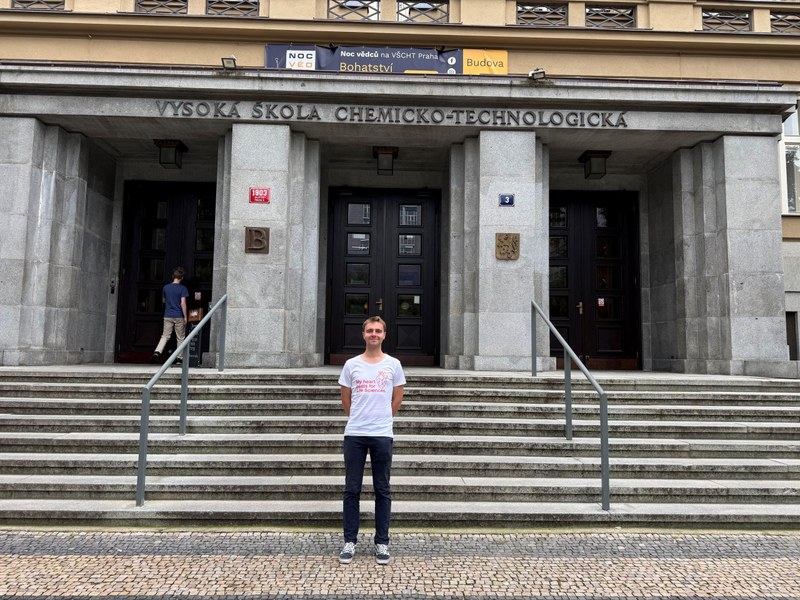
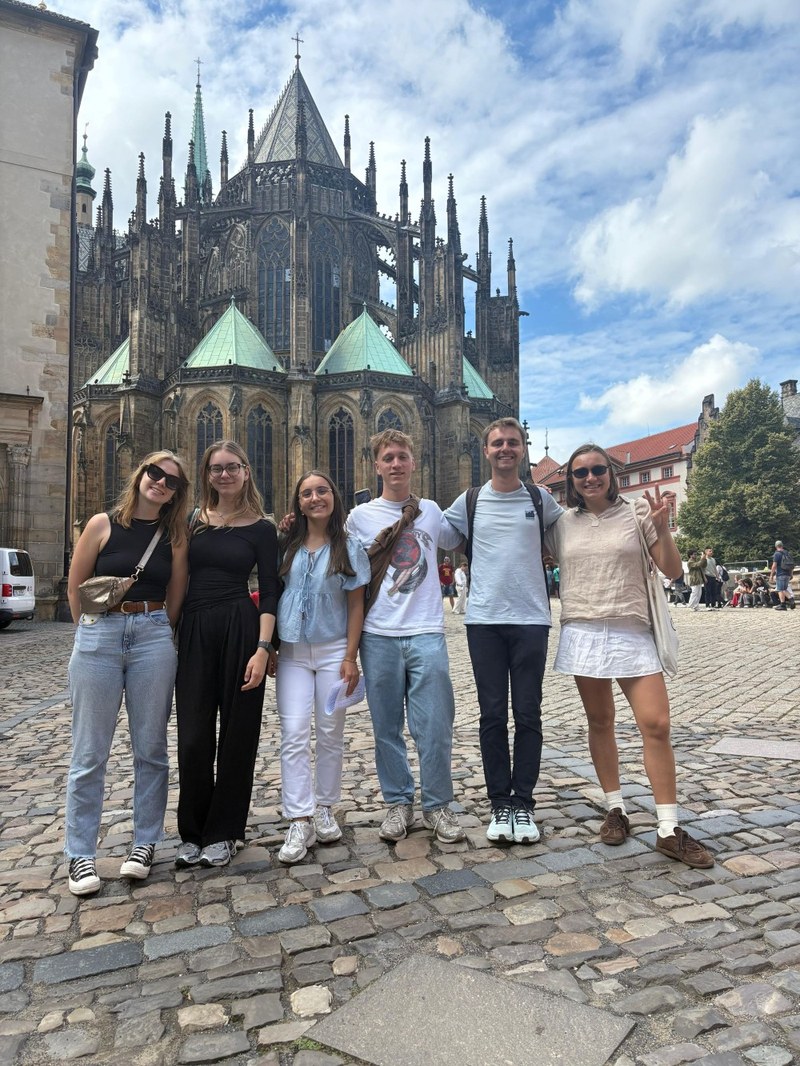
In 2025, Jaspar Fucker took the opportunity to do a double degree in Prague.

  • Story

What motivated you to go abroad?
I am generally fascinated by new surroundings and people from different backgrounds and their personal stories. I was motivated to experience different university systems and to see how they are organized. In addition, I wanted to gain experiences that would benefit my future professional career by learning to adapt to new and complex environments. I knew that I could only grow from this kind of experience.

Why did you choose your host institution/country?
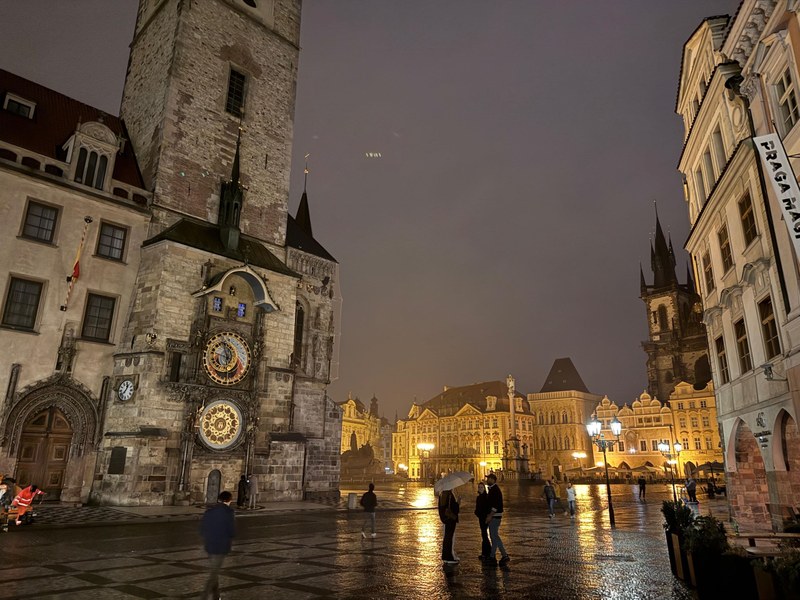
I knew that I wanted to spend a semester abroad, and the Double Degree Programme between the FHNW School of Life Sciences and University of Chemistry and Technology offered the perfect opportunity to combine this wish with my academic path. From my prior research and a weekend trip, I knew that Prague would be a good choice culturally and architecturally, as well as a lively city both day and night. Its central location in Europe also makes it ideal for traveling to neighboring countries.Many people have visited Prague for a weekend, but only few spend half a year and have the chance to go beyond the must visit spots.

What is your everyday life like?
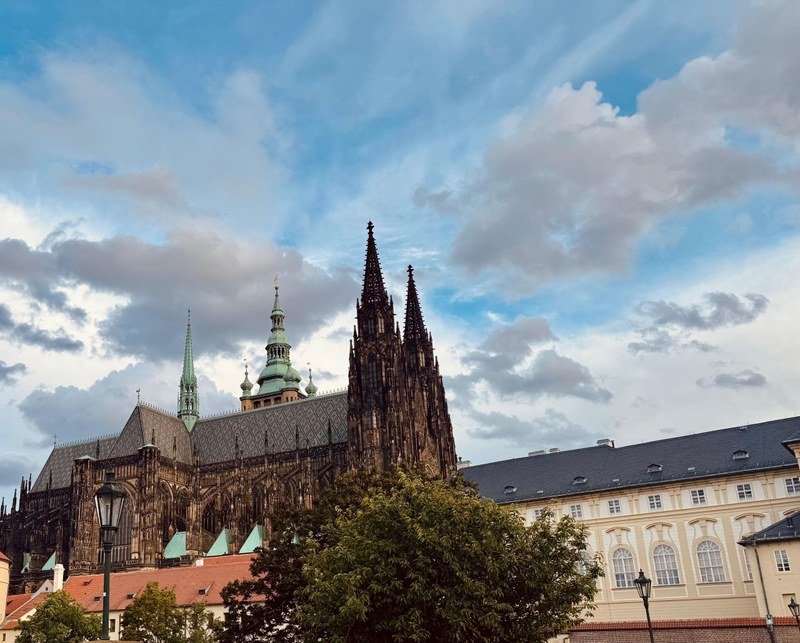
My master’s courses were spread throughout the day, and because I also worked in the lab, I usually woke up around 7 a.m. to commute by the affordable and efficient metro from the dormitory to campus. I planned my experiments flexibly and often had lunch with friends in the university canteens. I usually finished my day around 4–5 p.m., depending on the workload I had in the lab and some courses that were held in the afternoon. One really memorable spot for me was the technical library, which is shared with the other neighboring universities and therefore can become quite full, but offers a great space to work alone or in groups. After long days, it was always possible to walk to Prague Castle and enjoy the stunning views.

Tell us about your research findings during your residency.
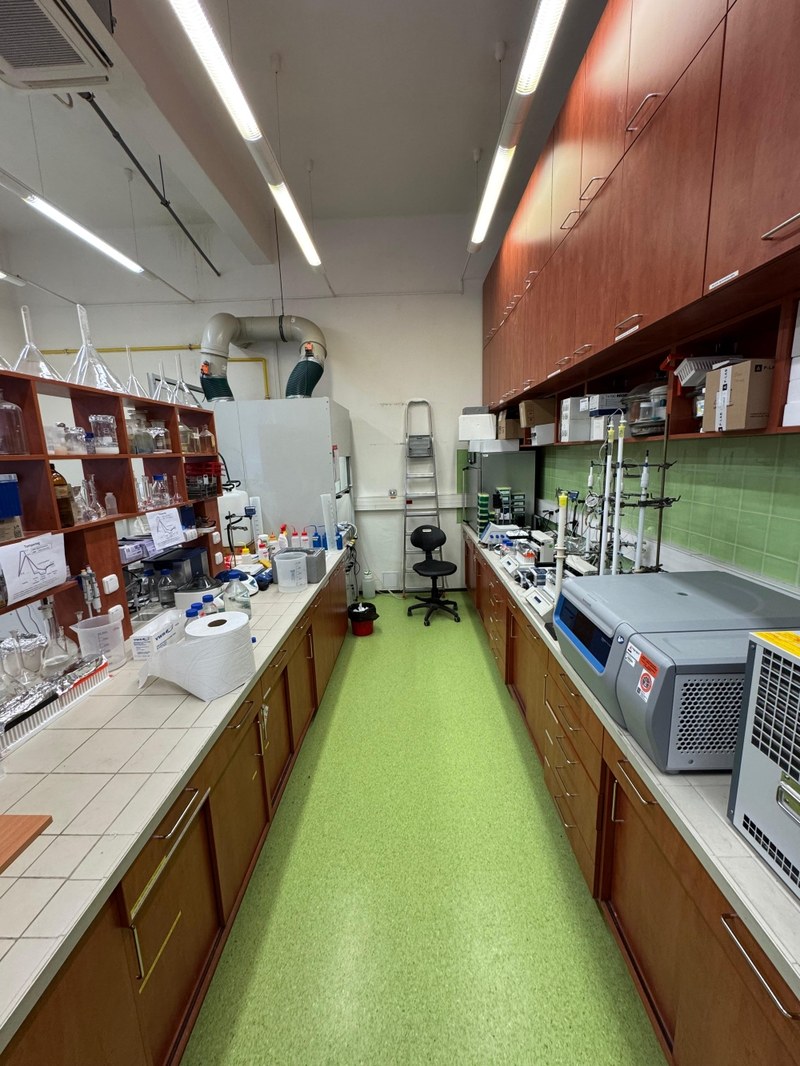
It obviously always depends on the lab and the people you are working with, but in my case, it was very important to set a clear and realistic goal for what you want to achieve in the lab and how much time you can devote to the work. The university offers very different specialized laboratories, in my case, I was assigned an analytical chemistry lab in the department for carbohydrates and cereals.

I worked on the structural elucidation of algal polysaccharides by extracting and separating them and applying spectroscopic and chromatographic methods. This was a realistic goal, as most protocols were well established. Although the laboratory equipment was not at the same level as at FHNW, practical solutions were always found.

What surprised you the most about your stay abroad?
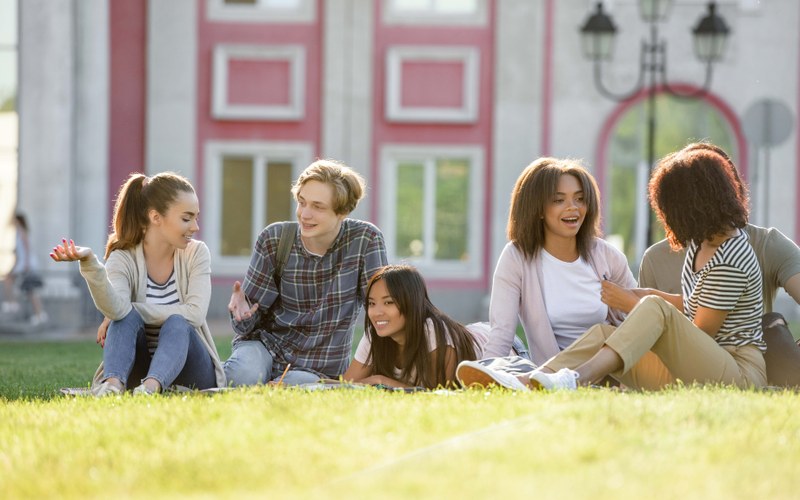
I was surprised that I mainly spent time with international students and had limited interaction with local Czech students outside the laboratory. I also found that Prague was not as cheap as expected in comparison to other beautiful places within the Czech Republic.

What tips would you give to future exchange students?
It is important to decide early what kind of Erasmus or Double Degree experience you want, as there are many courses, responsibilities, and travel opportunities. Staying in close contact with colleagues and supervisors helps to meet expectations. I also recommend reading authors like Franz Kafka or Milan Kundera by the Vltava River to better understand the cultural background of the city.

Is there anything else you would like to share?
I especially enjoyed attending local and university sports events, for example ice hockey matches of the university team and a football game of Sparta Praha. The cultural evenings organized by the Erasmus Student Network were also very memorable, as they allowed students to share traditions and stories, creating a welcoming atmosphere.
  • 4_jaspar.jpg
  • 1_jaspar.jpg
  • 3_jaspar.jpg
  • 2_jaspar.jpg

Take your chance to study abroad!
Thinking about a semester abroad or an international thesis? Find all the necessary information for outgoing students here:
DE - Outgoing StudierendeEN - Outgoing students

Contact

Irina Hauri

Irina Hauri

Head of International Office and Continuing Education Management
Phone
+41 61 228 50 66
E-Mail
international.lifesciences@fhnw.ch
Sarah Lehmann

Sarah Lehmann

Assistant International Office
Phone
+41 61 228 50 66
E-Mail
international.lifesciences@fhnw.ch

School of
Life Sciences FHNW University of Applied Sciences and Arts Northwestern Switzerland

  • About the School
    • School
    • Degree Programmes
    • Continuing Education
    • Research
    • Events
  • Social Media
    • Facebook
    • Instagram
    • YouTube
    • LinkedIn
  • About FHNW
    • Organisation
    • Schools
    • Locations
    • FHNW Library
    • Media Relations
  • Support
    • IT Support
    • Inside FHNW
    • Webmail
Logo FHNW - 20 Years
Logo Swiss Universities
Logo European University Association
© University of Applied Sciences and Arts Northwestern Switzerland (FHNW)
  • Data Protection
  • Imprint
  • Accessibility
  • EN
  • DE