Skip to main contentSkip to search barSkip to navigationSkip to footer
Logo of the University of Applied Sciences and Arts Northwestern Switzerland
  • DE
  • EN
  • Home

Ten Schools One Goal

The FHNW comprises 10 schools with different specializations. Select a school to see its specific courses, study programmes and information.

Applied Psychology

Architecture, Construction and Geomatics

Art and Design

Music

Computer Science

Life Sciences

School of Education

Social Work

Engineering and Environment

Business

  • Study offerings

    • All degree programmes
    • Master in Life Sciences
    • Master in Medical Informatics
    • Joint Degree Master in Biomedical Engineering
    • Info events
  • About degree programmes

    • Tuition fees and scholarships
    • Digital Life Sciences
  • International

    • Outgoing Students
    • Incoming Students
    • Double Degree
    • Partner universities
    • Student stories
    • Buddy programme
    • News and stories
  • Continuing education offerings

    • All continuing educations
    • CAS - Certificate of Advanced Studies
    • Modules and Seminars
    • Info events
  • Organisation

    • Consulting services
    • Legal information and terms & conditions
  • Research

    • Research fields
    • Projects
  • Collaboration

    • Process Technology Centre
    • Services
    • Tech Transfer Office
    • Student projects
  • International

    • Study abroad
    • International research projects
  • Updates and insights

    • News and stories
    • Research highlights
  • Events

    • All events
    • Info events
  • Media corner

  • About the School of Life Sciences

    • Strategy and values
    • Management board
    • Staff
    • Advisory board
    • People directory
    • Diversity and equal opportunities
    • Media corner
    • Infrastructure and campus
  • Institutes and centres

    • Institute for Chemistry and Bioanalytics
    • Institute for Ecopreneurship
    • Institute for Medical Engineering and Medical Informatics
    • Institute for Pharma Technology and Biotechnology
    • Centre for Teaching and Learning
    • Process Technology Centre
Logo of the University of Applied Sciences and Arts Northwestern Switzerland
  • About the School
    • School
    • Degree Programmes
    • Continuing Education
    • Research
    • Events
  • Social Media
    • Facebook
    • Instagram
    • YouTube
    • LinkedIn
  • About FHNW
    • Organisation
    • Schools
    • Locations
    • FHNW Library
    • Media Relations
  • Support
    • IT Support
    • Inside FHNW
    • Webmail
  • Data Protection
  • Imprint
  • Accessibility
  • Study offerings

    • All degree programmes
    • Master in Life Sciences
    • Master in Medical Informatics
    • Joint Degree Master in Biomedical Engineering
    • Info events
  • About degree programmes

    • Tuition fees and scholarships
    • Digital Life Sciences
  • International

    • Outgoing Students
    • Incoming Students
    • Double Degree
    • Partner universities
    • Student stories
    • Buddy programme
    • News and stories
  • Continuing education offerings

    • All continuing educations
    • CAS - Certificate of Advanced Studies
    • Modules and Seminars
    • Info events
  • Organisation

    • Consulting services
    • Legal information and terms & conditions
  • Research

    • Research fields
    • Projects
  • Collaboration

    • Process Technology Centre
    • Services
    • Tech Transfer Office
    • Student projects
  • International

    • Study abroad
    • International research projects
  • Updates and insights

    • News and stories
    • Research highlights
  • Events

    • All events
    • Info events
  • Media corner

  • About the School of Life Sciences

    • Strategy and values
    • Management board
    • Staff
    • Advisory board
    • People directory
    • Diversity and equal opportunities
    • Media corner
    • Infrastructure and campus
  • Institutes and centres

    • Institute for Chemistry and Bioanalytics
    • Institute for Ecopreneurship
    • Institute for Medical Engineering and Medical Informatics
    • Institute for Pharma Technology and Biotechnology
    • Centre for Teaching and Learning
    • Process Technology Centre

Type a search term and search continuing education,degree programmes, events, documents and other content.

Master in Medical Informatics, FHNW School of Life Sciences

School of Life Sciences


  • Life Sciences
  • Degree programmes
  • Study offerings
  • All degree programmes
All degree programmes
MSc Medical Informatics 1.jpg

Ready to shape the future of healthcare? Join our MSc programme in Medical Informatics and play a key role in the digital transformation of the field. Learn how to analyse complex medical data, develop innovative software solutions and apply artificial intelligence to improve patient outcomes. If you're passionate about technology and want to make a real impact, this programme is for you.


Factsheet

Degree
Master of Science FHNW in Medical Informatics
Study mode
Part-time and Full-time
Learning environment
Onsite
ECTS points
90
Next start
14.9.2026
Duration
3 semesters (full-time)/5 semesters (part-time)
Language
English
Place
FHNW Campus Muttenz, FHNW Campus Olten
Staying abroad
Possible
Application fee
CHF 200
Semester fee
CHF 750 / CHF 1 000 / CHF 5 000

At a glance

  • Data and analytical skills: Gain hands-on experience in biomedical data analysis, software development, and data-driven decision-making models for healthcare and pharmaceutical science.
  • AI and digital innovation: Explore the role of artificial intelligence in medicine and drug discovery, and learn cutting-edge methods in machine learning, big data and data visualisation.
  • Practice-oriented learning: Apply your knowledge through integrated internships, working on real-world challenges in hospitals, the pharma industry and MedTech companies.
  • Strong industry connections: Benefit from direct collaboration with leading institutions in the healthcare and pharma sectors, especially in the Basel area – a global hub for healthcare innovation.

Why study this?

What career opportunities are open to you?

With our Master’s in Medical Informatics and Pharma Informatics you will unlock outstanding career opportunities at the intersection of medicine/pharma, IT and innovation. You will analyse health data, develop smart IT solutions, and help design digital processes in hospitals, research and industry.

Thanks to your combined medical and technical expertise, you will be highly qualified for roles in:

  • Hospitals and healthcare firms: Optimise clinical workflows, diagnostics and treatment options through innovative digital solutions.
  • The pharma industry: Apply your knowledge of big data and artificial intelligence to accelerate drug development and enable personalised therapies.
  • Medtech companies: Work at the interface of technology, software and clinical application, designing innovative products that improve the cyberlives of patients and healthcare professionals.
  • Start-ups and Health Tech companies: Contribute your medical knowledge and IT skills to drive innovative projects in digital health.
  • Research institutions: Collaborate in interdisciplinary teams to develop algorithms, digital diagnostic tools and clinical decision support systems.

Structure and programme contents

Two specialisations

Specialisation in Medical Informatics

You will gain the latest insights in information technology with a focus on the healthcare industry, exploring areas such as biomedical data analysis, AI tools and big data, as well as their healthcare applications.

The emphasis is on personalised medicine: internships and seminars with leading healthcare providers address real-world applications in health data analysis, software development for hospitals and pharma firms, along with ethical and data security considerations.

Specialisation in Pharma Informatics

You will learn to combine advanced informatics, machine learning and mathematics techniques with a focus on AI-driven drug discovery. You will be prepared to take on leadership roles in the digital transformation of the sector.

Thanks to a blend of theoretical knowledge and hands-on internships with leading pharma firms, the curriculum offers a broad skill set, including laboratory automation, digital biomarkers and key aspects of drug discovery.

Details of the degree programme

Programme structure

The master’s degree programme consists of three key components: core competences, specialised training and the thesis. In the first part of your degree programme, you will complete modules totalling 60 ECTS. These include your core modules, specialisation electives and general electives, allowing for individual specialisation. This is followed in the final semester by the thesis, completed over six months and worth 30 ECTS.

Duration of study: Full-time or part-time

The diagram below shows how the programme is structured. After the core modules in your first semester you are free to choose from a range of electives. The programme concludes with your thesis.

Programme structure MSc Medical Informatics

Module groups Medical Informatics

Core modules

The core modules (24 ECTS) cover topics essential for success in medical informatics, going well beyond what is offered in standard computer science courses.

  • Medical Data Science
  • Digital Transformation in Healthcare
  • Digitalization of Business Processes in Healthcare
  • Medical Software Development
Specialisation electives

You can choose elective modules (≥ 18 ECTS) from a range of medical informatics topics, business modules and other subjects, reflecting the dynamic nature of a field where technologies and challenges are evolving rapidly.

  • Digital Biomarkers
  • Applied Quantum Computing
  • Development in Medicines and Medical Devices
  • Machine Learning in Medicine
  • Medicine and Informatics
  • Innovation Trends in Medical Informatics
  • Clinical Decision Support Systems
  • Human Machine Interaction and Bias Mitigation
  • Applied Computational Intelligence
  • Cyber Security in Health
  • Independent Learning
  • Internship
General electives

For the remaining ECTS you can select from a wide range of general electives that support different academic and career interests.

  • Data Science
  • User-Centred Design and Usability Testing
  • IT Governance, Risk and Compliance
  • Knowledge Processing and Decision Making
  • Healthcare Entrepreneurship
  • Pharmacokinetics and Pharmacodynamics
  • Artificial Intelligence in Drug Discovery
  • Laboratory Automation in the Pharmaceutical Industry
  • Biomarkers
  • Cloud Computing
  • Business Intelligence
Master’s thesis

The thesis is industry oriented and comprises 30 ECTS credits. Cooperation with external partners allows you to get industry experience during your thesis. You work on challenging, application-oriented informatics projects and you will be supervised by a lecturer from the MSc programme.

Module groups Pharma Informatics

Core modules

The core modules (22 ECTS) cover topics essential for success in medical informatics, going well beyond what is offered in standard computer science courses.

  • Foundations of Pharma
  • Digital Transformation in Healthcare
  • Medical Data Science
  • Applied Mathematics and Informatics in Drug Discovery
  • Mathematical and Computational Biology in Drug Discovery
Specialisation electives

You can choose elective modules (≥ 20 ECTS) from a range of pharma informatics topics, business modules and other subjects, reflecting the dynamic nature of a field where technologies and challenges are evolving rapidly.

  • Digital Biomarkers
  • Applied Quantum Computing
  • Development in Medicines and Medical Devices
  • Machine Learning in Medicine
  • Pharmacokinetics and Pharmacodynamics
  • Innovation Trends in Medical Informatics
  • Artificial Intelligence in Drug Discovery
  • Biomarkers
  • Laboratory Automation in the Pharmaceutical Industry
  • Business Intelligence
  • Cloud Computing
  • Independent Learning
  • Internship
General electives

For the remaining ECTS you can select from a wide range of general electives that support different academic and career interests.

  • Data Science
  • User-Centred Design and Usability Testing
  • IT Governance, Risk and Compliance
  • Knowledge Processing and Decision Making
  • Healthcare Entrepreneurship
  • Medicine and Informatics
  • Clinical Decision Support Systems
  • Human Machine Interaction and Bias Mitigation
  • Applied Computational Intelligence
  • Cyber Security in Health
Master’s thesis

The thesis is industry oriented and comprises 30 ECTS credits. Cooperation with external partners allows you to get industry experience during your thesis. You work on challenging, application-oriented informatics projects and you will be supervised by a lecturer from the MSc programme.

International

Our master's programme opens up global horizons: whether planning your Master's thesis overseas or coming to us from abroad, we will support you every step of the way!

Outgoing Students: Doing your Master's thesis abroad: Information

Incoming Students: Studying with us as an international student: Information


Requirements and admission

The programme is designed for BSc graduates in Medical Informatics, as well as related disciplines such as Computer Science/Informatics, Medicine (MSc in Medicine or equivalent), Pharmaceutical Sciences, Life Sciences, or similar fields that meet the programming/medical knowledge requirements.

Highly qualified graduates are admitted to the master’s programme if they:

  • have acquired a Bachelor's degree in a relevant field with grade A, B or ≥ 4.8 (≥ "good")
  • or possess an equivalent educational background and professional experience (college or university degree)
  • and have successfully passed the interview
  • and demonstrate a very good command of the English language.

Pre-master’s courses are available to ensure required prior knowledge. The Admissions Committee may set completion of these courses as a prerequisite for starting the programme. They begin before the semester and are free of charge.

Pre-master’s courses are available in: Digital Life Sciences, Programming, Mathematics and Business Information Systems.

Proof of sufficient English skills must be provided with one of the following certificates:

Type of certificate

Required level

CE (Cambridge English)

B2/FCE

IELTS (English Language Testing System)

5.5

TOEFL (Test of English as a Foreign Language)

IBT 72

Spoken or Written Academic English (module in the bachelor’s degree programme at the School of Life Sciences)

4.5


Organisational matters

Start of studies

The master’s programme begins in the autumn semester (calendar week 38).

Tuition fees

The following semester and registration fees are payable. Further details can be found in the FHNW fee regulations, valid from academic year 2025/26.

Tuition fees per semester:

CHF 750

  • Swiss citizens
  • Students legally resident in Switzerland at the start of their studies
  • Students whose parents are legally resident in Switzerland at the start of their studies
  • Recognised refugees and stateless persons who are legally resident in Switzerland.

CHF 1 000

  • Students resident in an EU/EFTA country at the start of studies.

CHF 5 000

  • Students resident outside Switzerland and the EU/EFTA.

An additional CHF 100 per semester is charged for materials and licences.

Full fees are due unless notice of deregistration is received within one week of the start of the semester

Downloads

Study and examination regulations German

Factsheet MSc Medical Informatics

The Master of Science in Medical Informatics is conducted in collaboration with the FHNW School of Business.


Advising and information events

Contact

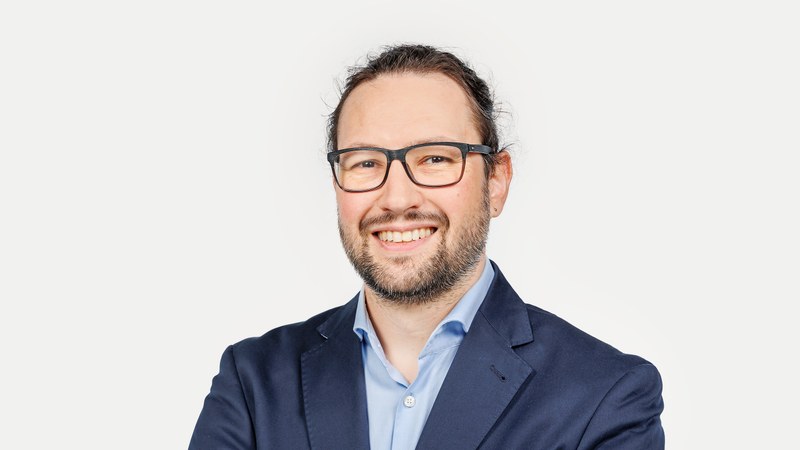
Julia Rausenberger

Prof. Dr. Julia Rausenberger

Joint-Head of Higher Education
Phone
+41 61 228 56 58
E-Mail
julia.rausenberger@fhnw.ch
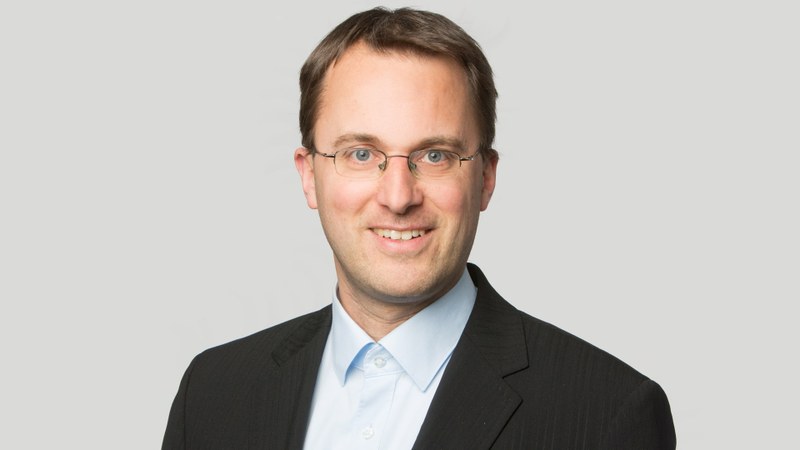
Hans Friedrich Witschel

Prof. Dr. Hans Friedrich Witschel

Lecturer, MSc Business Information Systems
Phone
+41 62 957 24 69
E-Mail
hansfriedrich.witschel@fhnw.ch
Vera Statovci

Vera Statovci

Team Assistant
Phone
+41 61 228 55 96
E-Mail
msc.medical.informatics.lifesciences@fhnw.ch

Information events

Loading...


Registration

Register here for your chosen start date. Before registering, we recommend attending an information event.

Master in Medical Informatics
Autumn semester 2026

Date
14.9.2026
Duration
3 semesters (full-time)/5 semesters (part-time)
Place
FHNW Campus Muttenz, Hofackerstrasse 30, 4132 Muttenz
Final application date
30.4.2026
Register

Master in Medical Informatics
Autumn semester 2027

Date
13.9.2027
Duration
3 semesters (full-time)/5 semesters (part-time)
Place
FHNW Campus Muttenz, Hofackerstrasse 30, 4132 Muttenz
Final application date
30.4.2027
Register

School of
Life Sciences FHNW University of Applied Sciences and Arts Northwestern Switzerland

  • About the School
    • School
    • Degree Programmes
    • Continuing Education
    • Research
    • Events
  • Social Media
    • Facebook
    • Instagram
    • YouTube
    • LinkedIn
  • About FHNW
    • Organisation
    • Schools
    • Locations
    • FHNW Library
    • Media Relations
  • Support
    • IT Support
    • Inside FHNW
    • Webmail
Logo FHNW - 20 Years
Logo Swiss Universities
Logo European University Association
© University of Applied Sciences and Arts Northwestern Switzerland (FHNW)
  • Data Protection
  • Imprint
  • Accessibility
  • DE
  • EN