MAKE/SENSE is a three-year PhD programme organized with the University of Arts Linz (AT). It combines supervision in Basel and Linz with a curriculum grounded in critical, experimental, and transdisciplinary research.
1/5
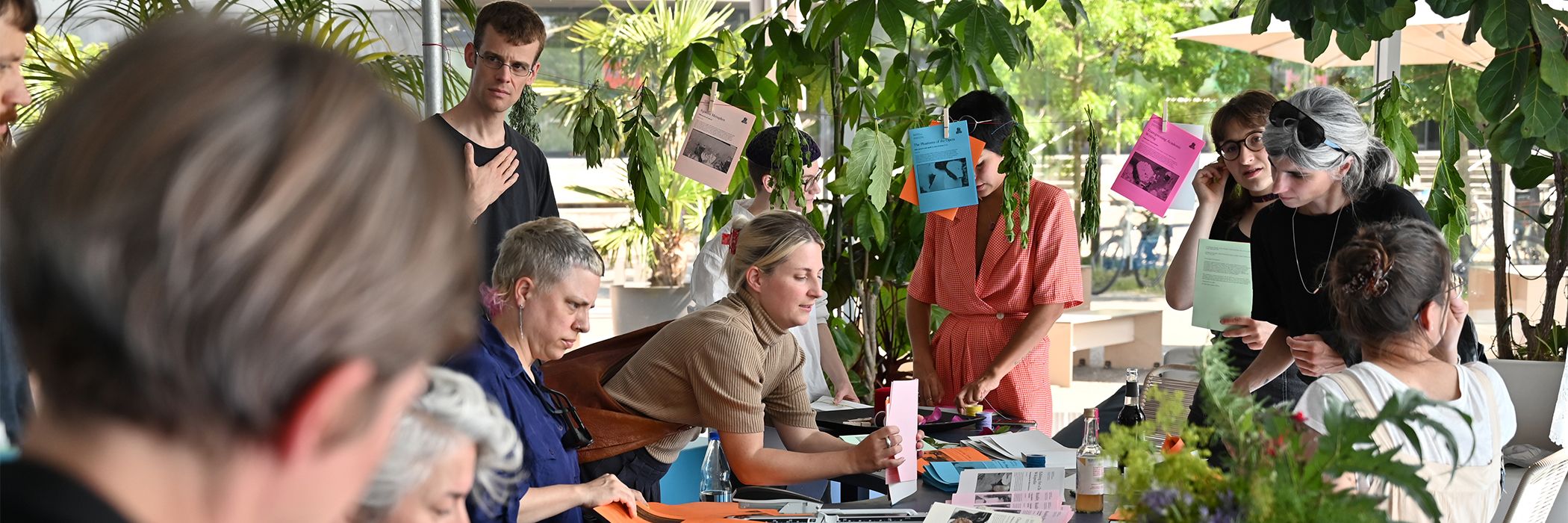
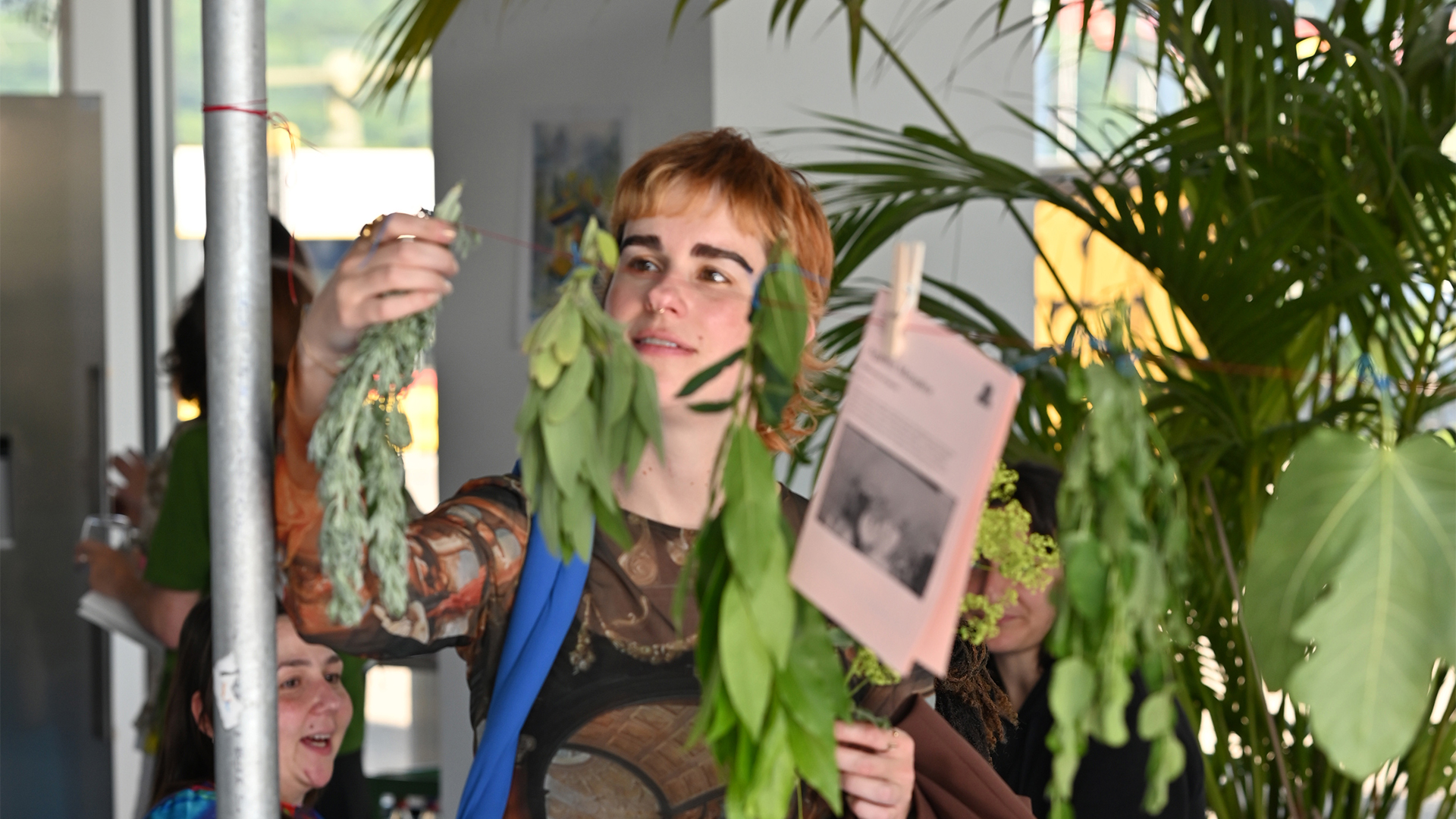
Launch of the publication “Imagination as a Site of Struggle” hosted by Gabriela Aquije and Eva Weinmayr during the Make/Sense Assembly 2025 Practice-based Forms of Reading and Writing.
2/5
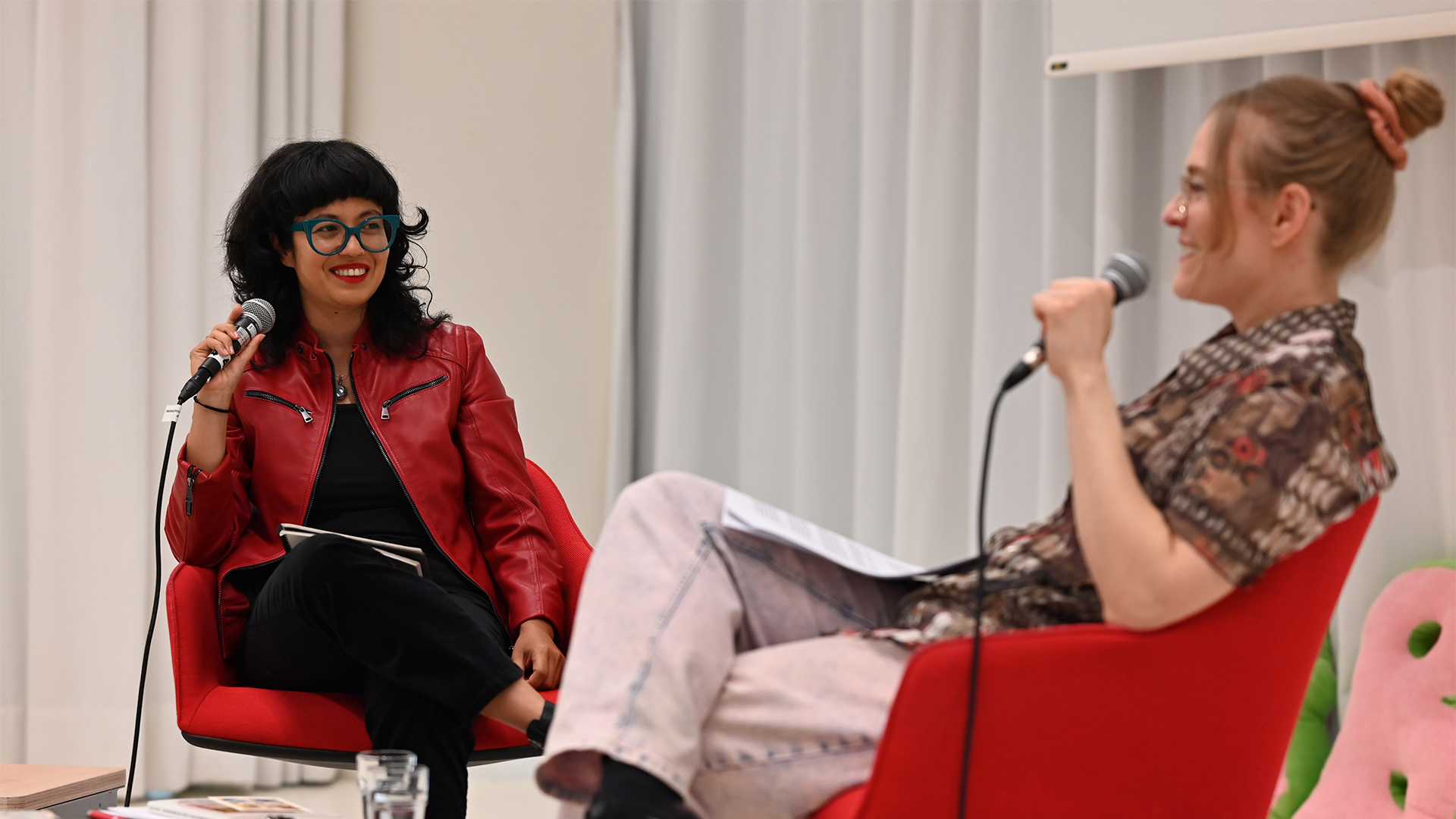
Performative Readings / Activation of “Imagination as a Site of Struggle” journal issue with Jackie Wang and Cassandra Troyan (facilitated by Helen Pritchard) as part of the Make/Sense Assembly 2025 Practice-based Forms of Reading and Writing.
5/5
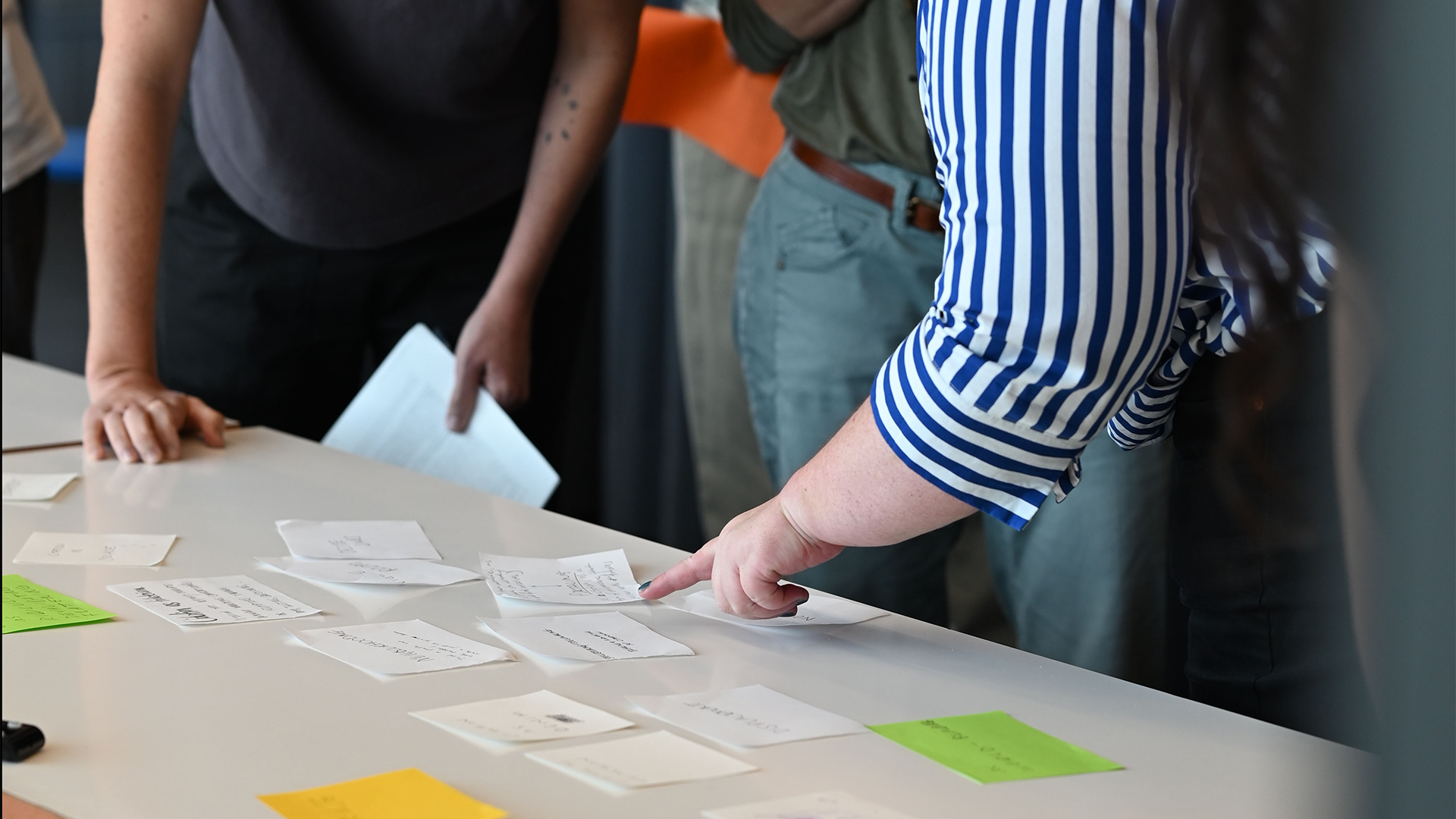
Ways of Writing. Proposals for a Collective Exploration, workshop hosted by Delphine Chapuis-Schmitz and facilitated by Lucie Kolb as part of the Make/Sense Assembly 2025 Practice-based Forms of Reading and Writing.
The study programme
The MAKE/SENSE PhD, hosted by the Critical Media Lab, brings together researchers from art, design, media, and technology in a collaborative environment. The programme combines close mentorship with shared practices of documenting, hacking, rehearsing, and publishing that shape the lab’s ongoing research threads.
Research is approached as a process that responds to social, political, infrastructural and technological questions of our time. Candidates develop situated and experimental approaches informed by socially engaged perspectives. Projects may take the form of artistic interventions, activist media, software critique, fieldwork, or other practice-based experiments that question how knowledge is produced and shared.
Doctoral training spans three structured years, with the option of extension. Students receive individual and group supervision in Basel and Linz, supported by monthly colloquia, a yearly assembly, and regular public events organized in collaboration with external partners. Research outcomes may include exhibitions, performances, installations, publications.
Supervision
PhD candidates are jointly supervised by the Basel Academy of Art and Design FHNW and the University of Arts Linz through regular individual and group meetings in both locations. These meetings provide individualized training and foster collective exchange, tailored to each doctoral project. At the Basel Academy of Art and Design FHNW, supervision is offered across its institutes, including:
Experimental Design and Media Cultures (IXDM)
Arts and Design Education (IADE)
Art Gender Nature (IAGN)
Digital Communication Environments (IDCE)
Contemporary Design Practices (ICDP)
Target audience
The programme is aimed at practitioners working at the intersection of artistic practice, critical theory, and political inquiry. It welcomes applicants from art, design, media, performance, or curation committed to practice-based research as critical, situated engagement.
Candidates should be interested in experimenting with transversal, artistic and theoretical methods, developing new forms of reasearch, writing, documenting and media. With their peers, they work collectively through formats such as reading groups, feedback sessions, or publishing. The programme particularly suits practitioners who wish to reconfigure existing conditions of knowledge production and link their research to broader social, cultural, or community contexts.
Aims and benefits
The programme supports research that reconfigures the aesthetic, performative and material conditions of knowledge production. Central to this is a rethinking of research infrastructures through open, equitable, and context-responsive systems of sharing, funding, and support, often linked to policy and community-oriented work.
Artistic research is thus approached as a situated, politically committed practice that reimagines what research can be, whom it serves, and how it shapes new publics and social imaginaries.
Educational goal and career prospects
Through support in the development of research skills, transversal work, and collaboration with experienced practitioners and academics, the programme offers candidates diverse career perspectives. Research across art, design, and media practices is approached as a means to create new frameworks for knowledge and pedagogy.
Doctoral researchers develop advanced research skills that bridge artistic, theoretical, and political inquiry, and experiment with methods and media that expand how knowledge is produced and shared. Graduates pursue careers in academia, art schools, and research institutions, as well as in design studios, cultural organisations, independent practice, policy-making, NGOs, and community initiatives. The programme prepares candidates to contribute both to academic debates and to wider public and institutional change.
Infrastructure
PhD candidates have access to the infrastructure of both the Basel Academy of Art and Design FHNW and the University of Arts Linz. Candidates also benefit from the broader networks of both institutions, connecting research to international communities.
Admission
Admission requirements
Applications are welcome from artists, curators, publishers, designers, and cultural organisers — holding an MA degree (120 ECTS) or equivalent qualification.