
Aida Kidane
Casa M
Fall Semester 2021
This project examines architecture as a fundamental act of spatial appropriation and the exertion of power, taking the UNESCO World Heritage Site of Asmara as its starting point. Architecture claims space, displaces other life forms, and centers humanity. The focus is on two significant historical periods: the Aksumite Empire and Italian colonial rule. Both left behind UNESCO-listed monuments—visible remnants of their histories that also reveal their entanglements with exploitation and destruction.
Rather than contrasting architectural styles, the project questions the very act of building. The Aksumite Empire, centered in what is now Eritrea and northern Ethiopia, was known for its monumental structures, territorial expansion, and the intertwining of architecture with political and religious authority. Italian colonial rule, in turn, reshaped Asmara with numerous modernist buildings that continue to define the city's landscape. These structures served not only representational purposes but also functioned as instruments of colonial power.
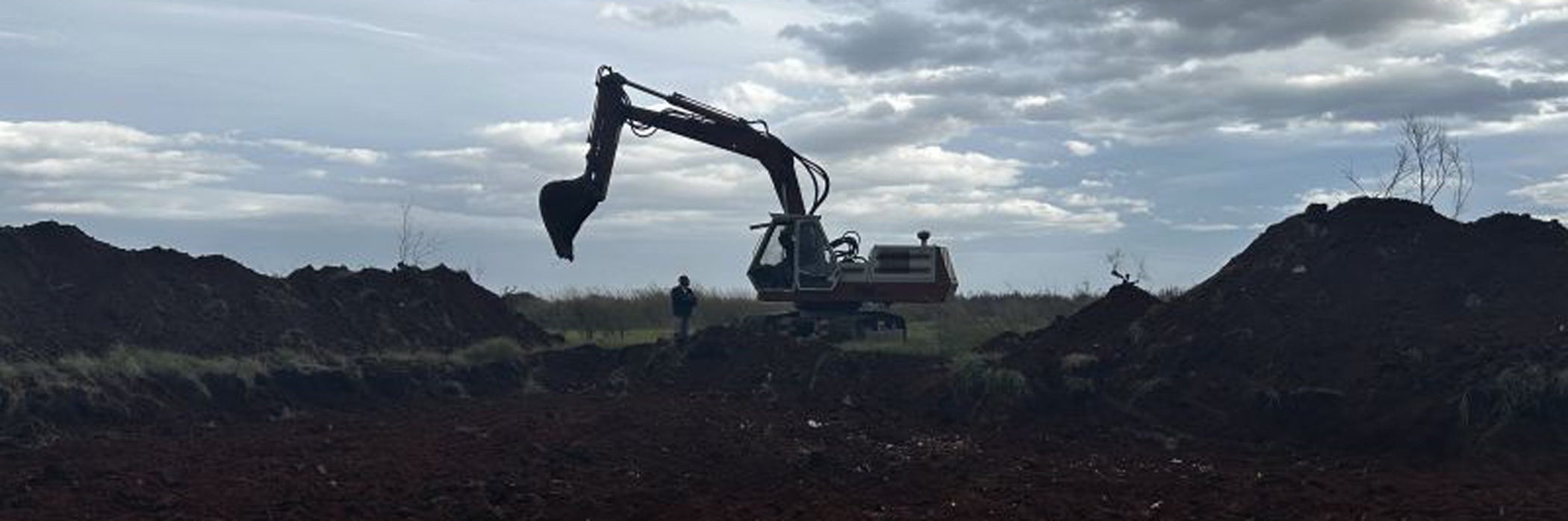
The name "Casa M" references Mussolini and Italy’s colonial past. Through a site-specific intervention, the project reverses historical power dynamics: in Italy, the outline of a colonial-fascist house—still standing in Asmara—is excavated. This creates a negative imprint, an absence with spatial, political, and ecological significance, inviting a reconsideration of space beyond a human-centered perspective.
Amid the climate crisis, "Casa M" challenges architecture’s anthropocentric foundations. The project poses speculative questions about architectural concepts that emerge when moving away from a human-centered perspective. While indigenous practices often harmonize with nature and emphasize sustainable methods, dominant cultures have historically used architecture as a tool of control. This project artistically examines that tension, opening new perspectives on architecture’s role.