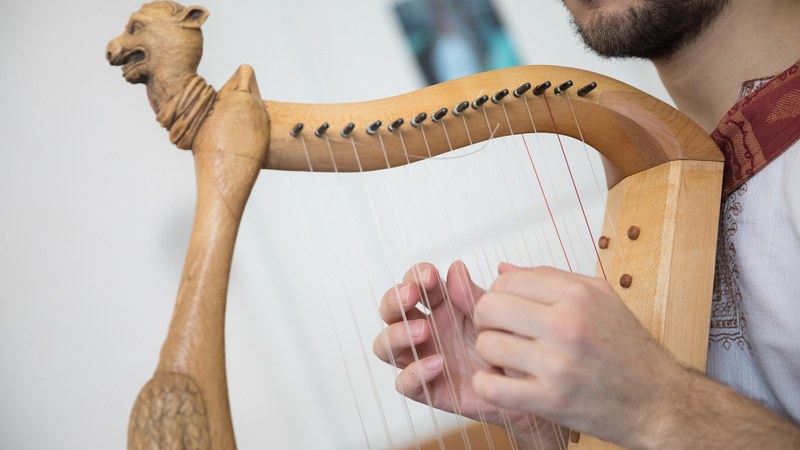
The Medieval programme is the world’s only full-time Bachelor’s programme of its kind. It combines technical support on instruments from the Middle Ages and the early Renaissance with contemporary vocal techniques. The programme offers a specialisation in repertoire studies and historical improvisation practice. Students gain access to the theoretical and music-historical basis for musical practice. A diverse and international community of lecturers and students awaits you at the Schola Cantorum Basiliensis.
Factsheet
- Degree
- Bachelor of Arts FHNW in Musik, Studienrichtung Mittelalter-Renaissance instrumental / vokal
- Study mode
- Full-time
- Learning mode
- Onsite
- ECTS credits
- 180
- Next start
- 14.9.2026
- Duration
- 6 semester
- Teaching language
- level B1 in German is required
- Stay abroad
- Not applicable
- Application fee
- 200 CHF
- Semester fee
- 750 CHF (CH) | 1000 CHF (EU/EFTA) | 1250 CHF (Not-EU/Not-EFTA)
At a glance
- Technical and musical support, instrument/voice
- Historical music practice based on source work
- Development of one’s own artistic personality as a soloist and as part of an ensemble
Why study this?
As a rule, the Bachelor degree programme prepares students for continuing their education at graduate level (Master’s). However, the experience and skills acquired during this course of study are also transferable to other professions, such as musicology, music journalism, publishing, music management and instrument making.
This particular Bachelor degree programme does not have a teacher-training component. Students wishing to pursue a career as a music educator may apply for the special Master's degree programme in Music Pedagogy upon completion of the Bachelor's studies. Career opportunities for Medieval-Renaissance music specialists include performance work in concert, festival, and Early Music concert series settings. As expert ensemble musicians, holders of this BA are qualified to play with existing ensembles or establish their own ensemble. A number of graduates opt to pursue a career in academic research within their chosen field of specialisation, while others choose to share their experience and expertise in workshops and masterclasses.
Permanent employee positions are rare in this field.
This SCB Bachelor degree programme is aimed at highly talented instrumentalists and vocalists wishing to acquire an undergraduate qualification in the study and practice of medieval and early Renaissance music. A separate track is offered for students wishing to specialise in music from the Late Renaissance through the Romantic periods (see course description: Bachelor degree with a Renaissance-Romantic specialisation).
Students should be highly qualified and prepared to dedicate themselves to a course of study and training in historical performance practice that meets the highest artistic standards. Prerequisites are: talent, high level of ability (voice/instrument) as well as potential for further artistic development, experience in Early Music and an interest in the historical foundations underpinning its practice.
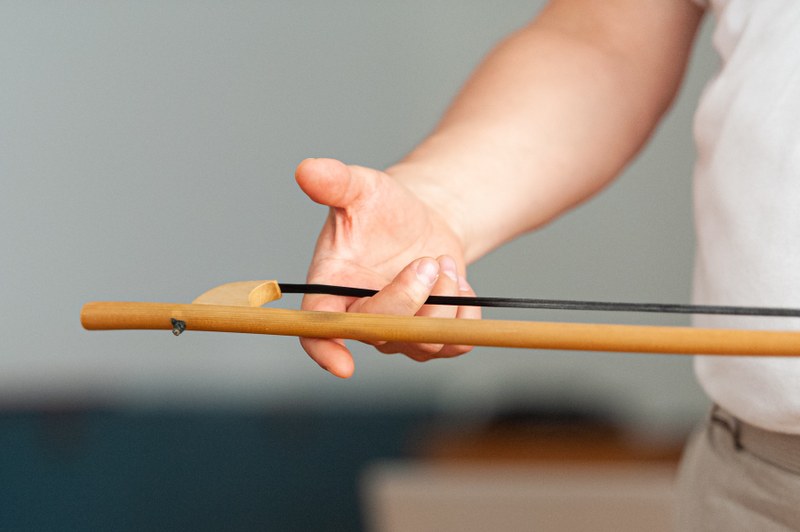
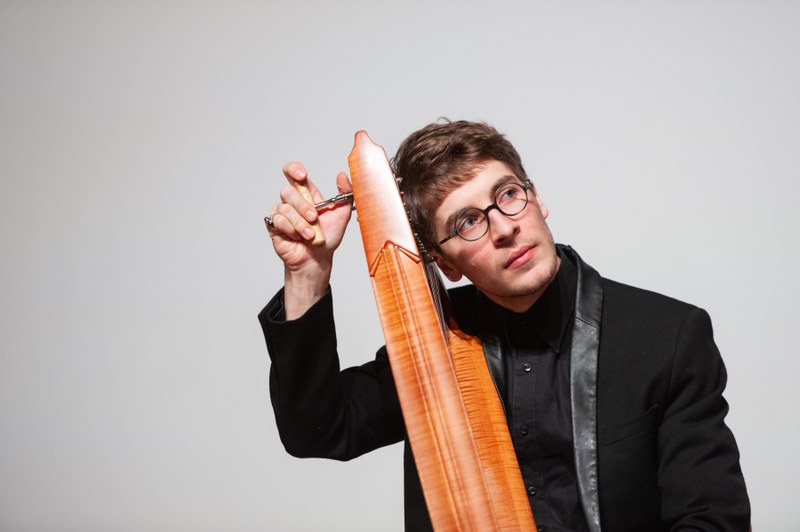
What is a Lute, Gittern, Citole, Cetra, Cythara? Which medieval plectrum instruments can be learned and studied at the Schola?
Prof. Marc Lewon, Schola Cantorum Basiliensis, presents medieval plectrum instruments
Structure and programme contents
The Schola Cantorum Basiliensis (SCB) offers a Bachelor of Arts in Early Music with a specialisation in the Medieval-Renaissance eras. As such, it is the only full-time undergraduate study programme of its kind in the world. The programme focuses on improving students’ mastery of medieval and early Renaissance instruments and vocal techniques, coupled with an in-depth study of Early Music repertoires and extensive exposure to historical improvisation practices. At the same time, students acquire an excellent foundation in music theory and history, which will in turn inform the development of their own musical practice.
Extensive ensemble-playing experience
Thanks to its exceptionally talented teaching staff and students, the Medieval Department of the SCB offers an array of opportunities for ensemble work. As a result, students are able to develop their artistic autonomy and gather valuable practical experience working with early source materials and notations.
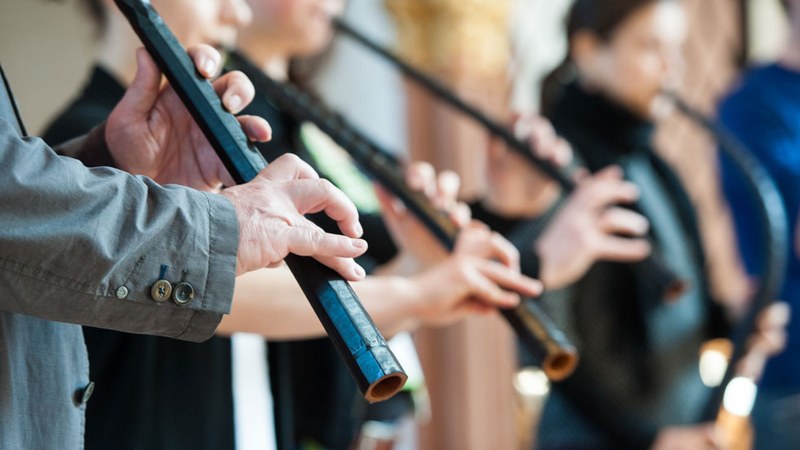
In addition to singing, the Early Music Bachelor degree programme is offered for the following instruments:
- Medieval plucked string instruments: plectrum lute, harp etc.
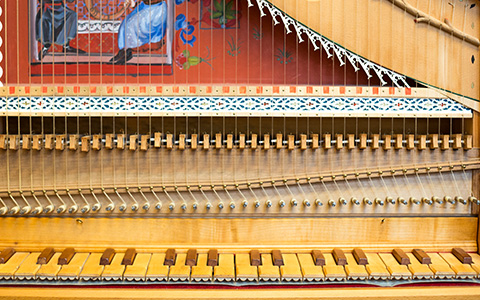
- Medieval keyboard instruments: organetto, clavicytherium, clavicymbalum etc.
- Medieval string instruments: vielle (da braccio and da gamba) etc.
- Medieval wind instruments: recorder, traverso (transverse flute), shawm
Modules and regulations
The BA and MA degree programmes at the Basel Academy of Music are based on modules.
The legally binding structure provides an initial guide to the content and weighting of the subjects on the degree programme.
The detailed content and modalities of the individual subjects can be found in the module descriptions.
The study regulations come into force together with the study and examination regulations of the Basel Academy of Music FHNW and form the legal framework.
Structure
Module descriptions
Study Regulations
History window: Music in the Middle Ages
Prof. Dr. Marc Lewon and Prof. Dr. Johannes Menke of Schola Cantorum Basiliensis as a guest on the podcast
Part 1: Early and High Middle Ages (in German) Part 2: The Late Middle Ages (in German)
Lecturers
Medieval Department
Schola Cantorum Basiliensis
Requirements, admission, entrance exam
We expect students to have good German language skills at the beginning of the studies. Students who are not German native speakers must present at least a B1 German language certificate (according to the Common European Framework of Reference for Languages (CEFR)) at the beginning of the studies.
More Admission Criteria
Entrance exam
The entrance exam is individual for each study programme direction.
Dates
Procedure
Organisational matters
Quicklinks
Files and Regulations
Advising and information events
Contact
Prof. Kelly Landerkin
- Phone
- +41 61 264 57 57 (Central office)
- kelly.landerkin@fhnw.ch
Information events
Loading...
Registration
BA Music | Early Music Medieval – Renaissance
- Date
- 14.9.2026
- Duration
- 6 Semester
- Place
- Provisorium Letzi & Campus Musik-Akademie Basel