Skip to main contentSkip to search barSkip to navigationSkip to footer
Logo of the University of Applied Sciences and Arts Northwestern Switzerland
  • DE
  • EN
  • Home
  • Degree programmes
  • Continuing education

Ten Schools One Goal

The FHNW comprises 10 schools with different specializations. Select a school to see its specific courses, study programmes and information.

Applied Psychology

Architecture, Construction and Geomatics

Art and Design

Music

Computer Science

Life Sciences

School of Education

Social Work

Engineering and Environment

Business

  • Research

    • Research fields
    • Projects
  • Updates and insights

    • News and stories
  • Events

  • Media corner

  • About the School of Engineering and Environment

    • People directory
    • Management Board
  • Institutes

    • Institute of Automation
    • Institute of Bioenergy and Resource Efficiency
    • Institute of Business Engineering
    • Institute of Electric Power Systems
    • Institute of Humanities and Social Sciences
    • Institute of Polymer Engineering
    • Institute of Mathematics and Natural Sciences
    • Institute of Polymer Nanotechnology
    • Institute of Optometry
    • Institute of Product and Production Engineering
    • Institute for Sensors and Electronics
    • Institute of Thermal and Fluid Engineering
    • Laboratories of the School of Engineering and Environment
Logo of the University of Applied Sciences and Arts Northwestern Switzerland
  • About the School
    • FHNW School of Engineering and Environment
    • Degree Programmes
    • Continuing Education
    • Collaboration in Research and Services
  • Social Media
    • LinkedIn
    • Instagram
    • Facebook
    • TikTok
    • YouTube
  • About FHNW
    • Organisation
    • Schools
    • Locations
    • FHNW Library
    • Media Relations
  • Support
    • IT Support
    • Inside FHNW
    • Webmail
  • Data Protection
  • Imprint
  • Accessibility
  • Research

    • Research fields
    • Projects
  • Updates and insights

    • News and stories
  • Events

  • Media corner

  • About the School of Engineering and Environment

    • People directory
    • Management Board
  • Institutes

    • Institute of Automation
    • Institute of Bioenergy and Resource Efficiency
    • Institute of Business Engineering
    • Institute of Electric Power Systems
    • Institute of Humanities and Social Sciences
    • Institute of Polymer Engineering
    • Institute of Mathematics and Natural Sciences
    • Institute of Polymer Nanotechnology
    • Institute of Optometry
    • Institute of Product and Production Engineering
    • Institute for Sensors and Electronics
    • Institute of Thermal and Fluid Engineering
    • Laboratories of the School of Engineering and Environment

Type a search term and search continuing education,degree programmes, events, documents and other content.

Incoming Students, FHNW School of Engineering and Environment

School of Engineering and Environment


  • Engineering and Environment
  • Degree programmes
  • international
  • incoming
incoming
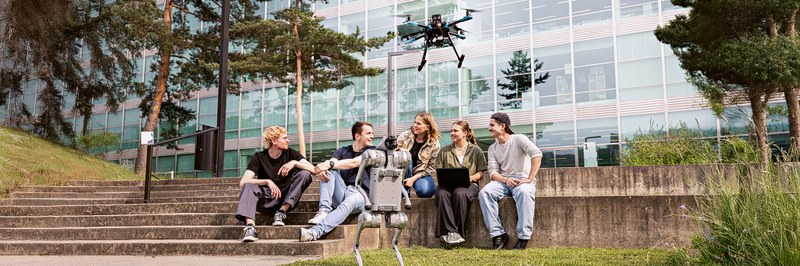
topbild_studierendenprojekte.jpeg

The FHNW School of Engineering and Environment and the FHNW School of Computer Science – a great choice for your exchange semester.

The FHNW School of Engineering and Environment and the FHNW School of Computer Science are located in the high-tech canton of Aargau, at the centre of Switzerland’s strongest economic region. The density of industrial companies as well as engineering consultancy firms represents an important advantage for this area. The FHNW benefits greatly from these conditions and in turn is itself a valuable asset for the region.

Knowledge and technology transfer – our strength
Our faculty and technical staff are experts at the forefront of engineering and technological innovation. They are key players in aR&D (applied research and development) as well as in knowledge and technology transfer, making available the latest findings of applied research to businesses operating in an increasingly challenging global market. Companies are offered active support to bridge the gap between top-level research and its practical implementation.

This strong working relationship between research and industry has helped establish both the local and international reputation of the School of Engineering and Environment and the School of Computer Science. It also continues to create significant value for our FHNW students, who are highly sought-after by employers when they graduate.

How you can benefit as an exchange student
Come and join us for a semester or two at the FHNW and gain valuable international experience while still at university. As expected, you will increase your technical knowledge and skills, but more importantly, you will have the opportunity to apply them in real-life project contexts which demand excellent intercultural, communication and project management skills. You will return home with enhanced career prospects and hopefully also great memories of your time at the FHNW.
General Formalities

Applying to study at the School of Engineering and Environment an the School of Computer Science

To apply for an exchange (and qualify for tuition fee waiver), students must be enrolled at a partner university of the FHNW School of Engineering and Environment or FHNW School of Computer Science.  Interested students should apply through the International Office of their local university and follow the normal application and registration procedures. You first need to be nominated by your home university and then begin the official application process.

Language requirements

In order to study successfully, students need adequate language skills. For all incoming students at Bachelor level, a B2 on the CEFR scale is required for the relevant language, German or English. For students who intend to enroll in a Master of Science in Engineering programme, we request level C1.

Study fees

Exchange students from partner universities with which the School of Engineering and Environment / School of Computer Science has a bilateral agreement are normally exempt from tuition fees. Any additional costs (textbooks or private excursions) must be borne by the student. The fees for students attending the FHNW and domiciled in Switzerland are CHF 700 per semester. Overseas students with Swiss nationality qualify for Swiss subsidies. Free mover exchange students from universities in an EU / EFTA country which do not have an exchange agreement with the School of Engineering and Environment / School of Computer Science will have to pay CHF 1000, those from universities outside of the EU must pay the full tuition costs of CHF 5,000 per semester.

Computer requirements

Computers are not supplied by the FHNW. Exchange students must bring their own computers/notebooks/tablets with them for their studies in Switzerland.

Visas/Permits 

If you intend to study for a period exceeding three months or come as a trainee, you will need to apply for a visa and/or permit to reside in Switzerland. If your country has a bilateral contract with Switzerland, then these procedures are greatly simplified.

Non-EU/EFTA citizens need to apply for an entry permit and student visa after being accepted by the FHNW. You are required by the immigration authorities to submit proof of sufficient financial means for your exchange period. Contact the Swiss Embassy in your country of residence to inquire about the formalities and the length of time required to obtain a visa. Further details...

All exchange students must obtain a residency permit after their arrival in Switzerland.

Insurance 

Swiss law requires that everyone staying in Switzerland for three months or more has adequate medical and accident insurance. You should ensure you have valid medical coverage before you leave home for further information see FOPH (Federal Office of Public Health).

You are also strongly advised to take out Third Party Liability insurance as this is standard in Switzerland, though not compulsory.

Accommodation & Registration

The International Office of the School of Engineering and Environment / School of Computer Science assists visiting students to find accommodation. Rooms are available through Studentenraum.ch (Brugg-Windisch) or the staff house of the cantonal hospital in Olten. For the latter, please contact ishrat.butt@fhnw.ch.

Registration with the local Swiss municipality

Since every resident in Switzerland must register at the district office of his/her municipality, you will need to register in person with the residents' registration office (Einwohnerkontrolle) within 14 days of your arrival. In order to obtain a residence permit, you must bring along the following documentation:

  • valid passport or identity card (only for EU nationals)
  • passport photos
  • certificate of enrolment at the FHNW
  • proof of medical and accident insurance cover valid for your stay in Switzerland
  • proof of your Swiss address (accommodation/tenancy agreement)
  • proof of sufficient funds for your stay (e.g. a bank statement in your name, credit card etc.)

You will have to de-register prior to your departure from Switzerland.

Introductory Session and Orientation

It is important to us that you have access to all the relevant information and assistance you need for successful studies at the FHNW and an unforgettable stay in Switzerland.

The International Office will invite you to an Introductory Session at the start of semester.  You will tour the university campus and be informed about important administrative processes and formalities (computer account, FH-card etc.). In addition, you will learn about the support services available to you during your time at the FHNW (International Office, School Administration, IT Services, Counselling Services, faculty and peers, your personal buddy, the student union and various other student groups). There will also be time to get to know the other exchange students and find out about opportunities for travel, leisure and social activities during your stay abroad. 

Application

Exchange semester application process

If you are a student at a partner university which has an exchange agreement with the School of Engineering and Environment / School of Computer Science, you may apply to attend one or two semesters at our institution.  Such applications must be made via the International Coordinator at your home university.

  • Once incoming students have been officially nominated on Mobility-Online by one of our partner universities, students will receive an email inviting them to apply.
  • After clarifying their home university requirements, students must apply online by filling in their application data and uploading all the required documents on Mobility-Online.
  • Once the student’s application has been reviewed and accepted, an acceptance email will then be sent to the student and his/her home university. Furthermore, students will be able to download their own Letter of Acceptance on Mobility-Online.

All incoming students at FHNW School of Engineering and Environment and FHNW School of Computer Science will receive financial support for their exchange programme. Students are required to sign either the SEMP or FHNW worldwide support agreement before arriving. These agreements will be available on Mobility-Online after students have generated their Letter of Acceptance.

Application deadline
  • For autumn/fall semester: April 15  (Semester begins calendar week 38)
  • For spring semester: October 15 (Semester begins calendar week 8)

Modules taught in English

Modules taught in English

Overview of modules taught in English at Bachelor level
We offer a wide range of modules in English which can be freely combined.

Programmes

Bachelor of Science Degrees (taught in German)

We offer 10 degree programmes in engineering-related topics, all taught in German. The International Tracks in Computer Science and in Engineering and Management allow you to study in English.

  • International Track in Computer Science
    The International Track in Computer Science allows you to study in English, the language of the computer science industry.
  • International Track in Engineering and Management
    Language excellence and intercultural competence play a key role in today's hyper-competitive world.

Admission prerequisites are either a vocational baccalaureate diploma ("Berufsmatura") or a Higher School Certificate ("Matura") with practical experience. Overseas students need to submit equivalent educational qualifications.

For detailed information about the courses see: Degree programmes FHNW School of Engineering and Environment.

Master of Science Degree (taught in English)

The practically-oriented MSE Master's degree programme offers students a wide range of options. From 2019, all modules on the Master of Science in Engineering MSE will be taught in English. Further information can be found on our website.

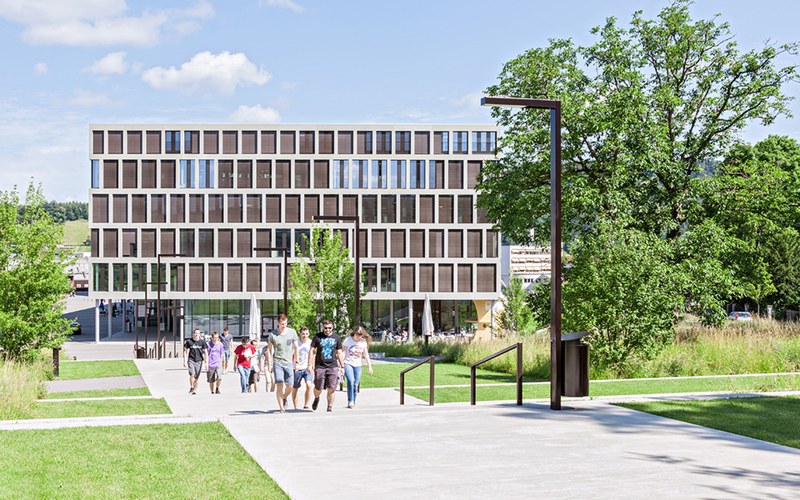
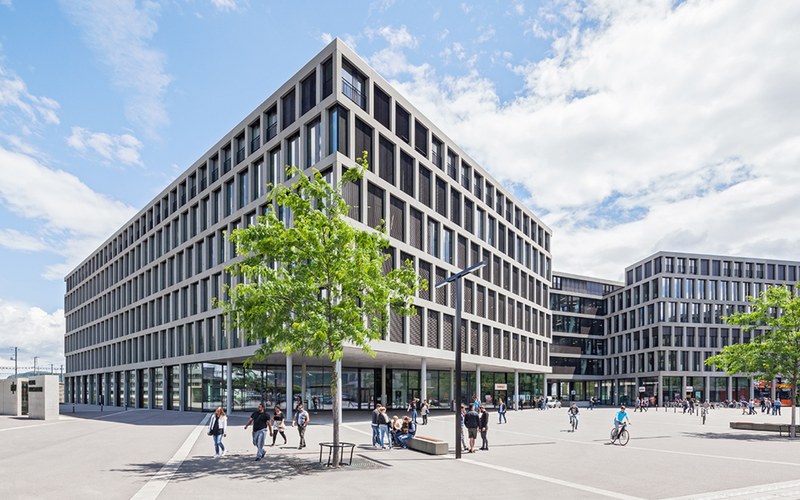
  • fhnw-campus-brugg-windisch-switzerland-1.jpg
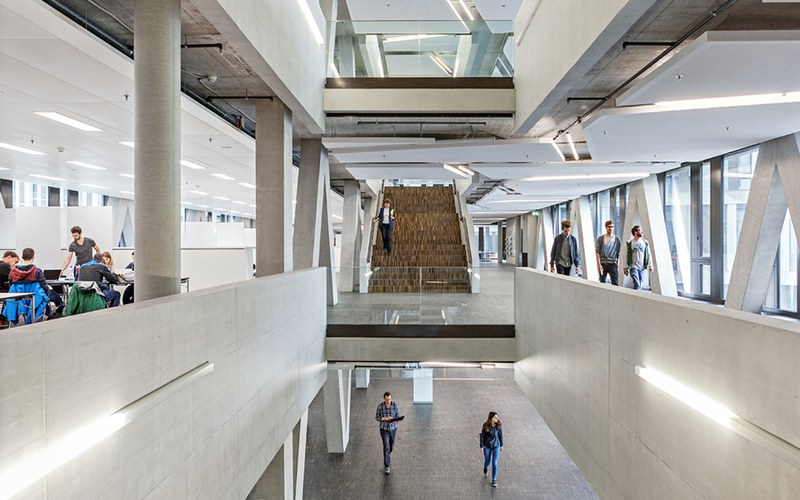
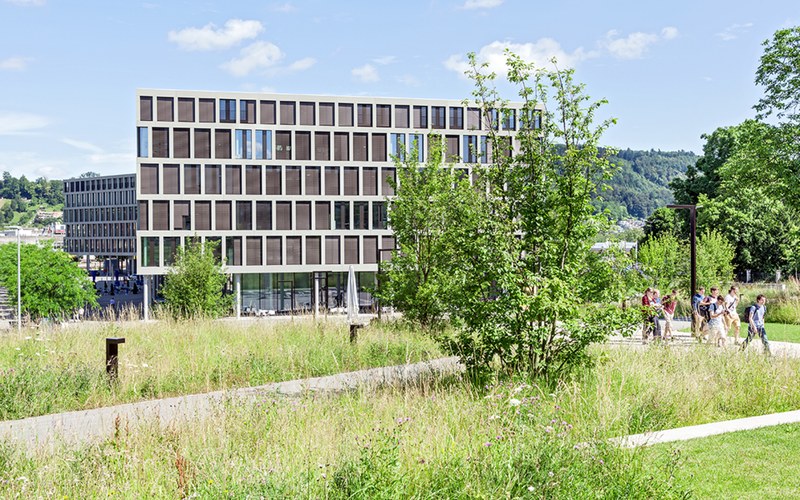
  • fhnw-campus-brugg-windisch-switzerland-2.jpg
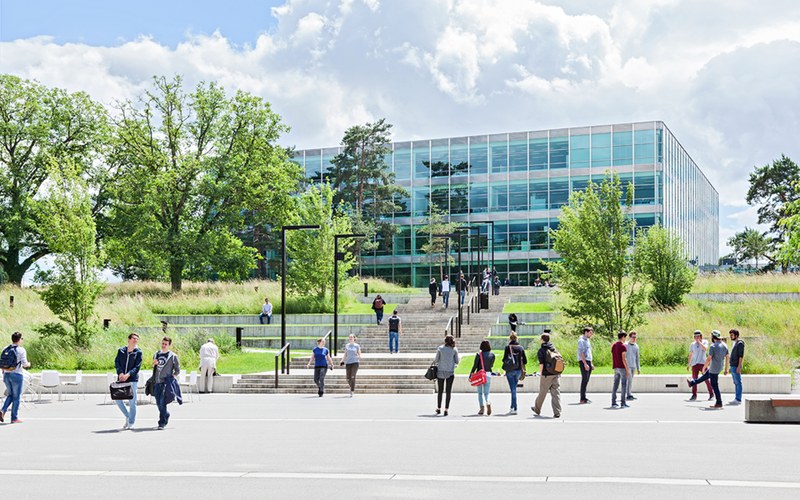
  • fhnw-campus-brugg-windisch-switzerland-3.jpg
  • fhnw-campus-brugg-windisch-switzerland-4.jpg
  • fhnw-campus-brugg-windisch-switzerland-5.jpg
  • fhnw-campus-brugg-windisch-switzerland-6.jpg

Contact

International Office

International Office

E-Mail
international.technik@fhnw.ch

School of
Engineering and Environment FHNW University of Applied Sciences and Arts Northwestern Switzerland

  • About the School
    • FHNW School of Engineering and Environment
    • Degree Programmes
    • Continuing Education
    • Collaboration in Research and Services
  • Social Media
    • LinkedIn
    • Instagram
    • Facebook
    • TikTok
    • YouTube
  • About FHNW
    • Organisation
    • Schools
    • Locations
    • FHNW Library
    • Media Relations
  • Support
    • IT Support
    • Inside FHNW
    • Webmail
Logo FHNW - 20 Years
Logo Swiss Universities
Logo European University Association
© University of Applied Sciences and Arts Northwestern Switzerland (FHNW)
  • Data Protection
  • Imprint
  • Accessibility
  • DE
  • EN