Skip to main contentSkip to search barSkip to navigationSkip to footer
Logo of the University of Applied Sciences and Arts Northwestern Switzerland
  • DE
  • EN
  • Home
  • Degree programmes
  • Continuing education

Ten Schools One Goal

The FHNW comprises 10 schools with different specializations. Select a school to see its specific courses, study programmes and information.

Applied Psychology

Architecture, Construction and Geomatics

Art and Design

Music

Computer Science

Life Sciences

School of Education

Social Work

Engineering and Environment

Business

  • Research

    • Research fields
    • Projects
  • Updates and insights

    • News and stories
  • Events

  • Media corner

  • About the School of Engineering and Environment

    • People directory
    • Management Board
  • Institutes

    • Institute of Automation
    • Institute of Bioenergy and Resource Efficiency
    • Institute of Business Engineering
    • Institute of Electric Power Systems
    • Institute of Humanities and Social Sciences
    • Institute of Polymer Engineering
    • Institute of Mathematics and Natural Sciences
    • Institute of Polymer Nanotechnology
    • Institute of Optometry
    • Institute of Product and Production Engineering
    • Institute for Sensors and Electronics
    • Institute of Thermal and Fluid Engineering
    • Laboratories of the School of Engineering and Environment
Logo of the University of Applied Sciences and Arts Northwestern Switzerland
  • About the School
    • FHNW School of Engineering and Environment
    • Degree Programmes
    • Continuing Education
    • Collaboration in Research and Services
  • Social Media
    • LinkedIn
    • Instagram
    • Facebook
    • TikTok
    • YouTube
  • About FHNW
    • Organisation
    • Schools
    • Locations
    • FHNW Library
    • Media Relations
  • Support
    • IT Support
    • Inside FHNW
    • Webmail
  • Data Protection
  • Imprint
  • Accessibility
  • Research

    • Research fields
    • Projects
  • Updates and insights

    • News and stories
  • Events

  • Media corner

  • About the School of Engineering and Environment

    • People directory
    • Management Board
  • Institutes

    • Institute of Automation
    • Institute of Bioenergy and Resource Efficiency
    • Institute of Business Engineering
    • Institute of Electric Power Systems
    • Institute of Humanities and Social Sciences
    • Institute of Polymer Engineering
    • Institute of Mathematics and Natural Sciences
    • Institute of Polymer Nanotechnology
    • Institute of Optometry
    • Institute of Product and Production Engineering
    • Institute for Sensors and Electronics
    • Institute of Thermal and Fluid Engineering
    • Laboratories of the School of Engineering and Environment

Type a search term and search continuing education,degree programmes, events, documents and other content.

  • Engineering and Environment
  • News and events
  • News and stories
  • All news and stories
All news and stories

The Future of Contact Lenses – When Vision Aids Become Smart Sensors, FHNW School of Engineering and Environment

12.1.2026 – School of Engineering and Environment, Institute of Optometry


An evening with Prof. Lyndon Jones revealed how contact lenses may soon detect dis-eases, deliver medication, and even project valuable information into the eye.

With every seat filled, the audience at the FHNW enjoyed a fascinating glimpse into the future of contact lenses. In his talk “The Future of Contact Lens,” internationally renowned researcher Prof. Lyndon Jones from the Centre for Ocular Research & Education (CORE) at the University of Waterloo, Canada, captivated attendees with visionary insights into the evolution of the tiny yet powerful device on the eye.

This event was kindly supported by the  Association des Optométristes Romands (AOR), Interlens, Organisation für Schweizer Optometrie (OSO), Mediconsult and Sensimed.

From Vision Correction to Therapy

Modern contact lenses are rapidly evolving beyond simple vision correction. They can now detect diseases, monitor physiological functions, and deliver medication directly through the tear film.
So-called drug-delivery lenses enable the controlled release of medication over several hours—a major step forward compared to conventional eye drops, which are often flushed away within a few minutes.

New diagnostic applications are also emerging: sensor-containing lenses can measure intraocular pressure, tear composition, and even biomarkers for diseases such as diabetes, cancer and alzheimers. Research projects are exploring how these lenses could help detect systemic diseases early and non-invasively.

Smart Lenses Powered by Tears

One remaining challenge is how to supply electrical energy to the lenses. Innovative approaches, such asultra-thin batteriesthat generate electricity from the chemical composition of tears, demonstrate the potential of sustainable solutions. In parallel,Bluetooth and NFC technologiesare being tested to securely transmit measurement data from the lenses on the eye to recording devices such as smartphones.

«We are on the verge of seeing contact lenses that not only correct vision but also measure, heal, and communicate information to the wearer.»
Prof. Lyndon Jones

3D Printing, Artificial Intelligence and Augmented Reality

Digital technologies are also accelerating innovation. Using 3D printing, researchers can produce personalized lenses tailored precisely to each eye’s anatomy—including those that have embedded drug reservoirs or optical elements. Artificial intelligence is already assisting in the analysis of tear film images and in diagnosing conditions such as dry eye.

The future could go even further: augmented-reality contact lenses may one day project information directly into the wearer’s field of vision—for navigation, training, or even medical education.

Impact on the Swiss Contact Lens Market

In the subsequentpanel discussion, industry expertsSarah Ven (AOR),Seonaid Collins (Optometriezentrum Basel),Daniel Ulrich (J&J Vision),Daniel Roos (Alcon)andPhilippe Seira (FHNW) discussed how innovation and responsibility must go hand in hand.
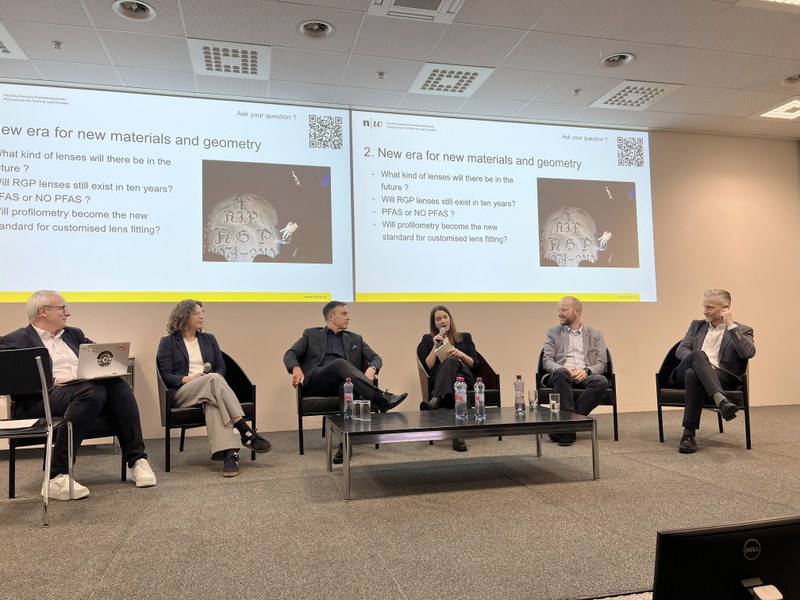
«The contact lens of the future will be smarter but also more demanding to use. Innovation and education must progress together»
, the panel emphasized.

Looking Ahead

Whether used totreat eye diseases,monitor health data, or serve as aninterface for augmented reality, the future of contact lenses has already begun.The combination ofmaterials science, electronics, and artificial intelligencepromises to redefine both vision and eye care in the years to come.
Research projects at FHNW

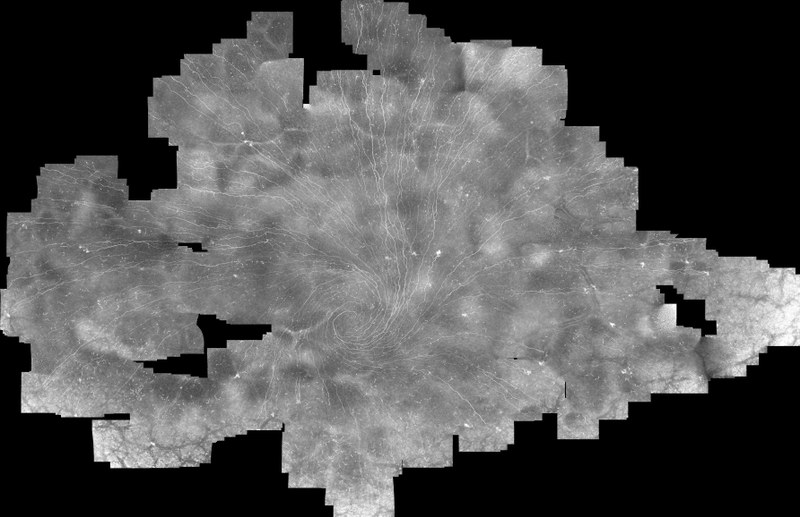
Assoziation zwischen Hornhautnervenfunktion, -morphologie und dem Trockenen Auge (DED)

Assoziation zwischen Hornhautnervenfunktion, -morphologie und dem Trockenen Auge (DED)
Mehr Informationen

More Informations

Institute of Optometry

Applied research and services relating to vision.
More Informations
Herunterladen.jpg

Discover the perfect contact lens in the blink of an eye

Your resource for contact lenses - clear, simple and efficient
Mehr Informationen

School of
Engineering and Environment FHNW University of Applied Sciences and Arts Northwestern Switzerland

  • About the School
    • FHNW School of Engineering and Environment
    • Degree Programmes
    • Continuing Education
    • Collaboration in Research and Services
  • Social Media
    • LinkedIn
    • Instagram
    • Facebook
    • TikTok
    • YouTube
  • About FHNW
    • Organisation
    • Schools
    • Locations
    • FHNW Library
    • Media Relations
  • Support
    • IT Support
    • Inside FHNW
    • Webmail
Logo FHNW - 20 Years
Logo Swiss Universities
Logo European University Association
© University of Applied Sciences and Arts Northwestern Switzerland (FHNW)
  • Data Protection
  • Imprint
  • Accessibility
  • DE
  • EN