Skip to main contentSkip to search barSkip to navigationSkip to footer
Logo of the University of Applied Sciences and Arts Northwestern Switzerland
  • DE
  • EN
  • Home
  • Degree programmes
  • Continuing education

Ten Schools One Goal

The FHNW comprises 10 schools with different specializations. Select a school to see its specific courses, study programmes and information.

Applied Psychology

Architecture, Construction and Geomatics

Art and Design

Music

Computer Science

Life Sciences

School of Education

Social Work

Engineering and Environment

Business

  • Research

    • Research fields
    • Projects
  • Updates and insights

    • News and stories
  • Events

  • Media corner

  • About the School of Engineering and Environment

    • People directory
    • Management Board
  • Institutes

    • Institute of Automation
    • Institute of Bioenergy and Resource Efficiency
    • Institute of Business Engineering
    • Institute of Electric Power Systems
    • Institute of Humanities and Social Sciences
    • Institute of Polymer Engineering
    • Institute of Mathematics and Natural Sciences
    • Institute of Polymer Nanotechnology
    • Institute of Optometry
    • Institute of Product and Production Engineering
    • Institute for Sensors and Electronics
    • Institute of Thermal and Fluid Engineering
    • Laboratories of the School of Engineering and Environment
Logo of the University of Applied Sciences and Arts Northwestern Switzerland
  • About the School
    • FHNW School of Engineering and Environment
    • Degree Programmes
    • Continuing Education
    • Collaboration in Research and Services
  • Social Media
    • LinkedIn
    • Instagram
    • Facebook
    • TikTok
    • YouTube
  • About FHNW
    • Organisation
    • Schools
    • Locations
    • FHNW Library
    • Media Relations
  • Support
    • IT Support
    • Inside FHNW
    • Webmail
  • Data Protection
  • Imprint
  • Accessibility
  • Research

    • Research fields
    • Projects
  • Updates and insights

    • News and stories
  • Events

  • Media corner

  • About the School of Engineering and Environment

    • People directory
    • Management Board
  • Institutes

    • Institute of Automation
    • Institute of Bioenergy and Resource Efficiency
    • Institute of Business Engineering
    • Institute of Electric Power Systems
    • Institute of Humanities and Social Sciences
    • Institute of Polymer Engineering
    • Institute of Mathematics and Natural Sciences
    • Institute of Polymer Nanotechnology
    • Institute of Optometry
    • Institute of Product and Production Engineering
    • Institute for Sensors and Electronics
    • Institute of Thermal and Fluid Engineering
    • Laboratories of the School of Engineering and Environment

Type a search term and search continuing education,degree programmes, events, documents and other content.

  • Engineering and Environment
  • Research and services
  • Research
  • Projects
Projects

Avionics Certifiable Ethernet ACE, FHNW School of Engineering and Environment

School of Engineering and Environment


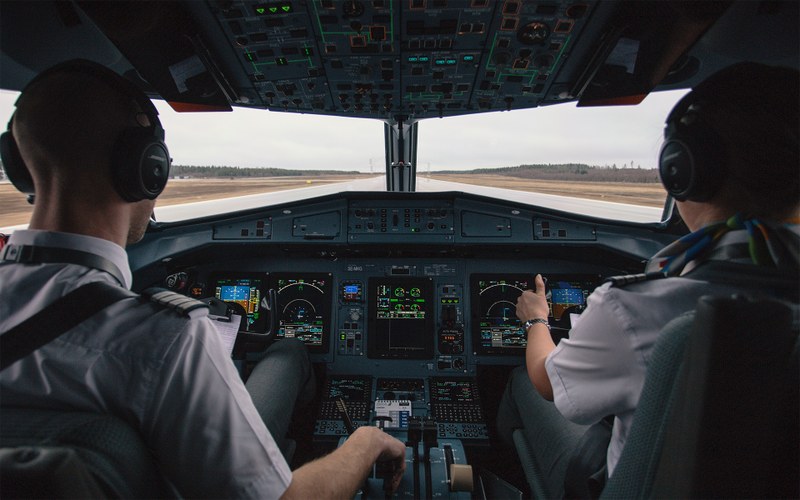
Researchers at the FHNW are developing a Media Access Controller (MAC) for Gigabit Ethernet for aviation. Functional safety plays a particularly important role here.
Project details

University
FHNW School of Engineering and Environment / School of Engineering and Environment, lnstitute for Sensors and Electronics

Technology

Embedded Systems, Ethernet, FPGA, Avionics

Objectives

Development of the MAC for the Avionics Certifiable Ethernet (ACE) according to the safety standards RTCA DO-254 and FAA CAST-33 with the maximum permissible error probability of level DAL A.

Background

The company Mercury Mission Systems International from Lancy next to Geneva develops electronic assemblies for use in aviation. In modern aircraft, Ethernet is responsible for the complete exchange of information. In contrast to the conventional Ethernet standard AFDX, the new "Avionics Certifiable Ethernet" or ACE should be faster, simpler and cheaper.

Method

The Institute for Sensor Technology and Electronics FHNW develops and refines the processes for the development of an FPGA library element (so-called "IP core"). After a thorough training a complete process landscape with all necessary documents, reviews and checks was defined. This process landscape now served as a guideline for the processing of the individual process phases, which followed a "double V-model". The double V refers to the fact that first the required function is prototypically developed and functionally tested in the laboratory. Based on this prototype, the actual product specification is then created, from which the product is developed and tested.

One of the particular challenges in development is to protect the circuit against interference from ionizing radiation. Consumer applications at sea level have hardly any problems with changes in the state of memory cells and registers as a result of bombardment by ionizing particles. The effect of a state change is called Single Event Upset (SEU). Since an SEU does not cause the same amount of damage at every point, the effect of each individual SEU in the various function blocks and the various memory cells must first be determined to calculate the final risk.

Project flyer

Projekt-Information

Client
Mercury Mission Systems International
Execution
FHNW Institute for Sensors and Electronics
Duration
2 Years
Funding
Innosuisse
Team
Prof. Michael Pichler (Lead), Prof. Karl Schenk

School of
Engineering and Environment FHNW University of Applied Sciences and Arts Northwestern Switzerland

  • About the School
    • FHNW School of Engineering and Environment
    • Degree Programmes
    • Continuing Education
    • Collaboration in Research and Services
  • Social Media
    • LinkedIn
    • Instagram
    • Facebook
    • TikTok
    • YouTube
  • About FHNW
    • Organisation
    • Schools
    • Locations
    • FHNW Library
    • Media Relations
  • Support
    • IT Support
    • Inside FHNW
    • Webmail
Logo FHNW - 20 Years
Logo Swiss Universities
Logo European University Association
© University of Applied Sciences and Arts Northwestern Switzerland (FHNW)
  • Data Protection
  • Imprint
  • Accessibility
  • DE
  • EN