Skip to main contentSkip to search barSkip to navigationSkip to footer
Logo of the University of Applied Sciences and Arts Northwestern Switzerland
  • DE
  • EN
  • Home
  • Degree programmes
  • Continuing education

Ten Schools One Goal

The FHNW comprises 10 schools with different specializations. Select a school to see its specific courses, study programmes and information.

Applied Psychology

Architecture, Construction and Geomatics

Art and Design

Music

Computer Science

Life Sciences

School of Education

Social Work

Engineering and Environment

Business

  • Research

    • Research fields
    • Projects
  • Updates and insights

    • News and stories
  • Events

  • Media corner

  • About the School of Engineering and Environment

    • People directory
    • Management Board
  • Institutes

    • Institute of Automation
    • Institute of Bioenergy and Resource Efficiency
    • Institute of Business Engineering
    • Institute of Electric Power Systems
    • Institute of Humanities and Social Sciences
    • Institute of Polymer Engineering
    • Institute of Mathematics and Natural Sciences
    • Institute of Polymer Nanotechnology
    • Institute of Optometry
    • Institute of Product and Production Engineering
    • Institute for Sensors and Electronics
    • Institute of Thermal and Fluid Engineering
    • Laboratories of the School of Engineering and Environment
Logo of the University of Applied Sciences and Arts Northwestern Switzerland
  • About the School
    • FHNW School of Engineering and Environment
    • Degree Programmes
    • Continuing Education
    • Collaboration in Research and Services
  • Social Media
    • LinkedIn
    • Instagram
    • Facebook
    • TikTok
    • YouTube
  • About FHNW
    • Organisation
    • Schools
    • Locations
    • FHNW Library
    • Media Relations
  • Support
    • IT Support
    • Inside FHNW
    • Webmail
  • Data Protection
  • Imprint
  • Accessibility
  • Research

    • Research fields
    • Projects
  • Updates and insights

    • News and stories
  • Events

  • Media corner

  • About the School of Engineering and Environment

    • People directory
    • Management Board
  • Institutes

    • Institute of Automation
    • Institute of Bioenergy and Resource Efficiency
    • Institute of Business Engineering
    • Institute of Electric Power Systems
    • Institute of Humanities and Social Sciences
    • Institute of Polymer Engineering
    • Institute of Mathematics and Natural Sciences
    • Institute of Polymer Nanotechnology
    • Institute of Optometry
    • Institute of Product and Production Engineering
    • Institute for Sensors and Electronics
    • Institute of Thermal and Fluid Engineering
    • Laboratories of the School of Engineering and Environment

Type a search term and search continuing education,degree programmes, events, documents and other content.

  • Engineering and Environment
  • Research and services
  • Research
  • Projects
Projects

Battery-Management-Systems for 2nd-Life Lithium Batteries, FHNW School of Engineering and Environment

School of Engineering and Environment


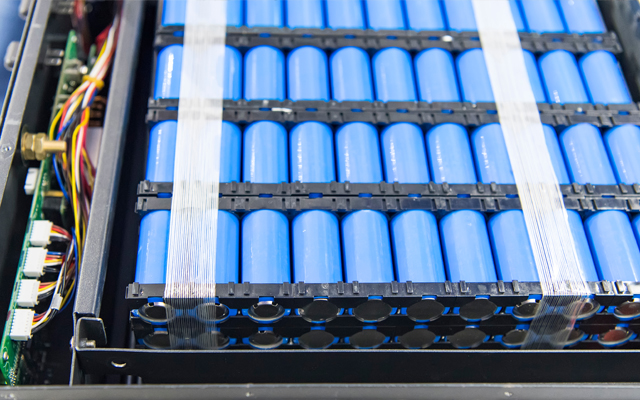
Do we need improved battery management systems (BMS) to establish Li-ion batteries on the market, built from cells that have been already in use?
Project details

University
FHNW School of Engineering and Environment / School of Engineering and Environment

Background

Lithium-ion battery cells require protection against overvoltage, temperature and deep discharge, which is guaranteed by a BMS. Due to tolerances between individual cells, these are charged to different voltages during cyclical charging and discharging during operation. The BMS protects the cells by matching the state of charge or the cell voltages of all cells to each another. As the cells age, the tolerances increase. The BMS has to balance more energy, up to a degree of aging at which it is no longer possible to create enough balance. The actually intact battery is disconnected from the consumer or the charger and declared as defective and later as a dangerous good.

Goals

It is examined:

  • Whether you can safely operate aged cells with the BMS available on the market and under what conditions.
  • How to optimize capacity with a BMS and increase or even predict battery life.

Results

Aged lithium-ion cells of the same type but from different manufacturers were characterized and compared. Except that they come from e-bike batteries, their history is not known. The spread of cell capacities, internal resistances and charging and discharging characteristics could be evaluated. Typical measured characteristic curves for a manufacturer's cell are shown in the following graphic. It has already been recognized that the scatter of the parameters of aged cells behaves differently depending on the manufacturer.
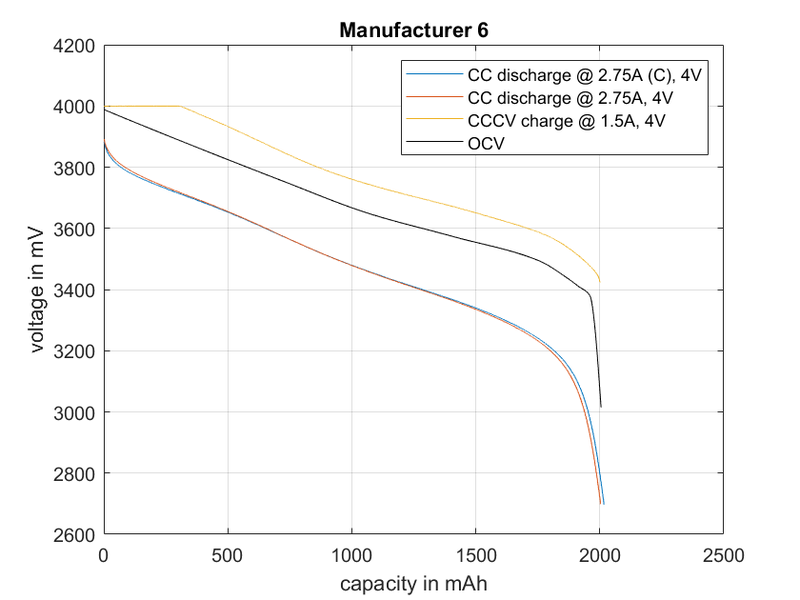
Figure 1: Charging and discharging curve and open circuit voltage characteristic for a lithium-ion cell

Project information

Client

Confidential

Execution

FHNW Institute of Electric Power Systems

Duration

6 months

Funding

Innosuisse (Innovationsscheck)

Project team

Tobias Strittmatter (project manager), Thomas Keller, Prof. Dr. Nicola Schulz

School of
Engineering and Environment FHNW University of Applied Sciences and Arts Northwestern Switzerland

  • About the School
    • FHNW School of Engineering and Environment
    • Degree Programmes
    • Continuing Education
    • Collaboration in Research and Services
  • Social Media
    • LinkedIn
    • Instagram
    • Facebook
    • TikTok
    • YouTube
  • About FHNW
    • Organisation
    • Schools
    • Locations
    • FHNW Library
    • Media Relations
  • Support
    • IT Support
    • Inside FHNW
    • Webmail
Logo FHNW - 20 Years
Logo Swiss Universities
Logo European University Association
© University of Applied Sciences and Arts Northwestern Switzerland (FHNW)
  • Data Protection
  • Imprint
  • Accessibility
  • DE
  • EN