Skip to main contentSkip to search barSkip to navigationSkip to footer
Logo of the University of Applied Sciences and Arts Northwestern Switzerland
  • DE
  • EN
  • Home
  • Degree programmes
  • Continuing education

Ten Schools One Goal

The FHNW comprises 10 schools with different specializations. Select a school to see its specific courses, study programmes and information.

Applied Psychology

Architecture, Construction and Geomatics

Art and Design

Music

Computer Science

Life Sciences

School of Education

Social Work

Engineering and Environment

Business

  • Research

    • Research fields
    • Projects
  • Updates and insights

    • News and stories
  • Events

  • Media corner

  • About the School of Engineering and Environment

    • People directory
    • Management Board
  • Institutes

    • Institute of Automation
    • Institute of Bioenergy and Resource Efficiency
    • Institute of Business Engineering
    • Institute of Electric Power Systems
    • Institute of Humanities and Social Sciences
    • Institute of Polymer Engineering
    • Institute of Mathematics and Natural Sciences
    • Institute of Polymer Nanotechnology
    • Institute of Optometry
    • Institute of Product and Production Engineering
    • Institute for Sensors and Electronics
    • Institute of Thermal and Fluid Engineering
    • Laboratories of the School of Engineering and Environment
Logo of the University of Applied Sciences and Arts Northwestern Switzerland
  • About the School
    • FHNW School of Engineering and Environment
    • Degree Programmes
    • Continuing Education
    • Collaboration in Research and Services
  • Social Media
    • LinkedIn
    • Instagram
    • Facebook
    • TikTok
    • YouTube
  • About FHNW
    • Organisation
    • Schools
    • Locations
    • FHNW Library
    • Media Relations
  • Support
    • IT Support
    • Inside FHNW
    • Webmail
  • Data Protection
  • Imprint
  • Accessibility
  • Research

    • Research fields
    • Projects
  • Updates and insights

    • News and stories
  • Events

  • Media corner

  • About the School of Engineering and Environment

    • People directory
    • Management Board
  • Institutes

    • Institute of Automation
    • Institute of Bioenergy and Resource Efficiency
    • Institute of Business Engineering
    • Institute of Electric Power Systems
    • Institute of Humanities and Social Sciences
    • Institute of Polymer Engineering
    • Institute of Mathematics and Natural Sciences
    • Institute of Polymer Nanotechnology
    • Institute of Optometry
    • Institute of Product and Production Engineering
    • Institute for Sensors and Electronics
    • Institute of Thermal and Fluid Engineering
    • Laboratories of the School of Engineering and Environment

Type a search term and search continuing education,degree programmes, events, documents and other content.

  • Engineering and Environment
  • Research and services
  • Research
  • Projects
Projects

Grid friendliness of residential buildings - development of an evaluation method, FHNW School of Engineering and Environment

School of Engineering and Environment


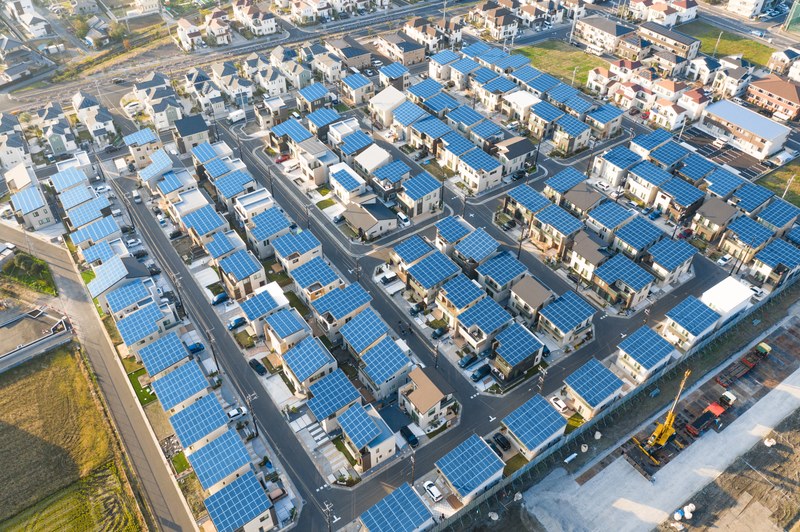
With increasing fluctuation of production and consumption of electrical energy in buildings, the developed method evaluates the effects on the electrical grid.
Project details

University
FHNW School of Engineering and Environment / School of Engineering and Environment

Background

State-of-the-art energetic rating methods for buildings typically focus on the building itself and do not consider the interaction between the building with its infrastructural environment. However, in the context of the Swiss Energy Strategy 2050, more devices that may impose a higher stress on the local distribution grid (e.g., photovoltaics, EV charging stations) will be installed in buildings. In a joint project of the Universities of Applied Sciences for Engineering and for Architecture, Construction and Geomatics, a method was developed to evaluate the influence (the "grid friendliness") of a building on the connected distribution grid.

Figure 1: Buildings and electrical network as a coupled system

Goals

  • Definition of an evaluation method for the electric grid compatibility of a building ("grid serviceability" or “grid friendliness”)
  • Application of the evaluation method to different local networks with building expansion scenarios "today", "2035" and "2050", as well as load management methods "internal consumption optimization" and "performance optimization”
  • Tool for architects and building planners to assess the compatibility of a new building or building upgrade with the local network environment and avoid expensive network extensions where possible

Results

The developed method quantifies the effects of different input variables (e.g. installed PV power, heat demand) of a building on the defined parameters of the grid (e.g. voltage limits, line and transformer load). The sum of the ratings of the individual parameters is summarized in the so-called grid friendliness of the building.

The application of the method on two different networks has yielded plausible results. To verify the general validity of the method, further investigations on different distribution networks are necessary.
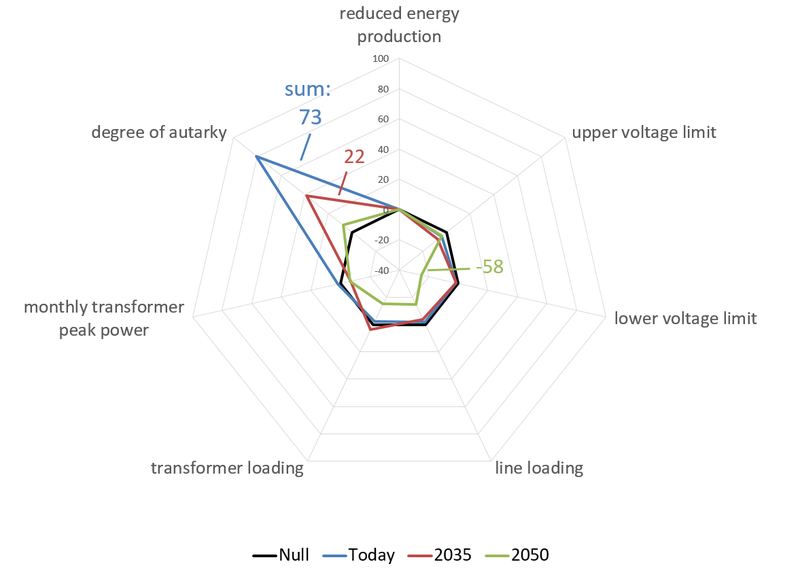
Figure 2: Exemplary evaluation of a building with a photovoltaic system and simple load management in a specific, real grid area, for the three scenarios Today, and for the years 2035 and 2050. Today's positive building evaluation worsens until 2050, as the other buildings in the grid environment change during this time and with it the situation in the distribution grid.

Project information

Client

Swiss Federal Office of Energy (SFOE)

Execution

FHNW School of Engineering: Institute of Electric Power Systems
FHNW School of Architecture, Civil Engineering and Geomatics: Institute Energy in Buildings

Research partner

AEW, IWB

Duration

2 years

Funding

Swiss Federal Office of Energy (SFOE)

Project team

FHNW School of Engineering: Dr. Christoph Hunziker, Thomas Keller, Luca Fankhauser, Tobias Schmocker, Prof. Dr. Nicola Schulz
FHNW School of Architecture, Civil Engineering and Geomatics: Dr. Monika Hall, Christoph Sibold, Bastian Burger

School of
Engineering and Environment FHNW University of Applied Sciences and Arts Northwestern Switzerland

  • About the School
    • FHNW School of Engineering and Environment
    • Degree Programmes
    • Continuing Education
    • Collaboration in Research and Services
  • Social Media
    • LinkedIn
    • Instagram
    • Facebook
    • TikTok
    • YouTube
  • About FHNW
    • Organisation
    • Schools
    • Locations
    • FHNW Library
    • Media Relations
  • Support
    • IT Support
    • Inside FHNW
    • Webmail
Logo FHNW - 20 Years
Logo Swiss Universities
Logo European University Association
© University of Applied Sciences and Arts Northwestern Switzerland (FHNW)
  • Data Protection
  • Imprint
  • Accessibility
  • DE
  • EN