Skip to main contentSkip to search barSkip to navigationSkip to footer
Logo of the University of Applied Sciences and Arts Northwestern Switzerland
  • DE
  • EN
  • Home
  • Degree programmes
  • Continuing education

Ten Schools One Goal

The FHNW comprises 10 schools with different specializations. Select a school to see its specific courses, study programmes and information.

Applied Psychology

Architecture, Construction and Geomatics

Art and Design

Business

Computer Science

Engineering and Environment

Life Sciences

Music

School of Education

Social Work

  • Research

    • Research fields
    • Projects
  • International

    • Outgoing Students
    • Incoming Students
  • Updates and insights

    • News and stories
  • Events

  • Media corner

  • About the School of Engineering and Environment

    • People directory
    • Management Board
  • Institutes

    • Institute of Automation
    • Institute of Bioenergy and Resource Efficiency
    • Institute of Business Engineering
    • Institute of Electric Power Systems
    • Institute of Technology and Society
    • Institute of Polymer Engineering
    • Institute of Applied Mathematics and Physics
    • Institute of Polymer Nanotechnology
    • Institute of Optometry
    • Institute of Product and Production Engineering
    • Institute for Sensors and Electronics
    • Institute of Thermal and Fluid Engineering
    • Laboratories of the School of Engineering and Environment
Logo of the University of Applied Sciences and Arts Northwestern Switzerland
  • About the School
    • FHNW School of Engineering and Environment
    • Degree Programmes
    • Continuing Education
    • Collaboration in Research and Services
  • Social Media
    • LinkedIn
    • Instagram
    • Facebook
    • TikTok
    • YouTube
  • About FHNW
    • Organisation
    • Schools
    • Locations
    • FHNW Library
    • Media Relations
  • Support
    • IT Support
    • Inside FHNW
    • Webmail
  • Data Protection
  • Imprint
  • Accessibility
  • Research

    • Research fields
    • Projects
  • International

    • Outgoing Students
    • Incoming Students
  • Updates and insights

    • News and stories
  • Events

  • Media corner

  • About the School of Engineering and Environment

    • People directory
    • Management Board
  • Institutes

    • Institute of Automation
    • Institute of Bioenergy and Resource Efficiency
    • Institute of Business Engineering
    • Institute of Electric Power Systems
    • Institute of Technology and Society
    • Institute of Polymer Engineering
    • Institute of Applied Mathematics and Physics
    • Institute of Polymer Nanotechnology
    • Institute of Optometry
    • Institute of Product and Production Engineering
    • Institute for Sensors and Electronics
    • Institute of Thermal and Fluid Engineering
    • Laboratories of the School of Engineering and Environment

Type a search term and search continuing education,degree programmes, events, documents and other content.

  • Engineering and Environment
  • Research and services
  • Research
  • Projects
Projects

Myceli­um com­pos­ite de­vel­op­ment for pack­ag­ing, FHNW School of Engineering and Environment

School of Engineering and Environment


  • Project details
  • Contact

An optimized biodegradable mycelium composite was devel-oped and evaluated as a potential substitute for EPS in pack-aging applications.
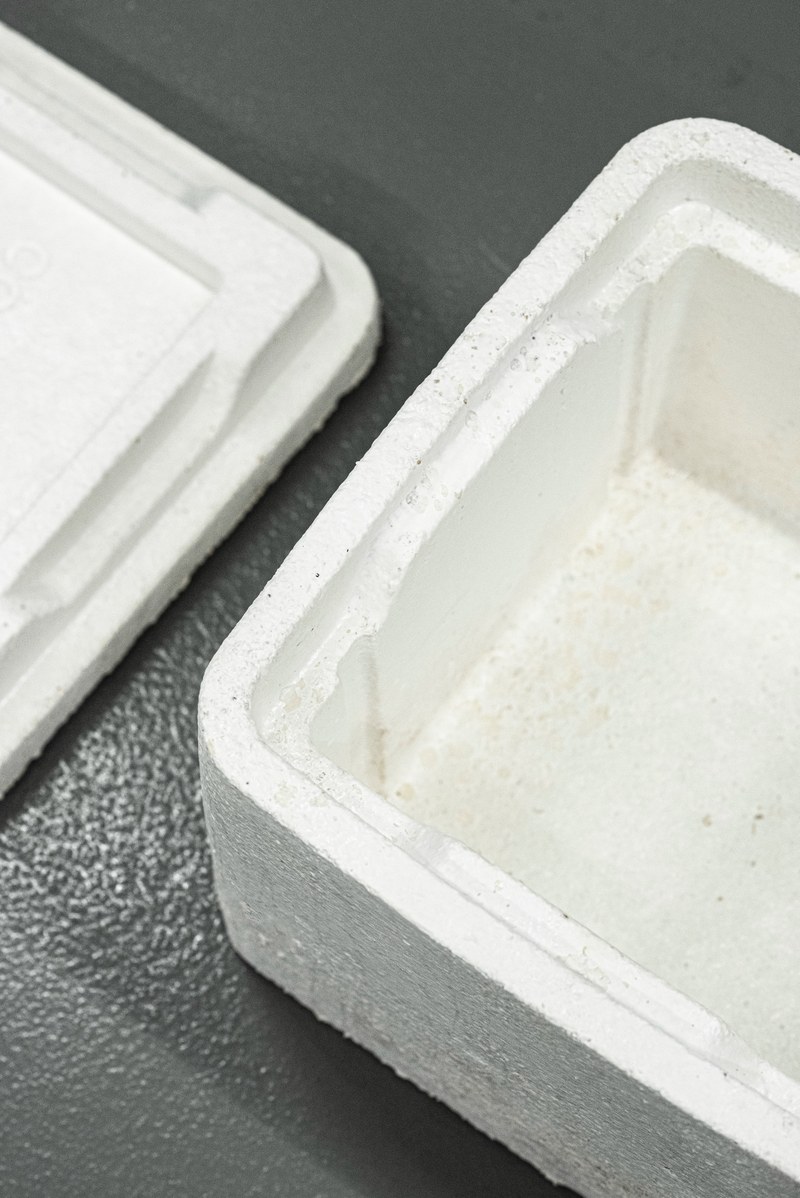
Picture_2_Mycrocell.jpg

Technology

      • Mycelium composite
      • Biodegradable materials
      • Foam materials
      • Sustainable packaging
      • Life cycle assessment

Background

Mycrobez AG, a start-up founded in 2019, develops biodegradable mycelium-based composite materials as sustainable alternatives to petroleum-based materials. However, these materials are still under development and require further optimization in terms of density, mechanical performance, thermal insulation, processing, and especially scalability to meet market needs.

Taracell AG, with over 70 years of experience in foamed materials, particularly EPS, provides industrial know-how to support the development of these materials.

Goals

The main goal of the project is to solve the challenges of these materials and make them a competitive solution for the packaging industry in specific applications. The material should have low thermal conductivity, good compression and impact properties, and a density below 80 g/l. In addition, the material should be scalable for large-scale production and have a low unit cost. This is addressed through the development of a suitable production line.
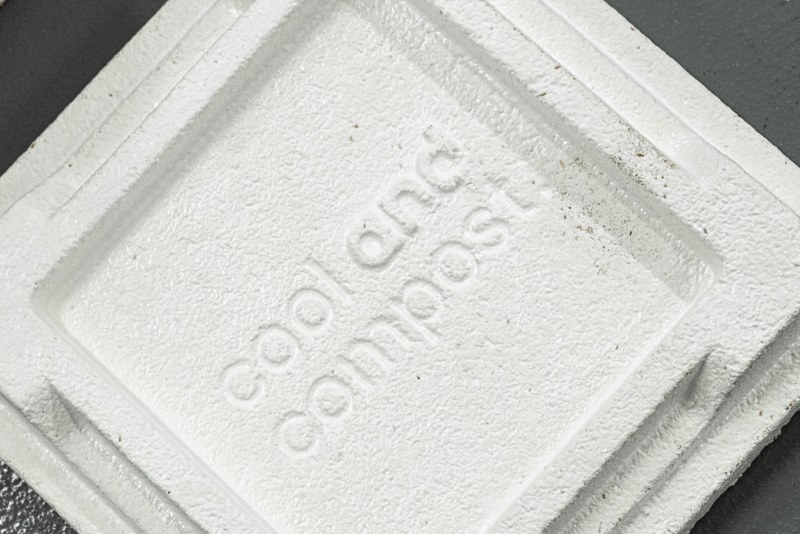
Eine Thermobox aus Myzel-Verbundwerkstoff zeigt das Potenzial dieser Materialien in Bezug auf Grösse, Form und Leistung.

Results

Different materials for three specific applications were developed. The target low density was achieved, but thermal insulation is still not better than EPS. Good compression and impact properties were obtained, showing that mycellium composite is suitable for some packaging applications.

An LCA comparison shows that the environmental impact of mycelium is much lower, confirming its ecological advantage, also supported by biodegradability tests. Fire tests were also carried out and showed additional benefits.

As EPS technology has been optimized for many years, it is difficult to directly compare the processes. The mycelium process, although still less developed, was demonstrated at proof-of-concept level with potential for scalability.

Project details

Type
Research project
Research field
Energie und Umwelt, Materialien
Topics
Umwelt und Nachhaltigkeit, Technologien und Engineering, Umwelttechnologie und Recycling, Werkstoffe, Verfahrenstechnik
School
Hochschule für Technik und Umwelt FHNW / Institute of Polymer Engineering
Partners
Mycrobez AG, Taracell AG
Funding
Innosuisse
Duration
27 Monate
Team
Prof. Dr. Christian Rytka, Mariona Diaz, Simone Battaglia, Katarina Knezevic, Vilem Sperlich, Halime Philipp, Stephanie Wegmann, Alex Massenbauer, Tim Lüthi

Contact

Christian Rytka

Prof. Dr. Christian Rytka

Group Leader Polymer Processing and Sustainability
Phone
+41 56 202 73 81 (Direct)
E-Mail
christian.rytka@fhnw.ch

School of
Engineering and Environment FHNW University of Applied Sciences and Arts Northwestern Switzerland

  • About the School
    • FHNW School of Engineering and Environment
    • Degree Programmes
    • Continuing Education
    • Collaboration in Research and Services
  • Social Media
    • LinkedIn
    • Instagram
    • Facebook
    • TikTok
    • YouTube
  • About FHNW
    • Organisation
    • Schools
    • Locations
    • FHNW Library
    • Media Relations
  • Support
    • IT Support
    • Inside FHNW
    • Webmail
Logo FHNW - 20 Years
Logo Swiss Universities
Logo European University Association
© University of Applied Sciences and Arts Northwestern Switzerland (FHNW)
  • Data Protection
  • Imprint
  • Accessibility
  • EN
  • DE