Skip to main contentSkip to search barSkip to navigationSkip to footer
Logo of the University of Applied Sciences and Arts Northwestern Switzerland
  • DE
  • EN
  • Home
  • Degree programmes
  • Continuing education

Ten Schools One Goal

The FHNW comprises 10 schools with different specializations. Select a school to see its specific courses, study programmes and information.

Applied Psychology

Architecture, Construction and Geomatics

Art and Design

Music

Computer Science

Life Sciences

School of Education

Social Work

Engineering and Environment

Business

  • Research

    • Research fields
    • Projects
  • Updates and insights

    • News and stories
  • Events

  • Media corner

  • About the School of Engineering and Environment

    • People directory
    • Management Board
  • Institutes

    • Institute of Automation
    • Institute of Bioenergy and Resource Efficiency
    • Institute of Business Engineering
    • Institute of Electric Power Systems
    • Institute of Humanities and Social Sciences
    • Institute of Polymer Engineering
    • Institute of Mathematics and Natural Sciences
    • Institute of Polymer Nanotechnology
    • Institute of Optometry
    • Institute of Product and Production Engineering
    • Institute for Sensors and Electronics
    • Institute of Thermal and Fluid Engineering
    • Laboratories of the School of Engineering and Environment
Logo of the University of Applied Sciences and Arts Northwestern Switzerland
  • About the School
    • FHNW School of Engineering and Environment
    • Degree Programmes
    • Continuing Education
    • Collaboration in Research and Services
  • Social Media
    • LinkedIn
    • Instagram
    • Facebook
    • TikTok
    • YouTube
  • About FHNW
    • Organisation
    • Schools
    • Locations
    • FHNW Library
    • Media Relations
  • Support
    • IT Support
    • Inside FHNW
    • Webmail
  • Data Protection
  • Imprint
  • Accessibility
  • Research

    • Research fields
    • Projects
  • Updates and insights

    • News and stories
  • Events

  • Media corner

  • About the School of Engineering and Environment

    • People directory
    • Management Board
  • Institutes

    • Institute of Automation
    • Institute of Bioenergy and Resource Efficiency
    • Institute of Business Engineering
    • Institute of Electric Power Systems
    • Institute of Humanities and Social Sciences
    • Institute of Polymer Engineering
    • Institute of Mathematics and Natural Sciences
    • Institute of Polymer Nanotechnology
    • Institute of Optometry
    • Institute of Product and Production Engineering
    • Institute for Sensors and Electronics
    • Institute of Thermal and Fluid Engineering
    • Laboratories of the School of Engineering and Environment

Type a search term and search continuing education,degree programmes, events, documents and other content.

  • Engineering and Environment
  • Research and services
  • Research
  • Projects
Projects

Retrofit wood gas burner, FHNW School of Engineering and Environment

School of Engineering and Environment


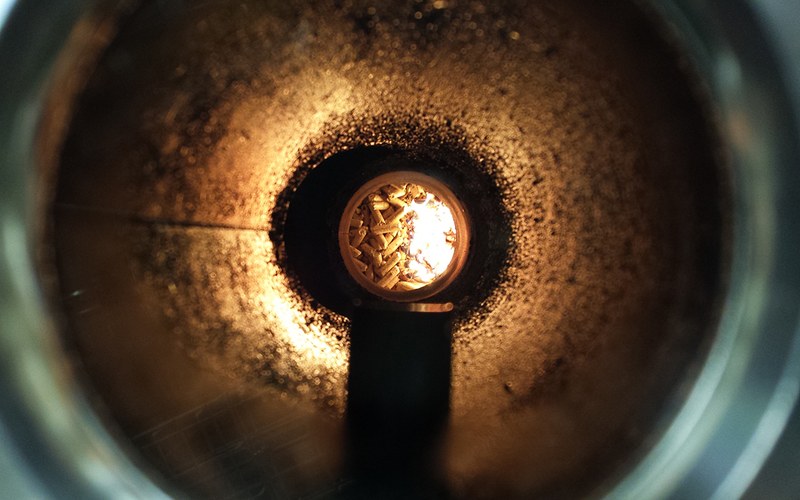
A research team at FHNW University of Applied Sciences and Arts Northwestern Switzerland is developing a wood gas burner with which old oil-fired heating systems can easily be retrofitted.
Project details

Objectives

Development of a marketable wood gas burner with which old oil-fired heating systems can easily be retrofitted.

Background

Over the next few years in Switzerland, large numbers of old oil-fired heating systems must be replaced or upgraded. This is a good opportunity to replace fossil fuel crude oil with a sustainable combustible such as wood. However, converting an oil-fired heating system to a wood burner is often associated with a number of difficulties: Converting the oil tank to a wood pellet store is expensive, the chimney is often not suitable due to legal regulations and ash deposits in the oil-fired boiler can be problematic.

Result

The innovative wood gas burner is designed to use pellets to produce thermal energy for semi-detached houses and apartment buildings in the energy spectrum of 5 to 50 kilowatts. The research team is further developing a prototype made by "Pyro-Man Oy" – a spin-off from University of Eastern Finland. In the case of wood gas burners, a gas is firstly produced from the wood pellets; the second stage involves this gas being oxidised. It is possible to significantly reduce the amount of emissions this way. "As a general rule, the disadvantage of conventional wood-fired heating systems is the relatively high amount of dust emissions", says Josef Wüest. The plan is for oil-fired heating systems to be converted into CO2-neutral wood-pellet-fired heating systems using this new burner with little effort in the future, without significantly increasing the exhaust gas emissions in the process.

Project information

Implementation partner

Liebi LNC AG

Implementation

FHNW Institute of Bioenergy and Resource Efficiency

Duration

six years

Funding

Swiss Federal Office of Energy SFOE, Federal Office for the Environment FOEN, Swiss Climate Foundation, Commission for Technology and Innovation CTI and Energie 360

Project team

Dr. Josef Wüest and Marc Keusch

School of
Engineering and Environment FHNW University of Applied Sciences and Arts Northwestern Switzerland

  • About the School
    • FHNW School of Engineering and Environment
    • Degree Programmes
    • Continuing Education
    • Collaboration in Research and Services
  • Social Media
    • LinkedIn
    • Instagram
    • Facebook
    • TikTok
    • YouTube
  • About FHNW
    • Organisation
    • Schools
    • Locations
    • FHNW Library
    • Media Relations
  • Support
    • IT Support
    • Inside FHNW
    • Webmail
Logo FHNW - 20 Years
Logo Swiss Universities
Logo European University Association
© University of Applied Sciences and Arts Northwestern Switzerland (FHNW)
  • Data Protection
  • Imprint
  • Accessibility
  • DE
  • EN