Skip to main contentSkip to search barSkip to navigationSkip to footer
Logo of the University of Applied Sciences and Arts Northwestern Switzerland
  • DE
  • EN
  • Home
  • Degree programmes
  • Continuing education

Ten Schools One Goal

The FHNW comprises 10 schools with different specializations. Select a school to see its specific courses, study programmes and information.

Applied Psychology

Architecture, Construction and Geomatics

Art and Design

Music

Computer Science

Life Sciences

School of Education

Social Work

Engineering and Environment

Business

  • Research

    • Research fields
    • Projects
  • Updates and insights

    • News and stories
  • Events

  • Media corner

  • About the School of Engineering and Environment

    • People directory
    • Management Board
  • Institutes

    • Institute of Automation
    • Institute of Bioenergy and Resource Efficiency
    • Institute of Business Engineering
    • Institute of Electric Power Systems
    • Institute of Humanities and Social Sciences
    • Institute of Polymer Engineering
    • Institute of Mathematics and Natural Sciences
    • Institute of Polymer Nanotechnology
    • Institute of Optometry
    • Institute of Product and Production Engineering
    • Institute for Sensors and Electronics
    • Institute of Thermal and Fluid Engineering
    • Laboratories of the School of Engineering and Environment
Logo of the University of Applied Sciences and Arts Northwestern Switzerland
  • About the School
    • FHNW School of Engineering and Environment
    • Degree Programmes
    • Continuing Education
    • Collaboration in Research and Services
  • Social Media
    • LinkedIn
    • Instagram
    • Facebook
    • TikTok
    • YouTube
  • About FHNW
    • Organisation
    • Schools
    • Locations
    • FHNW Library
    • Media Relations
  • Support
    • IT Support
    • Inside FHNW
    • Webmail
  • Data Protection
  • Imprint
  • Accessibility
  • Research

    • Research fields
    • Projects
  • Updates and insights

    • News and stories
  • Events

  • Media corner

  • About the School of Engineering and Environment

    • People directory
    • Management Board
  • Institutes

    • Institute of Automation
    • Institute of Bioenergy and Resource Efficiency
    • Institute of Business Engineering
    • Institute of Electric Power Systems
    • Institute of Humanities and Social Sciences
    • Institute of Polymer Engineering
    • Institute of Mathematics and Natural Sciences
    • Institute of Polymer Nanotechnology
    • Institute of Optometry
    • Institute of Product and Production Engineering
    • Institute for Sensors and Electronics
    • Institute of Thermal and Fluid Engineering
    • Laboratories of the School of Engineering and Environment

Type a search term and search continuing education,degree programmes, events, documents and other content.

  • Engineering and Environment
  • Research and services
  • Research
  • Projects
Projects

Temperature and layer wear measurement for turbine blades, FHNW School of Engineering and Environment

School of Engineering and Environment


New methods for the in-situ measurement of surface temperature and coating wear in a test rig for rotating turbine blades.
Project details

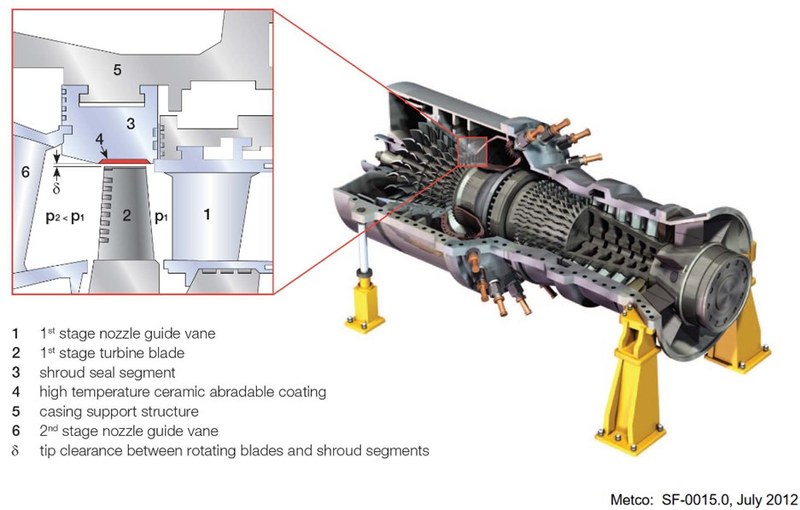
Figure 1: Detailed view of a gas turbine sealing system

Background

Surface technologies such as thermally sprayed scraper coatings for gas and steam turbines and turbochargers are used to control the gap between the turbine blade and turbine housing. They are optimised for a wide range of applications and load conditions. These coatings improve the operational reliability of the turbines and reduce fuel consumption and emissions. The turbine blade (2) and the scraper layer (4) form the sealing system of the gas turbine after the scraper process.

Objectives

The wear mechanisms of the sealing systems are simulated under realistic conditions on an ‘incursion test rig’. This consists mainly of a rotor (1), an ‘incursion unit’ (2) and a high-speed burner (3). The temperature development is of great importance for the investigation of the processes during the contact strip process. This is recorded using a high-speed thermal imaging camera and serves as the basis for the assessment of new coatings.
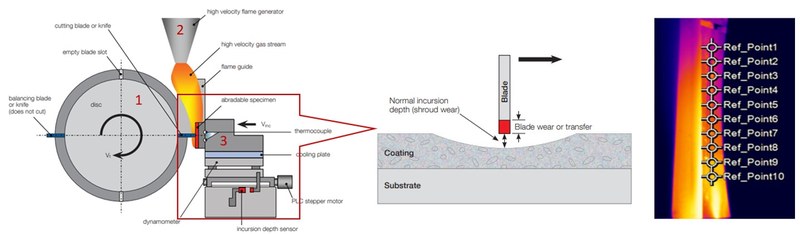
Figure 2: Schematic representation of the grazing process to be analysed

Results

Imaging methods in the infrared range are subject to considerable measurement uncertainty. Individual contributions to this have been experimentally quantified in the laboratory, thus significantly improving the overall uncertainty of this measurement on the test bench.

Project information

Client
Oerlikon Metco AG
Execution
FHNW Institute of Thermal and Fluid Engineering
Funding

Hightech Zentrum Aargau

Duration

2 years

Project team

Prof. Dr. Matthias Stark, Stefan Moser, Dr. Dario Wüthrich

School of
Engineering and Environment FHNW University of Applied Sciences and Arts Northwestern Switzerland

  • About the School
    • FHNW School of Engineering and Environment
    • Degree Programmes
    • Continuing Education
    • Collaboration in Research and Services
  • Social Media
    • LinkedIn
    • Instagram
    • Facebook
    • TikTok
    • YouTube
  • About FHNW
    • Organisation
    • Schools
    • Locations
    • FHNW Library
    • Media Relations
  • Support
    • IT Support
    • Inside FHNW
    • Webmail
Logo FHNW - 20 Years
Logo Swiss Universities
Logo European University Association
© University of Applied Sciences and Arts Northwestern Switzerland (FHNW)
  • Data Protection
  • Imprint
  • Accessibility
  • DE
  • EN