
With a focus on the practical application of AI, this German programme in Business Artificial Intelligence will teach you how intelligent systems can optimise processes, facilitate decision-making and enable innovative business models. Upon completion, you will be prepared to work as an AI expert, consultant or project manager in various industries, enabling you to play an active role in shaping the digital transformation.
Factsheet
- Degree
- Bachelor of Science FHNW in Business Artificial Intelligence
- Study mode
- Full-time, Part-time/work-study
- Learning mode
- Onsite
- ECTS credits
- 180
- Next start
- 20.9.2027
- Duration
- 3 to 5 years
- Teaching language
- German, depending on module selection also English
- Place
- Olten
- Stay abroad
- Possible
- Application fee
- CHF 200
- Semester fee
- CHF 750 for residents of Switzerland (for details, see fees)
At a glance
- Flexible study modes: Choose between full-time and part-time and from a wide range of elective modules.
- Application-oriented: Learn about AI in a practical way through real projects, case studies and modern tools.
- Interdisciplinary: Combine economics, technology and ethics for a holistic view of AI.
- Future-oriented: Qualify for in-demand roles in the fields of artificial intelligence and digitalisation.
Why study this?
The career fields are diverse and offer plenty of variety and challenges. With the AI knowledge acquired during your studies, you could manage projects involving AI, design and optimise business processes, pursue a career in marketing, join innovation teams in companies, administrations and organisations, work as a management consultant, or start your own business.
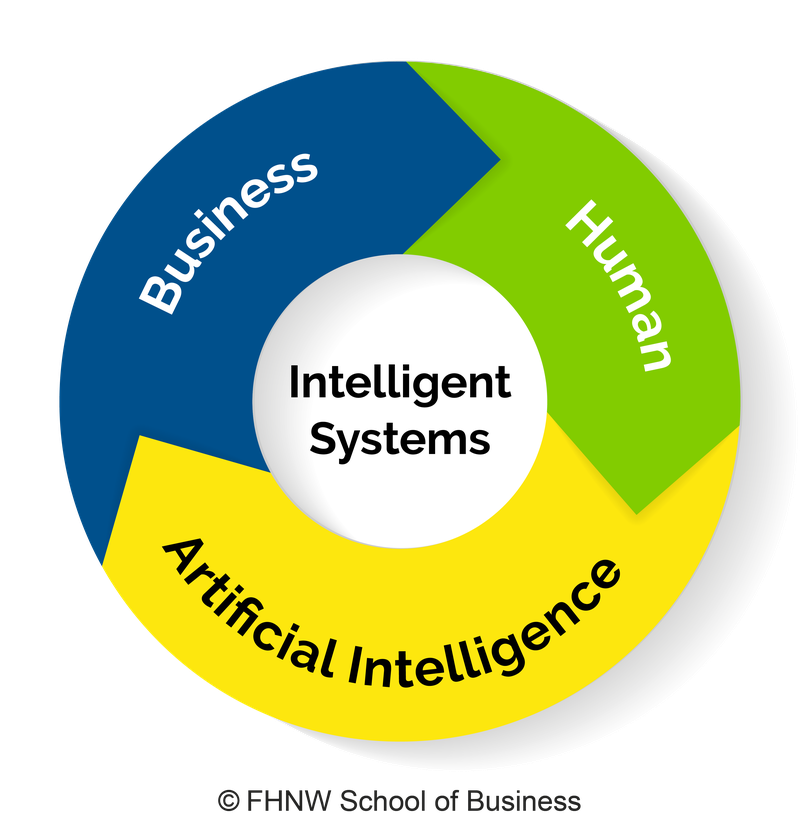
Why study Business Artificial Intelligence?
Interaction
Artificial intelligence covers not only machine learning, but also knowledge-based systems. When humans and artificial intelligence collaborate effectively, they can develop intelligent systems that create an ethical, sustainable and successful future – a task that neither humans nor machines can accomplish alone.
Digitalisation
With your interdisciplinary knowledge, you will identify and develop innovative AI solutions and take on an advisory role. You will optimise processes, analyse and structure data using artificial intelligence, and develop effective strategies or new business models. You will help your company get the most out of data and support employees with difficult tasks. In this way, you will make a significant contribution to the success of your company.
Consulting
You take a close look at processes, procedures and dependencies in order to understand them. In doing so, you identify weaknesses and potential for the use of artificial intelligence. After analysing the current situation, you define what is needed to improve the process. You define and structure the implementation, how it should be in the future and how artificial intelligence will support it.
The environment
The economy needs creative people with an entrepreneurial mindset who can find modern, forward-looking solutions. You understand how the economy works and what makes companies successful. You manage projects and teams, working in line with corporate strategy to ensure the best cost-benefit ratio by utilising artificial intelligence to analyse data.
Career prospects
There are many different career opportunities with a wide range of tasks. You will bridge the gap between business, people and artificial intelligence and play an active role in shaping future-oriented companies.
Specifically, this degree programme opens up a wide range of career prospects and job opportunities in various industries. These professions offer you the prospect of working in a fast-growing and innovative environment. Some jobs and job profiles are specifically geared towards the use of AI. In other jobs, you can make a name for yourself with your AI skills. The programme supports you in further improving your career opportunities and taking on a leading position.
Examples of career opportunities:
Data scientist
AI Engineer
Machine Learning Engineer
Data Analyst
Business Intelligence Analyst
AI Consultant
Cybersecurity specialist
AI Manager
Structure & programme contents
Study content
The Bachelor’s degree in Business Artificial Intelligence prepares you for tomorrow's digitalised world. You will learn about the possibilities of artificial intelligence and broaden your horizons with business administration fundamentals and computer science expertise. You will learn how to create data models and design information systems according to the highest security standards, how to derive new knowledge from data using machine learning, how to develop AI-supported applications, and how to create strategic advantages for companies through knowledge management. This combination of theoretical knowledge and practical skills is the basis for success in the dynamic world of IT and business.
Practice orientation
Throughout the programme, practical application is experienced in the module group ‘Anwendung und Praxis’. Each semester, this module group provides practical tasks that reflect the challenges companies face daily.
The practical relevance of the Business Artificial Intelligence programme offers several advantages:
- Application-oriented learning: The teaching is practical; theoretical knowledge is applied directly in real-life situations. This approach fosters a deeper understanding and enhances problem-solving skills in real-life situations.
- Networking: Through projects and collaboration with companies and organisations, you can build valuable professional contacts to help you start your career and further your development.
- Practical experience: You will gain practical experience through projects, case studies and your Bachelor's thesis during your studies, giving you an advantage when looking for a job.
- Up-to-date content: Thanks to our close cooperation with the business world, we can regularly update the course content to reflect the latest industry developments and trends.
- Soft skills: As well as technical skills, important soft skills such as teamwork, communication and project management are promoted. These are highly valued in the professional world.
These advantages ensure that students at the FHNW School of Business are optimally prepared for their professional future and can successfully establish themselves in the business world.
Study structure
Full-time
Part-time
Degree course structure
Module Groups
The programme consists of compulsory and elective modules. The wide range of elective modules (from the second year onwards) allows you to put together an individual portfolio based on your personal preferences. You decide for yourself which of the four subject areas (module groups) you want to focus on. Each semester, you can choose from a wide range of elective modules.
International
The FHNW School of Business offers numerous opportunities to gain international experience – from semesters abroad and double degrees to summer/winter schools, as well as virtual exchange formats and international projects. These opportunities will help you to develop professionally and personally, and will also prepare you for an international career.

Gain international experience during your studies
Requirements and admission
Direct admission
Admission only with practical experience
Admission only with entrance exam
Foreign degrees
Organisational matters
Fees and Grants
Registration and deadlines
Preparatory courses
Compensation for disadvantages
Mandatory Notebook Requirements
Military and Civil Service
Downloads & Regulations
Study location
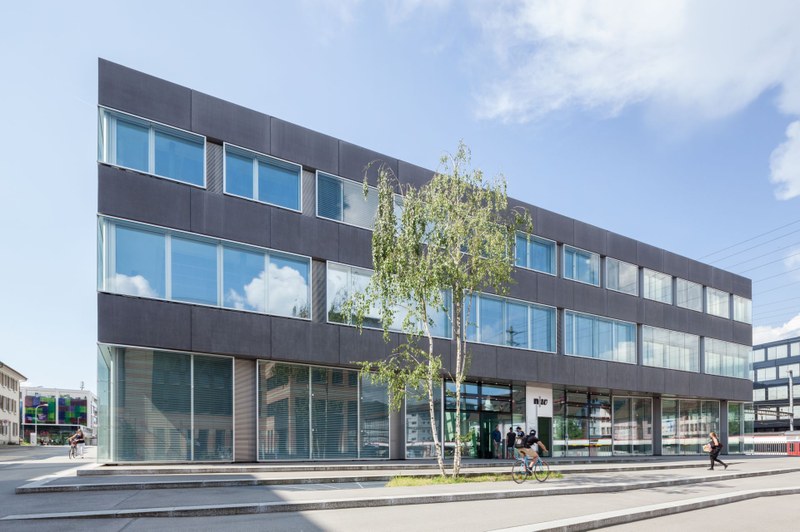
Campus Olten
Lift at University

Career Services

Student organisations

FH sport

Library
Discounts
Advising and information events
Info-Events
Loading...
Contact

Prof. Dr. Uri Nahum
- Phone
- +41 62 957 21 91
- uri.nahum@fhnw.ch
Registration
Bachelor of Science Business Artificial IntelligenceSeptember 2027
- Date
- 20.9.2027
- Duration
- 3 to 5 years
- Place
- Olten
- Notes
- Mandatory introduction days will be held in week 37: 13.09.2027
Bachelor of Science Business Artificial IntelligenceSeptember 2028
- Date
- 18.9.2028
- Duration
- 3 to 5 years
- Place
- Olten