For three days, researchers and industry experts from around the world gathered at FHNW Campus Olten to explore one of the most pressing questions of our time: how humans and artificial intelligence can work together effectively.
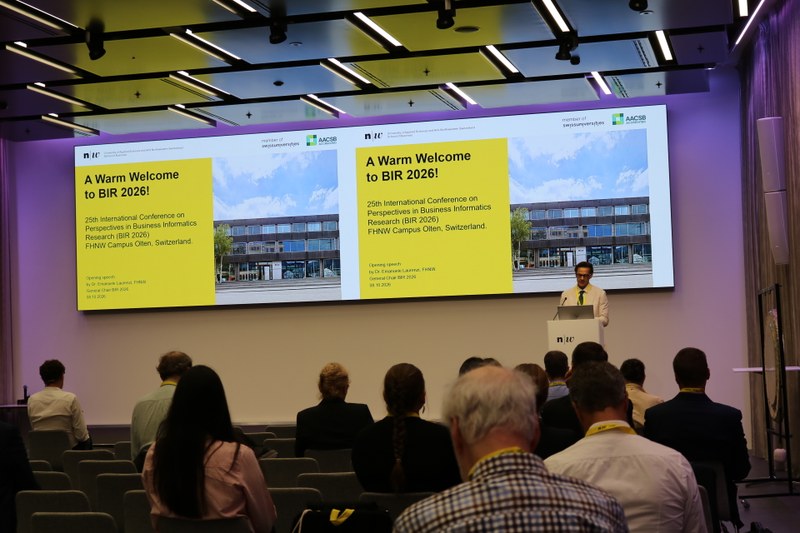
The 25th International Conference on Perspectives in Business Informatics Research (BIR) brought together around 80 participants from 19 countries under the theme "Hybrid Intelligence in Business."
The conference featured 79 presentations, five international workshops, four keynote speeches and a closing panel discussion, creating a vibrant platform for exchanging ideas on the opportunities and challenges that artificial intelligence presents for organizations and society.
Exploring the Future of Hybrid Intelligence
The programme was structured around five key research areas:
- ·Architectures and systems for hybrid intelligence
- ·Ethical, responsible and accountable AI and information systems
- ·AI-supported data and knowledge management
- ·Alignment, interoperability and openness
- ·Smart systems and application areas
Throughout the conference, participants examined how AI is reshaping organizations and discussed approaches that combine human expertise with artificial intelligence to achieve better outcomes.
A notable feature of the event was the strong engagement with the conference theme across presentations and discussions. Many speakers referred to insights from other sessions, creating a continuous dialogue and highlighting the interdisciplinary nature of hybrid intelligence research.
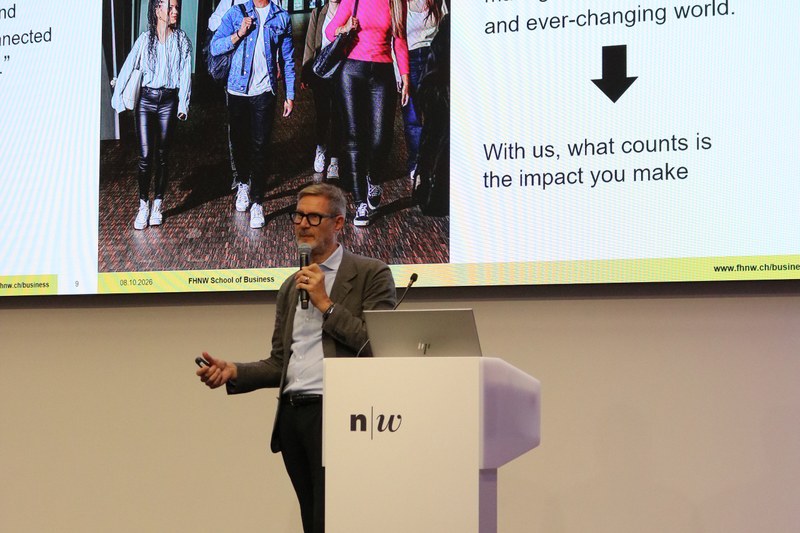
Insights from Leading Experts
The keynote speakers approached the topic from different perspectives while sharing a common message: AI should support, not replace, human capabilities.
Prof. Dr. Frank van Harmelen from Vrije Universiteit Amsterdam outlined a vision of AI as a cognitive partner, describing intelligent systems as tools that help people think and act more effectively rather than as independent "thinking machines."
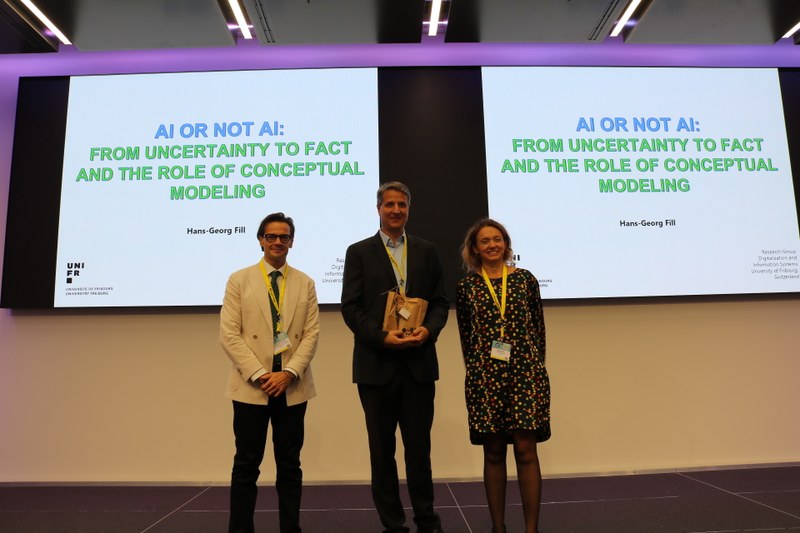
Prof. Dr. Hans-Georg Fill from the University of Fribourg highlighted the impact of AI on learning processes and argued for the importance of conceptual modelling and dedicated AI-free spaces in education.
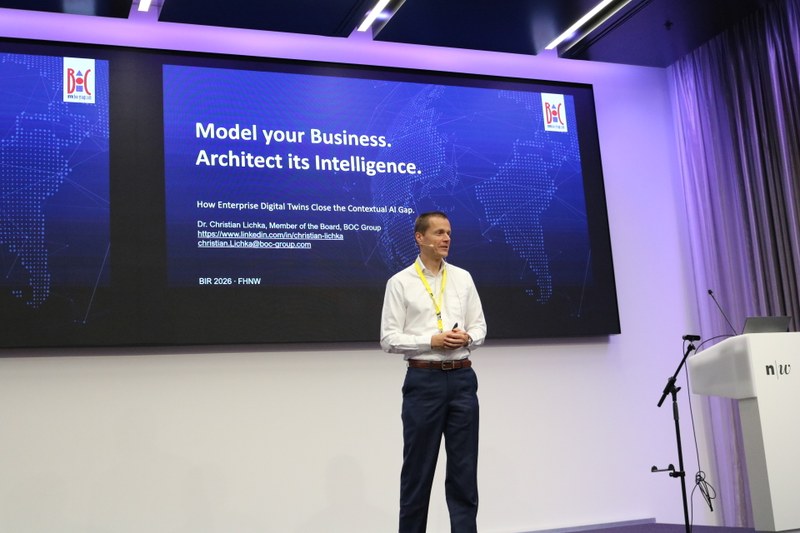
Representing the industry perspective, Dr. Christian Lichka from BOC Group Switzerland emphasized the need to engineer the organizational context in which AI operates, using enterprise models as digital representations of organizations.
Prof. Dr. Toni Wäfler from the FHNW School of Applied Psychology addressed the risks of becoming overly dependent on AI, warning of potential declines in critical thinking and professional expertise. He advocated for AI applications that strengthen rather than weaken human cognition.
Strengthening the Connection Between Research and Practice
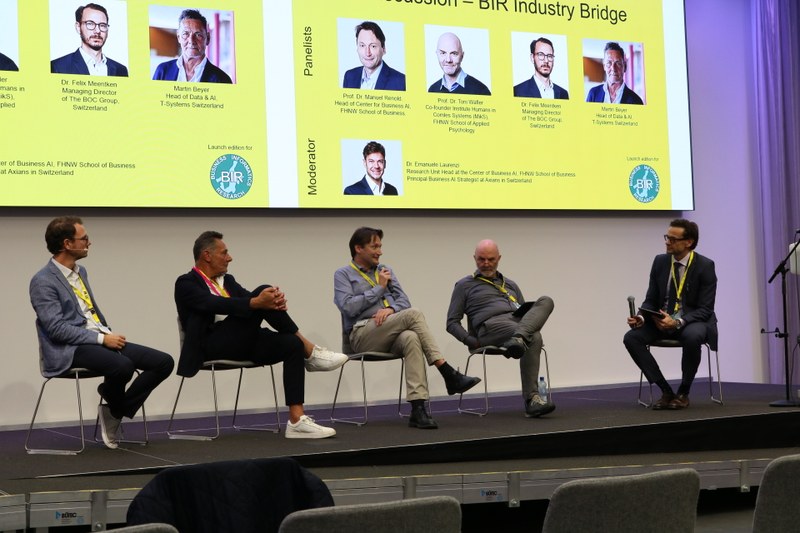
A particular highlight was the launch of the BIR Industry Bridge, a new initiative designed to foster closer collaboration between academia and business.
Representatives from KI-ZENTRUM, Axians Switzerland and T-Systems Switzerland shared practical experiences of AI adoption, discussing topics ranging from strategic planning to technical implementation and sovereign AI solutions.
The conference concluded with a panel discussion on the future relationship between research and industry. Two key messages emerged:
- Education systems must evolve to prepare future professionals for increasingly AI-supported workplaces.
- Organizations need stronger and longer-term partnerships with universities to address complex innovation challenges and remain competitive in a rapidly changing environment.
A Truly International Effort
In addition to the scientific programme, participants enjoyed networking opportunities, a visit to Alpiq AG, a guided tour of Olten and the conference dinner, where the Best Paper Award was presented.
The success of the conference was made possible through the collaboration of numerous researchers, organizers, volunteers and partners from across Europe, Africa, Asia and the Americas. As host institution, FHNW welcomed the international community to Campus Olten and provided the setting for three days of inspiring discussions on the future of AI and business.
The conference proceedings have been published by Springer, ensuring that the insights and research presented in Olten will continue to contribute to the global conversation on hybrid intelligence and its role in shaping the future of organizations.
