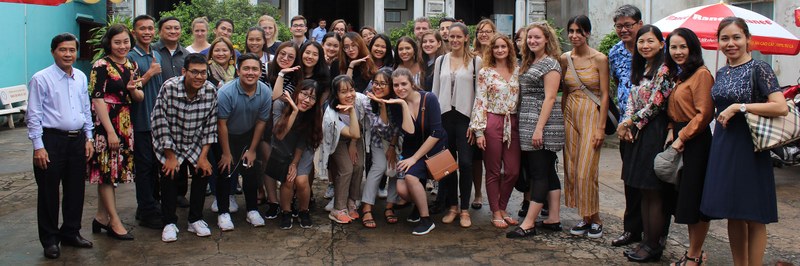
For the summer programme Social Entrepreneurship for Economic Development 2019, students came together to develop business concepts and strategies for villagers in the Mekong Delta.
The cross-cultural SEED project in Vietnam, in collaboration with the University of Economics Ho Chi Minh City, goes to second round. From 1 – 10 August students gathered first-hand experiences with Vietnamese industry and the economic challenges the Mekong Delta in particular is facing.
Developing business models
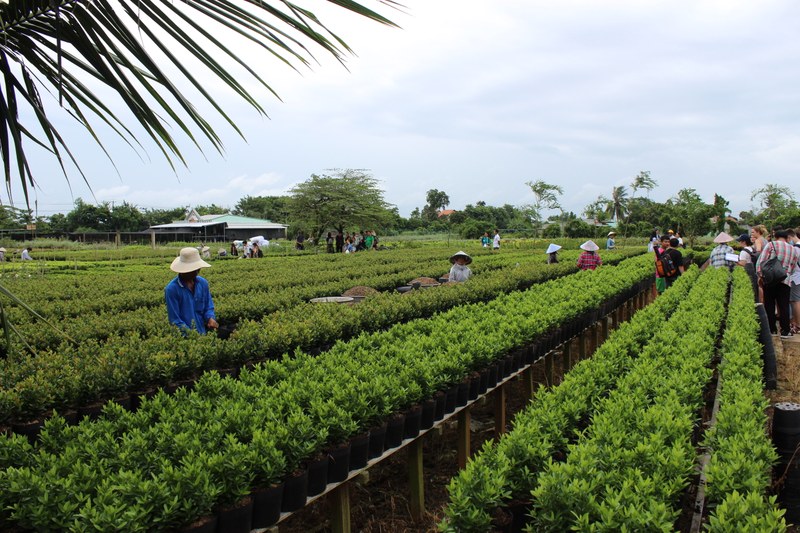
The Nine Dragon river delta makes up 18% of the country’s GDP and covers 12% of Vietnam’s area. Net migration rate is about -4%, meaning more people are leaving than coming to the area. The average income is about 2271 USD, which is lower than the country average (2389 USD). That makes the Mekong Delta a development area. The main industry in the region is the agricultural sector: rice, shrimp, catfish and fruits. The most important problems the Mekong Delta is dealing with are poverty, inequality, lack of regional linkage, climate change, unexpected change, land fragmentation and lack of infrastructure and public investment.
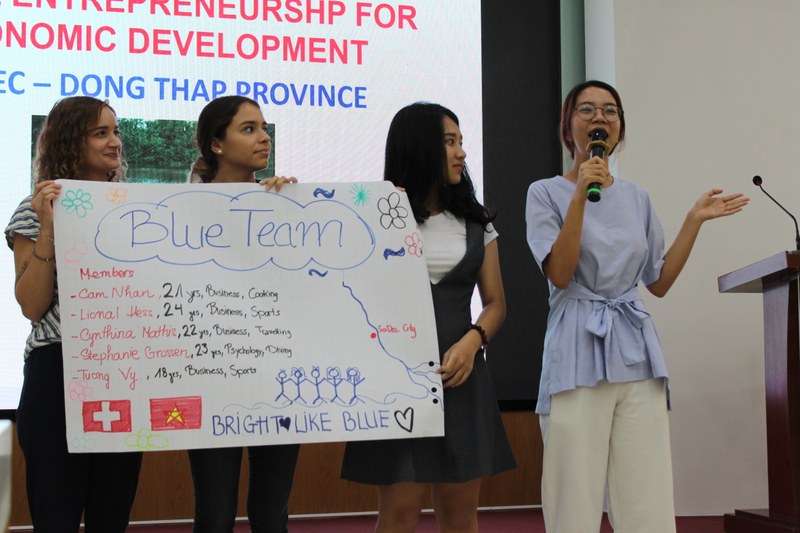
What can be done for a sustainable development and to help villagers in the area? The students analysed the problems, collected data, generated ideas, assessed the opportunity, and proposed innovative business models. Several topics have been addressed such as eco-friendliness and sustainable tourism, as well as green production.
Intercultural Experiences
The workshops and group sessions alternated with cultural events during the programme. The delegation was warmly welcomed with ceremonies at Ho Chi Minh City Cadre Academy and Dong Thap University in Sa Dec.
One evening the group enjoyed cross-cultural entertainment with dancing and singing performances. A guided tour through Sa Dec City included local games such as fish caching. The participants also visited significant sights: The Lover’s House, with its romantic background story, was an inspiration for an acclaimed novel. The Xeo Quyt – a tropical forest where the Viet Cong used to hide from the US soldiers – is considered to be a very dangerous place, given that some war mines are still unaccounted for.
The famous flour and flower village visit was a highlight. The students evaluated the economic potential of the village as a main tourist attraction and identified the opportunities of sustainable flour production. At the end of the programme the students presented their business model at the People’s Committee in Sa Dec. The theme of SEED 2019 was “SEA Coopetition”, meaning that the presentations resulted in a competition where the teams were ranked.
The SEED project contributes to the goal of building up strategic partnerships in South East Asia. Not only is the project an opportunity for students to gain deep insights in other cultures but also part of a Dual Degree programme for Vietnamese students who will finish their study at our School in Switzerland.