Skip to main contentSkip to search barSkip to navigationSkip to footer
Logo of the University of Applied Sciences and Arts Northwestern Switzerland
  • EN
  • Home
  • Degree programmes
  • Continuing education

Ten Schools One Goal

The FHNW comprises 10 schools with different specializations. Select a school to see its specific courses, study programmes and information.

Applied Psychology

Architecture, Construction and Geomatics

Art and Design

Music

Computer Science

Life Sciences

School of Education

Social Work

Engineering and Environment

Business

  • Research

    • Research fields
    • Projects
  • Updates and insights

    • News and stories
  • Events

  • Media corner

  • About the School of Engineering and Environment

    • People directory
    • Management Board
  • Institutes

    • Institute of Automation
    • Institute of Bioenergy and Resource Efficiency
    • Institute of Business Engineering
    • Institute of Electric Power Systems
    • Institute of Humanities and Social Sciences
    • Institute of Polymer Engineering
    • Institute of Mathematics and Natural Sciences
    • Institute of Polymer Nanotechnology
    • Institute of Optometry
    • Institute of Product and Production Engineering
    • Institute for Sensors and Electronics
    • Institute of Thermal and Fluid Engineering
    • Laboratories of the School of Engineering and Environment
Logo of the University of Applied Sciences and Arts Northwestern Switzerland
  • About the School
    • FHNW School of Engineering and Environment
    • Degree Programmes
    • Continuing Education
    • Collaboration in Research and Services
  • Social Media
    • LinkedIn
    • Instagram
    • Facebook
    • TikTok
    • YouTube
  • About FHNW
    • Organisation
    • Schools
    • Locations
    • FHNW Library
    • Media Relations
  • Support
    • IT Support
    • Inside FHNW
    • Webmail
  • Data Protection
  • Imprint
  • Accessibility
  • Research

    • Research fields
    • Projects
  • Updates and insights

    • News and stories
  • Events

  • Media corner

  • About the School of Engineering and Environment

    • People directory
    • Management Board
  • Institutes

    • Institute of Automation
    • Institute of Bioenergy and Resource Efficiency
    • Institute of Business Engineering
    • Institute of Electric Power Systems
    • Institute of Humanities and Social Sciences
    • Institute of Polymer Engineering
    • Institute of Mathematics and Natural Sciences
    • Institute of Polymer Nanotechnology
    • Institute of Optometry
    • Institute of Product and Production Engineering
    • Institute for Sensors and Electronics
    • Institute of Thermal and Fluid Engineering
    • Laboratories of the School of Engineering and Environment

Type a search term and search continuing education,degree programmes, events, documents and other content.

  • Engineering and Environment
  • About us
  • Institutes
  • Research Projects
Research Projects

IcoLens, FHNW School of Engineering and Environment

School of Engineering and Environment


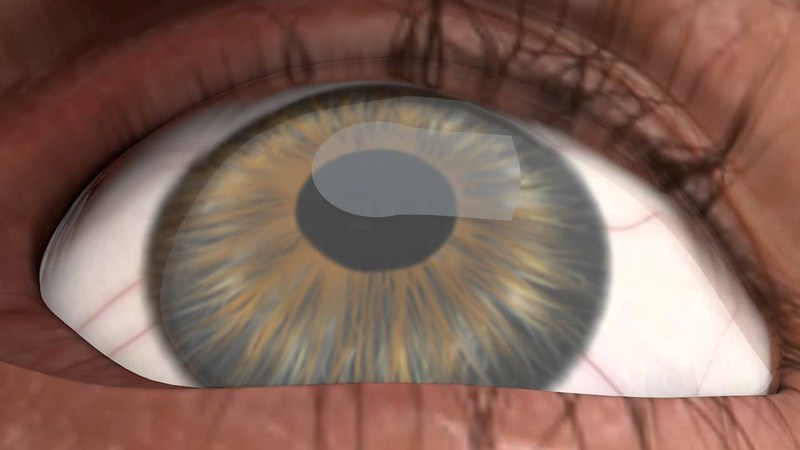
The Institute of Optometry (FHNW) is involved in several projects for the development of intra-corneal lenses created by Neoptics.
topbild-io.jpg

Project details

Background

Intra-corneal lenses, IcoLens, produced by Neoptics represent a modern alternative to reading glasses or multifocal contact lenses for correcting presbyopia. This project involves a number of activities and tasks.

Metrology of intracorneal lenses

The aim was to find a quick solution for the optical measurement of intra-corneal lenses, ensuring the dimensional accuracy and quality of the IcoLenses in accordance with QA standards. The NIMO-TR1504 device manufactured by Lambda-X was used and a software was developed that can summarise thousands of measurement points as a basis for analysis.

Finite element analysis (FEA)

A FEA was carried out to calculate the visual effect of the intra-corneal lens. This was necessary to understand the biomechanical interactions between the cornea and intra-corneal lens. Changes to the shape of the cornea caused by the intra-corneal lenses cause an intentionally modified visual effect.

Impact study

The suitability of the intra-corneal lens was tested in an impact study; this involved a variety of tasks:

  • Defining the optometric examination methods for the selection of suitable subjects and lenses.
  • Defining the study parameters/study protocol: determining the primary end point, statistical methods, power analysis
  • Statistical analysis of study results, optometric interpretation and conclusions

Development of a nomogram

The findings of the impact study and other areas of the project are being consolidated into a "nomogram", which enables important parameters to be defined for intracorneal lens implantation.

Development of a specialised contact lens

A special contact lens is being developed in order to evaluate patient suitability before surgical intervention.

Project information

Client

Neoptics AG

Implementation

FHNW Institute of Optometrie

Project team

Professor Dr. Roland Joos

School of
Engineering and Environment FHNW University of Applied Sciences and Arts Northwestern Switzerland

  • About the School
    • FHNW School of Engineering and Environment
    • Degree Programmes
    • Continuing Education
    • Collaboration in Research and Services
  • Social Media
    • LinkedIn
    • Instagram
    • Facebook
    • TikTok
    • YouTube
  • About FHNW
    • Organisation
    • Schools
    • Locations
    • FHNW Library
    • Media Relations
  • Support
    • IT Support
    • Inside FHNW
    • Webmail
Logo FHNW - 20 Years
Logo Swiss Universities
Logo European University Association
© University of Applied Sciences and Arts Northwestern Switzerland (FHNW)
  • Data Protection
  • Imprint
  • Accessibility
  • EN