Skip to main contentSkip to search barSkip to navigationSkip to footer
Logo of the University of Applied Sciences and Arts Northwestern Switzerland
  • DE
  • EN
  • Home
  • Degree programmes
  • Continuing education

Ten Schools One Goal

The FHNW comprises 10 schools with different specializations. Select a school to see its specific courses, study programmes and information.

Applied Psychology

Architecture, Construction and Geomatics

Art and Design

Music

Computer Science

Life Sciences

School of Education

Social Work

Engineering and Environment

Business

  • Research

    • Research fields
    • Projects
  • Updates and insights

    • News and stories
  • Events

  • Media corner

  • About the School of Engineering and Environment

    • People directory
    • Management Board
  • Institutes

    • Institute of Automation
    • Institute of Bioenergy and Resource Efficiency
    • Institute of Business Engineering
    • Institute of Electric Power Systems
    • Institute of Humanities and Social Sciences
    • Institute of Polymer Engineering
    • Institute of Mathematics and Natural Sciences
    • Institute of Polymer Nanotechnology
    • Institute of Optometry
    • Institute of Product and Production Engineering
    • Institute for Sensors and Electronics
    • Institute of Thermal and Fluid Engineering
    • Laboratories of the School of Engineering and Environment
Logo of the University of Applied Sciences and Arts Northwestern Switzerland
  • About the School
    • FHNW School of Engineering and Environment
    • Degree Programmes
    • Continuing Education
    • Collaboration in Research and Services
  • Social Media
    • LinkedIn
    • Instagram
    • Facebook
    • TikTok
    • YouTube
  • About FHNW
    • Organisation
    • Schools
    • Locations
    • FHNW Library
    • Media Relations
  • Support
    • IT Support
    • Inside FHNW
    • Webmail
  • Data Protection
  • Imprint
  • Accessibility
  • Research

    • Research fields
    • Projects
  • Updates and insights

    • News and stories
  • Events

  • Media corner

  • About the School of Engineering and Environment

    • People directory
    • Management Board
  • Institutes

    • Institute of Automation
    • Institute of Bioenergy and Resource Efficiency
    • Institute of Business Engineering
    • Institute of Electric Power Systems
    • Institute of Humanities and Social Sciences
    • Institute of Polymer Engineering
    • Institute of Mathematics and Natural Sciences
    • Institute of Polymer Nanotechnology
    • Institute of Optometry
    • Institute of Product and Production Engineering
    • Institute for Sensors and Electronics
    • Institute of Thermal and Fluid Engineering
    • Laboratories of the School of Engineering and Environment

Type a search term and search continuing education,degree programmes, events, documents and other content.

  • Engineering and Environment
  • Degree programmes
  • about-degree-programmes
  • students-projects
students-projects

Optimising logistics in RailCity Zurich, FHNW School of Engineering and Environment

School of Engineering and Environment


Students at FHNW University of Applied Sciences and Arts Northwestern Switzerland analysed the implications of an increase in capacity for the logistics of the "ShopVille" at Zurich central train station.
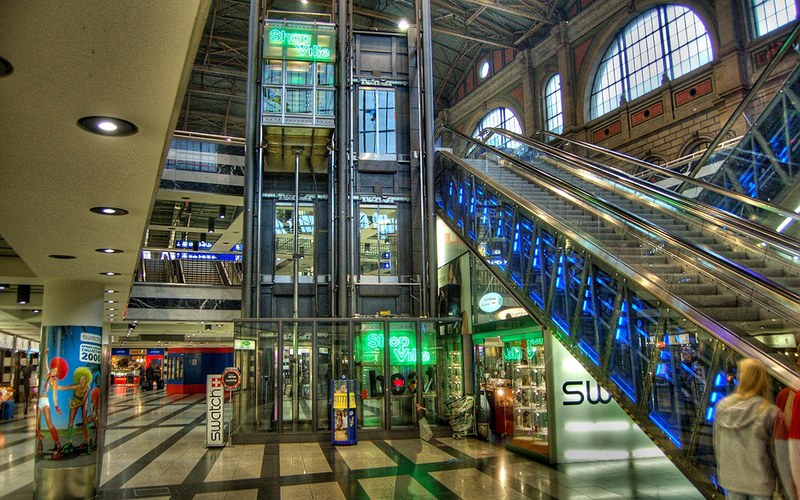
There are over 150 shops in the "ShopVille" shopping area at the main train station in Zurich. These are all supplied with goods via a central delivery service. With the capacity of the main train station increasing, the number of delivery vehicles for the "ShopVille" area will also increase. Traffic jams already occur at peak times, when all 37 ramps are occupied. Prospective industrial engineers were commissioned by RailCity to analyse the logistics processes and determine the capacity limits of the existing infrastructure.

The analysis performed by the students showed that it is not the number of ramps that is the problem but rather the processes involved and the vehicle utilisation. An Excel simulation of the potential impact of different proposed solutions was given to the client. The students came to the conclusion that RailCity does not need to start any large construction projects right away. The simulation shows that it would be sensible to opt for a solution involving a number of small steps. The existing infrastructure is adequate for the capacity increase if the processes are correspondingly optimised.

Project information

  • Client: RailCity
  • Implementation: Students Bachelor in Engineering and Management
  • Supervision: Professor Dr. Martin Käppner

School of
Engineering and Environment FHNW University of Applied Sciences and Arts Northwestern Switzerland

  • About the School
    • FHNW School of Engineering and Environment
    • Degree Programmes
    • Continuing Education
    • Collaboration in Research and Services
  • Social Media
    • LinkedIn
    • Instagram
    • Facebook
    • TikTok
    • YouTube
  • About FHNW
    • Organisation
    • Schools
    • Locations
    • FHNW Library
    • Media Relations
  • Support
    • IT Support
    • Inside FHNW
    • Webmail
Logo FHNW - 20 Years
Logo Swiss Universities
Logo European University Association
© University of Applied Sciences and Arts Northwestern Switzerland (FHNW)
  • Data Protection
  • Imprint
  • Accessibility
  • DE
  • EN