Skip to main contentSkip to search barSkip to navigationSkip to footer
Logo of the University of Applied Sciences and Arts Northwestern Switzerland
  • DE
  • EN
  • Home
  • Degree programmes
  • Continuing education

Ten Schools One Goal

The FHNW comprises 10 schools with different specializations. Select a school to see its specific courses, study programmes and information.

Applied Psychology

Architecture, Construction and Geomatics

Art and Design

Music

Computer Science

Life Sciences

School of Education

Social Work

Engineering and Environment

Business

  • Research

    • Research fields
    • Projects
  • Updates and insights

    • News and stories
  • Events

  • Media corner

  • About the School of Engineering and Environment

    • People directory
    • Management Board
  • Institutes

    • Institute of Automation
    • Institute of Bioenergy and Resource Efficiency
    • Institute of Business Engineering
    • Institute of Electric Power Systems
    • Institute of Humanities and Social Sciences
    • Institute of Polymer Engineering
    • Institute of Mathematics and Natural Sciences
    • Institute of Polymer Nanotechnology
    • Institute of Optometry
    • Institute of Product and Production Engineering
    • Institute for Sensors and Electronics
    • Institute of Thermal and Fluid Engineering
    • Laboratories of the School of Engineering and Environment
Logo of the University of Applied Sciences and Arts Northwestern Switzerland
  • About the School
    • FHNW School of Engineering and Environment
    • Degree Programmes
    • Continuing Education
    • Collaboration in Research and Services
  • Social Media
    • LinkedIn
    • Instagram
    • Facebook
    • TikTok
    • YouTube
  • About FHNW
    • Organisation
    • Schools
    • Locations
    • FHNW Library
    • Media Relations
  • Support
    • IT Support
    • Inside FHNW
    • Webmail
  • Data Protection
  • Imprint
  • Accessibility
  • Research

    • Research fields
    • Projects
  • Updates and insights

    • News and stories
  • Events

  • Media corner

  • About the School of Engineering and Environment

    • People directory
    • Management Board
  • Institutes

    • Institute of Automation
    • Institute of Bioenergy and Resource Efficiency
    • Institute of Business Engineering
    • Institute of Electric Power Systems
    • Institute of Humanities and Social Sciences
    • Institute of Polymer Engineering
    • Institute of Mathematics and Natural Sciences
    • Institute of Polymer Nanotechnology
    • Institute of Optometry
    • Institute of Product and Production Engineering
    • Institute for Sensors and Electronics
    • Institute of Thermal and Fluid Engineering
    • Laboratories of the School of Engineering and Environment

Type a search term and search continuing education,degree programmes, events, documents and other content.

  • Engineering and Environment
  • News and events
  • News and stories
  • All news and stories
All news and stories

Mitigating of Macro- and Micro-Plastics in Agriculture Soils using Hyperspectral Imaging (MIRACLE), FHNW School of Engineering and Environment

5.6.2025 – School of Engineering and Environment, Institute of Bioenergy and Resource Efficiency


The Institute of Biomass and Resource Efficiency FHNW recently successfully launched the SNF Practice-to-Science project Miracle. The results of the research will enable decision-makers from cantons, federal agencies, industry, environmental organizations and farmers to make long-term predictions about the impact of plastics in the environment using simple and effective means.
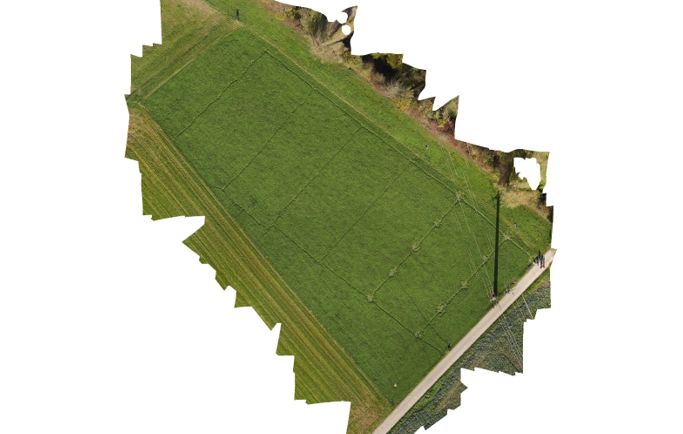
In the picture - drone shot of the sampling sites

The presence of microplastics (plastic particles <5 mm, MP) in soils is a growing concern. Microplastics can pose a threat to soil ecosystems and freshwater, and potentially to human health. In recent years, several studies have reported the presence of MP in treated tap and bottled water, raising concerns about the potential impact of MP in drinking water on human health. MP have been widely detected in aquatic environments, but their occurrence in soil ecosystems remains largely unexplored and is based only on estimates. One of the main obstacles to obtaining quantitative information is the lack of standardized techniques to accurately and cost-effectively determine and map MP distribution in soils and aquatic environments. Miracle's key research objectives are :

  • To develop rapid, accurate, and cost-effective methods for detecting and investigating the fate of microplastics in agricultural soils based on hyperspectral imaging combined with machine learning and artificial neural networks for pattern recognition;
  • To transfer the technology to unmanned aerial vehicles;
  • To conduct laboratory studies to determine the mechanism by which MP can leave agricultural land and the risk they pose to humans or animals in nearby areas.

Project duration: 3 years
Funding instrument : Practice-to-Science
Amount awarded : 600,000 CHF
More information

School of
Engineering and Environment FHNW University of Applied Sciences and Arts Northwestern Switzerland

  • About the School
    • FHNW School of Engineering and Environment
    • Degree Programmes
    • Continuing Education
    • Collaboration in Research and Services
  • Social Media
    • LinkedIn
    • Instagram
    • Facebook
    • TikTok
    • YouTube
  • About FHNW
    • Organisation
    • Schools
    • Locations
    • FHNW Library
    • Media Relations
  • Support
    • IT Support
    • Inside FHNW
    • Webmail
Logo FHNW - 20 Years
Logo Swiss Universities
Logo European University Association
© University of Applied Sciences and Arts Northwestern Switzerland (FHNW)
  • Data Protection
  • Imprint
  • Accessibility
  • DE
  • EN