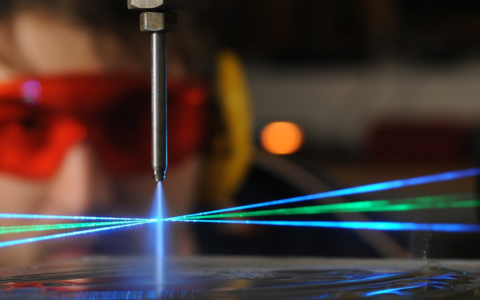
In the combustion research laboratory, we analyse engine processes and combustion methods using optical measurement technology. A special focus here is on alternative fuels.

Our Offer
At the Laboratory for Combustion Research, we support you with research activities and industrial services:
- Characterization of injectors: Fuel spray investigations, evaporation behaviour, etc.
- optical and thermodynamic investigation of combustion processes on engine like test benches
- Development of innovative combustion processes
- Investigations of fundamental processes in optically accessible constant-volume cells
- Investigation of combustion processes and combustion for various fuel types
- Characterization of emissions from alternative, future fuels
Get in touch with us
For more information or to discuss a collaboration, please contact Kai Herrmann.
Infrastructure
Optically accessible test benches for combustion analysis
- Flex-OeCoS: Optically accessible 1-cylinder test bench with combustion pressures of up to 260 bar
- OPC (Optical pre chamber): Constant volume chamber with coupled prechamber, optical accessibility in multiple axis in both chambers, actively filled pre- and main chamber
- HTDZ: Constant volume chamber with optional hydrogen pre-combustion, multi-axial optical accessibility
- Test rig for analysing the laminar flame velocity
Measurement technology, data acquisition and evaluation:
- Optical measurement technology with high-speed image data acquisition, optical amplifiers, and laser excitation equipment
- State of the art signal acquisition and processing platforms (image acquisition, cylinder-pressure measurement and data processing)
- Emission measurement devices based on measurement principles such as FTIR, MS etc.


The Combustion Research Lab is part of the FHNW Institute of Thermal and Fluid Engineering
Institute of Thermal and Fluid Engineering
We are committed to a sustainable, energy-efficient and innovative industrial future. With our expertise in thermal and fluid engineering, we support companies in the analysis and optimisation of fluid mechanical and thermal processes, measurement methods, and prototype development.