Skip to main contentSkip to search barSkip to navigationSkip to footer
Logo of the University of Applied Sciences and Arts Northwestern Switzerland
  • DE
  • EN
  • Home
  • Degree programmes
  • Continuing education

Ten Schools One Goal

The FHNW comprises 10 schools with different specializations. Select a school to see its specific courses, study programmes and information.

Applied Psychology

Architecture, Construction and Geomatics

Art and Design

Music

Computer Science

Life Sciences

School of Education

Social Work

Engineering and Environment

Business

  • Research

    • Research fields
    • Projects
  • Updates and insights

    • News and stories
  • Events

  • Media corner

  • About the School of Engineering and Environment

    • People directory
    • Management Board
  • Institutes

    • Institute of Automation
    • Institute of Bioenergy and Resource Efficiency
    • Institute of Business Engineering
    • Institute of Electric Power Systems
    • Institute of Humanities and Social Sciences
    • Institute of Polymer Engineering
    • Institute of Mathematics and Natural Sciences
    • Institute of Polymer Nanotechnology
    • Institute of Optometry
    • Institute of Product and Production Engineering
    • Institute for Sensors and Electronics
    • Institute of Thermal and Fluid Engineering
    • Laboratories of the School of Engineering and Environment
Logo of the University of Applied Sciences and Arts Northwestern Switzerland
  • About the School
    • FHNW School of Engineering and Environment
    • Degree Programmes
    • Continuing Education
    • Collaboration in Research and Services
  • Social Media
    • LinkedIn
    • Instagram
    • Facebook
    • TikTok
    • YouTube
  • About FHNW
    • Organisation
    • Schools
    • Locations
    • FHNW Library
    • Media Relations
  • Support
    • IT Support
    • Inside FHNW
    • Webmail
  • Data Protection
  • Imprint
  • Accessibility
  • Research

    • Research fields
    • Projects
  • Updates and insights

    • News and stories
  • Events

  • Media corner

  • About the School of Engineering and Environment

    • People directory
    • Management Board
  • Institutes

    • Institute of Automation
    • Institute of Bioenergy and Resource Efficiency
    • Institute of Business Engineering
    • Institute of Electric Power Systems
    • Institute of Humanities and Social Sciences
    • Institute of Polymer Engineering
    • Institute of Mathematics and Natural Sciences
    • Institute of Polymer Nanotechnology
    • Institute of Optometry
    • Institute of Product and Production Engineering
    • Institute for Sensors and Electronics
    • Institute of Thermal and Fluid Engineering
    • Laboratories of the School of Engineering and Environment

Type a search term and search continuing education,degree programmes, events, documents and other content.

  • Engineering and Environment
  • Research and services
  • Research
  • Research fields
  • Automation
Automation

Industrial Automation and Building Systems Engineering, FHNW School of Engineering and Environment

School of Engineering and Environment


topbild-i4.0.jpg

Our expertise in the field of industrial automation and building technology covers the following areas:

Industrial Automation and Building Automation

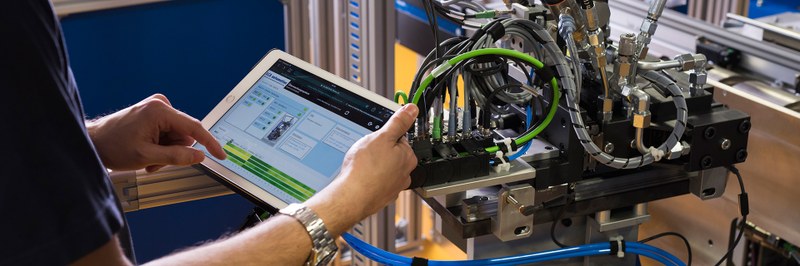
  • Industrial automation for processes and products
  • Industrial image processing (machine vision)
  • Industrial communication

Energy and self-consumption control

  • Automation of Building Technology in Industry and the Private Sector
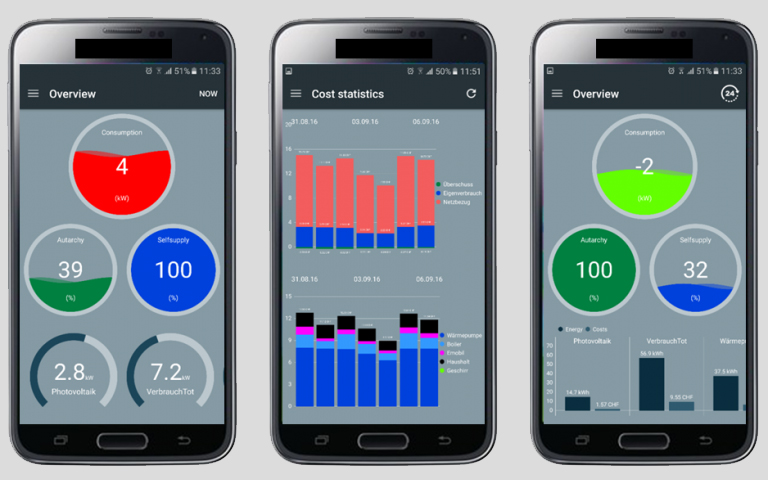
  • Control engineering for self-consumption and energy optimization

Electronics development / EMC (Electromagnetic Compatibility)

BATLOGGER, a high-tech data logger for recording bat echolocation calls

The BATLOGGER can record (log) the ultrasonic calls of bats and can perform these recordings automatically or according to a predefined schedule. It logs signals in the frequency range of 10–150 kHz and provides additional information on the location, temperature, time, and date of the recordings.

To capture these data, the BATLOGGER is equipped with a highly sensitive ultrasonic sensor system, a GPS receiver, and a temperature sensor. The large volume of call data is stored as WAVE files, while the additional metadata are stored as XML files on an SD card. This card can be used to transfer the data to a computer for analysis. The LOGGER can be operated and configured either via buttons and an LCD display directly on the device or via the SD card from a computer.

Evolvable Ultra Precision Assembly Systems (EUPASS)

EUPASS stands for Evolvable Ultra Precision Assembly Systems, which can be translated as “evolvable high-precision assembly systems.” The aim of the EUPASS project is to develop an assembly system that is as modular as possible, both in hardware and software.

The advantage of this modularity is that an assembly system is not designed for just one product and a fixed output capacity. Instead, a wide range of products can be manufactured on the same system, and the output capacity can be adapted as needed through simple reconfiguration. The required modules can be added to or removed from the system with minimal installation effort.

Line Tracking on Optically Challenging Backgrounds

Within the framework of a KTI project, we are developing strategies and concepts for line detection on highly diverse background structures and in continuous image sequences. The detected line is intended to provide a reliable guidance reference for line tracking. Such line-tracking problems frequently arise in the use of mobile robots.

In this project, we present an approach that delivers promising results. The method is called “Snake.” The algorithm, so to speak, “slithers” along a line.

Wireless Motor

During orthopedic surgery, a navigation system assists the surgeon in positioning and guiding their instruments. A wireless, sterilizable drive unit enables the automatic positioning of the cutting guide.

In this project, supported by the Aargau Research Fund, the goal was to demonstrate the feasibility of a sterilizable wireless drive unit, identify the required technologies and regulatory requirements, and, based on this, develop a functional prototype. This prototype is intended to verify the practical applicability of the new approach.

Water Hardness Measurement

The KTI project Water Hardness Measurement is a feasibility study aimed at discovering and developing an in-situ measurement method for determining the hardness of tap water. The industrial partner in this project is the fittings manufacturer R. Nussbaum AG in Olten.

Previous literature and patent research, as well as investigations into purported water hardness measurement methods, repeatedly identified conductivity measurement as a method for determining water hardness. Unfortunately, conductivity is only a measure of the total ion concentration in water and not solely the concentration of calcium and magnesium ions, which are the primary contributors to water hardness.

The measurement principles applied in this project included, on the one hand, the direct measurement of physical quantities that were assumed to depend on water hardness, and, on the other hand, differential conductivity measurements of treated and untreated water. Treatments of the water samples included static and dynamic electric and magnetic fields of varying strength, temperature changes, and ion exchange.

Intelligent Bogie Test Bench Technology

The rapidly growing transport demand and increasing maximum speeds in rail-bound transportation worldwide are leading to rising requirements for measurement and testing technologies for railway vehicles, particularly their bogies (running gear).

Current bogie test benches either operate statically or are extremely complex dynamic test systems that simulate driving conditions. Within the framework of an Innosuisse project, the static test benches were further developed.

Novel Rock Milling Machine

This article describes the modeling of a novel rock milling machine. It shows how appropriate modeling of the milling process can be used to correctly adjust system parameters during operation. In a first step, the milling kinematics are modeled. In a subsequent step, the performance of the milling machine is optimized by exploiting quasi-stable oscillations in order to achieve a high material removal rate, low energy consumption, and a compact device design.

Setup of a Heat Pump and Solar Test Facility

As part of an inter-university collaboration between the School of Architecture, Civil Engineering and Geomatics, the School of Life Sciences, and the School of Engineering, a strategic initiative was launched on the topic of “Building Automation, Energy Efficiency, and Alternative Energy Generation.” In this context, a test facility is being established at the Muttenz campus to investigate the dynamic behavior of heat pumps in combination with solar technologies.

Strategic Initiative on Lighting

The optimization of daylight and artificial lighting in indoor spaces requires an interdisciplinary approach; architectural, design, and technical aspects must be addressed jointly. The School of Architecture, Civil Engineering and Geomatics with the Institute for Energy in Building, the School of Engineering with the Institute for Automation, and the School of Design and Art with the Institute of Interior Architecture and Scenography have joined forces within the framework of the “Strategic Initiative on Lighting” to meet this interdisciplinary challenge and to holistically address questions related to the optimization of daylight, artificial light, and mixed lighting.

As part of the initiative, the flexible test platform Façade Lab was developed for applications in building, façade, lighting, and energy technologies.

Loading

Contact

Roland Anderegg

Prof. Dr. Roland Anderegg

Head of Institute of Automation
Phone
+41 56 202 77 43
E-Mail
roland.anderegg@fhnw.ch

School of
Engineering and Environment FHNW University of Applied Sciences and Arts Northwestern Switzerland

  • About the School
    • FHNW School of Engineering and Environment
    • Degree Programmes
    • Continuing Education
    • Collaboration in Research and Services
  • Social Media
    • LinkedIn
    • Instagram
    • Facebook
    • TikTok
    • YouTube
  • About FHNW
    • Organisation
    • Schools
    • Locations
    • FHNW Library
    • Media Relations
  • Support
    • IT Support
    • Inside FHNW
    • Webmail
Logo FHNW - 20 Years
Logo Swiss Universities
Logo European University Association
© University of Applied Sciences and Arts Northwestern Switzerland (FHNW)
  • Data Protection
  • Imprint
  • Accessibility
  • DE
  • EN