Modellierung und Validation mechatronischer Systeme im Makro- und Mikrobereich.
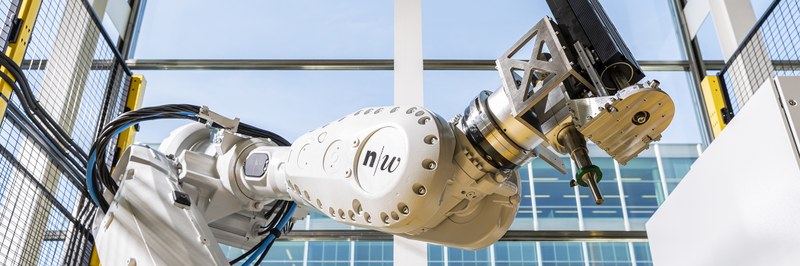
Mechatronics (products and individual systems)
- Robotics
- Mechatronic systems
Based on an analytical system model, the mechatronic solution is developed and its feasibility is tested in practice. The validated concept is industrialised together with the industrial partner.
Selected projects
Energy-efficiency dynamic soil compactor
The energy efficiency of dynamic soil compactors is enhanced by maximising the compaction force transmitted per oscillation period. This allows the necessary static dead weight of a roller compactor or a vibrating plate to be reduced, resulting in reduced drive power and increased energy efficiency! Since the process as a whole is non-linear and chaotic oscillations can result, control technology has to be used to ensure the stability of the machine dynamics.
Development of a device to simulate gravitation
Various illnesses such as osteoporosis and muscular atrophy pose significant challenges in medical ageing research. Surprisingly, comparable phenomena occur in well-trained astronauts in conditions of zero gravity after a relatively short time in space. This is why medical-biological experiments are carried out in this field in ISS space stations. By carrying out cell research in zero gravity conditions, the aim is to obtain new insights into treating bed-ridden or elderly people as well as patients suffering from osteoporosis.
Mechatronic pressure reduction valve for water supply in buildings
The pressure reduction valves used in buildings today are simple, low-cost mechanical systems. There are applications where the pressure control response is not satisfactory, however. A new type of mechatronic actuator was developed at the Institute of Automation as a solution to keep the pressure within close tolerances across the entire throughflow range; it is designed to be retrofitted without altering or dismantling the basic mechanical systems.
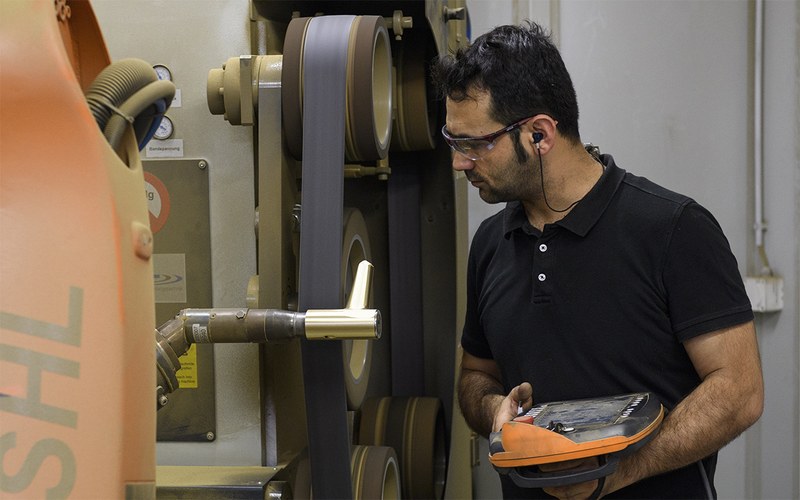
Robot-supported grinding technology
The Institute of Automation is working with KWC AG to examine the difficulties involved in robot-supported belt grinding of complex free-form geometries. The focus of initial analyses is on reducing set-up time in the existing system by means of an add-on solution. The project will then go on to look into more extensive manufacturing innovations in this field.
Contact

Prof. Dr. Roland Anderegg
- Phone
- +41 56 202 77 43
- roland.anderegg@fhnw.ch